
In Tibet, religion is not confined to monasteries or rituals – it is deeply woven into everyday life. Spinning prayer wheels along the streets, fragrant incense smoke rising at dawn, and pilgrims prostrating themselves across vast distances all reflect a living spiritual tradition. Travelers who wish to understand Tibet beyond its landscapes must first understand its religious foundation. Learning the basics of Tibetan Buddhism provides essential context for temples, sacred sites, and daily practices, allowing visitors to experience Tibet with greater awareness and respect.
Tibetan Buddhism: The Core of Tibetan Religious Culture
To understand Tibetan religious culture, you first need to grasp its main body—Tibetan Buddhism. It is a unique religious system formed after Buddhism was introduced to Tibet, integrating with the local original religion Bon, and developing over more than 1,300 years.
Major Sects of Tibetan Buddhism
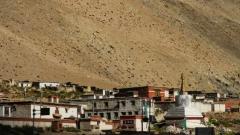
During your trip, you may hear terms like “Yellow Hat Sect” and “Red Hat Sect,” which are common names for different sects based on the color of monks’ robes. Among them, the most widely spread is the Gelugpa (Yellow Hat Sect), founded by Master Tsongkhapa, known for its strict precepts, with the Dalai Lama and Panchen Erdini as its important leaders. The Nyingma (Red Hat Sect), the oldest sect, retains many early esoteric traditions. The Sakya (Flower Hat Sect) is characterized by temples with outer walls painted with red, white, and gray stripes. The Kagyu (White Hat Sect) focuses on oral and experiential practice methods. Understanding these basic differences will help you notice subtle variations in architecture, statues, and atmosphere when visiting different temples.
Recognizing Common Religious Symbols and Objects
In Tibet, the following items are not only religious utensils but also important symbols for understanding its culture:
- Mani Stone Pile: Piles of stones carved with scriptures or Buddha statues. Pilgrims circumambulate them clockwise and add a stone when passing by to pray for blessings.
- Wind Horse Flags: Five-colored square prayer flags printed with scriptures and steed patterns, often strung and hung at mountain passes and rooftops. The fluttering of the flags in the wind is believed to recite scriptures and spread blessings.
- Prayer Wheels: Handheld or large-scale wheels installed around temples, containing scriptures. Rotating them clockwise once symbolizes reciting the scriptures once.
- Eight Auspicious Symbols: Including the Precious Umbrella, Golden Fish, Treasure Vase, Lotus Flower, Right-Turning Conch Shell, Endless Knot, Victory Banner, and Golden Wheel. These patterns widely appear in temple decorations, thangkas, and ritual tools, symbolizing auspiciousness and perfection.
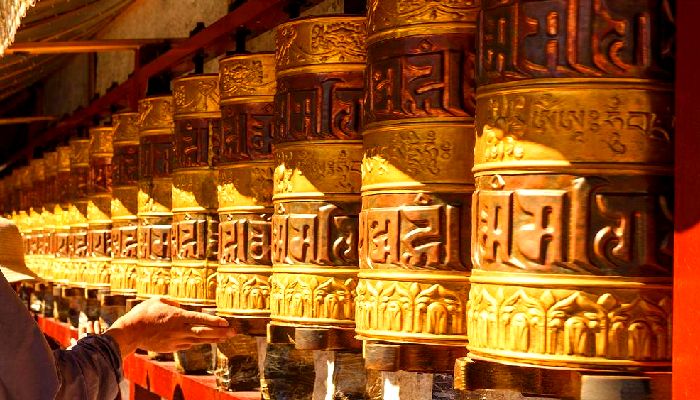
Prayer Wheels at Jokhang Temple, Lhasa
The Core of Tibetan Religious Culture: Must-Visit Temples and Sacred Sites
Stepping into these centers of faith in person is an irreplaceable way to experience Tibetan religious culture. The following places are the highlights of the journey.
Core Religious Sites in Lhasa and Surroundings
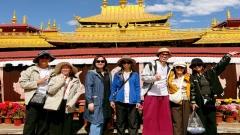
- Jokhang Temple: Known as the spiritual heart of Tibet rather than just an ordinary temple. The 12-year-old Sakyamuni Buddha statue enshrined here is regarded as the most precious sacred relic, attracting countless pilgrims. On the square outside the temple, many believers are always performing “prostrations in worship,” creating a solemn scene. Barkhor Street surrounding the temple is Lhasa’s most important pilgrimage route—following the crowd to walk clockwise around it is an excellent way to feel the local devout atmosphere.
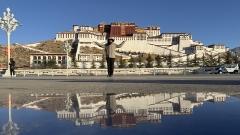
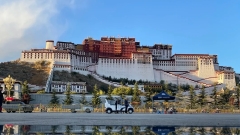
- Potala Palace: This iconic building was once the winter palace and political-religious center of successive Dalai Lamas. More like a grand treasure trove of Tibetan Buddhist art and history, its inner halls house tens of thousands of Buddha statues, countless scriptures, and exquisite murals on the walls. It is a key site to understand how Tibetan history and religion are intertwined.
- Sera Monastery: The daily afternoon debate session is its biggest highlight. Monks debate Buddhist philosophy on the gravel ground under the shade of trees through clapping, pacing, and rhythmic questioning and answering. This academic scene full of logic and passion is highly infectious, even if you can’t understand the specific content, it’s worth watching.
Sacred Natural Landscapes
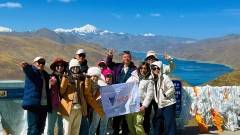
In the worldview of Tibetan religious culture, majestic mountains and clear lakes are also considered sacred. Mount Kailash in the Ngari region is jointly revered as the “Center of the World” by Tibetan Buddhism, Hinduism, Bon, and other religions. Circumambulating the mountain (known as “Kora”) is an extremely sacred religious practice. Lakes such as Nam Co, Manasarovar, and Yamdrok are regarded as sacred lakes by believers, who believe their waters have the power to purify and bless.
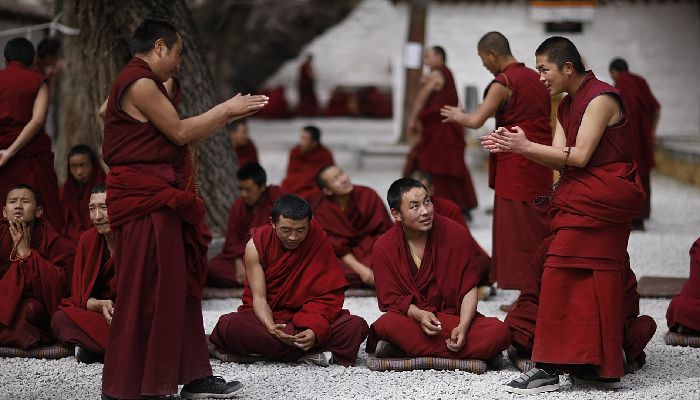
Monks Debating at Sera Monastery
Participating in Tibetan Religious Culture: Important Activities and Festivals
If visiting sites is a static observation, participating in festivals and rituals is a dynamic experience that will make your understanding more vivid.
Daily Religious Practices
- Incense Burning (Wei Sang): The wispy white smoke rising from temple courtyards or residential rooftops in the early morning is when believers burn cypress branches, highland barley, and other items, offering the fresh fragrance to the gods to express prayers and purification intentions.
- Prostrating in Worship: The most devout form of reverence in Tibetan Buddhism. Believers fold their hands together above their heads, move them to their foreheads, then to their chests, and finally lie prostrate on the ground, touching their foreheads lightly to the earth. Many people use this method to circumambulate temples, sacred mountains, or sacred lakes over months or even years.
Major Annual Religious Festivals
- Tibetan New Year: The most grand and lively traditional festival in Tibet, falling around the same time as the Chinese Lunar New Year but not always coinciding. During the festival, every household displays a “Chhema” (five-grain bucket), and people greet each other with “Tashi Delek” (auspiciousness and good fortune). Major temples hold grand religious assemblies, Vajra Dance (commonly known as “masked dance”), and other activities.
- Shoton Festival: Literally meaning “Yogurt Festival,” usually held at the end of the sixth lunar month or the beginning of the seventh lunar month. The most spectacular event is the “Thangka Unveiling” at Drepung Monastery and Sera Monastery. At dawn, huge embroidered Buddha thangkas are slowly unfurled along the mountain slopes, bathed in morning light, receiving the worship of tens of thousands of believers—a truly magnificent scene.

Jokhang Temple Tourist Photos
Respecting Tibetan Religious Culture: Specific Visiting Etiquette and Taboos
Respecting local customs and beliefs is the responsibility of every traveler. Following the specific norms below will ensure your visit is respectful and allow you to integrate into the environment more comfortably.
Specific Guidelines for Entering Temples
- Follow the Direction: All rotation and walking should be done clockwise, including turning prayer wheels, circumambulating temples or stupas, and even moving around inside Buddha halls.
- Attire and Behavior: When entering any Buddha hall, you must remove your hat and keep quiet, avoiding loud talking and laughing. Do not point directly at Buddha statues with your fingers—if you need to gesture, keep your palms up and fingers together.
- Note the Thresholds: Temple thresholds are considered symbolic and should not be stepped on; cross them directly.
- Photography Rules: Photography and video recording are strictly prohibited inside most temple halls. When taking photos of buildings or activities outdoors, if you want to photograph monks or worshipping believers, always politely ask for their explicit consent first. Avoid using flash, and do not disturb others’ religious activities by staying too close for a long time.
Tips for Interacting with Monks and Local Believers
- Monks can be respectfully addressed as “Lama” or “Aka” (a respectful term for elderly monks). If you want to take a photo with them, you must ask first and graciously accept any refusal.
- The head is regarded as a noble part of the body in Tibetan culture—do not casually touch the heads of others, especially children.
- Almsgiving should be done according to your ability and with sincerity. You can put a small amount of change into the merit boxes in the halls or add a piece of butter to the butter lamps in front of Buddha statues—these are common ways to show respect.
Advice on Travel Planning and Services
Considering the solemnity of religious sites and the accuracy of cultural interpretation, choosing an experienced travel agency to arrange your itinerary is usually smoother and more in-depth. A professional travel agency, such as China Dragon Travel, has guides who can not only efficiently arrange transportation and tickets but also provide accurate and rich explanations of religious and cultural backgrounds, and promptly remind you of behavioral dos and don’ts to avoid unintentional mistakes. They can also plan a reasonable visiting route based on your interests and time, and even help arrange participation in specific festival activities when possible, allowing you to have a more authentic experience.
Understanding First, Experience Deeper
The essence of Tibetan religious culture lies not in observation alone, but in understanding. Whether you are visiting monasteries, witnessing philosophical debates, or encountering pilgrims along sacred routes, each moment carries meaning shaped by centuries of belief and practice. Recognizing why rituals follow specific directions, why certain behaviors are restricted, and why silence is valued transforms these encounters from surface-level sightseeing into meaningful cultural engagement.
Given the cultural sensitivity and complexity of religious sites, thoughtful planning can greatly enhance the experience. Travelers seeking deeper insight and smoother logistics may benefit from professional guidance. China Dragon Travel offers expertise in culturally respectful travel planning, helping visitors navigate transportation, site visits, and religious contexts with clarity and confidence—ensuring a journey that is both enriching and considerate.