
Founded in the Sui Dynasty over 1,400 years ago, Chengdu Wenshu Monastery is the best-preserved Buddhist temple in Chengdu. Wenshu Monastery blends Zen serenity with local street life. Inside, incense smoke lingers, and the Grand Hall and Thousand-Buddha Peace Pagoda stand solemnly; outside, delicious food and teas reflect everyday Chengdu life. With no entrance fee and no commercial noise, only authentic local atmosphere, the temple attracts many visitors for prayer and contemplation. This guide systematically presents information for visiting Chengdu Wenshu Monastery, including pre-visit essentials, transportation, core attractions, and unique experiences, helping you to discover the Zen in the bustling city.
Must-know Information for Wenshu Monastery
Passport
International visitors holding ordinary passports should ensure their passport is valid for at least another six months and carry the original with them. Although Wenshu Monastery is a free-admission scenic area, some sections may require identity verification. It is recommended to carry your passport for potential inspection.
Opening Hours
Wenshu Monastery is open daily from 8:00 AM to 5:00 PM, including Mondays. It is recommended to enter before 9:00 AM or after 3:00 PM when there are fewer visitors, offering a better experience. Last entry is around 4:30 PM; please allow at least 1.5 hours for your visit. During the Spring Festival period, hours are extended until around 8:00 PM; check the official WeChat account for updates.
Ticket Policy
Admission to Wenshu Monastery is free, no reservation required. On Buddhist holidays like the 1st and 15th of the lunar month, free incense is provided. The relic hall and sutra copying room are also free. Tea drinking at Xiangyuan Garden and vegetarian meals are paid experiences but reasonably priced.
Visiting Duration
A simple tour of the temple takes about 1-1.5 hours. If including praying, tea drinking, sutra copying, trying vegetarian food, and exploring nearby eateries, allow 3-4 hours. For relaxing with tea at Xiangyuan Garden, plan for a half day. Spring brings magnolia and plum blossoms; autumn features golden ginkgo leaves. Weekdays (Tuesday to Thursday) are less crowded than weekends and holidays. At 8:00 AM, you can hear monks chanting; rainy days offer a unique atmosphere listening to the rain under the eaves.
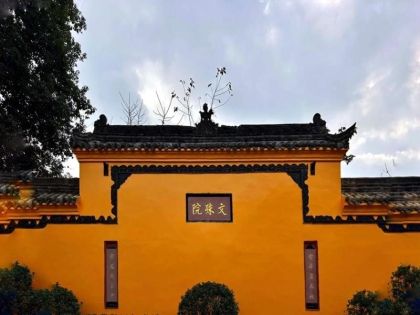
The Exterior of Chengdu Wenshu Monastery
Transportation to Wenshu Monastery
Metro
You can take Metro Line 1 to Wenshu Monastery Station, exit from Gate K, and walk about 500 meters (5-8 minutes). This is the fastest and most economical option, with signs guiding the way. The subway is crowded during morning (8:00-9:00 AM) and evening (5:30-6:30 PM) rush hours; avoid these times if carrying large luggage.
Bus
You can take buses 16, 55, 98, or 298 to Wenshu Monastery Station and walk about 320 meters. Alternatively, take buses 42, 75, 126, or 127 to Da’an West Road West Station. Bus fare is 2 RMB, payable via Alipay or WeChat QR codes, but routes may be affected by rush hour congestion.
Taxi and Ride-hailing
From Chunxi Road or Taikoo Li, the trip takes about 10-15 minutes and costs about 15-20 RMB. From Chengdu East Station, it takes about 25 minutes and costs about 30 RMB. Roads around Wenshu Monastery can be congested on weekends and holidays.
Self-Driving
Navigate to “Wenshu Monastery Parking Lot” for the underground parking. The first hour costs 5 RMB, subsequent hours 2 RMB each, with a daily maximum of about 20 RMB. Parking is limited on holidays; arriving before 9:30 AM is recommended. The parking lot entrance is on Wenshu Monastery Street; watch for roadside signs.
Core Attractions of Wenshu Monastery
Screen Wall
Located opposite the main gate, the Screen Wall is an important landmark before entering the temple. Many visitors take photos here as a starting point for their tour.
Three Great Bodhisattvas Hall
This is the second hall, dedicated to Avalokitesvara (Guanyin), Manjushri (Wenshu), and Samantabhadra (Puxian). Manjushri represents wisdom, the temple’s main deity, attracting many students and job seekers who pray for success in their studies and careers. During exam seasons, incense offerings are particularly abundant, with many parents bringing their children to pray.
Grand Hall
The Grand Hall is the temple’s third hall and its core building. It houses a seated copper-cast statue of Sakyamuni Buddha, about 5 meters high, flanked by statues of his disciples Kasyapa and Ananda. These were cast during the Daoguang period of the Qing Dynasty, nearly 200 years ago. The pure copper statues are exquisite works of art and among the temple’s most precious relics. Please remain quiet during your visit.
Dharma Hall
The fourth hall, believed to be the site of the ancient Xinxiang Temple, where eminent monks historically gave lectures. The hall features a central dharma seat. Embedded in the wall is a stone tablet with the characters “Kong Lin” (Empty Forest), bestowed by Emperor Kangxi of the Qing Dynasty, giving the temple its alternative name, “Kong Lin Tang” (Empty Forest Hall), one of its greatest treasures.
Sutra Hall
The fifth hall, 15.84 meters high, is where scriptures and important relics are stored. It has two floors: the lower for Buddha statues, the upper for Buddhist scriptures. It holds the extremely precious skull relic of Master Xuanzang (the historical monk who inspired the Tang Sanzang character in “Journey to the West”), the temple’s most sacred relic. The Sutra Hall is not open to the public, but visitors can view it from outside.
Manjushri Pavilion
Located at the end of the central axis, built in 1997, covering 1,000 square meters, this is the temple’s newest structure. It comprises the Konglin Lecture Hall, the Konglin Buddhist Library, and the Ten-Thousand Buddha Hall. The lecture hall hosts Buddhist teachings and ceremonies; the library holds numerous Buddhist texts open to the public; the Ten-Thousand Buddha Hall houses ten thousand small Buddha statues.
Thousand-Buddha Peace Pagoda
Located on the east side of the temple, this uniquely structured iron pagoda is one of Wenshu Monastery’s landmarks. Cast with numerous Buddha images, it is called the Thousand-Buddha Pagoda. Many devotees circumambulate the pagoda clockwise three times, making wishes and dropping coins into an iron cylinder at its base.
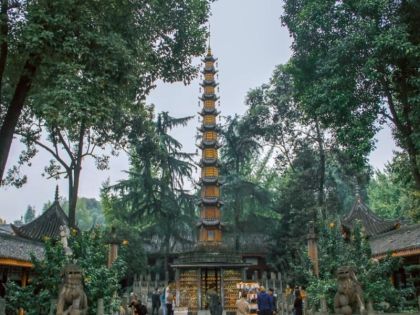
The Thousand Buddha Pagoda of Wenshu Monastery
Unique Experiences at Wenshu Monastery
Circumambulating the Pagoda for Blessings
The Thousand-Buddha Peace Pagoda is a uniquely structured iron pagoda and a landmark of Wenshu Monastery. Many devotees walk clockwise around the pagoda three times, silently reciting Buddha’s name or making wishes, then drop a coin into an iron cylinder. This ritual symbolizes accumulating merit and purifying the mind. It is one of the temple’s most representative experiences, worthwhile for both devotees and tourists.
Teas at Xiangyuan Garden
Xiangyuan Garden is a teahouse within Wenshu Monastery and an excellent place to experience Chengdu’s “courtyard tea” culture. Bamboo chairs, covered bowl tea, and the leisurely old Chengdu atmosphere – everything you need is here. Order a cup of jasmine tea for about 8 RMB, with unlimited refills until 5:00 PM. Sitting in a bamboo chair, daydreaming, reading, chatting, listening to birds, and watching the light shift is the most authentic Chengdu lifestyle.
Sutra Copying Experience
The Fuhui Hall in Xiangyuan Garden houses a sutra copying room, open year-round from 10:00 AM to 10:00 PM. Ordering a cup of tea allows you to copy sutras for free; brushes, ink, paper, and inkstones are provided. Sutra copying is a meditative practice, a rare spiritual experience regardless of your beliefs. The window-side seats offer excellent lighting, allowing you to enjoy the courtyard view while copying.
Vegetarian Meal Experience
Wenshu Monastery’s vegetarian meals are renowned, worth trying even for non-believers. “Gugu Rice” at Xiangxin Hall costs 18 RMB, combining rice with various vegetables, simple yet comforting. The “Luohan Noodles” at Xiangyuan Garden cost about 15 RMB per bowl, featuring a delicious mushroom broth with hand-pulled noodles. The vegetarian hot pot costs 50 RMB per person, pricier but a unique experience.
Tips for Visiting Wenshu Monastery
Dressings
Dressing appropriately when entering the temple, avoiding overly revealing clothing as a sign of respect for the religious site. The grounds have many stone paths that can be slippery when wet; wear comfortable, non-slip walking shoes. High heels or new shoes are not recommended for extended walking.
Visiting Etiquette
When circumambulating the pagoda or prayer wheels, always walk clockwise, a common etiquette in both Tibetan and Han Buddhism. Photography is prohibited inside the halls; follow the rules, especially avoiding flash on Buddha statues and scriptures. Maintain silence, avoid noise and horseplay, and set your phone to silent or vibrate mode.
Beware of Scams
Fortune-tellers and people selling “blessed” items often approach tourists outside Wenshu Monastery’s gate. Do not engage or make eye contact; simply walk directly into the temple. All dharma item shops within the temple are officially operated with transparent pricing; do not trust street vendors’ claims.
Luggage Storage
There is no luggage storage inside Wenshu Monastery. If carrying large suitcases or backpacks, you can store them at the Wenshufang District Tourist Service Center or nearby convenience stores for about 10-20 RMB. Some merchants offer free storage with a minimum purchase; inquire in advance. Small bags can be carried inside, but keep an eye on your belongings to avoid loss in crowded areas.
Travel Guide for Wenshu Monastery: Zen and Everyday Life
Wenshu Monastery’s charm lies in the seamless blend of a sacred Zen environment and local street life. It is simultaneously a place for Buddhist practitioners and a leisure spot for ordinary people. The incense inside the temple and the delicious food outside, the Zen atmosphere and the hustle and bustle of daily life – all coexist harmoniously here. Every scene here is a true reflection of Chengdu city. When you circumambulate the Thousand-Buddha Pagoda clockwise and sip a bowl of tea from a bamboo chair at Xiangyuan Garden, the tranquility and ease you feel will allow you to truly appreciate the leisurely old Chengdu lifestyle. May you take away a beautiful memory of Chengdu amidst the incense and tea aroma of Wenshu Monastery.