
Is the Wuhou Shrine worth visiting during your trip to Chengdu? Even if you are unfamiliar with the Romance of the Three Kingdoms, this historic site remains one of the city’s most important cultural landmarks. Dedicated to Zhuge Liang—the legendary strategist known worldwide for his wisdom—the shrine offers a fascinating introduction to ancient Chinese history. This guide provides essential information on tickets, transportation, must-see attractions, and practical travel tips to help you plan your visit with ease.
Pre-Visit Essentials for Chengdu Wuhou Shrine
For international visitors, a passport is the essential legal identification document. Unlike mainland Chinese visitors, international visitors cannot enter directly using an ID card or an e-ticket QR code; they must exchange for a paper ticket at the ticket window using their physical passport.
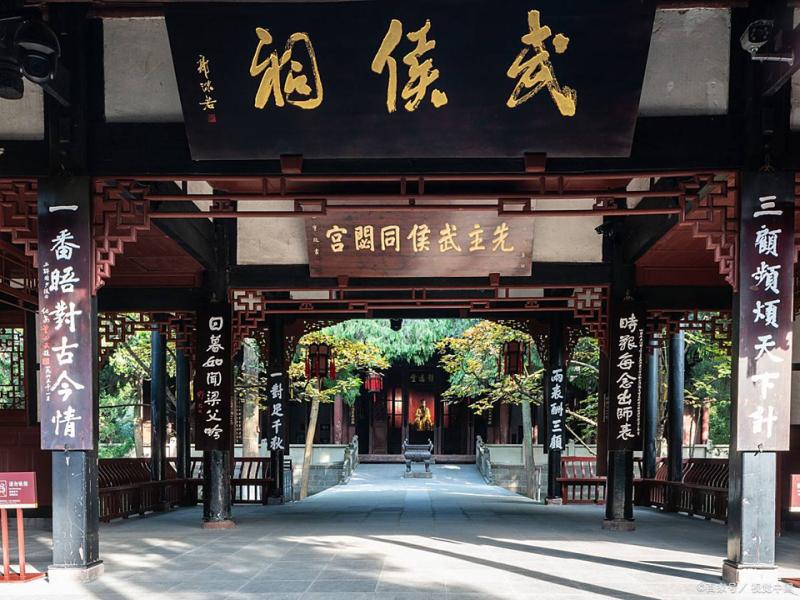
Chengdu Wuhou Shrine
Passport
International visitors holding ordinary passports should ensure their passport is valid for at least another six months and carry the original with them. The original passport must be presented for identity verification when purchasing tickets and entering the shrine. It is recommended to take a photo of your passport information page and store it on your phone, and also carry one or two photocopies stored separately from the original, in case of loss.
Visa-Free Policy
China has implemented a unilateral visa-free policy for citizens of certain countries holding ordinary passports. Eligible visitors can enter China without a visa for stays of 15 to 30 days for tourism, business, family visits, or transit. Before departure, please confirm the latest visa policy with the Chinese embassy or consulate in your home country or official visa service center, and ensure your passport validity is at least six months.
Ticket Purchase
International visitors cannot directly purchase e-tickets online for QR code entry. You must first book tickets through the official WeChat public account or a travel platform. Upon arrival, go to the “International Visitor Ticket Window,” present your original passport to exchange for a paper ticket, and then use the paper ticket to pass through the turnstile.
Ticket Prices
The full-price ticket for Wuhou Shrine is 50 RMB. A half-price ticket is 25 RMB. Half-price discounts apply to minors aged 6 to 18 years old and full-time university undergraduate students (including those with associate degrees) with valid identification. It is recommended to book tickets in advance through the official “Chengdu Wuhou Shrine Museum” WeChat public account to save queuing time. An annual pass is available for 100 RMB per person per year, suitable for frequent visitors.
Opening Hours
Peak season (May 1st to October 31st) is 8:00 AM to 8:00 PM. Low season (November 1st to April 30th) is 8:00 AM to 6:30 PM. Ticket sales stop 1 hour before closing (7:00 PM in peak season, 5:30 PM in low season). Allow 2-3 hours for visiting; if including Jinli Ancient Street, allow 4 hours or more.
Transportation to Chengdu Wuhou Shrine
Wuhou Shrine is located within the First Ring Road of Chengdu, close to the city center, making it extremely convenient to reach.
- Subway (Most Recommended): Take Subway Line 3 or Line 5 to Gaoshengqiao Station. Exit from Gate C or Gate D, and walk for about 10 minutes to reach Wuhou Shrine. Walk west along Wuhou Shrine Street from the exit; follow the signs. The subway is the fastest and most economical way to reach Wuhou Shrine.
- Bus: Take bus lines 1, 10, 57, 82, 301, 334, 335, 503, 521, 901, or 904, and get off at “Wuhou Shrine Station”. The bus stop is right near the main entrance. The bus fare is 2 RMB.
- Taxi / Ride-hailing: A taxi from Chunxi Road or Taikoo Li to Wuhou Shrine takes about 15-20 minutes and costs about 15-25 RMB. From Chengdu East Station, the trip takes about 30 minutes and costs about 30-40 RMB. From Shuangliu Airport, the trip takes about 40 minutes and costs about 50-60 RMB.
- Self-Driving: If driving, navigate to “Wuhou Shrine Museum South Parking Lot” or the “Underground Parking Lot at the West Gate of Wuhou Shrine.” The parking lots are open 24 hours, with a fee of approximately 10-20 RMB per day.
- Scenic Area Shuttle Bus: Wuhou Shrine has a shuttle bus service point. You can take the shuttle bus directly from Wuhou Shrine to Shuangliu Airport. The shuttle bus operates from 8:00 AM to 8:00 PM, departing every hour on the hour. The shuttle bus service hotline is 028-83181155.
Attractions of Chengdu Wuhou Shrine
Han Zhaolie Temple
Han Zhaolie Temple is the main hall of Wuhou Shrine, dedicated to Liu Bei, the founding emperor of the Shu Han dynasty. Inside, there is a gilded statue of Liu Bei, approximately 3 meters tall. The side halls to the left and right house statues of Liu Bei’s sworn brothers, Guan Yu and Zhang Fei.
- East Side Hall (Guan Yu Hall): Features a statue of Guan Yu, with his Green Dragon Crescent Blade standing nearby. Guan Yu is renowned for his loyalty and righteousness, revered later as a “Military Saint”. Murals and statues depict classic stories like “Guan Yu Crossing Five Passes and Slaying Six Generals” and “The Lone Journey to the Meeting”.
- West Side Hall (Zhang Fei Hall): Features a fierce-looking statue of Zhang Fei holding his Eight-foot Serpent Spear, showcasing his brave and fearless image.
- Statue of Liu Chen: The left side of Liu Bei Hall features a statue of Liu Chen, Liu Bei’s grandson. When the Wei army approached, Liu Shan surrendered, but Liu Chen refused, choosing to commit suicide within Wuhou Shrine. Later generations, moved by his loyalty, erected this statue in his memory.
Civil and Military Corridors
The Civil and Military Corridors are located on the two sides in front of Liu Bei Hall, housing a total of 28 statues representing the civil officials and military generals of the Shu Han era. The military generals are on the left, and the civil officials on the right.
- Military Generals Corridor: Features statues of famous Shu Han generals like Zhao Yun, Ma Chao, Huang Zhong, and Wei Yan. Zhao Yun’s statue is handsome and valiant; Ma Chao’s is firm and heroic.
- Civil Officials Corridor: Features statues of Shu Han strategists like Pang Tong, Fa Zheng, and Jian Yong. Pang Tong’s statue is wise and composed; Fa Zheng’s is quick-witted.
These statues, sculpted during the Qing Dynasty, are lifelike and provide an important window into the historical figures of the Shu Han dynasty.
Zhuge Liang Hall
Zhuge Liang Hall is the core building of Wuhou Shrine and the most popular place for incense offerings. Inside, a central statue of Zhuge Liang is enshrined, praising his enduring legacy.
- The “Psychological Attack” Couplet: Hanging outside the hall is one of China’s top ten famous couplets, telling the story of Zhuge Liang’s seven captures of Meng Huo and using the example of his tearful execution of Ma Su to emphasize the need for governing Shu with both timely decisiveness and appropriate leniency.
- Jing Yuan Tang (Hall of Tranquility and Aspiration): The hall’s name comes from a famous phrase in Zhuge Liang’s “Admonition to My Son”. Above the hall, an ebony plaque is inscribed with “Low-keyed ambition for high aims, peace of mind for great distance,” a spiritual legacy left by Zhuge Liang.
The left and right sides inside the hall feature statues of Zhuge Liang’s son, Zhuge Zhan, and grandson, Zhuge Shang. They died in battle defending the Shu Han in its later days, embodying the Zhuge family’s patriotic loyalty.
Red Wall Pathway
The Red Wall Pathway is the most popular photo spot at Wuhou Shrine and one of Chengdu’s most iconic internet-famous locations. When director Zhang Yimou was filming a promotional video for Chengdu, this red wall gained immense popularity, becoming a must-visit spot.
- Location: The Red Wall Pathway is located between Huiling (Liu Bei’s Tomb) and Sanyi Temple, stretching several hundred meters as a corridor connecting the two attractions. The tall red walls, lined with green bamboos, create dappled light and shadow as sunlight filters through, offering a highly visual impact.
- Visiting Time: The Red Wall Pathway gets crowded on weekends and holidays. It is recommended to visit before 9:00 AM or after 5:00 PM on weekdays when fewer visitors are around for a better experience.
Huilin
Huiling is the joint tomb of Liu Bei and his consorts, Lady Gan and Lady Wu, located in the western part of the Wuhou Shrine scenic area, with a history of over 1800 years. The tomb mound is about 12 meters high with a circumference of about 180 meters, making it one of the best-preserved imperial tombs in China.
- Sights: The tomb mound is about 12 meters high; visitors can walk around its base to observe the tomb’s form from different angles. Stone animals and figures from the Ming Dynasty line the spirit way, with simple and elegant designs. The “Tomb of Emperor Zhaolie of Han” stele from the Qing Dynasty has neat calligraphy and is part of the classic Wuhou Shrine scenery.
- Suggested Route: Allow 15-20 minutes to visit the Huiling area. Enter via the spirit way, walk to the tomb stele, then walk clockwise around the mound before leaving.
- Precautions: The Huiling area is solemn and dignified; please maintain silence. Visiting in the early morning or late afternoon helps avoid peak tour group times for a more peaceful experience.
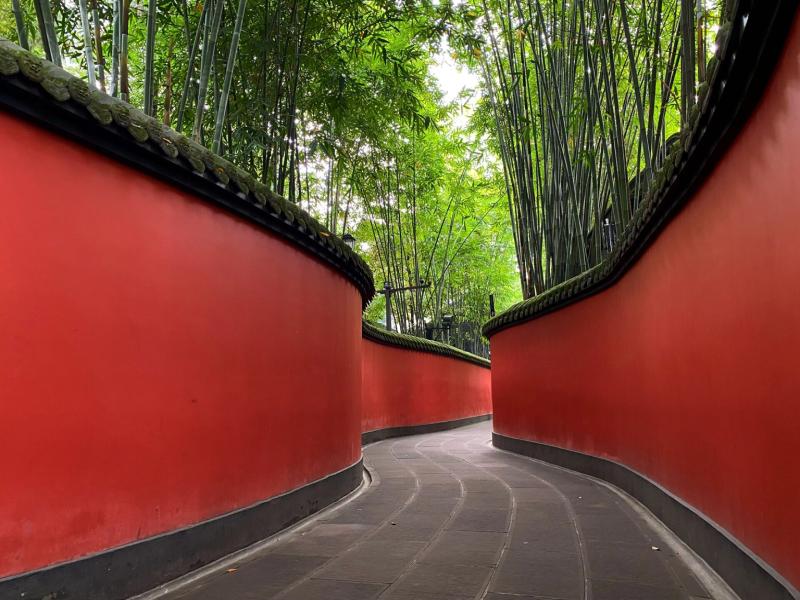
Red Wall Pathway: A Famous Spot in Chengdu Wuhou Shrine
Tips for Visiting Chengdu Wuhou Shrine
- Best Time: It is recommended to enter the park before 9:00 AM to avoid peak tour group times. Tuesday through Thursday are relatively less crowded than weekends and holidays. The Red Wall Pathway is less crowded and has better lighting for photos after 5:00 PM. Depart early on holidays to avoid full parking lots and long queues.
- Sun Protection and Clothing: Chengdu summers are hot and humid; wear light, breathable clothing, and bring sunscreen, a hat, and sunglasses. Winters are cold and damp; bring a warm jacket. Wear comfortable walking shoes as much of the path is stone-paved.
- Guided Tours: Visitors can join a group guided tour for about 20 RMB per person, or a private tour for 50 RMB per person (lasting about 1 hour). Guides will take you to the core attractions, explaining the historical background and cultural significance. Tour inquiry hotline: 028-85568685.
- Audio Guide: Audio guides can be rented for about 20 RMB. They support both Chinese and English, are simple to use, and suitable for independent exploration.
- Official WeChat Free Audio Guide: Follow the official “Chengdu Wuhou Shrine Museum” WeChat public account for free audio guides. The WeChat guide covers major attractions; you can listen by entering the attraction number, which is very convenient.
Wuhou Shrine in Chengdu: A Gateway to Understanding Chinese History
You don’t need prior knowledge of the Three Kingdoms to appreciate the Chengdu Wuhou Shrine. With its elegant architecture, tranquil gardens, and the iconic Red Wall walkway, the site offers a captivating blend of history, culture, and photography opportunities. It is an ideal destination for travelers seeking deeper insight into traditional Chinese values such as loyalty, wisdom, and honor.
For a seamless and enriching journey through Chengdu and beyond, consider traveling with a professional tour operator. China Dragon Travel specializes in tailor-made China tours, offering expert guidance and immersive cultural experiences for international visitors.