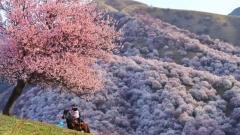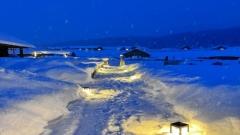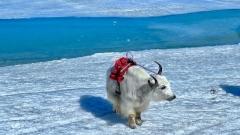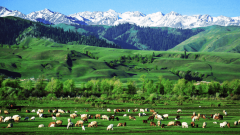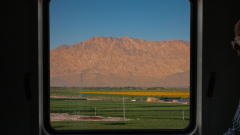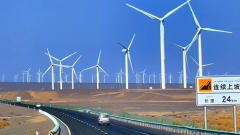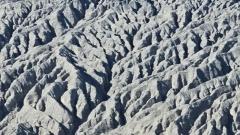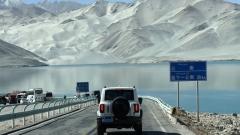

The Wusun Ancient Road is a millennium-old trekking route spanning the north and south of the Tianshan Mountains, linking the ancient states of Wusun and Qiuci with rich historical and cultural memories. The reverse route starts from Kuqa and ends in Yining, covering about 120 kilometers. It passes through canyons, mountain passes, lakes, grasslands and other landforms, and is especially famous for the crystal-blue waters of Paradise Lake and its snow-capped mountain reflections. The 8-day/7-night journey is a dual test of physical strength and will, but the stunning natural scenery and the sense of accomplishment from completing the challenge make it all worthwhile.
Xinjiang Itinerary for the 8-Day/7-Night Reverse Trek of the Wusun Ancient Road in January
D1: Assemble in Kuqa from All Over China | Procure Supplies & Pre-Trip Check
The whole day is set for assembly in Kuqa. After arriving in Kuqa by plane or train, check in at the designated hotel for registration. In the afternoon or evening, attend a pre-trip briefing where the team leader will inspect personal gear, explain itinerary notes, safety rules and plateau acclimatization knowledge. During free time, purchase last-minute trail meals and personal supplies in Kuqa. As the site of the ancient Qiuci Kingdom, you can take a brief tour of Kuqa’s old town to experience southern Xinjiang customs if time permits. Overnight at a Kuqa hotel.
D2: Kuqa – Heiyingshan Township – Fire Station Camp (175km by car, ~6h with transfers)
After breakfast, depart by car. After about 6 hours of driving (with possible transfers to local vehicles en route), arrive at Heiyingshan Township, the starting point of the trek. Organize luggage here, distribute shared supplies, and start an adaptive hike led by guides and assistants. The hiking distance and elevation gain on the first day are relatively moderate, aiming to help the body gradually adapt to weight-bearing and high altitude. Reach the Fire Station Camp in the evening to pitch tents. Learn basic skills like tent setup and camp construction at night. Dine at the camp and get used to outdoor camping life.
D3: Fire Station Camp – Akbulak Daban – Paradise Lake Camp (10km hike, 700m ascent, 800m descent, ~4h)
The third day’s journey enters the core area. Depart from the camp and start a continuous climb to cross Akbulak Daban, the first key mountain pass of the trip. At an altitude of about 3,800 meters, you can enjoy the magnificent alpine canyon scenery along the way. After crossing the pass, descend all the way—when the crystal-blue Paradise Lake (Akku Lake) suddenly comes into view, all fatigue will be replaced by awe. Pitch tents at the lakeside camp and admire the lake and mountain scenery surrounded by snow-capped peaks, one of the most iconic photography spots of the entire trip.
D4: Paradise Lake – Kokesu River Camp (23km hike, 400m ascent, 1,100m descent, ~8h)
This is the longest hiking day with the most elevation loss, posing a great challenge to the knees. Enjoy the sunrise over Paradise Lake in the early morning. After breakfast, hike along the lake shore and then start a long descent along the Kokesu River Valley. The landscape gradually changes from alpine lakes to forested river valleys. You need to ford the river multiple times (water level and temperature vary by season and weather), so river-tracing shoes are a must. Arrive at the Kokesu River Camp in the evening, where the altitude is lower and the climate is relatively warmer.
D5: Kokesu River Camp – Kunosayi Camp (14km hike, 1,500m ascent, ~7h)
After the long descent of the previous day, today brings the longest and toughest continuous climb of the entire trip, with a vertical elevation gain of 1,500 meters. Hike continuously upward along the Kunosayi River Valley on a steep path that consumes a lot of physical energy. Allocate your strength rationally, maintain a steady pace, and replenish water and energy in a timely manner. When you reach Kunosayi Camp and look back at the path you’ve taken, a strong sense of accomplishment will well up. The camp is usually set in a relatively flat river valley area.
D6: Kunosayi – Qiong Daban – Qiongkushitai River Valley Camp (14km hike, 410m ascent, 960m descent, ~5h)
Today, you need to cross Qiong Daban, the second key mountain pass of the trip. The climb is relatively gentle. After crossing Qiong Daban, the scenery suddenly opens up—alpine meadows and distant snow-capped peaks form a vast landscape painting. Then start a long descent into the beautiful Qiongkushitai River Valley. With gurgling streams, lush pastures and herds of cattle and sheep dotting the valley, you can fully relax and enjoy a peaceful night on the grassland.
D7: Qiongkushitai River Valley – Qiongkushitai Village – Shantu Ranch (8km hike, 800m descent; 30km by car, ~1h)
The final day of trekking. Strike camp in the morning and continue descending along the Qiongkushitai River Valley. After an 8km hike, arrive at Qiongkushitai Village, the end point of the trek. Surrounded by snow-capped mountains and forests, this Kazakh village is a renowned trekking base camp. Take a short break here to celebrate the successful completion of the trek. Then transfer to a pickup vehicle and drive for about 1 hour to Shantu Ranch or nearby towns for accommodation. Enjoy a hearty celebration dinner at night to wash away the fatigue of days of trekking.
D8: Shantu Ranch – Yining Dissolution (200km by car, ~5h)
After breakfast, drive for about 5 hours to Yining City. Enjoy the beautiful scenery of the Ili River Valley along the way. Upon arrival in Yining, the trip officially ends. You can leave Yining by plane or train according to your personal schedule (Yining has an airport and a railway station), or continue exploring the Ili region.
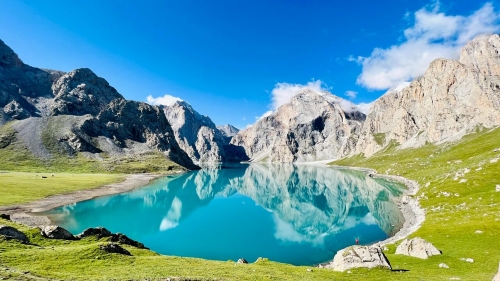
Paradise Lake
Gear & Fitness Preparation Checklist for January Trekking in Xinjiang
Personal Essential Gear
- Backpack System: 55–75L professional mountaineering backpack with rain cover; 20–30L summit daypack (for daily hikes).
- Sleep System: Down sleeping bag with a comfort temperature rating of -10℃; moisture-proof pad (egg-crate or inflatable type).
- Clothing System:
-
- 2 sets of moisture-wicking quick-dry underwear.
- Insulating mid-layer: fleece jacket and pants or lightweight down jacket.
- Protective outer layer: waterproof and breathable hardshell jacket and pants (GTX fabric recommended).
- 3–4 pairs of trekking socks (wool or blended fabric).
- High-cut waterproof trekking shoes (well broken-in).
- Insulated down jacket for camp use.
- Sun hat, thermal hat, thin & thick gloves, neck gaiter, sunglasses.
- Trekking Gear: Pair of trekking poles, headlamp with spare batteries, 1L+ insulated water bottle, multiple waterproof dry bags (for organizing gear), personal tableware.
- River-Fording Gear: River-tracing shoes or military rubber shoes (for multiple river crossings), quick-dry pants or shorts.
Shared Gear & Supplies (Usually Provided by the Organizer, Confirm in Advance)
– Tents (1 tent for 2–3 people), cooking equipment, group dining tent, satellite phone (for emergencies), walkie-talkies, first-aid medicine & oxygen supply.
Fitness Preparation & Health Requirements
– Conduct systematic training 2–3 months in advance, including 3–4 sessions of aerobic exercise per week (running, cycling, stair climbing, etc.) and weight-bearing hikes (gradually increasing load to 15–20kg).
– The maximum altitude of the trip is about 3,800 meters. Learn about altitude sickness in advance, maintain a positive mindset, and avoid catching a cold at all costs.
– This route is physically demanding and suitable for outdoor enthusiasts with long-term exercise habits and 2–3 days of high-altitude trekking experience. Those without heavy backpack long-distance trekking experience should evaluate their abilities carefully.

Qiongkushitai
Detailed Budget Breakdown for January Trekking in Xinjiang
Basic Group Tour Fee Reference (Included Items Typically)
The cost of commercial trekking tours for the 8-day/7-night reverse trek of the Wusun Ancient Road ranges from CNY 5,800–8,500 per person, depending on service standards (e.g., logistics support, meals, packhorse teams). Fees usually include:
– Accommodation for the first night in Kuqa and the first night after trekking as listed in the itinerary (D1 hotel, D7 guesthouse).
– All transportation within the itinerary (chartered cars from Kuqa to the trek start point, and from the trek end point to Yining).
– Camp meals, hot water, and shared cooking equipment during the trek.
– Services of professional guides and assistant leaders.
– Provision & transportation of shared gear (tents, dining tents, satellite phones, walkie-talkies, etc.).
– Full-trip outdoor insurance coverage.
Excluded Items & Personal Additional Expenses
– Long-distance transportation to Kuqa and from Yining: Round-trip airfare/train tickets, approximately CNY 1,500–3,000 depending on departure city.
– Personal trekking gear purchase or rental fees: Approximately CNY 500–1,000 if renting gear.
– Personal expenses during the trek: e.g., beverage purchases, souvenirs.
– Possible single room supplement: Price difference for single occupancy on assembly and dissolution days.
– Packhorse fees: If requiring horses or donkeys to carry personal luggage (non-heavy backpack), this fee may be included in the group tour price or charged separately, approximately CNY 800–1,500 for the entire trip.
Total Budget Reference
– Commercial Tour (Bringing Partial Gear): Basic group fee CNY 6,500 + long-distance transportation CNY 2,000 + personal expenses CNY 500 = Total approximately CNY 9,000 per person.
– Comfort Level (Renting Gear & Requesting Packhorse Service): Basic group fee CNY 8,000 + long-distance transportation CNY 2,500 + gear rental/packhorse fees CNY 1,500 = Total approximately CNY 12,000 per person.
Safety Guidelines & Environmental Protection Principles for January Trekking in Xinjiang
Trekking Safety First
- Stay with the Group: Strictly prohibit leaving the group to act alone; always stay within the sight of guides and assistants.
- River-Fording Safety: When crossing rivers, use the rope protection set up by the team leader, wear river-tracing shoes, and move sideways facing upstream.
- Weather Adaptation: Mountain weather is changeable; add or remove clothing at any time to prevent hypothermia. In case of severe weather, unconditionally follow the team leader’s decision to adjust the itinerary or descend.
- Health Monitoring: Report any discomfort to the team leader promptly, especially symptoms of altitude sickness.
Leave No Trace (LNT) Principles
- Pack Out All Trash: Including fruit peels and tissues; do not bury or burn trash.
- Protect Water Sources: Wash at least 30 meters away from rivers and lakes, using biodegradable detergent only.
- Preserve the Natural Landscape: Do not pick plants, chase wild animals, or take away any natural items such as stones or bones.
- Minimize Fire Impact: Use stoves only in designated areas; strictly prohibit cutting down trees for firewood.
The reverse trek of the Wusun Ancient Road is an epic journey into the heart of the Tianshan Mountains, testing not only physical strength but also purifying the soul. Thorough preparation, professional guides and team collaboration are the keys to success and safety.
With rich experience in organizing professional trekking activities, China Dragon Travel has senior team leaders who are familiar with the road conditions, weather and emergency procedures of every section of the Wusun Ancient Road. We provide one-stop services from itinerary planning and gear guidance to high-standard full-process logistics support, ensuring your trekking trip is safe, smooth and rewarding. If you are interested in challenging the Wusun Ancient Road, please contact us for detailed itinerary plans and the latest departure schedules.