
Traveling to China has become easier for Canadian citizens thanks to several visa-free entry policies introduced in recent years. Whether you are planning a short vacation, a business visit, or a stopover while traveling to another Asian destination, there are now multiple visa-free options available. Each policy comes with different conditions, including stay duration, entry requirements, and travel scope within China. Understanding these rules in advance can help you plan a smoother trip.
Three Types of Visa-Free Policies for Canadians Traveling to China
At present, Canadian citizens traveling to China have three visa-free entry channels to choose from.
30-Day Unilateral Visa-Free Entry
This is a new policy launched in February 2026, applicable to all citizens holding ordinary Canadian passports. For entry purposes such as sightseeing, family visits, business exchanges or transit transfers, with a stay of no more than 30 days, you can enter China without a visa. This policy has no restrictions on the scope of activities, allowing free travel across China.
240-Hour Transit Visa-Free Entry
This policy applies to those who depart from Canada, stay in China first and then fly to a third country (such as Japan, South Korea or Southeast Asian countries). The stay duration has been extended from the original 144 hours to 240 hours, i.e., 10 days. The applicable ports have increased to 60, and the scope of activities has expanded to 24 provinces (autonomous regions and municipalities directly under the central government). You can enter China through any of the 60 ports including Beijing, Shanghai, Guangzhou and Chengdu, travel across provinces within the specified areas and depart China within 10 days.
30-Day Visa-Free Entry to Hainan
Tourists whose destination is Hainan Province can choose to enter China directly through Hainan. Canadian citizens can stay in the whole of Hainan for 30 days without a visa, without the need for advance declaration or traveling to a third country. This policy is applicable to tourists who travel to Hainan specifically for vacation.
Notes
The 30-day visa-free policy is currently in effect until December 31, 2026, and a formal notice is required for any extension in the future. A connecting flight ticket is a must for the transit visa-free entry, and you are not allowed to travel to areas outside the scope specified by the policy after entry. If you plan to work, study or stay in China for more than 30 days, you still need to apply for the corresponding type of visa in advance.
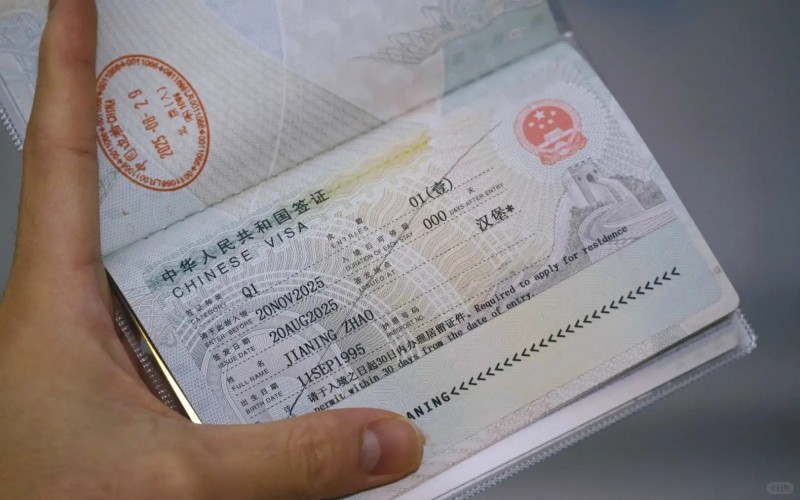
Visa for China
Entry Document Preparation
The visa-free policy has simplified the entry process, but the following documents are still required for entry:
- Passport: Valid for at least 6 months
- Return or connecting flight ticket itinerary: It is recommended to print a paper copy for backup
- Hotel reservation: Information of the first night’s hotel booking, it is recommended to print a copy for backup
- Entry registration form: Distributed on the plane, which can be filled in in advance to save time
- Travel insurance policy: Not a mandatory requirement, but recommended to purchase
Major ports in China have launched an electronic entry card system. You can fill in the information in advance through WeChat or Alipay mini-programs, save the confirmation code and present it upon entry.
Travel Cost Budget From Canada to China
Consumption levels vary across different regions in China. The following is a budget reference converted to Canadian dollars (CAD):
International Flights
The economy class fare for round-trip flights from Canada to major Chinese cities is about 800 to 1,200 CAD in the low season (November to March of the following year) and 1,200 to 2,000 CAD in the peak season (June to October, Spring Festival). The one-way fare from Vancouver to Beijing is a minimum of about 440 CAD, with a similar price for flights to Chengdu. There are non-stop flights to Beijing, Shanghai and Guangzhou departing from Vancouver, Toronto and Montreal. Booking tickets 3 to 4 months in advance is more cost-effective.
Domestic Transportation in China
The second-class seat of high-speed rail costs about 0.1 CAD per kilometer. The 1,318-kilometer high-speed rail ride from Beijing to Shanghai costs about 125 CAD. For domestic flights, the one-way fare is about 60 to 150 CAD when booking in advance. The one-way subway fare in big cities is about 0.6 to 2 CAD. The initial taxi fare is about 2 to 3 CAD, followed by about 0.6 CAD per kilometer thereafter.
Accommodation Fees
Nightly rates: Budget hotels or hostels cost about 30 to 60 CAD, mid-range chain hotels about 60 to 115 CAD, and 4-star and above hotels about 115 to 380 CAD.
Catering Fees
Daily cost per person: Snacks or fast food cost about 6 to 12 CAD, a la carte meals in regular restaurants about 15 to 30 CAD, and upscale restaurants start from about 40 CAD. Chengdu, Xi’an and other cities famous for traditional food offer high cost-effective catering services.
Scenic Spot Tickets
Most 5A-level scenic areas charge about 15 to 40 CAD. World heritage sites such as the Forbidden City, the Great Wall and the Terracotta Army cost about 12 to 20 CAD.
Other Expenses
SIM card: A 30-day unlimited data plan costs about 20 CAD.Travel insurance: It is recommended to purchase insurance covering medical care and trip cancellation, which costs about 50 to 100 CAD per week.
A comprehensive estimate shows that a 10-day trip to China (including airfare) costs about 2,500 to 4,000 CAD. Tourists who travel in the low season, choose budget accommodation and local snacks can control the cost at around 2,000 CAD.

Giant Panda Breeding Research Base in Chengdu
Recommended Popular Cities for Canadian First-Time Visitors to China
China has a vast territory with cities of distinct characteristics. The following are the most popular destinations for Canadian tourists:
Beijing
As an ancient capital of China, its main scenic spots include the Forbidden City, the Great Wall, the Temple of Heaven and the Summer Palace. You can rent a bicycle to explore the Hutong areas. The Palace Museum has been ranked among the top 10 most visited museums in the world for many consecutive years.
Shanghai
A modern international metropolis, its main scenic spots include the Bund, Nanjing Road, Disney Resort and Yu Garden. Various characteristic shops are scattered in the Longtang areas. Shanghai ranks first in China in terms of inbound flight volume and has a well-established tax refund policy for departing tourists.
Xi’an
A famous historical and cultural city, its main scenic spots include the Terracotta Army, the Giant Wild Goose Pagoda and the Ancient City Wall. The Muslim Quarter gathers a variety of local snacks.
Chengdu
The hometown of giant pandas, its main scenic spots include the Giant Panda Breeding Research Base, Kuanzhai Alleys and the Dujiangyan Irrigation System. Chengdu ranks among the top three in tourist satisfaction in six dimensions: accommodation, catering, transportation, payment, scenic spots and business districts, and is the Chinese city with the highest search popularity among foreign tourists.
Guangzhou
The food capital of China, its main scenic spots include the Pearl River Night Cruise, Shamian Island and Chimelong Paradise. The per capita consumption of morning tea is about 10 to 20 CAD.
Tibet
Lhasa, the capital of Tibet Autonomous Region, is the spiritual and cultural center of Tibetan Buddhism. Key attractions include the Potala Palace, Jokhang Temple, Barkhor Street, and Drepung Monastery. Travelers can also use Lhasa as a base to visit stunning natural sites such as Namtso Lake and Mount Everest Base Camp. Foreign visitors must obtain a Tibet Travel Permit through a registered travel agency before visiting Tibet.
Xinjiang
Xinjiang is famous for its dramatic landscapes and diverse ethnic cultures. Urumqi, the regional capital, serves as the main gateway for travelers entering Xinjiang. Major attractions include Tianchi (Heavenly Lake) in the Tianshan Mountains, the International Grand Bazaar, and the Xinjiang Regional Museum. Many visitors also travel onward to destinations such as Kanas Lake, the Ili grasslands, or the Taklamakan Desert.
You can visit adjacent cities in a connected route, such as Beijing and Xi’an (a 5-hour high-speed rail ride), and Shanghai and Hangzhou (a 1-hour high-speed rail ride).

Forbidden City in Beijing
Pre-Travel Preparation Checklist
Documentary Items
Passport, printed copy of the return flight ticket, hotel reservation, confirmation page of the entry card. You can take a photo of the passport bio page and save it on your mobile phone for backup.
Payment Methods
Mobile payment is widely used in China, with a high penetration rate of WeChat Pay and Alipay. Canadian credit cards (Visa, Mastercard) are accepted in hotels and large shopping malls, but there are sometimes payment barriers in small and micro merchants such as markets, snack bars and taxis. It is recommended to exchange 1,000 to 2,000 CNY in cash for backup, which can be done at airports and banks.
Mobile Internet Access
You can buy a local Chinese SIM card at the airport, with a 30-day unlimited data package costing about 100 CNY. You can also activate international roaming. It is recommended to install a VPN in advance.
Practical Mobile Apps
Translation apps: Google Translate or Youdao Translator.Maps: Amap or Baidu Maps (offline data can be downloaded in advance).Ride-hailing: DiDi Chuxing.
Service stations for foreign tourists have been set up in major transportation hubs of some cities, equipped with translation devices and promoting bilingual menus.
Power Plugs
The voltage in China is 220V, and the sockets are two-pin flat plugs, which are the same as the American standard. Two-pin chargers can be used directly. An adapter is required for three-pin plugs.
Clothing Preparation
Northern China has distinct four seasons, while southern China is damp and cold in winter and hot and stuffy in summer. Check the weather of the destination before departure, and layered clothing is practical. Most scenic spots are large in area, so it is recommended to wear comfortable walking shoes.
Frequently Asked Questions About Visa-Free Travel to China for Canadians
Q: Can a holder of a Canadian passport fly non-stop from Toronto to Shanghai, stay for a week and then fly back to Toronto non-stop without a visa?
A: The 30-day unilateral visa-free policy applies. You can enter China directly from Shanghai with a stay of no more than 30 days without traveling to a third country.
Q: Can I use the transit visa-free policy if I fly from Vancouver to Beijing, stay for a few days, then fly to Hong Kong for a few days and finally fly back to Vancouver?
A: Yes, the transit visa-free policy is applicable. You enter China through Beijing and depart the Chinese mainland within the specified time. Hong Kong is regarded as a separate travel destination, which meets the transit conditions.
Q: What questions do immigration officers usually ask upon entry?
A: They usually ask about the purpose of entry, length of stay, accommodation location, return flight ticket and other information. It is recommended to print the hotel reservation and return flight ticket for backup.
Q: Can I travel to areas such as Xizang and Xinjiang after entering China without a visa?
A: Theoretically, you can travel across China with the 30-day visa-free entry, but a Tibet Travel Permit is required for some areas in Xizang, and there are restrictions in some areas in Xinjiang. It is recommended to check the latest regulations for foreign tourists in the local areas before departure.
Q: What should I do if I plan to stay in China for more than 30 days?
A: You need to apply for a visa in advance. The tourist visa (L Visa) allows a maximum stay of 60 days, and the length of stay for a business visa (M Visa) is determined by the invitation letter.
Q: Is the visa-free policy only in effect until the end of 2026?
A: The official notice states that it is in effect until December 31, 2026, and a further notice is required for any extension in the future.
Planning Your Trip to China Under the Visa-Free Policies
For Canadian travelers, the new visa-free policies significantly simplify the process of visiting China. By preparing essential documents such as a valid passport, return tickets, and hotel reservations, most visitors can complete the entry process smoothly. From historic destinations like Beijing and Xi’an to modern cities such as Shanghai and Chengdu, China offers an incredible variety of travel experiences.
If your travel plan includes regions such as Tibet, additional permits may still be required. China Dragon Travel specializes in organizing trips for international visitors and can assist with permits, transportation, and itinerary planning. With proper preparation and support, Canadian travelers can easily explore both China’s famous cities and its more remote cultural destinations.