
Planning a trip to Tibet means making one decision before almost anything else: where do you start? For most international travelers entering from inland China, that choice comes down to two cities — Xining and Chengdu. Both are well-connected, both serve as legitimate jumping-off points for Lhasa, and both have their own distinct advantages. But they are very different places to begin a high-altitude journey, and picking the wrong one for your travel style or health profile can make the first few days in Tibet far more uncomfortable than they need to be.
Xining vs Chengdu: A Quick Look at Two of Tibet’s Closest Gateway Cities
Before diving into the details, here’s a side-by-side snapshot of what each city offers:
| Feature | Xining | Chengdu |
|---|---|---|
| Altitude | 2,275 m | 500 m |
| Distance to Lhasa | ~1,200 km | ~1,600 km |
| By Train | Direct — world’s highest railway (21 hrs) | Via Xining (34 hrs total) |
| By Flight | 2–3 daily flights (2h 20min) | 20+ daily flights (2h 25min) |
| By Road | Qinghai-Tibet Highway (G109), avg. 4,000 m | Sichuan-Tibet Highway (G318), avg. 3,500–4,000 m |
| Altitude Sickness Risk | Lower with 2-day stay | Higher due to rapid ascent |
| Best For | Gradual acclimatization via scenic train | Flight flexibility and international connections |
Both cities require a Tibet Travel Permit, which must be arranged in advance through a licensed travel agency.
Xining vs Chengdu: Why Xining Is Better for Acclimatizing Before Lhasa
The Altitude Advantage
If avoiding altitude sickness is your top priority, Xining has a clear edge. Sitting at 2,275 meters — more than four times higher than Chengdu’s 500 meters — it gives your body a meaningful head start before the jump to Lhasa at 3,650 meters. Spending two nights in Xining allows your red blood cell count to begin adjusting, your breathing to settle into the thinner air, and your body to signal whether it’s ready for the next climb. For many travelers, this buffer makes the difference between a smooth first day in Lhasa and 48 hours spent horizontal in a hotel room.
Chengdu, by contrast, sits at near sea-level altitude. Arriving in Lhasa from Chengdu means gaining over 3,100 meters in under three hours — one of the steepest altitude jumps a traveler can make by air. That’s not a dealbreaker, and millions of people do it every year, but it does require more careful preparation and a deliberately slow first day on arrival.

Riding the World’s Highest Railway from Xining to Lhasa
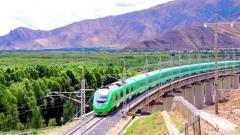
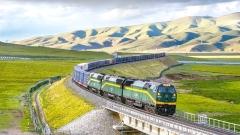
Xining is the departure point for the Qinghai-Tibet Railway, widely regarded as one of the great train journeys on earth. Completed in 2006, it reaches a maximum elevation of 5,072 meters at Tanggula Pass — higher than any other railway on the planet. The 21-hour overnight journey from Xining crosses vast grasslands, skirts the shores of Qinghai Lake, and climbs through the remote wilderness of the Tibetan Plateau before descending into Lhasa.
Compared to the Chengdu-to-Lhasa train, which takes around 34 hours and passes through Xining anyway, the direct Xining departure is shorter, less tiring, and gives you more energy to hit the ground acclimatizing rather than recovering from a longer journey.
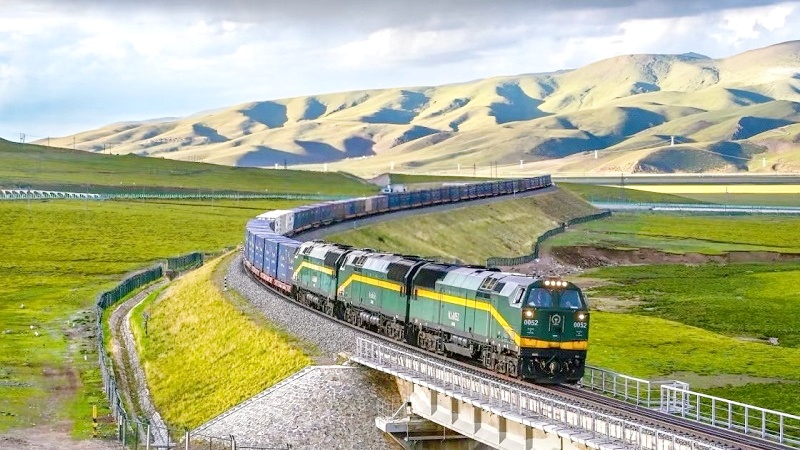
Tibet Train
2026 Xining to Lhasa Train Schedule
| Train | Departure | Arrival | Duration |
|---|---|---|---|
| Z8981 | 12:50 | 10:25 (next day) | 21h 35min |
| Z8991 | 22:00 | 18:26 (next day) | 20h 26min |
One practical detail worth knowing: once the train passes Golmud and begins its ascent onto the Tibetan Plateau, a built-in oxygen enrichment system activates throughout the carriages, with individual oxygen outlets available at each sleeper berth. It’s a reassuring feature that helps ease mild discomfort as the altitude climbs through the night.
China Dragon Travel handles Tibet Travel Permits at no extra charge for guests booking this route, and can arrange soft sleeper tickets — the most comfortable class on the train — along with guided services, accommodation, and transportation throughout Tibet.
Xining vs Chengdu: Why Many Travelers Fly from Chengdu to Lhasa
The Flight Advantage
For travelers with limited time or those connecting from international destinations, Chengdu is hard to beat as an air gateway to Tibet. The city is served by two major airports — the established Shuangliu International Airport and the newer Tianfu International Airport — with a combined offering of more than 20 daily flights to Lhasa. Connections from Beijing, Shanghai, Guangzhou, and most major Asian hubs are frequent and well-served, and the infrastructure at both airports makes onward transit smooth.
Xining’s Caojiabao Airport, while functional, operates on a much smaller scale with just two to three daily flights to Lhasa. If a flight is delayed or cancelled, your options are limited and a disruption can ripple through your entire Tibet itinerary.
| Departure City | Daily Flights to Lhasa | Flexibility if Disrupted |
|---|---|---|
| Chengdu | 20+ | High — next flight often within hours |
| Xining | 2–3 | Low — cancellation can affect entire trip |
How to Beat Altitude Sickness When Flying from Chengdu
The altitude gap between Chengdu and Lhasa is significant, but manageable with the right approach. The key is preparation before departure and restraint after arrival.
In the week before your flight, avoid intense physical exercise — swimming, running, and cycling all push your cardiovascular system in ways that can leave you less resilient when altitude hits. Stay well-hydrated, limit alcohol, and try not to travel if you’re fighting a cold. Respiratory infections that feel mild at low altitude can become noticeably worse in Lhasa’s thin air.
After landing in Lhasa, the single most effective thing you can do is rest. Resist the urge to explore the streets or visit temples on your first afternoon. Give your body 24 hours to begin adjusting — drink plenty of water, stay warm, avoid sudden exertion like running or climbing stairs quickly, and let your guide set the pace. China Dragon Travel’s local Tibetan guides carry supplemental oxygen and are experienced in recognising and responding to early signs of altitude sickness, so you’re never navigating that first day alone.
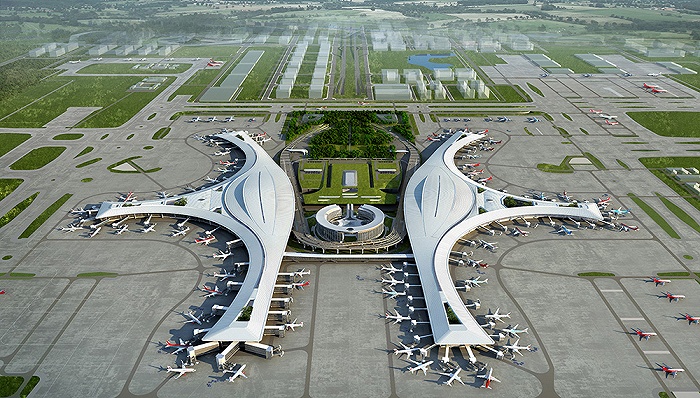
Chengdu Tianfu International Airport
Xining vs Chengdu: Chengdu Is the Best Overland Gateway for Gradual Ascent and Scenic Views
Chengdu to Lhasa via the G318 Sichuan-Tibet Highway
For travelers with more time and a taste for adventure, the overland route from Chengdu to Lhasa along the G318 Highway is one of the most extraordinary road journeys in the world. Stretching roughly 2,146 kilometers, it winds through the Hengduan Mountains — crossing high passes by day and descending into forested valleys to sleep at night. This natural rhythm of ascent and descent gives your body time to adapt gradually, making it one of the gentler approaches to Tibet’s altitude despite the dramatic terrain.
The landscape along the G318 shifts constantly. Within a single day’s drive, you might pass through subtropical river gorges, ancient Tibetan villages, snow-dusted mountain passes, and open grasslands. The visual variety alone makes this route stand apart from any other approach to Lhasa.
China Dragon Travel offers a classic 7-day Chengdu to Lhasa overland tour covering this route, with Tibet Travel Permits, comfortable vehicles, carefully selected accommodation at safe altitudes, and experienced local guides who monitor your health and provide oxygen supplies throughout the journey.
Xining to Lhasa via the G109 Qinghai-Tibet Highway
The overland route from Xining follows the G109 — known as the “Sky Road” — for roughly 1,937 kilometers. It’s the most direct road to Lhasa, but it comes with a significant caveat: more than 1,000 kilometers of the route sits above 4,000 meters, making it one of the highest sustained road journeys on earth. The risk of altitude sickness on this route is higher than on the Chengdu overland, and it’s best suited to travelers who are already well-acclimatized or have experience at high altitude.
The scenery is stark and magnificent — Qinghai Lake, the Kunlun and Tanggula mountain ranges, the wildlife-rich wilderness of Hoh Xil, and the otherworldly Qiangtang Grassland all feature along the way. It’s more uniform than the G318 but no less breathtaking in its own right.
Local Guide Tips: How to Avoid Altitude Sickness for Travelers from Xining or Chengdu
Regardless of which gateway you choose, these practical tips will help you arrive in Lhasa in better shape:
Before you travel:
- Spend at least two nights in Xining if taking the train route — don’t rush this buffer
- Avoid alcohol in the 48 hours before arrival in Lhasa
- Stay hydrated throughout your journey
- Skip intense workouts in the week before departure
- Ensure you’re healthy — even a mild cold can worsen at altitude
After arriving in Lhasa:
- Rest completely for the first 24 hours — this is non-negotiable
- Drink water consistently throughout the day
- Avoid sudden physical exertion — walk slowly, take lifts where available
- Keep warm, especially at night when temperatures drop sharply
- Accept supplemental oxygen if your guide offers it — there’s no benefit in pushing through
More FAQs: Xining vs Chengdu – Best Gateway to Tibet
Is Xining or Chengdu better for first-time Tibet visitors?
Xining is generally better for first-timers who want a gentler introduction to altitude. Chengdu suits those with tight schedules who can follow careful arrival protocols.
Do I need a Tibet Travel Permit from both cities?
Yes — regardless of whether you fly, take the train, or travel overland, a Tibet Travel Permit is required. It must be arranged through a licensed agency before departure.
Can I take the train from Chengdu directly to Lhasa?
Yes, but the journey takes around 34 hours and routes through Xining. Many travelers find it more practical to fly from Chengdu and save the train experience for the Xining departure.
What is the best time of year to travel to Tibet?
April to October is generally considered the best window, with May, June, and September offering a good balance of weather, accessibility, and crowd levels.
Both Xining and Chengdu Lead to the Same Extraordinary Destination
There’s no universally correct answer between these two gateways — the right choice depends on your schedule, your altitude sensitivity, and what kind of journey you want to have before you reach Lhasa. Xining rewards travelers who have time to slow down, offers a genuinely world-class train experience, and provides a meaningful altitude buffer that can make the first days in Tibet considerably more comfortable. Chengdu offers unmatched flight frequency, seamless international connections, and the most scenic overland route in Asia for those willing to take the longer road.
What both cities share is the need for proper planning — Tibet Travel Permits, acclimatization awareness, and reliable on-the-ground support. China Dragon Travel specialises in Tibet travel for international visitors, handling permits, transport, accommodation, and guided services from either gateway. Whether you’re boarding the Qinghai-Tibet Railway in Xining or catching an early flight out of Chengdu, having experienced local support from the moment you depart makes a tangible difference to how you experience one of the world’s most extraordinary destinations.