
Tucked away within the karst folds of Southwest China lies a city embraced by mountains and draped in emerald green—Guiyang. As the capital of Guizhou Province, Guiyang has long been celebrated as the “Forest City,” with an urban canopy coverage that ranks among the highest in the nation. To many travelers, however, its most alluring title is the “City of Eternal Summer”. While much of China swelters in the midsummer heat, Guiyang remains a sanctuary of coolness, with average summer temperatures lingering at a refreshing 23.2°C. The essence of Guiyang is defined by a unique harmony where the forest grows within the city and the city breathes within the forest. It is a place where ancient history, surreal landscapes, and a vibrant local life are stitched together into a captivating tapestry of highland culture.
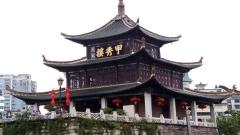
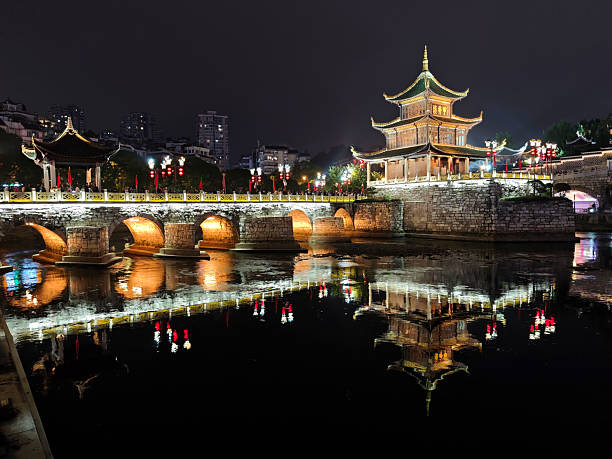
The journey into Guiyang’s heart often begins on the banks of the Nanming River at Jiaxiu Pavilion. Built during the Wanli era of the Ming Dynasty, this elegant structure stands atop a massive rock in the river, serving as a silent witness to centuries of the city’s transformation. What makes the pavilion extraordinary is its rare “three-story, four-cornered pointed roof,” a design seldom seen in traditional Chinese architecture, reflecting the grace and ingenuity of Ming-era craftsmanship. As night falls, the pavilion is bathed in a warm glow, reflected in the rippling waters of the Nanming River. Here, the ancient upturned eaves stand in contrast against the neon skyline of modern skyscrapers, telling a story of a city that has transitioned from classical elegance to modern vitality with effortless grace.
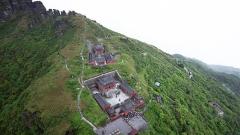
Just a stone’s throw from the bustling city center lies Qianling Mountain Park, the ultimate embodiment of Guiyang’s “Forest City” identity. Known as the “First Mountain of Southern Guizhou,” this natural oxygen bar integrates ecological beauty, Buddhist culture, and historical relics. The park is unique for its incredible biodiversity; within its dense woods live thousands of semi-wild macaques that interact closely with visitors—a rare spectacle of urban-nature coexistence. Winding paths lead to Hongfu Temple at the summit, a Zen Buddhist sanctuary founded in the early Qing Dynasty. Surrounded by ancient trees and the scent of incense, it offers a peaceful retreat for the soul. Below, the serene Qianling Lake reflects the surrounding verdant peaks, offering a quiet harbor for those looking to escape the urban clamor.
For those seeking a more visceral and surreal experience, Yelang Valley in Huaxi is an artistic wonder like no other. This is not a traditional government-planned park, but a “prehistoric castle” hand-built over twenty years by the artist Song Peilun using stone, ceramics, and pure imagination. The valley is a contemporary deconstruction of the ancient “Yelang Culture”—massive stone masks, strange totems, and layered primitive fortresses rise from the deep gorge. There is no polished perfection here; instead, one finds a raw, wild beauty that feels almost primordial. It stands as a profound artistic experiment that merges the ancient ethnic soul of Guizhou with the skeletal Karst landscape.
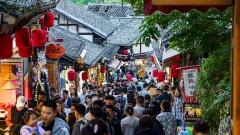
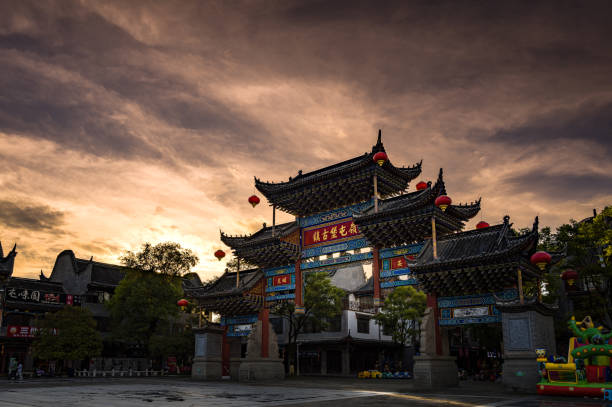
In terms of historical depth and cultural heritage, Qingyan Ancient Town is undoubtedly Guiyang’s most storied chapter. As one of the four famous ancient towns in Guizhou, Qingyan was originally established in the Ming Dynasty as a military fortress to control vital transport routes. Its distinctiveness lies in its complete Ming and Qing military defensive systems—stone walls surround the town, and narrow streets wind along the mountain slopes. Perhaps its most mysterious feature is its religious inclusivity; within this small town, Buddhist temples, Taoist shrines, Catholic cathedrals, and Christian churches coexist in harmony. Walking down the iconic “Back Street,” with its mottled stone walls and polished cobblestones, the traces of time are palpable. After soaking in the history, a taste of the “Zhuangyuan Pig Trotters”—tender, savory, and rich in local legend—is an essential part of the experience.
The natural palette of Guiyang finds its softest expression at the Huaxi Flat Bridge and the Ten-Mile River Wetlands. Here, the Huaxi River flows gently through the city, flanked by lush bamboo and swaying water grass. This area does not seek to overwhelm with grandeur but rather charms with its tranquility and elegance. In the heat of summer, cycling along the wetlands provides a cooling breeze and a direct connection to the city’s slow-paced rhythm. Recently, the “White House of Guiyang” near Huaguoyuan Wetland Park has added a touch of modern glamor. This magnificent European-style complex, when lit at night, resembles a fantastical palace floating on water, showcasing the vibrant and fashionable side of the city’s evolution.
For travelers, a journey to Guiyang is not just a visual tour but a culinary adventure of “sour and spicy” flavors. The city’s true character is found in the steam rising from the stalls on Minsheng Road or Caijia Street—from a fragrant bowl of Huaxi Beef Rice Noodles in the morning to a sizzling Sour Soup Fish hotpot at night. To travel here is to slow down: watch the sunset from Qianling Mountain, sip a Cili (mountain rosehip) juice in Qingyan, and feel the cool night breeze along the Nanming River. The beauty of Guiyang lies in the peace hidden between its green forests and its fiery local life—a highland wine that starts crisp and leaves a long, mellow aftertaste.