
Hidden within the undulating peaks of Southeast Guizhou lies a prehistoric wonder that captivates the world: Xijiang Qianhu Miao Village. As the largest Miao settlement on the planet, it is composed of over ten natural villages built harmoniously along the mountain slopes. More than just a scenic destination, Xijiang serves as a “living textbook” documenting the 5,000-year migration history of the Miao people. When you crest the final hill and witness thousands of brown wooden stilt houses covering the ridges like dragon scales, you immediately understand the profound mystery of the ancient “Miao Frontier.”

The most awe-inspiring feature of Xijiang is its massive cluster of Diaojiaolou (Stilt Houses). These structures cling to the mountainsides, following the natural contours of the Karst landscape. The brilliance of Miao architecture lies in its “mortise and tenon” joints—built entirely of wood without a single iron nail. Typically rising three stories, the ground floor houses livestock, the second serves as the living quarters, and the third acts as a granary. Wandering through the cobblestone paths, flanked by weathered wooden walls and “Meirenkao” (curved porch railings), feels like stepping into a centuries-old scroll of ethnic history.
Spanning the Baishui River are seven iconic Wind-and-Rain Bridges. These are not merely river crossings but masterpieces of Miao craftsmanship. Their unique feature is the tower-like pavilions atop the bridge corridors, adorned with upturned eaves and intricate carvings. For the Miao, these bridges possess spiritual significance, intended to “lock in” the valley’s vital energy (Qi). They serve as communal hubs where villagers rest, shelter from the weather, and where young men and women once sang folk songs to find love. On a misty morning, the view from these bridges, with the rushing water below, offers a sense of ethereal tranquility.

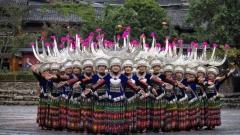
To capture the true soul of Xijiang, the Observation Deck is a mandatory pilgrimage. As twilight descends, the lights of ten thousand households begin to flicker across the valley like fallen stars. This is the famous “Xijiang Night View,” a spectacle that rivals the skyline of any modern metropolis yet retains a warmth and intimacy that only a living village can provide. In the village center, the Performance Square hosts daily original Miao dances. The rhythmic jingle of silver ornaments and the haunting melodies of “Ancient Miao Songs” transport travelers back to a time dominated by the rhythms of the earth.
The sensory experience of Xijiang extends into its exquisite Silver Culture. During major festivals, Miao women wear elaborate silver attire weighing over ten kilograms, from towering crowns to layered neck hoops. Every piece is handcrafted, symbolizing both family wealth and ancestral totems. In the village workshops, you can watch master silversmiths transform cold metal into delicate butterflies and phoenixes, a testament to the enduring craftsmanship of the Miao people.
No journey to Xijiang is complete without the legendary Long Table Banquet. This is the highest form of Miao hospitality, where dozens of tables are joined in a long line, seating hundreds of guests. The star of the feast is Sour Soup Fish, made with a signature red broth fermented from local wild tomatoes. This is often accompanied by the “High Mountain and Flowing Water” ceremony—a row of Miao women cascading rice wine from bowl to bowl into a guest’s mouth, showcasing their fiery hospitality and zest for life.

For those planning a visit, Xijiang is beautiful year-round, but it truly comes alive during the Miao New Year, featuring bullfighting and Lusheng dance competitions. We recommend staying overnight in a traditional guesthouse to experience the village in the early morning mist—the purest moment after the day-trippers have left. Located about an hour from Kaili South High-Speed Railway Station, the village involves significant uphill walking; comfortable shoes and light packing are essential.
Xijiang Qianhu Miao Village is a place that forces you to slow down. It protects an ancient culture within its wooden walls and welcomes the world with its songs. As you sit by a window overlooking the sea of lights, you will find that this village in the clouds fulfills every dream of both a distant sanctuary and a spiritual home.