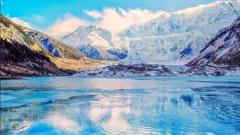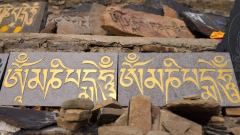

On PTT and Dcard, the top three questions are: how to buy train tickets, whom to contact for a Tibet Travel Permit, and how severe altitude sickness is. But the first thing is how many days to go. PTT has the most experience with Qinghai-Tibet Railway ticket purchases, while Dcard has the most posts on permits and altitude sickness. Tibet independent travel means the Qinghai-Tibet Railway from Xining to Lhasa, an ~21-hour journey with views of Qinghai Lake, Hoh Xil, and Tanggula snow peaks – scenery you won’t see from a plane. This article covers days, railway, permits, and altitude adaptation, with user tips.
Tibet Independent Travel Days Breakdown
The number of days for Tibet independent travel depends on the places you visit, your physical condition, and budget. Below are four common itineraries.
Lhasa only
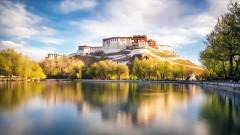
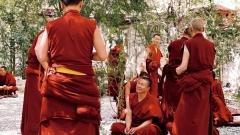
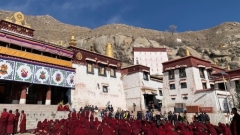
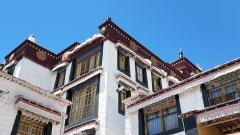
4 to 5 days. Day one: rest all day, no shower, no brisk walking. Day two: Potala Palace and Jokhang Temple. Day three: Sera Monastery debating plus Barkhor Street kora. Day four: Drepung Monastery or Norbulingka. Suitable for travelers with limited time, but the altitude adaptation buffer period is relatively short.
Lhasa plus one sacred lake
7 to 8 days. The most recommended option by PTT users. First two to three days in Lhasa to acclimatize and visit Potala Palace and Jokhang Temple. Then one day trip to Yamdrok Lake and back. Then two days at Namtso Lake for stargazing and sunrise. Finally, leave one day in Lhasa for rest. Comfortable pace with sufficient buffer time.
Lhasa plus Everest direction
10 to 12 days. Adds Shigatse, Tingri, and Everest Base Camp round trip, approximately 4 to 5 extra days. Everest Base Camp is at about 5,200 meters. The itinerary should not be too tight.
Mount Kailash trek
14 to 15 days. Average altitude over 4,500 meters, basic accommodation but stunning landscapes. Suitable for travelers with altitude experience, good physical condition, and ample time. The minimum number of days for Tibet independent travel is 14 days or more.
Regardless of which itinerary you choose, you must stay in Lhasa for the first two nights after arrival to acclimatize to the altitude, and do not go directly to attractions on the first day.
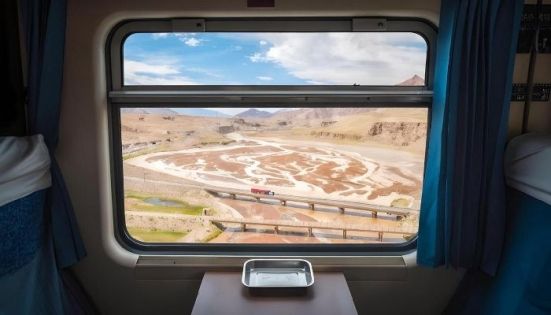
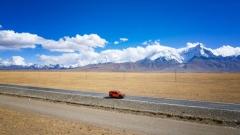
Qinghai-Tibet Railway Train Window View
Tibet Independent Travel Railway: Train Numbers, Fares, and Ticket Purchase Methods
The Qinghai-Tibet Railway is the core of Tibet independent travel by railway. The journey from Xining to Lhasa is about 1,956 kilometers and takes about 19 to 22 hours, passing Qinghai Lake, Hoh Xil, Tanggula Mountain Pass (5,072 meters), Changtang Grassland, and Cona Lake. After the train leaves Golmud Station and enters the plateau section, it automatically starts diffuse oxygen supply.
Main Train Numbers on the Xining to Lhasa Section
- Z8981: Departure 12:50, arrival in Lhasa at 10:20 the next day.
- Y971: Departure 20:50, arrival in Lhasa at 17:06 the next day, all sleeper carriages.
- Z8991: Departure 22:00, arrival in Lhasa at 17:40 the next day.
Trains originating from other Chinese cities (Beijing Z21, Shanghai Z165, Guangzhou Z265, Chengdu Z322) all change to plateau oxygen-supply carriages in Xining. Z165 passes Hoh Xil and the Tanggula Mountains during the daytime, offering better views.
Fare Reference (RMB)
Xining to Lhasa: Hard seat about 224 RMB, hard sleeper about 495 to 521 RMB, soft sleeper about 781 to 808 RMB. Originating from Chengdu or Chongqing: hard seat about 302.5 RMB, hard sleeper about 627.5 RMB, soft sleeper about 997.5 RMB.
Hard Sleeper vs. Soft Sleeper
- Hard sleeper: Six berths per compartment, no door, poor sound insulation, narrow berths. Lower berth offers good views, middle berth has good value, upper berth provides more privacy.
- Soft sleeper: Four berths per compartment with a door, wider berths, good privacy.
- Deluxe soft sleeper: Two berths per compartment with a private sink, very limited tickets.
First-time visitors to Tibet are advised to choose a soft sleeper. Hard seat carriages are not recommended.
Practical Ticket Purchase Tips
- Register and complete real-name authentication on 12306 in advance, and fill in passenger information before tickets go on sale.
- The pre-sale period is 15 days; during peak season, sleeper tickets sell out on the day they are released. Refresh immediately at the start of the sale.
- If tickets from the origin station are unavailable, buying the “Xining to Lhasa” segment has a higher success rate.
- Entrusting a travel agency to purchase tickets usually charges a service fee of 200 to 1,000 RMB.
Coping with Altitude Sickness on the Train
When crossing the Tanggula Mountain Pass, you may experience headaches and chest tightness. Drink plenty of warm water, move slowly, and do not stay in bed for long periods. If you experience dizziness, palpitations, or blue lips, ask the train attendant for a free oxygen tube and use it intermittently.
PTT Tibet Independent Travel: Tibet Travel Permit Application Process
The Tibet Travel Permit is one of the most discussed topics in PTT Tibet independent travel forums, and it is the primary required document.
Who Needs a Tibet Travel Permit
- Need to apply: Foreign nationals holding non-Chinese passports, and Taiwanese compatriots (holding Mainland Travel Permit for Taiwan Residents).
- No need to apply: Mainland Chinese residents (with national ID card), and Hong Kong and Macau residents (with Home Return Permit).
Policy Changes in 2026
Effective March 13, 2026, foreign nationals and Taiwanese travelers must have the original Tibet Travel Permit to board trains or flights. In previous years, copies were accepted for train travel in some cities, but this policy has been tightened. In previous years, permits were not approved in March, but as of March 2026, applications can be processed normally; however, travel in March is still not recommended.
Application Process and Time Required
- Foreign nationals: Scanned copy of passport information page (valid for more than 6 months), scanned copy of Chinese visa, rough itinerary.
- Taiwanese travelers: High-definition electronic copy of the front page and visa pages of the Mainland Travel Permit for Taiwan Residents.
- Applications must be submitted through a qualified local travel agency in Tibet; individual applications are not accepted.
- Processing time is 10 to 15 working days, longer during peak season. It is strongly recommended to submit at least 30 days in advance.
Important Notes
The Tibet Travel Permit cannot be applied for separately; it must be arranged with a tour guide and vehicle provided by the travel agency. Non-mainland Chinese travelers must be accompanied by a guide and use designated vehicles, but the itinerary can be customized to individual preferences. For travel to Everest, Ngari, or Shannan border areas, an additional Travel Permit for Foreigners and a Frontier Pass are required, which the travel agency usually handles together.
Dcard Tibet Independent Travel: Frontier Pass Application Guide
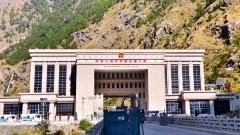
On Dcard Tibet independent travel, experiences with Frontier Pass application are also a hot topic. If your itinerary is limited to Lhasa, Nyingchi, or Shannan urban areas, a Frontier Pass is not required. If your itinerary includes border areas such as Everest Base Camp (Tingri County), Ngari Prefecture, Medog, or Zhangmu Port, a Frontier Pass is mandatory.
Major Adjustment in 2026
Effective January 1, 2026, the Shigatse Border Management Detachment no longer processes Frontier Passes; this responsibility has been transferred to the Exit-Entry Administration Detachment of the Shigatse Municipal Public Security Bureau. The former application point on North Deji Road in Lhasa has ceased operations, replaced by the Exit-Entry Administration Detachment of the Lhasa Municipal Public Security Bureau.
Application Locations
- Shigatse City: Service hall of the Exit-Entry Administration Detachment of the Municipal Public Security Bureau, or nearby police stations in Chengdong, Chengxi, Chengnan, Chengbei (fewer people).
- Lhasa City: Lhasa Government Affairs Service Center; only two regions’ Frontier Passes can be processed at one time.
- Apply at your place of household registration (recommended): Apply in advance at the public security bureau or police station in your registered domicile; some areas support online application, with same-day pickup.
Electronic Frontier Pass
Mainland Chinese residents can apply for an electronic Frontier Pass through the “National Immigration Administration 12367” app or mini-program, valid for three months, and can be obtained within minutes. Foreign nationals and Taiwanese travelers still need to apply through a travel agency or offline.
Tibet Independent Travel: Altitude Sickness Prevention and Response
The average altitude of Tibet exceeds 4,000 meters, and altitude sickness is a concern for every traveler entering Tibet for the first time.
Symptom Grading
- Mild: Slight headache, dizziness, fatigue, insomnia, loss of appetite. Natural adaptation within 1 to 3 days.
- Moderate: Severe, persistent headache (painkillers ineffective), nausea and vomiting, difficulty breathing. Immediately take oxygen and stop the itinerary; if no improvement, descend.
- Severe: Confusion, unsteady gait, coughing up pink frothy sputum. Signs of high-altitude cerebral edema or pulmonary edema; must immediately receive oxygen and quickly descend to lower altitude for medical attention.
Practical Prevention and Response Tips
- On the first day of arrival in Lhasa, rest all day, no shower, no brisk walking, no alcohol. Allow 1 to 2 days for acclimatization.
- Plan the itinerary to ascend gradually in altitude; avoid going above 5,000 meters on the first day.
- Drink plenty of warm water, eat less greasy food, maintain adequate sleep. Move slowly, speak softly.
Medication Preparation
Diamox (acetazolamide) is the most effective Western medicine for preventing altitude sickness. Start taking it 24 to 48 hours before arrival, half a pill morning and evening, continue for 1 to 2 days after entering Tibet. Rhodiola rosea needs to be taken 7 to 10 days in advance to have any effect. Keep ibuprofen (for headaches), oral glucose solution, and motion sickness medicine as backups.
Portable Oxygen Canisters
Choose a 1,000 ml or larger canister with a mask. Use for 10 to 15 seconds at a time in emergencies when headache prevents sleep or when experiencing chest tightness.
Purchase travel insurance that covers high-altitude emergency medical evacuation, and confirm that it includes altitude sickness medical expenses and helicopter transfer.
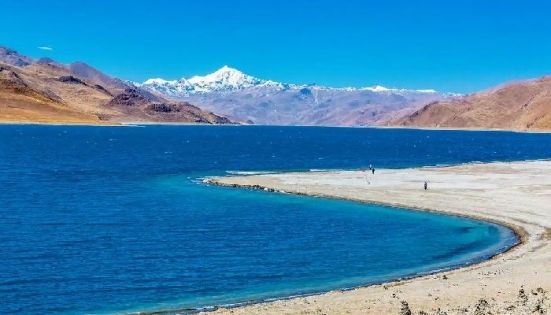
Yamdrok Lake
Tibet Independent Travel Packing List
Tibet has strong daytime sunlight, high UV levels, and extreme temperature differences between day and night. This list is compiled based on lessons learned from PTT and Dcard users.
Clothing (layered dressing)
Base layer (thermal underwear), mid layer (fleece or light down), outer layer (windproof jacket). From May to October, light long sleeves plus a sun-protective jacket during the day, add a down jacket at night. In winter, a thick down jacket and fleece-lined pants are required.
Sun protection
SPF50+ sunscreen, sunglasses, wide-brimmed hat, lip balm.
Medications
Diamox (take in advance), ibuprofen, motion sickness medicine, stomach medicine, oral glucose solution, vitamin C.
Other
Thermos, wet wipes, power bank, offline maps.
Frequently Asked Questions About Tibet Independent Travel
Q: Is it safe to travel alone to Tibet?
A: Public security in Lhasa urban area is very good. For remote areas, consider joining a group tour or traveling with companions. Several female PTT users have shared their experiences of traveling alone to Tibet, noting that you just need to pay attention to your physical condition.
Q: Can I use mobile internet in Tibet?
A: 4G signals are good in cities like Lhasa, Shigatse, and Nyingchi. Signals are slower in remote areas. It is advisable to get a prepaid SIM card from China Mobile or China Telecom.
Q: How much cash should I bring? Is mobile payment convenient?
A: WeChat Pay and Alipay are accepted almost everywhere in Lhasa urban area, but street stalls, small shops, and remote toilets still require cash. It is recommended to bring 500 to 1,000 RMB in cash as backup.
Q: What is the best season to visit Tibet?
A: May to October is the best time. From June to September, oxygen levels are higher, but the rainy season may cause landslides. October has beautiful autumn scenery but temperatures drop. From November to April, it is very cold, and some attractions may be closed due to snow, but there are fewer tourists and cheaper accommodation.
Q: What if I don’t speak Mandarin?
A: Merchants, drivers, and guides in major tourist areas can communicate in basic Mandarin. You can download a translation app in advance; some travel agencies provide English-speaking guides.
Pre-departure Checklist for Tibet Independent Travel
After reading this article, you should have a clear understanding of Tibet independent travel days planning, Qinghai-Tibet Railway travel, and Tibet Travel Permit application. The questions repeatedly asked on PTT and Dcard have all been answered. Tibet requires careful preparation. Before departure, please confirm the following again:
- Permits: Is your Taiwan Compatriot Permit or passport valid for more than 6 months? Have you obtained the original Tibet Travel Permit? For travel to Everest or Ngari, have you obtained the Frontier Pass?
- Transportation: Have you purchased your train tickets? If entrusting a travel agency to book, confirm the service fee and ticket collection method.
- Insurance: Have you purchased travel insurance that covers altitude sickness emergency medical care and helicopter evacuation?
- Medications: Have you started taking Diamox as directed? Have you prepared ibuprofen, glucose, and motion sickness medicine?
- Clothing: Have you prepared layered clothing? Have you packed a thermos and sun protection items?
- Cash and mobile phone: Have you prepared 500 to 1,000 RMB in cash? Have you activated WeChat Pay and Alipay and linked a bank card?
Once you have completed the above preparations, you can set off with peace of mind. Wishing you a smooth journey. Tashi Delek.