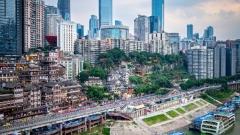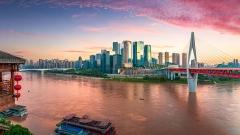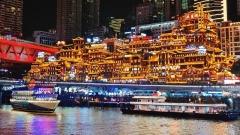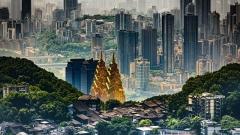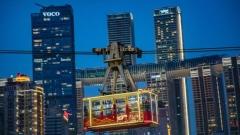

In China, it is rare to find a city that has etched the word “vertical” so deeply into its marrow as Chongqing. To truly grasp the three-dimensional nature of this metropolis, one must look beyond the skyscrapers of Jiefangbei or the neon glitz of Hongya Cave. You must descend the stone steps and step into Shibati.
Shibati is more than just a passage connecting the Upper and Lower Cities of the Yuzhong Peninsula; it is the original pulse of the city. Here, there are no smooth, sterile surfaces of a modern megacity—only endless stone steps, interlocking stilted houses, and the eternal, swirling aroma of spicy hotpot.
The Poetics of Geography — The Vertical Logic of Shibati
Chongqing’s urban development has been a perpetual gamble against gravity. Shibati is the most brilliant chapter of that story.
The Staircase: The Backbone of the City
The name “Shibati” is simple and direct, yet it speaks volumes about the hardships and romance of the Mountain City. For centuries, these 200-plus bluestone steps were the busiest traffic artery in Chongqing. Goods from the Yangtze docks were carried by hand up this “ladder to heaven” to reach every corner of the city.
For the people of Chongqing, a staircase is not just a path; it is life itself. In Shibati, you can see children doing homework on the steps, elderly men playing chess by the landings, and vendors hawking their wares at every turn. This vertical public space has shaped the resilient, upward-striving, yet easy-going character of the local people.
The Art of Folding: Merging Two Worlds
The most charming aspect of Shibati is its sense of “spatiotemporal folding.” As you stand at the entrance of the Upper City, your feet are level with the tiled roofs of Ming and Qing-style houses, yet when you look up, you see the glass curtains of skyscrapers reflecting the clouds. This intense contrast makes Shibati a spectacle where realism and surrealism intertwine. It acts as a time tunnel, stitching the texture of agrarian civilization to the rhythm of the industrial age.
The Architecture of Resilience — Wisdom Suspended on Cliffs
The architectural form of Shibati is a masterpiece of human adaptation to extreme terrain.
Stilted Houses (Diaojiaolou): Magic of Spatial Utility
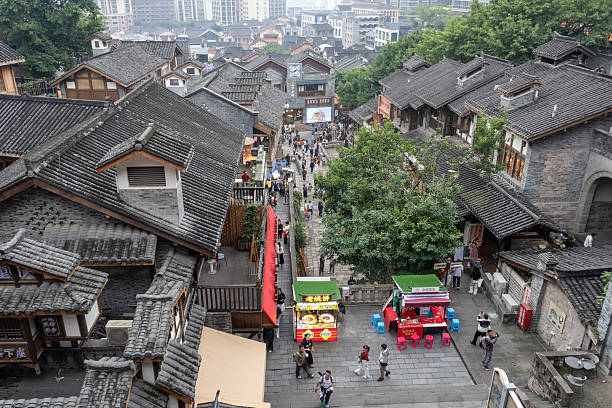
Due to the steep mountain slopes, Shibati developed the unique Stilted House style. Architects used cedar pillars to support structures that extend outward into the air. This structure is both ventilated and damp-proof while saving on foundation space. Walking through Shibati, you realize that “your roof is another person’s courtyard.” This staggered layering creates the unique visual wonder of Chongqing.
The “Tie-and-Bundle” Architecture
The old buildings of Shibati mostly adopted the “Chuan-Dou” timber frame, colloquially known as “Bundle Architecture.” This flexible structure possesses excellent adaptability to structural shifts. The revitalized Shibati retains the palette of grey bricks, black tiles, and vermilion window frames, perfectly blending the rustic aesthetics of Bayu folk houses with modern spatial design.
The Taste of the Mountain City — Culinary Codes in the Alleys
In Shibati, the best food is never found in high-end, decorated storefronts, but in the steam rising from a corner stall. Chongqing’s food culture is essentially a “Dock Culture,” pursuing heat, directness, and extreme sensory stimulation.
Hotpot: The Boiling Soul of the Staircase
If hotpot is Chongqing’s religion, Shibati is one of its sacred temples.
-
The Persistence of Old Tallow: You will smell the mellow aroma of beef tallow floating in the air. Authentic Shibati hotpot does not rely on chemical spices; instead, it uses Shizhu red chilies and Mao County Sichuan peppercorns, simmered for hours with high-quality tallow. Sitting by a narrow stone step, watching the red oil tumble in the pot, is not just a meal—it is a lifestyle ritual.
-
The Grid Tradition (Jiugongge): Here, you can learn the most authentic way to eat. Different grids represent different temperatures and heat levels—crisping tripe in the center, simmering brain in the corner, and stewing duck blood in the edges.
Morning Rituals: Chongqing Noodles and Salted Duck
The mornings in Shibati are awakened by the fragrance of Xiao Mian (Chongqing Noodles).
-
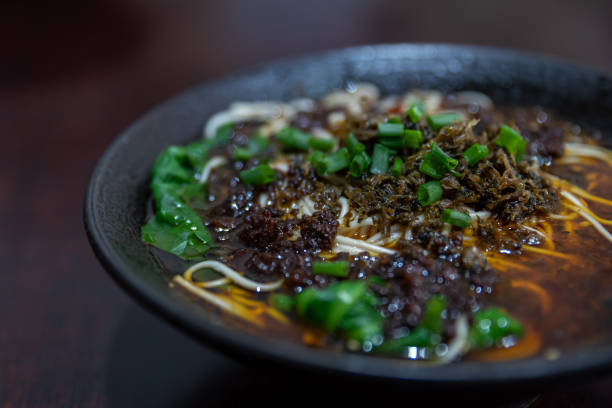
The Art of Seasoning: The soul of a bowl of noodles lies in the da you (sauce base). Stalls around Shibati use hand-ground chili powder, lard rendered over hours, and fresh water spinach. That numbing, spicy, and savory aftertaste is the essential energy for a Chongqing local’s day.
-
Centennial Salted Duck: This area also preserves legendary snacks like “Fatty Mother’s Salted Duck.” With springy skin and savory meat, it relies on the freshness of the ingredients rather than heavy seasoning, serving as a collective memory for generations.
Jianghu Cuisine: A Bold Storm on the Tongue
In the lower alleys of Shibati hide the most authentic “Jianghu” (Wild/Folk) dishes.
-
Spicy Chicken and Mao Xue Wang: These dishes are known for “large portions, heavy oil, and heavy spice.” You have to find the chicken hidden among a mountain of red chilies. This uninhibited style of cooking reflects the heroic and straightforward personality of the Chongqing people.
The Art of Living — The Pulse of the Mother Town
Life in Shibati is a never-ending play where the most authentic Chongqing scenes are performed every day.
“Longmenzhen” and Covered Tea: Social Philosophy
In the public spaces of Shibati, you will see retirees gathered together to “Bai Longmenzhen” (tell stories).
-
The Art of Language: The local dialect is full of humor and wisdom. They chat about everything from international affairs to family gossip at a pace like a machine gun, yet with warmth. This is a flowing folk narrative, showcasing a lifestyle where people remain optimistic no matter the circumstances.
-
The Rhythm of the Tea House: While the world outside moves at a frantic pace, time seems to stand still in the old tea houses of Shibati. A bamboo chair and a bowl of green tea are all one needs for a perfect afternoon.
The “Lige” (Porter) Culture: The City’s Burden Bearers
Although modern logistics are advanced, you can still see “Bangbang” (porters) in places like Shibati.
-
Life on a Bamboo Pole: They carry the weight of the city on their shoulders with a single bamboo pole. They are the personification of Chongqing’s spirit of “moving forward under pressure.” To tourists, they are scenery; to the city, they are the vital bloodline.
A Cultural Note for Every Traveler
Shibati does not require a hurried “check-in.” It requires you to slow down and measure the thickness of those two hundred bluestone steps with your feet.
It proves that even in a rapidly developing modern city, old buildings and old times can still have a place. It is not just a tourist attraction; it is the emotional sustenance of the people of Chongqing, a “Mother Town” memory that the city refuses to let go of as it marches toward the future.
As you wander through Shibati, listening to the roar of the city in the distance and watching the smoke of life around you, you will realize: Chongqing is charming not because it looks like a city of the future, but because it always remembers it started from that old well and those eighteen steps.