
Deep within Anshun City, in Guizhou Province’s Zhenning Buyi and Miao Autonomous County, lies an earthly marvel born of water and stone: Huangguoshu Waterfall. As the crown jewel of Asia’s largest waterfall cluster, Huangguoshu is far more than a simple scenic attraction; it is a dynamic epic of a Karst landscape evolving over millions of years. As early as the Ming Dynasty, the legendary geographer and traveler Xu Xiake praised its monumental power, describing it as “flying silk suspended in mid-air.” The true brilliance of the Huangguoshu ecosystem is that it does not stand alone; it is the heart of a massive family of 18 surface and subterranean waterfalls. Standing at the observation deck, enveloped in a gentle mist that paints the canyon a vibrant emerald green, the roaring thunder of the cascading river offers a profound encounter with the raw, unfiltered power of Guizhou’s waters.
The undisputed soul of the entire park is the Huangguoshu Great Waterfall (Main Waterfall Scenic Area), which stands 77.8 meters high and stretches 101 meters wide. Among the world’s great water features, it possesses a completely unique characteristic: it is the only major waterfall on Earth that can be thoroughly viewed and experienced from six different angles—front, back, left, right, top, and bottom. This 3D encounter is made possible by the mystical Water Curtain Cave (Shuiliandong). This 134-meter-long natural karst cave cuts directly through the waist of the mountain cliff hidden behind the roaring sheet of water. Stepping inside the cave places you just inches away from the tumbling torrent. You can reach out to touch the icy mountain water and look through the crystalline curtain as the sunlight splits into vibrant rainbows. It is a thrilling journey behind nature’s grandest stage, making you feel like a character in a mythical epic.
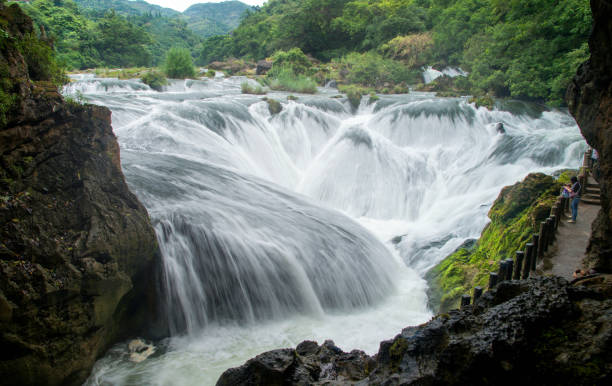
If the Great Waterfall represents the roaring strength of water, the Tianxingqiao Scenic Area showcases its delicate, artistic touch. Described by locals as a “natural bonsai garden on a grand scale,” Tianxingqiao effortlessly blends water, rock formations, roots, and caves. The first half of the trail features the “Birth Walkway,” where 365 stepping stones are scattered across the winding water, each stone representing a day of the year so travelers can locate their own birthday for a memorable photo. Passing through Gaolaozhuang—a spot made famous by the classic Chinese television epic Journey to the West—you enter the park’s true masterpiece: the Silver Chain Waterfall (Yinlian Zhuitan). While not exceptionally tall, its unique funnel-shaped karst rock bed causes countless silver streams to twist, intertwine, and rush together like a web of silver chains plunging into a deep, swirling pool below. It remains one of the most dynamic and graceful aquatic displays in Southwest China.
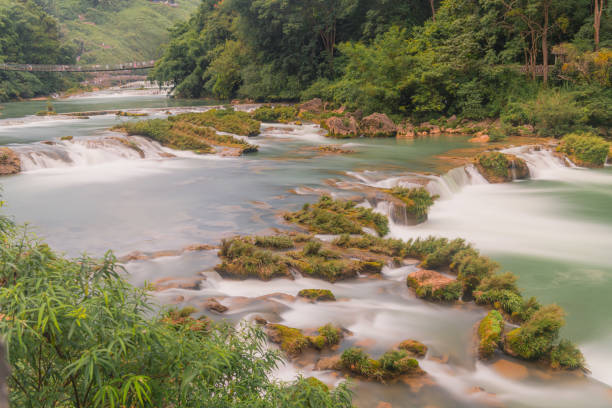
Just one kilometer upstream from the main fall sits the broadest cascade in the cluster, Doupotang Waterfall. Standing 21 meters tall and spanning an impressive 105 meters at its peak, it is officially the widest waterfall in the Huangguoshu network. Doupotang is unique because it is known as a “singing waterfall.” Due to the hollow structures beneath its riverbed, the waterfall emits a low, rumbling growl before a flood crest arrives, earning it the nickname “The Roaring Fall” from the local Buyi people. For many Chinese visitors, this spot holds a special place in their hearts, as it served as the iconic backdrop for the closing credits of the beloved 1986 television series Journey to the West.
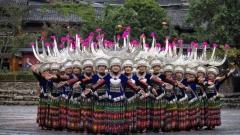
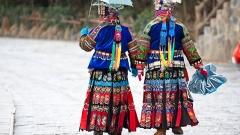
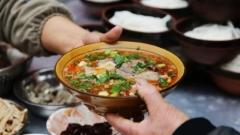
A grand journey through Guizhou’s landscapes deserves to be rewarded with authentic local flavors. The culinary culture surrounding Huangguoshu is heavily influenced by the Buyi ethnic minority, celebrated for its bold balance of sour, spicy, and fresh tones. A trip here requires sampling a traditional highland beef or lamb hotpot, slow-simmered with secret local spices to create a incredibly rich broth. For a true taste of Anshun street life, try Duo Duo Fen, a unique local hotpot style where a tangy, spicy tomato or mixed-vegetable broth is used to flash-cook cold jelly noodles, fresh meats, and wild greens. After a day of hiking in the humid canyon air, treat yourself to a chilled bowl of Bingjiang (a smooth slushy made from fresh fruit, shaved ice, and sweet glutinous rice) or Guojuan, thin rice wraps stuffed with pickled radish, kelp strips, and a signature chili paste.
For operators and travelers mapping out a visit, a seamless journey requires a bit of strategy. The Huangguoshu complex is vast, so we highly recommend adopting a counter-flow route starting with Doupotang, moving to Tianxingqiao, and finishing with the Great Waterfall. Because the true highlights of Tianxingqiao lie in its second half (the Silver Chain Waterfall), it is vital not to expend all your energy at the beginning of the trail. The park is exceptionally well-equipped with eco-shuttle buses and a massive outdoor escalator at the main waterfall, making it highly accessible for senior travelers and international guests. The absolute best time to visit is during the high-water season from June to October, when the summer monsoons turn the falls into a roaring spectacle, though upstream reservoirs guarantee a beautiful view even during the dry winter months.
Huangguoshu Waterfall stands as a magnificent natural temple where the hardness of mountain stone meets the untamed fluid grace of mountain rivers. Over tens of thousands of years, its relentless flow has carved a breathtaking three-dimensional masterpiece into the heart of Guizhou. As your day ends and you look back at the white ribbons of water cutting through the canyon, the echoes of Xu Xiake’s ancient wonder still ring true. This crystal palace built by the hands of nature does more than redefine what a waterfall can be; it permanently carves the wild soul of the Guizhou highlands into the memory of every traveler.