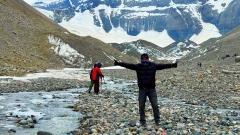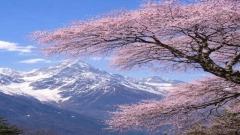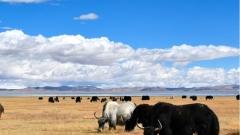

If you could visit only one destination in Tibet during autumn, Basum Tso would be an excellent choice.
Many travelers describe it as the “Swiss Alps of Tibet,” but those who have actually been there know that Basum Tso needs no comparison. It is a destination unlike any other.
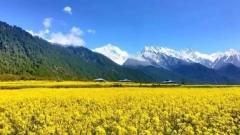
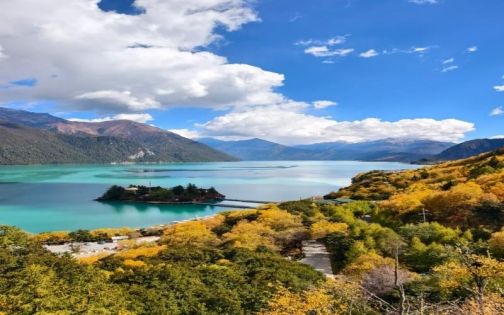
As autumn arrives in southeastern Tibet, forests surrounding the lake turn shades of gold, orange, and crimson. Snow-capped mountains, colorful woodlands, traditional Tibetan villages, and crystal-clear waters combine to create one of the most spectacular landscapes on the Tibetan Plateau.
With fewer tourists, peaceful surroundings, and stunning scenery, November is arguably the best time to experience Basum Tso.
Also known as Cuogao Lake, Basum Tso means “Green Water” in Tibetan. Sitting at an elevation of approximately 3,490 meters (11,450 feet), it is one of the largest glacial barrier lakes in southeastern Tibet and the first national 5A-rated scenic area in the Tibet Autonomous Region.
Thanks to Nyingchi’s relatively low altitude and abundant vegetation, Basum Tso is often recommended as an ideal destination for first-time visitors to Tibet.
Basum Tso
Why Visit Basum Tso in November?
Many travelers associate Basum Tso with spring blossoms, but autumn offers an entirely different experience.
For photographers, nature lovers, and those seeking a quieter journey, November is one of the best months to visit.
Peak Autumn Foliage Season
From late October through November, forests surrounding the lake reach their most colorful stage.
Golden birch trees, red shrubs, and dark green conifer forests create breathtaking contrasts against the lake’s turquoise waters.
The reflections alone make the journey worthwhile.
Fewer Crowds
Summer and National Day holidays attract large numbers of visitors.
By November, the peak season has ended, allowing travelers to enjoy the scenery without the crowds.
Many viewpoints feel almost private.
Crystal-Clear Weather
Autumn and early winter typically bring drier conditions and excellent visibility.
The lake becomes calmer, mountain views become clearer, and photography conditions improve significantly.
Where Is Basum Tso?
Basum Tso is located in Gongbo’gyamda County, Nyingchi, southeastern Tibet.
The scenic area is easily accessible from both Nyingchi and Lhasa.
From Nyingchi
Approximately 120 kilometers away.
Driving time: around 1.5 hours.
Flying directly into Nyingchi Mainling Airport is currently one of the easiest ways to reach Basum Tso.
From Lhasa
Approximately 340 kilometers away.
Driving time: around 3–4 hours via the Lhasa–Nyingchi Expressway.
The entire route is paved and suitable for self-driving travelers.
The expressway is considered one of the most scenic highways in Tibet, with mountains, rivers, forests, and valleys along the way.
Entrance Fees and Opening Hours
Ticket Prices
Peak Season (May 1 – October 31)
120 RMB per person
Off Season (November 1 – April 30)
60 RMB per person
Opening Hours
Peak Season
08:30 – 20:30
Off Season
09:30 – 19:30
Travelers staying inside the scenic area may be able to register their vehicles in advance and drive directly into designated zones. It is recommended to confirm the latest policies with your accommodation before arrival.
Must-Visit Attractions in Basum Tso
Daqiela Viewing Platform
The most famous viewpoint in the entire scenic area.
From here, visitors can enjoy panoramic views of the emerald lake surrounded by mountains and forests.
During November, golden foliage frames the lake beautifully, creating one of the most iconic views in Tibet.
If you only have time for one viewpoint, choose Daqiela.
Tashi Island and Cuozong Monastery
The island in the middle of the lake is Basum Tso’s most recognizable landmark.
Cuozong Monastery, located on the island, is over 1,500 years old and belongs to the Nyingma School of Tibetan Buddhism.
Prayer flags, ancient temples, turquoise waters, and autumn colors combine to create unforgettable scenery.
Fertility Cave
Visitors can take a sailboat or sightseeing boat across the lake to reach the famous Fertility Cave.
Local legends say the cave brings blessings for family happiness and fertility.
Even for those uninterested in spiritual traditions, the boat ride itself offers stunning lake views.
Forgotten Pier
One of the most underrated photography locations in Basum Tso.
A short walk from the main scenic area leads to this peaceful lakeside spot.
On calm days, the reflections are spectacular.
Several mirror-photo installations also make it a popular place for creative photography.
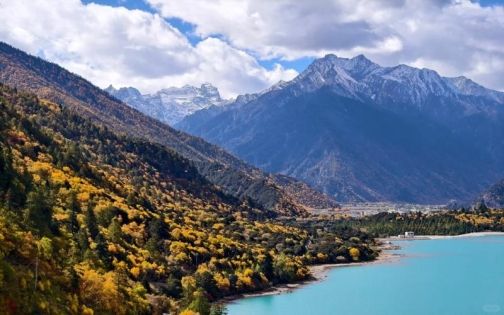
Basum Tso
The Hidden Gem Most Visitors Miss: Jieba Village Boardwalk
Most visitors stop briefly at the viewpoints and leave.
However, one of Basum Tso’s best experiences lies along the lakeside boardwalk near Jieba Village.
Starting from Jieba Village Viewing Platform, travelers can walk approximately 3 kilometers round trip along a scenic wooden pathway beside the lake.
The trail is mostly flat and easy.
Because dense forest provides shade, even newcomers to high altitude usually find it comfortable.
The greatest advantage of this trail is the constantly changing scenery.
Every turn reveals a new perspective of the lake.
Golden autumn leaves hanging over the turquoise water create photographs that feel far more unique than those taken at the crowded viewpoints.
Best of all, very few tourists come here.
At times, it feels as though the entire lakeshore belongs to you alone.
Recommended One-Day Basum Tso Itinerary
If you’re short on time, the highlights of Basum Tso can easily be explored in a single day.
Suggested Route:
Nyingchi City
↓
Basum Tso Scenic Area
↓
Daqiela Viewing Platform
↓
Tashi Island & Cuozong Monastery
↓
Forgotten Pier
↓
Jieba Village Boardwalk
↓
Xincuo Lake
↓
Xincuo Heart Valley
↓
Return to Nyingchi
With proper planning, the entire route can comfortably be completed in one day.
Travelers without a vehicle may consider spending a night in Jieba Village and visiting Xincuo the following morning.
Xincuo: An Even More Remote Hidden Paradise
Deep within the Basum Tso region lies Xincuo, a secluded alpine lake that remains largely unknown to mainstream tourism.
It takes approximately two hours by car from Basum Tso to reach the area.
Currently, entrance is free, although a small environmental maintenance fee may apply.
Along the route, visitors pass through traditional Tibetan villages, alpine forests, grazing pastures, and untouched wilderness.
Yaks roam freely along the roadside.
The atmosphere feels authentic and unspoiled.
Compared with popular scenic areas, Xincuo offers a much deeper sense of tranquility.
Xincuo Heart Valley Hiking Guide
For outdoor enthusiasts, Xincuo Heart Valley is one of the most rewarding hikes in the Nyingchi region.
The route passes through streams, meadows, forests, and mountain landscapes.
Waterproof hiking shoes are highly recommended.
In autumn, golden forests cover the valley while distant snow peaks tower above.
Nearly every corner looks like a professional landscape photograph.
Even casual hikers can enjoy shorter sections of the trail.
Where to Stay
Jieba Village
The best overall accommodation area.
Close to major attractions and ideal for photographing morning mist over the lake.
Hotels Inside the Scenic Area
Perfect for travelers wanting to experience sunrise and sunset at Basum Tso.
Nyingchi City
Offers the widest range of accommodation options and lower prices.
Ideal for day-trip visitors.
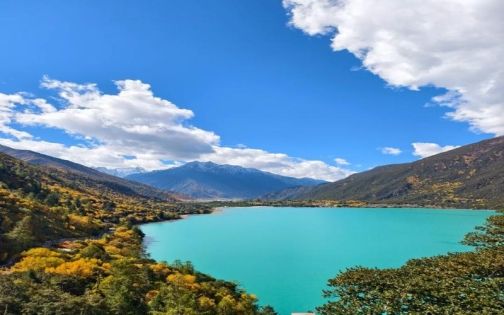
Basum Tso
Essential Travel Tips for Autumn
- Avoid intense physical activity when first arriving at altitude.
- Day-night temperature differences are significant, so dress in layers.
- Bring thermal clothing, a down jacket, and a windproof shell in November.
- Mobile signal may be weak in remote areas.
- Carry snacks and drinking water.
- Respect local religious customs and sacred sites.
- Drone flights require prior approval, and some areas are restricted.
- Take all rubbish with you and help protect Tibet’s fragile environment.
Why Basum Tso Is Worth Visiting in Autumn
Some travelers come to Nyingchi for Namcha Barwa Peak.
Others come for the famous peach blossoms of spring.
But many leave believing that autumn at Basum Tso is the region’s greatest treasure.
When golden forests reflect across emerald waters, when prayer flags flutter gently in the mountain breeze, and when snow peaks stand silently above the lake, you realize that no photograph can fully capture the beauty of this place.
November brings fewer crowds, quieter landscapes, and a deeper connection with nature.
Basum Tso is not just another scenic lake.
It is one of southeastern Tibet’s most extraordinary masterpieces—a place where autumn feels almost unreal.
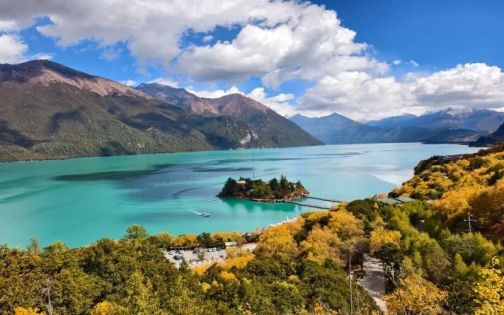
Basum Tso