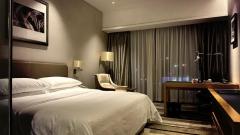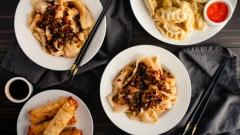

Tourists visiting Beijing, Xi’an and Shanghai often have questions about ticket booking, accommodation, mobile payment and visa policies. For example, how far in advance to book the Palace Museum tickets, which Great Wall section to choose between Badaling and Mutianyu, whether on-site tickets are available for the Terracotta Army, passport verification rules for Shanghai Disneyland, how to communicate without speaking Chinese, if overseas credit cards can be used for mobile payment, and the specific terms for transit visa exemption. This article explains these travel FAQs city by city, helping you avoid inconveniences on your trip.
What Is the Best Season to Travel in Beijing?
- Spring (April to May): Temperatures rise, plants bloom, suitable for outdoor visits.
- Autumn (September to October): Clear skies and moderate temperatures, the most comfortable travel period.
- Summer (June to August): Hot weather with a large number of tourists; long waiting times at the Great Wall and the Palace Museum.
- Winter (December to February): Low temperatures and strong winds, but the Palace Museum has unique snow views with few tourists.
The best travel seasons for Beijing are spring and autumn. Scenic spots have longer opening hours in summer, and accommodation prices are lower in winter.
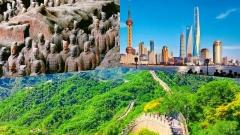
What Are the Visa and Visa-Exemption Policies for Travel in Beijing?
- Holders of ordinary passports from 50 countries (France, Germany, Italy, Spain, Australia, New Zealand, South Korea, Japan, etc.) can enter China visa-free for tourism purposes and stay for 30 days.
- Citizens from 54 countries can apply for 240-hour transit visa exemption. They can stay in the designated area for up to 240 hours after entering through a Beijing port with a connecting flight to a third country.
- Tourists not covered by the visa-exemption policy need to apply for a tourist visa (Type L) in advance. They should provide a passport valid for more than 6 months, photos, round-trip air tickets and hotel reservations, and submit them to the Chinese Visa Application Service Center.
If you are not sure whether your nationality is eligible for the visa-exemption policy, you are advised to check the official website of the National Immigration Administration of China before departure.
How to Reserve Tickets for the Palace Museum and What Are the Tips?
- Tickets must be reserved 7 days in advance, available at 20:00 daily. Non-mainland Chinese visitors purchase with passports; no on-site tickets for same-day visits.
- Peak season (April to October): 60 RMB per ticket; off-season (November to March): 40 RMB per ticket. Closed on Mondays (except legal holidays).
- Reservation tips: Enter the reservation page on time; fill in passport information in advance. If standard tickets are sold out, consider the Palace Museum annual pass (300 RMB, valid for 10 visits a year, passports supported).
- Avoid long security lines: Walk from Donghua Gate along the Tongzi River to the Meridian Gate to bypass security checks at Tiananmen Square.
The Palace Museum is the most difficult attraction to reserve in Beijing. At least half a day is recommended for the visit after successful reservation.
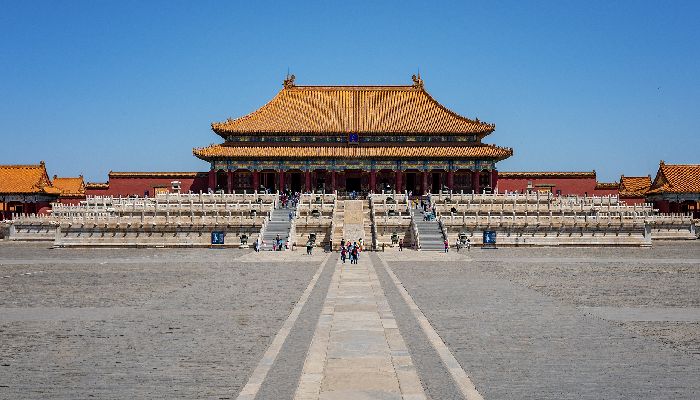
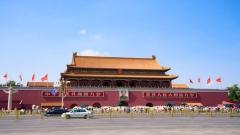
The Palace Museum, Beijing
How to Choose Between Badaling and Mutianyu Great Wall in Beijing?
- Badaling Great Wall: Most famous with convenient transportation (direct high-speed train in about 40 minutes), crowded with tourists, suitable for tourists with limited time or first-time visitors.
- Mutianyu Great Wall: Beautiful natural scenery, fewer tourists, high proportion of foreign visitors. About 1.5 hours’ drive from the urban area, suitable for tourists pursuing quiet environment and photography.
- Juyongguan Great Wall: Closer to the urban area, steep terrain but well-restored, a compromise option.
The high-speed train to Badaling is the most convenient if you have a tight schedule and want to save energy. Mutianyu is significantly better than Badaling for photos with no people in the background.
How to Choose Accommodation Areas for Travel in Beijing?
- Qianmen or Dashilan: Within walking distance to Tiananmen and the Palace Museum, surrounded by old Beijing hutongs. Chain hotels cost about 300-400 RMB per night.
- Dongsi or Wangfujing: Extremely convenient for dining and shopping, higher prices, suitable for tourists with sufficient budget.
- Near the North Second Ring Road (Gulou, Shichahai area): Strong local atmosphere, close to Nanluoguxiang and Houhai, comfortable for evening walks.
- Remote areas such as Tongzhou and Daxing are not recommended: It takes more than one hour by subway to the city center.
Please confirm the walking distance to the nearest subway station when choosing accommodation, preferably no more than 500 meters. Road congestion is severe during morning and evening peaks in Beijing, and the subway is the most reliable way to travel.
How to Solve Language Problems When Traveling in Beijing Without Speaking Chinese?
- Airports, major attractions, and four-star and above hotels have staff who can communicate in English.
- Subway station names and broadcast announcements provide pinyin and English, making it easy to identify directions.
- Install translation software in advance, save the Chinese names of hotels and attractions on your mobile phone, and show them directly when taking a taxi or asking for directions.
- For emergencies, call 110 (police), 119 (fire alarm), 120 (first aid), and the operator can transfer to English service.
- Major attractions provide English audio guides and paper maps, available for free at the tourist center.
Save common phrases in your mobile phone in advance, and you can handle basic daily communication with translation software.
How to Prepare Mobile Payment and Cash for Travel in Beijing?
- Complete real-name registration on Alipay or WeChat with a passport and bind Visa or Mastercard international credit cards, which can be used in most consumption scenarios such as street stalls, convenience stores, and taxis.
- It is recommended to carry 1000-2000 RMB in cash with small denominations to prevent small shops from being unable to give change.
- International credit cards are only valid in high-end hotels and large shopping malls, and basically not accepted in small shops.
- Beijing Subway supports mobile code payment with bound international credit cards, no need to buy physical transit cards.
- You can apply for a short-term SIM card with your passport at the airport after arrival to use the local network.
Although mobile payment is the conventional method, cash is still a reliable backup. Set up payment tools before departure and use them immediately after landing.
What Are the Tips for Shopping and Tax Refund When Traveling in Beijing?
- Popular souvenirs include Daoxiangcun pastries, Palace Museum cultural and creative products, and silk products, which can be bought in Wangfujing or Qianmen Street.
- If you spend more than 500 RMB in a single day in a store marked “Tax Free”, you can ask the clerk for a tax refund application form.
- Get the tax refund after stamping by the airport customs when leaving the country. The tax refund rate is about 9% to 11% of the commodity price.
- Some Beijing airport ports support fast tax refund, which can be received in a few minutes. Please keep the shopping receipts and tax refund documents properly.
Please arrive at the airport at least 2 hours in advance for tax refund to reserve time for queuing.
What Is the Best Season to Travel in Xi’an?
- Spring (March to May) and Autumn (September to November): Comfortable temperatures, the best travel seasons.
- Summer (June to August): Hot and dry. Although there is air conditioning in the Terracotta Army pits, outdoor walking is quite sunny.
- Winter (December to February): Not too cold with few tourists.
- It is recommended to avoid weekends and holidays; visits on weekdays are more leisurely.
Xi’an has more sunny days in autumn with dry air, suitable for shooting ancient buildings.
How to Reserve the Terracotta Army and What to Pay Attention to During the Visit?
- Ticket price: 120 RMB. Free for seniors over 60 years old and minors under 16 years old. Real-name reservation with passport is required in advance, at least 3 days in advance during peak season.
- If overseas tourists encounter online payment problems, they can get assistance from local travel agencies after arriving in Xi’an, but online completion is still recommended as much as possible.
- Recommended visit order: Pit 1 (the largest) → Pit 2 → Pit 3, and finally take the free shuttle bus to the Li Mountain Garden.
- Selfie sticks and tripods are prohibited in the exhibition hall. Do not turn on the flash when taking photos. At least half a day is recommended for the visit.
The Terracotta Army is about 1 hour’s drive from Xi’an urban area. It is recommended to depart early in the morning to avoid the peak flow of group tours.
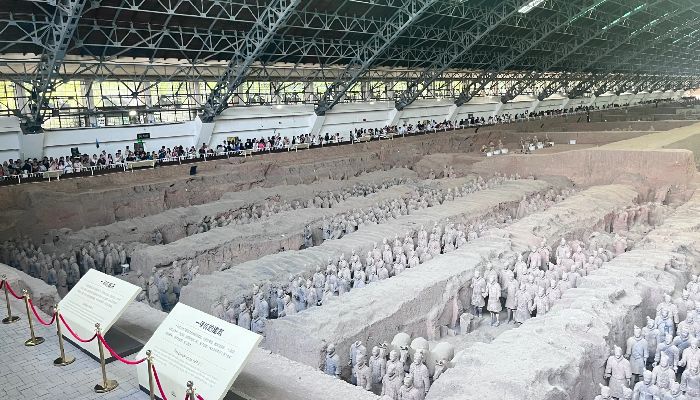
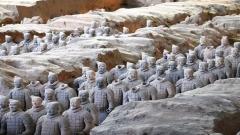
Terracotta Army, Xi’an
How to Choose Accommodation Areas for Travel in Xi’an?
- Near the Bell Tower or South Gate: Located in the city center, within walking distance to the Muslim Quarter and the Bell and Drum Towers. Budget hotels cost about 200-300 RMB per night with high cost performance.
- Near the Big Wild Goose Pagoda: No need to take a bus to visit the Grand Tang Mall at night. Hotel prices are slightly higher, with good night view.
- The area near the railway station is not recommended due to noisy environment; there are few hotel options in Lintong District (where the Terracotta Army is located), so you need to stay in the urban area.
Tourists mainly visiting attractions within the city wall should prioritize the Bell Tower area. Those who prefer night activities and light landscapes can choose the area around the Big Wild Goose Pagoda.
What Are the Special Foods and Dietary Tips for Travel in Xi’an?
- The Muslim Quarter offers a wide range of snacks but at higher prices. Authentic foods are mostly concentrated in streets and alleys such as Sajinqiao and Dapiyuan.
- Recommended foods: Roujiamo (pork version is more local), liangpi, lamb paomo, biangbiang noodles. Each meal costs about 20-30 RMB.
- The spicy flavor in Xi’an is fragrant but not dry. Tourists who cannot eat spicy food can also try it. Halal restaurants are widely distributed in the urban area.
- Tourists with food allergies should write down allergy information in advance with translation software and show it to the waiter when ordering. Do not drink raw water directly; please buy bottled water.
Snacks in Sajinqiao and other places are more affordable and authentic.
How to Solve Language Problems When Traveling in Xi’an Without Speaking Chinese?
- Major attractions such as the Terracotta Army and Shaanxi History Museum provide English audio guide rental services, and restaurant menus are mostly equipped with pictures.
- Save the Chinese names of hotels and destinations on your mobile phone and show them directly when taking a taxi or asking for directions.
- The Grand Tang Mall is crowded during night view hours; please pay attention to your personal belongings.
- Major subway stations provide English announcements with clear guidance.
The internationalization of tourism services in Xi’an is gradually improving, and basic communication problems can be solved with translation software.
How to Reserve Shaanxi History Museum During Travel in Xi’an?
- The museum is free of charge but must be reserved through the official mini-program, which is extremely popular. It is recommended to pay attention to the ticket release time one week in advance (usually fixed time slots every day, such as 10:00, 11:00).
- If you fail to reserve free tickets, you can buy tickets for the paid Treasure Hall or Mural Hall (dozens of RMB). Such tickets are easier to obtain and you can view more precious cultural relics.
- The museum houses a large number of cultural relics from the Zhou, Qin, Han and Tang dynasties, an important place to understand ancient Chinese civilization.
Prioritize buying paid special exhibition tickets to ensure entry and enhance the visiting experience.
What Is the Best Season to Travel in Shanghai?
- Spring (March to May) and Autumn (September to November): Moderate temperatures and low humidity, the best travel windows.
- Summer (June to July) is the plum rain season, hot and stuffy; high temperature and strong sunshine from July to August, making outdoor activities hard.
- Cold and humid in winter, the apparent temperature is lower than the actual temperature.
- The number of tourists surges during public holidays such as National Day, and hotel prices rise exponentially. It is recommended to avoid them as much as possible.
Exhibitions and festivals are the most abundant in Shanghai in spring and autumn.
What Are the Special Tips for Shanghai Disneyland During Travel in Shanghai?
- Ticket prices are divided into regular days (about 475 RMB) and peak days (about 799 RMB), with a price difference of about 200 RMB. Tickets must be purchased online and the entry date reserved in advance.
- Tourists aged 16 and above must enter with the original valid passport registered during ticket purchase; verification cannot be done on behalf of others.
- Mobile payment or cash is available in the park; a few snack stalls only accept mobile payment.
- It is recommended to download the official application to check queuing time and collect reservation waiting cards, which can significantly reduce queuing time.
Popular projects often take more than one hour to queue. It is recommended to collect reservation waiting cards or buy premium cards first after entering the park.
How to Choose Accommodation Areas for Travel in Shanghai?
- People’s Square or Nanjing Road: Located in the city center, within walking distance to most attractions and commercial areas, but housing prices are high.
- Jing’an Temple or West Nanjing Road: Concentrated in medium and high-end hotels, convenient for dining and shopping with high cost performance.
- Near the Bund: Rooms with river views, but sufficient budget is required. Low-priced Bund hotels may only provide side or non-river view rooms.
- Hongqiao or Xujiahui: Relatively affordable prices, about 30 minutes by subway to major attractions, suitable for tourists with limited budget.
- Pay attention to the walking time to the subway station when choosing a hotel; rooms more than 10 minutes away are not recommended.
Tourists mainly visiting Pudong can consider staying in Pudong. Those mainly visiting Puxi can choose People’s Square or Jing’an Temple for more convenience.
How to Use Local Transportation for Travel in Shanghai and Can Foreign Cards Be Used Directly for Subway?
- All station gates of Shanghai Metro support direct contactless payment with foreign cards such as Visa and Mastercard, no need to buy tickets or download applications.
- From Pudong Airport to the urban area: You can take Metro Line 2 (about 7 RMB, 50-60 minutes direct to the city center) or maglev train (50 RMB, 8 minutes to Longyang Road Station). Both methods support foreign card contactless payment.
- Carriages are extremely crowded during peak hours (8:00-9:30 am, 17:30-19:30 pm). Tourists with large luggage should try to avoid them.
- Taxis can be hailed on the roadside, or you can use a car-hailing platform to bind international credit cards for payment.
The foreign card contactless payment function is very convenient. Just paste the contactless payment-supported credit card on the gate sensor to enter and exit the station. The maglev train is fast but only arrives at Longyang Road, requiring transfer to other transportation.
How to Solve Language Problems When Traveling in Shanghai Without Speaking Chinese?
- Most salespersons in large shopping malls and young people have basic English skills; communication is smoother in tourist-intensive areas such as Jing’an Temple, Xintiandi and Nanjing Road.
- Save the Chinese names of destinations in your mobile phone in advance and show them directly when taking a taxi or asking for directions.
- Multilingual paper maps are available for free at the tourist centers of scenic spots.
- Staff at subway station service desks can basically provide help in simple English.
Shanghai is the most international city in China with the least language barriers.
Is Shopping and Tax Refund Convenient for Travel in Shanghai?
- Large business districts include Nanjing Road, Huaihai Road and Lujiazui, with a large number of shopping malls and boutiques.
- Departure tax refund: Spend more than 500 RMB in a single day in a store marked “Tax Free”, ask for a tax refund application form, and get the tax refund after stamping by the airport customs (about 9% to 11% of the commodity price).
- Some airports support online mobile tax refund, which can be received in a few minutes.
- When buying international brand goods, it is recommended to buy them directly at the duty-free shops in Pudong Airport or Hongqiao Airport to avoid tax refund handling fees.
Please keep the shopping vouchers properly and reserve enough time before departure to go through tax refund procedures.
What Preparations Need to Be Made Before Departure and Is It Necessary to Consult a Travel Agency?
The above is the complete answer to common questions for travel in Beijing, Xi’an and Shanghai. Before departure, tourists should go through visa procedures or confirm visa-free eligibility in advance according to their own itinerary, reserve tickets for popular attractions, prepare mobile payment tools and an appropriate amount of cash, and purchase travel insurance covering medical items. If tourists have further needs for document handling, ticket booking or itinerary connection for travel in the three cities, they can consult professional tourism service agencies such as China Dragon Travel, and entrust the above affairs to reduce the time spent on self-preparation and reduce uncertainties during the trip.