Known as the “Sky Railway,” the Chengdu-Lhasa train stands as the top choice for travelers venturing into Tibet. More than just a transportation link between plains and plateaus, this 34-hour journey offers an immersive experience of dramatic landscape transformations—from basins to snow-covered highlands—where stunning plateau scenery unfolds at every turn. Compared to direct flights, the train allows your body to gradually adapt to rising altitudes, significantly lowering the risk of altitude sickness while saving you a considerable sum on travel expenses. This guide covers key essentials including train schedules, ticket-buying hacks, scenic highlights, travel preparations, and altitude sickness management, helping every traveler embark on a comfortable, safe, and unforgettable journey to the snowland.
Chengdu to Lhasa Train Schedule & Ticket-Buying Hacks
To kickstart your Chengdu-Lhasa train journey smoothly, mastering core schedule information and ticket-buying strategies is crucial—especially during peak travel seasons, when tickets are as scarce as Spring Festival fares. Advanced planning is the key to avoiding regrets.
Currently, the primary operational train for the Chengdu-Lhasa route is Train Z322. Departing from Chengdu West Railway Station at 21:10, it travels for 34 hours and 31 minutes, arriving at Lhasa Railway Station at 07:41 on the third day. The train traverses four provinces/municipalities: Sichuan, Gansu, Qinghai, and Tibet, passing through major stations such as Guangyuan, Lanzhou, Xining, and Golmud. It makes a 25-minute stop at Golmud Station, a vital refueling and maintenance checkpoint before entering the plateau. Seating options include hard seat, hard sleeper, and soft sleeper. The hard seat starts at 302.5 RMB, hard sleeper ranges from 700 to 800 RMB, and soft sleeper costs between 1100 and 1200 RMB, allowing travelers to choose based on budget and comfort preferences.
Ticket-buying requires careful attention. Tickets for the Chengdu-Lhasa train go on sale 15 days in advance, released precisely at 9:00 AM daily. During peak seasons, hard sleeper tickets often sell out in seconds, and hard seats are also in high demand. It’s advisable to complete real-name authentication and bind frequent traveler information on the 12306 APP in advance. Log into the ticket-purchasing page 5 minutes before sales open, select your preferred seat, and submit the order promptly. If direct tickets are sold out, try purchasing split tickets—for example, Chengdu to Golmud first, then Golmud to Lhasa—this method boosts your chances of securing a seat. Additionally, enable the 12306 waitlist function and check adjacent dates and different seat types to increase success. For flexible travelers, avoid holidays and summer vacation; opt for March-April or mid-October and later. Not only are tickets easier to obtain, but there are also fewer tourists, offering a better viewing experience.
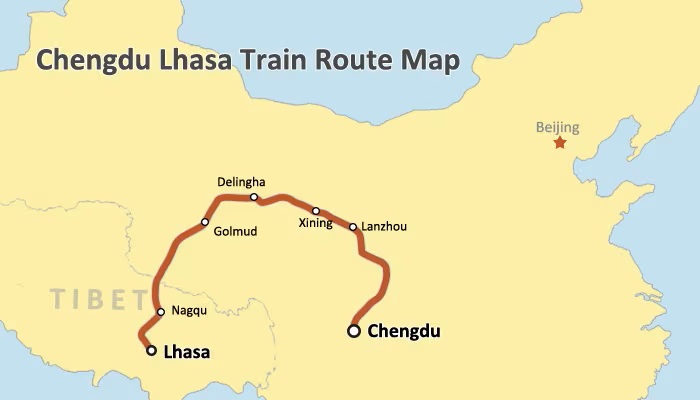
Chengdu to Lhasa Train Route Map
Must-See Scenery Along the Way: 34 Hours Through Seasons & Hidden Gems
The greatest allure of the Chengdu-Lhasa train lies in its ever-changing breathtaking scenery. From the fertile plains of Chengdu to the snow-capped mountains and grasslands of the Qinghai-Tibet Plateau, each segment of the journey holds unique surprises—setting it apart from other ways to enter Tibet.
After departing Sichuan, the train first crosses the Chengdu Plain, where stretches of rice fields and scattered villages outside the window exude vibrant rural charm. Late at night, it passes through the Erlang Mountain Tunnel. Waking up the next morning, you’ll already be in the western Sichuan Plateau. Outside the window, rolling mountains come into view, and the canyon scenery along the Dadu River is stunning—steep cliffs and rushing rivers complement each other, showcasing the grandeur of nature. Continuing onward, the train passes Tibetan towns like Kangding and Litang. Distant snow-capped mountains glisten in the sun, flocks of cattle and sheep dot the grasslands, and Tibetan watchtowers add to the scene, immersing you in a strong Tibetan atmosphere.
Entering Qinghai, the scenery becomes even more spectacular. The train passes Qinghai Lake, China’s largest inland lake. On clear days, you can gaze at its sapphire-blue waters from the carriage, which, paired with the rapeseed flower fields (in full bloom July-August), creates a picturesque landscape. Next, the train enters the Qaidam Basin, where the unique yardang landforms on the Gobi Desert resemble a sculptural park crafted by nature. After arriving at Golmud Station, you’ll officially enter the core section of the Qinghai-Tibet Railway. From here, the altitude gradually rises, and the scenery becomes more pristine. The train passes through the Hoh Xil National Nature Reserve, the best spot to see rare wildlife like Tibetan antelopes and wild yaks. Bring a pair of binoculars—you might be lucky enough to spot herds of Tibetan antelopes running across the grasslands.
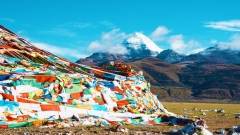
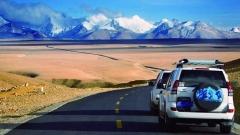
The scenery in Tibet reaches its climax. The train crosses the Tanggula Pass, which stands at 5072 meters above sea level—the highest point of the entire journey. Outside the window, snow-capped mountains stretch as far as the eye can see, and clouds seem within arm’s reach. After crossing the pass, the altitude gradually decreases. The train passes the Northern Tibetan Grassland, where vast grasslands are dotted with countless lakes, and tributaries of Nam Co Lake wind through like silver ribbons. As you approach Lhasa, the scenery of the Yarlung Zangbo River Valley comes into view—stretches of highland barley fields and Tibetan-style dwellings signal the end of your sky railway journey. Note that the best viewing seats are the left window seats in hard seats or hard sleepers, especially in the morning when sunlight is abundant and the view is unobstructed.
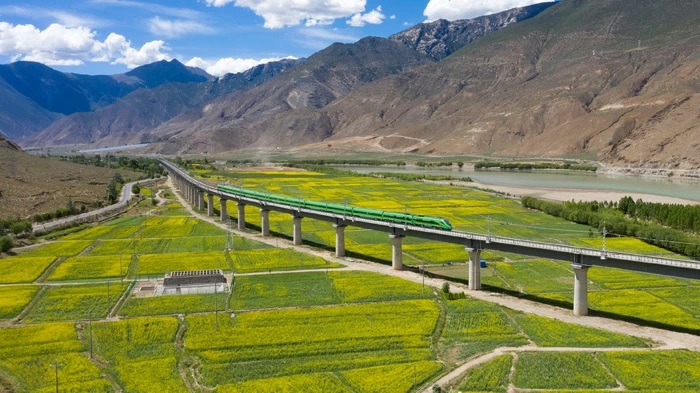
Chengdu Tibet Railway
Practical Travel Preparations: Enjoy a Comfortable Journey on the Sky Railway
With a 34-hour journey ahead, adequate preparations are essential to enhance comfort and handle potential situations along the way.
- For clothing, follow the layering principle. Temperature differences along the route are extreme—from the subtropical climate of Chengdu to the frigid climate of Tanggula Pass, temperatures can vary by over 20℃. Wear a breathable, moisture-wicking cotton inner layer, a warm fleece jacket or thin down jacket as the middle layer, and a waterproof windbreaker as the outer layer. Additionally, pack warm accessories like a hat, scarf, gloves, and thick socks—especially when crossing Tanggula Pass, as the temperature inside the carriage drops significantly.
- Food and water preparations are equally important. While the train has a dining car, prices are high and the food is mediocre. It’s recommended to bring plenty of food in advance, such as self-heating rice, instant noodles, bread, fruits, and nuts. This not only caters to your taste preferences but also saves money. For water, be sure to carry a large-capacity water bottle. The train provides free hot water, so stay hydrated throughout the journey—aim for 2-3 liters of water per day to promote metabolism and prevent altitude sickness. Avoid alcohol, smoking, and overly greasy or spicy food on the train, as these can burden your body.
- Other practical items to pack: a power bank (socket availability is limited on the train, and some hard seats may have no sockets), headphones, books or downloaded movies/TV shows (to pass the long journey), wet wipes, disposable slippers (for added comfort), sunscreen and sunglasses (ultraviolet radiation is intense on the plateau—protection is needed even inside the carriage), and common medications (cold medicine, gastrointestinal medicine, band-aids, etc.).
Altitude Sickness Management: Scientifically Cope with Plateau Challenges
Many travelers worry about altitude sickness on the Chengdu-Lhasa train, but with scientific preparation and response, the risk can be effectively reduced. The train’s biggest advantage is the gradual increase in altitude—starting from around 500 meters in Chengdu, rising to 5072 meters at Tanggula Pass, then dropping to 3650 meters in Lhasa. This gives your body ample time to adapt, making altitude sickness less likely compared to flying directly to Lhasa.
For pre-trip prevention, there’s no need to take medications like Rhodiola rosea in advance (medical evidence for its effectiveness in preventing altitude sickness is inconclusive). A more effective approach is to ensure adequate sleep and avoid overexertion before departure. During the journey, maintain a positive mindset—anxiety can exacerbate discomfort. Minimize strenuous activities such as rushing or lifting heavy objects; move slowly throughout the trip.
If mild altitude sickness symptoms occur, such as headaches, dizziness, chest tightness, shortness of breath, or insomnia, there’s no need to panic—these are normal reactions as your body adjusts to the plateau. Immediately return to your seat or berth to rest, drink plenty of water, unbutton your collar for better breathing, and open the window slightly for ventilation (be careful to stay warm and avoid catching a cold). For more noticeable symptoms, take altitude sickness relief medications like Gaoyuan’an or glucose oral solution. The train is also equipped with oxygen cylinders—consult the crew to purchase or use them.
It’s crucial to be alert for severe altitude sickness symptoms, such as persistent severe headaches, vomiting, difficulty breathing, confusion, or blue lips/nail beds. If these occur, inform the crew immediately. Medical staff are on standby at stations like Golmud and Nagqu, and you may need to get off at an intermediate station for treatment if necessary. It’s recommended to purchase travel insurance before departure to cover unexpected situations.
Border Permit Application Tips: Unlock More Tibetan Hidden Gems
If your itinerary includes border areas like Everest Base Camp, Ngari Region, or Medog (beyond Lhasa), a border permit is mandatory. It’s advisable to make preparations before taking the Chengdu-Lhasa train.
There are two main ways to apply for a border permit: 1) Apply at your place of household registration. It’s free and valid for a long period (usually 3 months). Bring your original ID card, household registration book, and copies. Visit the Exit and Entry Administration Bureau of your district/county public security bureau, fill out the border area pass application form, and clearly specify the Tibetan border counties you plan to visit (e.g., Dingri County in Xigazê, Purang County in Ngari). Some areas may require a stamp from your employer or neighborhood committee. After approval, you can collect the permit within 1-3 working days. 2) Entrust a travel agency to handle it after arriving in Tibet. Suitable for travelers with tight schedules or flexible itineraries, you only need to provide a photo of your ID card and pay a service fee ranging from tens to one hundred RMB. The permit can be ready within 1 working day. Travel agencies can also accurately fill in the destinations based on your itinerary to avoid omissions.
Note that the destination on the border permit must be specified to the county level—not just “Tibet.” Children must apply with their guardians, following the same process as adults. Hong Kong and Macau travelers need to bring their HK/Macau Travel Permit in addition to their ID. Travelers with Xinjiang household registration may require special review. After arriving in Lhasa by train, you can apply for a border permit at No. 115 Deji North Road, Lhasa, or entrust a regular local travel agency to handle it.
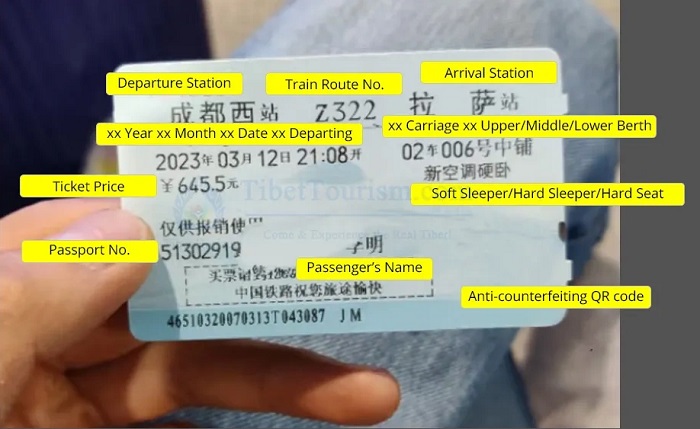
Chengdu to Lhasa Train Ticket
Travel Pitfalls to Avoid & Practical Tips: Ensure a Smooth Journey
Mastering a few practical tips can make your Chengdu-Lhasa train journey smoother and help you avoid unnecessary troubles.
- For tickets: During peak seasons (May-October), be sure to grab tickets exactly 15 days in advance. If the waitlist fails, check again during peak refund periods at 12:30 PM and 6:00 PM—you might get lucky. Never trust strangers selling overpriced tickets on the train or around the station to avoid scams.
- For itinerary connection: After arriving at Lhasa Station, avoid heading directly to higher-altitude attractions. Rest in downtown Lhasa for 1-2 days to acclimatize before traveling further. Downtown Lhasa has convenient transportation—you can take a taxi, ride-hailing service, or bus to your hotel. There are official taxi queues outside the railway station; avoid unlicensed black taxis.
- Other notes: Crew members may promote souvenirs or local products on the train—politely decline if you’re not interested. Respect other passengers’ need for rest and avoid loud noises. After entering Tibet, respect local customs and traditions: do not touch prayer flags or prayer wheels without permission, and ask for consent before taking photos of locals.
Final Prep: Travel the Sky Road with Confidence and Care
Riding the Chengdu–Lhasa train is both a practical acclimatization strategy and a moving landscape journey. Before you go, secure tickets early (use split-ticket and waitlist tactics if needed), pack layered clothing, bring plenty of water, basic medicines, power banks and light snacks, and avoid alcohol. Move and rest slowly onboard; if symptoms of altitude sickness appear, rest, hydrate and notify train staff. Allow 1–2 days in Lhasa to adapt on arrival. For travelers who prefer fewer logistics to manage, experienced local operators can handle bookings and transfers so you can focus on the scenery and the experience.