
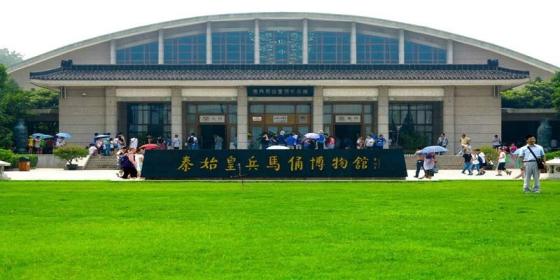
Nestled on Qinling North Road in Lintong District, Xi’an, Shaanxi Province, the Terracotta Army Museum is a site-specific museum built atop the original excavation pits of the Terracotta Warriors and Horses of Qin Shi Huang’s Mausoleum. As China’s largest ancient military museum and a UNESCO World Heritage Site, it stands as a shining emblem of Chinese civilization and a sacred historical destination for travelers worldwide. Each year, millions of visitors flock here to witness the awe-inspiring underground army that has slumbered for over 2,000 years, immersing themselves in the grandeur of the Qin Empire that unified ancient China. Stepping into the museum is like pushing open a time portal to the 3rd century BCE, where every terracotta figure and artifact silently narrates the epic stories of that turbulent and magnificent era.
Essential Pre-Visit Information for the Terracotta Army Museum
The Terracotta Army Museum
Tickets and Reservations
- The museum operates a strict real-name reservation system for all visitors. There are no on-site manual ticket counters, so all tickets must be purchased in advance through official or authorized channels.
- The standard admission fee is 120 RMB, which includes access to both the Terracotta Army Museum and the Lishan Garden of Qin Shi Huang’s Mausoleum. Tickets are valid for 48 hours from the date of first use, allowing visitors to explore both sites at a leisurely pace over two days.
- Eligible visitors including students, active military personnel, people with disabilities, and seniors aged 65 and above can enjoy half-price or free admission. Specific eligibility criteria and discount policies are subject to the latest official announcements, so it is advisable to check in advance.
- There are three main reservation channels: the official WeChat public account of the Terracotta Army Museum (the most convenient option for most visitors), the official museum website, and reputable third-party travel platforms.
- It is strongly recommended to book tickets at least 3 days in advance. During peak tourist seasons and public holidays, reservations should be made 1 to 2 weeks ahead to avoid sold-out tickets, as the museum strictly limits daily visitor numbers to protect the archaeological site.
Opening Hours
- The museum is open year-round, with operating hours adjusted seasonally to align with daylight hours. The Lishan Garden shares the same opening schedule as the Terracotta Army Museum.
- Peak Season (March 16 to November 15): Open from 8:30 AM to 5:00 PM, with last ticket check-in at 4:30 PM.
- Off-Season (November 16 to March 15 of the following year): Open from 8:30 AM to 4:30 PM, with last ticket check-in at 4:00 PM.
- The last shuttle bus between the Terracotta Army Museum and Lishan Garden departs at 4:30 PM daily. If you plan to visit both sites, be sure to allocate sufficient time and catch the final shuttle to avoid being stranded.
In-Depth Tour of the Museum’s Core Exhibition Halls
The Terracotta Army Museum consists of four main exhibition areas: Pit 1, Pit 2, Pit 3, and the Bronze Chariots Exhibition Hall. Each area offers unique insights into the military organization, craftsmanship, and culture of the Qin Dynasty, with distinct historical and artistic value.
Pit 1
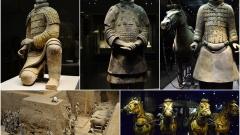
Pit 1 is the largest and most breathtaking exhibition hall in the museum, and it is typically the first stop for most visitors. Measuring 230 meters long from east to west and 62 meters wide from north to south, it covers a total area of 14,260 square meters and is constructed as an underground tunnel-style building. To date, approximately 2,000 terracotta warriors and horses have been excavated from Pit 1, and archaeologists estimate that the entire pit contains around 6,000 figures, forming a meticulously organized rectangular military formation.
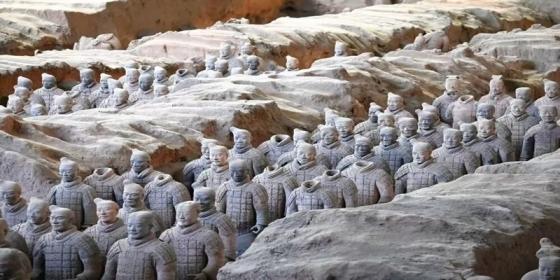
The Terracotta Army Museum
Standing on the viewing platform overlooking Pit 1, visitors are immediately struck by the imposing sight of the underground army stretching out before them. The vanguard consists of three rows of crossbowmen wearing light battle robes, holding their weapons and facing east, ready to charge into battle at a moment’s notice. Behind them is the main force, composed of armored infantry and chariots arranged in 38 columns, marching forward with overwhelming momentum. On both flanks and at the rear of the formation, there are rows of warriors facing outward, serving as guards to prevent surprise attacks from the sides and rear. This rigorous layout perfectly embodies the Qin military philosophy of “vanguard, main force, rearguard, and flanks”.
In the rear section of Pit 1, visitors can observe the ongoing archaeological excavation and restoration work up close. Archaeologists work painstakingly to clean, piece together, and restore the broken terracotta figures, offering a rare glimpse into the meticulous process of cultural heritage preservation. What makes these figures truly remarkable is that no two are identical—each warrior has a unique facial expression, hairstyle, and clothing, crafted with such lifelike detail that they seem almost ready to come to life.
Pit 2
Located to the northeast of Pit 1, Pit 2 covers an area of approximately 6,000 square meters and houses a complex mixed military formation of cavalry, infantry, crossbowmen, and chariots. Unlike the uniform formation in Pit 1, the layout of Pit 2 demonstrates the Qin army’s advanced ability to coordinate multiple arms in combat, making it a masterpiece of ancient military engineering.
Pit 2 is divided into four distinct tactical units:
- The crossbow unit, consisting of 334 crossbowmen arranged in a neat square formation. These warriors alternate between standing and kneeling positions, allowing for continuous volleys of fire and showcasing the Qin army’s formidable long-range striking power.
- The chariot unit, made up of 64 chariots. Each chariot is manned by three warriors: one to drive the horses, one to wield a dagger-axe for close combat, and one to use a bow for long-range attacks.
- The mixed chariot-infantry-cavalry unit, which includes 19 chariots, 108 infantry warriors, and 8 cavalrymen. This unit is a microcosm of the Qin army’s main combat force, demonstrating the flexibility of combined arms tactics.
- The cavalry unit, composed of 108 cavalrymen and 108 terracotta horses. This is the earliest physical evidence of a cavalry unit ever discovered in Chinese archaeological history, marking a significant milestone in the development of ancient Chinese warfare.
Pit 2 has yielded many precious cultural relics, the most famous of which is the kneeling archer. Dressed in a battle robe and armor, the kneeling archer crouches on his left leg, rests his right knee on the ground, and holds a bow with both hands at his right side. His posture is elegant and lifelike, and because of his lower height, he suffered minimal damage when the pit roof collapsed. As a result, he is the most completely preserved terracotta warrior in the museum—even the stitching on the soles of his shoes is clearly visible.
Pit 3
Situated to the northwest of Pit 1, Pit 3 is the smallest of the three pits, covering only 520 square meters, but it is widely recognized as the command center of the entire terracotta army. The pit has a concave-shaped layout, divided into three sections: the southern chamber, the northern chamber, and the main hall. The southern chamber contains 64 warriors armed with long halberds, arranged in a neat guard formation. The northern chamber houses 22 warriors and four deer antlers, which archaeologists believe were used in pre-battle divination rituals. The main hall features a luxurious chariot and four warriors, which is thought to have been the commander’s chariot.
Notably, no large quantities of weapons have been found in Pit 3, which further supports the theory that it served as the military headquarters. Archaeologists speculate that this was the command post responsible for directing the armies in Pits 1 and 2 into battle. Despite its small size, the discovery of Pit 3 has been of immense significance for the study of ancient Chinese military systems and command structures.
Bronze Chariots Exhibition Hall
Located near the museum entrance, the Bronze Chariots Exhibition Hall displays two sets of Qin Dynasty bronze chariots and horses, known as the “Crown of Bronze Art”. Unearthed in 1980 to the west of the Qin Shi Huang Mausoleum mound, these chariots are made to a 1:2 scale of real chariots and horses, assembled from over 3,000 individual components with extraordinary craftsmanship.
The first bronze chariot is called the “High Chariot” or “Standing Chariot”. It was used for clearing the way, providing security, and hunting during the emperor’s travels. The chariot is equipped with crossbows, arrows, and shields, reflecting the majesty of the imperial guard. The second chariot is the “Comfort Chariot” or “Sedan Chariot”, which was the emperor’s personal carriage. Its compartment is divided into two parts: the front section for the driver, and the rear section for the emperor. The compartment features windows that can be opened and closed to regulate temperature and ventilation.
The craftsmanship of these bronze chariots represents the pinnacle of Qin Dynasty bronze casting technology. Every detail is exquisitely executed—the horses’ manes, the patterns on the reins, and the facial expressions of the drivers are all rendered with stunning realism, leaving visitors in awe of the skill of ancient Chinese artisans.
Practical Tour Tips for the Terracotta Army Museum
Avoiding Crowds
The Terracotta Army Museum is one of the most popular tourist attractions in China, drawing huge crowds every day. To ensure a more enjoyable and immersive experience, it is crucial to plan your visit to avoid peak times. The best time to visit is immediately after the museum opens at 8:30 AM, when there are far fewer visitors and you can admire the exhibits in relative peace. The second-best option is after 3:00 PM, when most large tour groups have already left and the crowds thin out significantly.
Public holidays and peak tourist seasons (especially summer vacation and the National Day holiday) are the busiest times, and it is advisable to avoid visiting during these periods if possible. If you must visit during a holiday, be sure to book your tickets well in advance and arrive at the museum as early as possible. Another effective strategy to avoid crowds is to start your tour at Pit 2 instead of Pit 1, as most tour groups follow the standard route of Pit 1 → Pit 2 → Pit 3.
Guided Tours
The Terracotta Army Museum is rich in historical and cultural connotations, and it can be difficult to fully appreciate the significance of the exhibits and understand the stories behind them without a guide. For this reason, it is highly recommended to hire a professional tour guide or rent an audio guide device.
The museum offers official guided tour services: Chinese-language tours cost 100 RMB per session, and English-language tours cost 150 RMB per session, with each tour lasting approximately 1.5 hours. Audio guide devices are available for rent at the museum entrance for 30 RMB per unit, with a deposit of 200 RMB. They provide commentary in multiple languages including Chinese, English, Japanese, and Korean. Visitors can also access free audio commentary through the official WeChat public account, which, while more basic in content, is sufficient for a general understanding of the exhibits.

Surrounding Amenities and Visiting Etiquette
Dining and Shopping
The museum has several restaurants and snack stalls inside, offering a variety of Shaanxi specialties such as roujiamo (Chinese hamburger), liangpi (cold noodles), and yangrou paomo (lamb soup with bread). While the food is generally tasty, prices are relatively high compared to outside the scenic area. There are also many restaurants and snack shops near the museum entrance, where prices are more affordable—just be sure to choose establishments with good hygiene conditions.
There are multiple souvenir shops throughout the museum selling a wide range of Terracotta Army-themed merchandise, including replica terracotta figures, bronze artifacts, books, and postcards. It is recommended to purchase souvenirs from the official museum shops, as they offer better quality and authenticity. Importantly, it is illegal to buy or sell any genuine cultural relics or relic fragments, and visitors should strictly avoid engaging in such activities.
Visiting Etiquette
As a UNESCO World Heritage Site and a treasure of all humanity, the Terracotta Army Museum requires visitors to observe the following rules to protect these precious cultural relics:
- Do not touch any exhibits or cultural relics, as even minor contact can cause irreversible damage.
- Keep your voice down and avoid running or shouting in the exhibition halls to maintain a quiet and respectful visiting environment.
- Do not smoke, eat, drink, or litter inside the exhibition halls.
- Do not use flash photography, as the intense light from flashes can fade and damage the pigments and materials of the ancient artifacts.
- Do not climb over guardrails or cross safety lines, as this poses a risk to both yourself and the archaeological site.
Every visitor has a responsibility to protect these irreplaceable cultural treasures so that they can be preserved for future generations to appreciate.
Experience the Timeless Majesty of the Terracotta Army
After touring the Terracotta Army Museum, you will undoubtedly be deeply impressed by the overwhelming momentum of this underground army and gain a profound understanding of the history and culture of the Qin Empire. If you want to explore the Terracotta Army Museum and other famous attractions in Xi’an in a more relaxed and in-depth way, China Dragon Travel can provide you with professional travel services. With an experienced team of tour guides and well-designed itineraries, they can customize personalized travel plans according to your needs, making your trip to Xi’an an unforgettable and perfect experience.