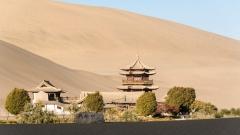

Stretching for nearly a thousand kilometers between the Qilian Mountains and the Tengger Desert lies the famous Hexi Corridor. It is more than just a geographic passage; it is the vital throat of the ancient Silk Road and the golden bridge for trade, art, and cultural exchange between East and West.
In the Hexi Corridor, you will feel the profound power of history at ancient fortresses, marvel at the vibrant colors of the Rainbow Mountains, and find comfort in the smoky, aromatic flavors that have defined the Silk Road for centuries.
Fortress and Wonders: The Spectacular Landscapes of Hexi
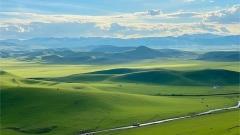
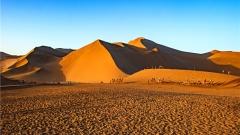
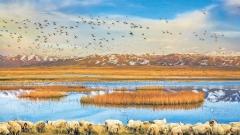
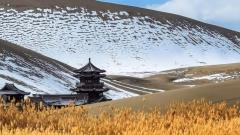
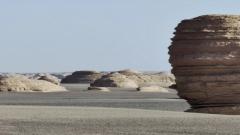
The scenery of the Hexi Corridor is a striking blend of rugged desert grit and vibrant natural beauty.
-
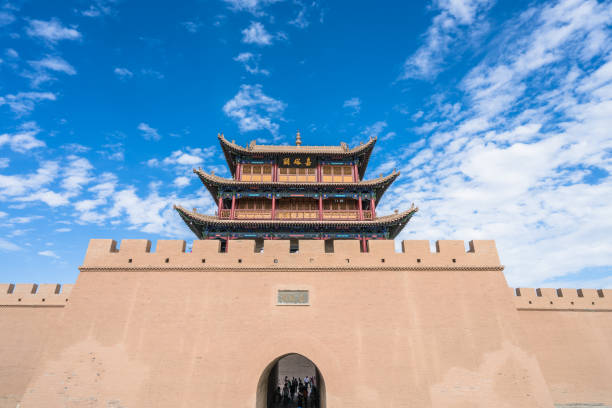
Jiayuguan Pass: The First and Greatest Pass Under Heaven As the western terminus of the Ming Dynasty Great Wall, Jiayuguan stands proudly atop the desert plateau. From its towers, you can see the snow-capped Qilian peaks to the north and the Taolai River canyon to the south, embodying the strategic majesty of ancient China.
-
Zhangye Rainbow Mountains: God’s Palette The Danxia landforms in Zhangye are world-renowned for their brilliant colors and grand scale. Especially after rain or during sunset, the mountains reveal layers of red, yellow, orange, and green, resembling a vast bolt of colorful silk laid across the earth.
The Soul of the Silk Road: From Han Conquest to Cultural Crucible
The history of the Hexi Corridor is an epic saga spanning over two thousand years.
-
The Four Frontier Cities The names Wuwei, Zhangye, Jiuquan, and Dunhuang were bestowed by Emperor Wu of the Han Dynasty, symbolizing the military prestige and openness of the empire. For millennia, this has been the mandatory route for those entering the Western Regions from Central China.
-
A Melting Pot of Civilizations As a Silk Road hub, the corridor witnessed the eastward spread of Buddhism and the constant flow of merchants and ideas. This fusion of civilizations is preserved today not only in magnificent grotto art but also in the architecture, fashion, and culinary habits of the region.
Flavors of the Silk Road: Deep Dive into Hexi Cuisine
The food culture here is heavily influenced by ancient military logistics, trade caravans, and multi-ethnic integration, featuring hearty ingredients and unique spices.
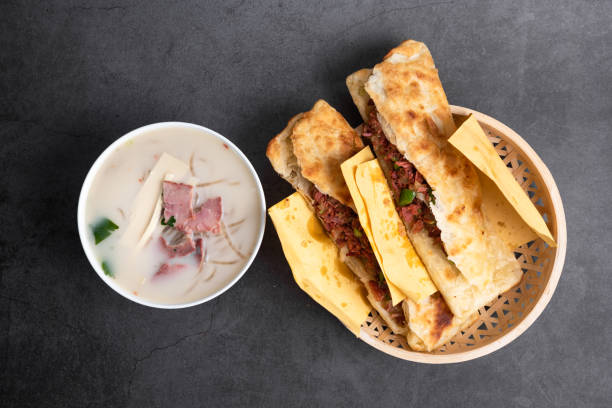
1. Hu-Yang Mutton Smothered Pancakes (A Fusion of Han and Nomadic Cultures)
-
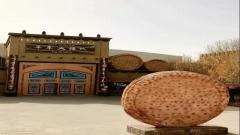
History & Origins: The name “Hu” refers to the Western nomadic peoples, while “Pancake” (Bing) represents the staple food of the Han. Legend has it that this dish originated from the exchange of ingredients between Han merchant caravans and Western herders, where thin pancakes were placed over stewing mutton to be “smothered” and flavored by the rising steam.
-
Flavor Profile: Made with the exceptionally tender lamb of the Hexi Corridor, the paper-thin pancakes absorb the rich, concentrated meat broth. The resulting texture is soft yet chewy—a perfect representation of the bold spirit of the Northwest.
2. Donkey Meat Yellow Noodles (A Millennium of Flavor from the Murals)
-
History & Origins: Donkey Meat Yellow Noodles have a long history in Dunhuang, with early versions of noodle-pulling even appearing in the murals of the Mogao Caves. It is a masterpiece of culinary wisdom from the ancient Silk Road outposts.
-
Flavor Profile: The noodles are golden and vibrant, served with thinly sliced five-spice donkey meat and a signature mushroom and tofu gravy. It is springy, savory, and provides the perfect energy boost for Silk Road travelers.
3. Jiuquan “Hugu” (A Warming Desert Breakfast)
-
History & Origins: This is the most iconic breakfast in the Jiuquan area, demonstrating the locals’ ability to create rich flavors from limited desert ingredients.
-
Flavor Profile: A thick chicken broth base filled with fried dough twists (Mahua) and paper-thin gluten slices. It is rich in texture and carries a warming peppery kick—perfect for warding off the chilly desert mornings.
Practical Hexi Corridor Travel Tips
-
Travel Pacing: The Hexi Corridor route is long, and travel times between sites can be significant. For senior travelers or families, it is recommended to slow down the pace, perhaps staying an extra night in Zhangye or Jiuquan. For 2026, utilizing the high-speed rail network to connect these cities is the best way to reduce travel fatigue.
-
Vegetarian & Vegan Travel Guide: While meat is a staple in the Northwest, vegetarians can still find plenty of options. In addition to Yellow Noodles (which can be ordered with a vegetarian sauce), you can enjoy handmade Liangpi (cold noodles), roasted potatoes, and stir-fried cabbage. Local Apricot Peel Tea is also a delicious, vegan-friendly way to stay refreshed.
-
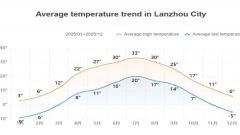
Gear and Preparation: The climate is dry with strong UV rays. Always carry sufficient water, sun protection, and moisturizing skincare products. For long road segments, a comfortable neck pillow and headphones will significantly enhance your travel experience.