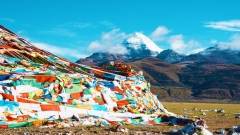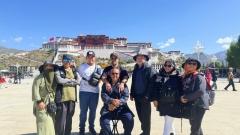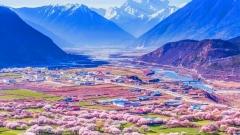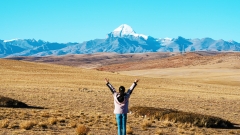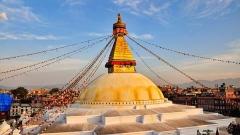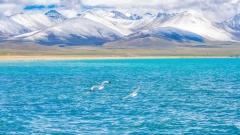

Nepal and China’s Tibet Autonomous Region share the breathtaking Mount Everest, the highest peak on Earth. On both sides of the border, travelers can visit base camps located close to the mountain. Nepal is home to the South Base Camp, while Tibet features the North Base Camp and the lesser-known East Base Camp. This guide focuses on how to travel from Nepal to Everest Base Camp, helping visitors understand the options, challenges, and best routes to experience the grandeur of Everest.
Distance From Kathmandu to Everest Base Camp and Which Route Is Easier
Kathmandu, the capital of Nepal, lies in the scenic Kathmandu Valley and is famous for its rich culture and historic charm. Mount Everest sits directly on the border between Nepal and China, with its southern slope in Nepal and northern slope in Tibet.
The Everest Base Camp on the Nepal side is located on the south slope at an altitude of approximately 5,364 meters. Reaching this base camp requires a long and physically demanding trek. The camp itself is positioned deep in the mountains and partially shielded by Lhotse, which means the summit of Everest, known locally as Sagarmatha, is not clearly visible from the base camp.
The straight-line distance from Kathmandu to the South Base Camp is about 161 kilometers. However, travelers must first fly from Kathmandu to Lukla, as there is no road access. From Lukla, the trekking route to the base camp is roughly 65 kilometers and typically takes eight to nine days on foot. This journey demands good physical fitness, trekking experience, and proper equipment, making it unsuitable for many casual travelers.
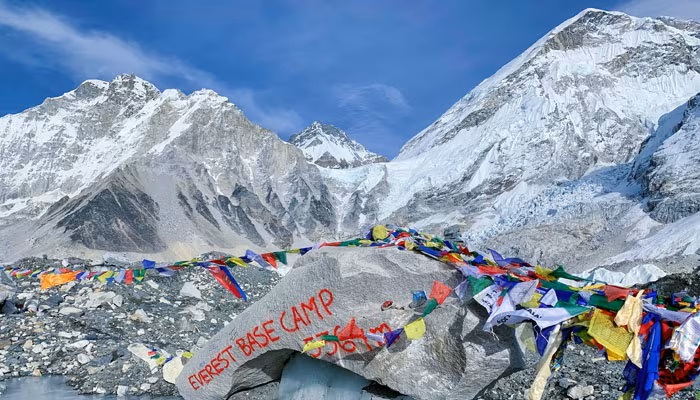
Nepal Everest Base Camp
North Everest Base Camp in Tibet
By comparison, the North Everest Base Camp in Tibet sits at an altitude of about 5,200 meters and is accessible by paved roads. Visitors can reach it by vehicle, which has made it one of the most popular destinations in Tibet. The dramatic landscape, combined with its proximity to Rongbuk Monastery, offers an impressive and direct view of Mount Everest.
The overland distance from Kathmandu to the North Base Camp is approximately 504 kilometers. Travelers typically cross the border at Gyirong Port, enter Tibet, and continue along the China–Nepal Friendship Highway to Tingri before reaching Everest Base Camp.
For most travelers, visiting the North Base Camp in Tingri County is more affordable and far less physically demanding than trekking on the Nepal side. The route is well-suited to regular tourists, does not require special equipment, and allows visitors to experience Everest without extreme physical strain.
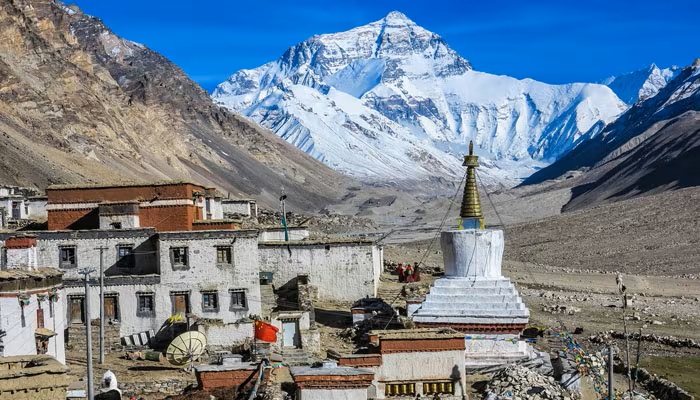
Rongbuk Monastery, Everest Base Camp on the north slope of Tibet
How to Travel From Kathmandu to the North Everest Base Camp
There are two main ways to reach the North Base Camp in Tibet from Kathmandu. One option is to cross the border by land via Gyirong. The other is to fly from Kathmandu to Lhasa and continue the journey by road. Regardless of the method chosen, foreign travelers must book through a licensed Tibet travel agency, which will arrange permits, transportation, accommodation, and guided services.
Overland Route via Gyirong Border
Traveling from Kathmandu to Tibet by road is an immersive journey that passes through diverse landscapes and dramatic mountain scenery. The route takes travelers from Nepal’s cultural heartland into the Himalayas before entering the Tibetan Plateau.
The journey begins in Kathmandu and continues by vehicle to the Nepal–China border near Rasuwagadhi. After crossing at Gyirong Port, travelers officially enter Tibet and meet their local Tibetan guide. The first overnight stop is usually Gyirong Town, a green valley settlement that provides a gentle introduction to high-altitude travel.
From Gyirong, the route continues toward Everest Base Camp, with a visit to Rongbuk Monastery along the way. Once at the base camp, travelers have time to explore the area and admire the immense north face of Everest. The journey then proceeds to Shigatse, where visitors can explore Tashilhunpo Monastery, the traditional seat of the Panchen Lama. The trip concludes in Lhasa, with stops at notable landmarks such as Pelkor Chode Monastery, Karola Glacier, and Yamdrok Lake. In Lhasa, travelers can visit iconic sites including the Potala Palace and Jokhang Temple to gain insight into Tibetan history and culture.
All arrangements, including travel permits and local logistics, must be handled in advance by a Tibet-based travel agency to ensure a smooth and compliant journey.
Flying From Kathmandu to Lhasa
For travelers with limited time, flying from Kathmandu to Lhasa is the fastest option. The flight takes approximately one and a half hours and offers spectacular aerial views of the Himalayan range, including Mount Everest on clear days.
After arriving in Lhasa, it is recommended to spend two days acclimatizing to the altitude. The overland journey to Everest Base Camp then begins, passing Yamdrok Lake, Karola Glacier, Pelkor Chode Monastery, and Shigatse before reaching the base camp area near Rongbuk Monastery. Travelers can enjoy sunrise and sunset views of Everest before continuing toward Gyirong and eventually returning to Kathmandu via the overland border route.
Those seeking to shorten the journey may travel by train or flight from Lhasa to Shigatse before continuing by road, although this option reduces exposure to scenic landscapes along the way.
Traveling to the South Everest Base Camp From Kathmandu
Reaching the South Everest Base Camp in Nepal requires a combination of flight and trekking. Travelers fly from Kathmandu to Lukla, a short flight that typically lasts between 30 minutes and one hour. Due to weather conditions and mountainous terrain, flights to Lukla are often subject to delays.
From Lukla, the trek to the South Base Camp begins. The route passes through Himalayan villages, suspension bridges, and dramatic alpine scenery. The full trek usually takes eight to ten days, depending on walking pace and acclimatization stops. Along the way, travelers experience both natural beauty and local Sherpa culture.
After reaching the base camp, trekkers return to Lukla on foot before flying back to Kathmandu. This route offers an immersive adventure but requires careful preparation, physical conditioning, and reliable local support.
Required Travel Documents
Travelers heading from Kathmandu to Everest Base Camp in Tibet must carry a valid passport and obtain several permits. These include a Chinese group visa, the Tibet Travel Permit, and an Alien Travel Permit.
The Chinese group visa must be applied for in Kathmandu at the Chinese embassy, using the original passport. Processing usually takes around three working days, so travelers should arrive in Kathmandu several days before departure.
The Tibet Travel Permit and Alien Travel Permit must be arranged in advance through a licensed Tibet travel agency. These documents are mandatory for all foreign visitors to Tibet, including those traveling to Everest Base Camp.
Altitude and Acclimatization Concerns
The drive from Kathmandu to the Gyirong border remains at relatively low elevations, with an average altitude of around 2,300 meters. Despite winding mountain roads, the lush scenery and moderate altitude reduce the risk of altitude sickness.
After entering Tibet, the elevation gradually increases over more than 400 kilometers, rising from around 2,500 meters to 5,200 meters at Everest Base Camp. The gradual ascent helps the body adapt, but travelers who are concerned about altitude sickness can extend travel time between Gyirong and Everest Base Camp to allow for additional acclimatization stops.
With proper pacing and rest, most travelers are able to reach the North Everest Base Camp comfortably and enjoy the awe-inspiring views of Mount Everest without serious altitude-related issues.