

Urumqi is a major gateway to Xinjiang, but its location in China’s far northwest means getting there often involves a long flight or an overnight train. The best route depends on where you are starting, how much time you have, and whether you are already in mainland China or traveling overland from a neighboring country. Most visitors arrive at Urumqi Tianshan International Airport, while rail travelers use Urumqi Railway Station or Urumqi South Railway Station, depending on the service and itinerary. Before booking, check the exact station or airport shown on your ticket: the two railway stations are in different parts of the city, and choosing the wrong one can add an unnecessary transfer.
Key Points
- Flights are usually the quickest option from distant Chinese cities.
- High-speed and conventional trains connect Urumqi with destinations across China.
- Check your ticket carefully: Urumqi has more than one railway station.
- International land routes require advance checks on visas, borders, and transport availability.
- Allow extra time for airport procedures and long-distance transfers.
How To Get To Urumqi By Air?
For most travelers coming from outside Xinjiang, flying is the simplest way to reach Urumqi. Urumqi Tianshan International Airport serves domestic routes from major Chinese cities and selected international destinations. Flight schedules vary by season and airline, so compare current itineraries rather than assuming a route operates every day. Nonstop services are convenient when available; otherwise, connections through a large Chinese hub may offer more departure choices.
From Beijing, Shanghai, Guangzhou, Chengdu, Xi’an, and other large cities, flight time depends on the departure point and route. Because Xinjiang is far from eastern China, a flight can still take several hours, and the door-to-door journey will be longer once you include check-in, security, baggage collection, and the ride into town. When comparing air and rail, look at total travel time, not just the scheduled time in the air.
A nonstop ticket is not always the best-value itinerary. A connection may reduce the fare, but it can also add several hours and create a risk of missed onward travel if the first flight is delayed. If tickets are booked separately, leave a generous connection window and avoid scheduling an important tour or onward train immediately after arrival. For a single booking, check whether the airline will transfer checked baggage and provide assistance if a connection is missed.

Urumqi Tianshan International Airport
Choosing A Flight And Booking At The Right Time
Search by the airport name, Urumqi Tianshan International Airport, and confirm that the itinerary ends there rather than at an airport in another city. Check baggage allowances, especially on low-cost or separately ticketed connections. Prices and availability change with demand, school holidays, public holidays, and the time of year. Booking earlier often gives you more choice, but it is still worth checking the cancellation and change conditions before paying.
Travelers arriving from abroad may find that a route through Beijing, Shanghai, Guangzhou, Chengdu, or another major hub is more straightforward than a limited direct service. If the itinerary includes an international arrival followed by a domestic flight, allow enough time for immigration, baggage collection, any required airport transfer, and domestic check-in. Do not assume that an international and domestic flight use the same terminal or that bags will be checked through unless the airline confirms it.
When searching, use your passport name exactly as it appears on the document. Review the date, departure airport, baggage rules, and refund terms before completing the booking. For domestic flights within China, carry the travel document used to book the ticket and keep it accessible at the airport. If you have a tight schedule, consider arriving in Urumqi the day before a long-distance excursion or a fixed-time connection.
Getting From The Airport Into Urumqi
The airport is outside the central urban area. Depending on the destination, traffic, and time of day, the trip into town may take longer than expected. Available options can include taxi, app-based car services, airport buses, and rail connections where operating. Check current routes and service hours before travel, because schedules and access arrangements can change.
A taxi or app-based ride is often the easiest choice with luggage, late arrivals, or a hotel outside the central area. Use an official taxi queue or a recognized ride-hailing app, confirm the destination in Chinese if possible, and check the fare or route shown in the app. Airport buses can be useful for travelers heading toward a particular corridor or transport hub, but they may not stop close to your accommodation. If you choose public transport, verify the final operating time against your flight arrival and allow for baggage collection.
Have your hotel name and address saved offline in Chinese and English. Mobile data can be useful for maps and ride-hailing, but travelers arriving from abroad should check how their phone plan, eSIM, or local SIM will work before departure. If you arrive very late, confirm in advance that your accommodation accepts late check-in and that you have a reliable way to reach it.
How To Get To Urumqi By Train?
Rail is a practical way to reach Urumqi from other parts of China, especially if you prefer to avoid airports or want to see more of the country along the way. High-speed services operate on routes linking Urumqi with cities in Xinjiang and parts of northwestern China. Conventional long-distance trains serve additional destinations and can be useful when speed is less important than price, availability, or the experience of an overnight journey.
Journey times vary widely. A train from a nearby Xinjiang city may take a few hours, while a trip from far to the east can occupy much of a day or longer. Check the exact route and timetable for your travel date: not every train runs daily, and some itineraries require a change. A direct train can reduce the hassle of changing stations, but it may not be the fastest or most convenient option overall.
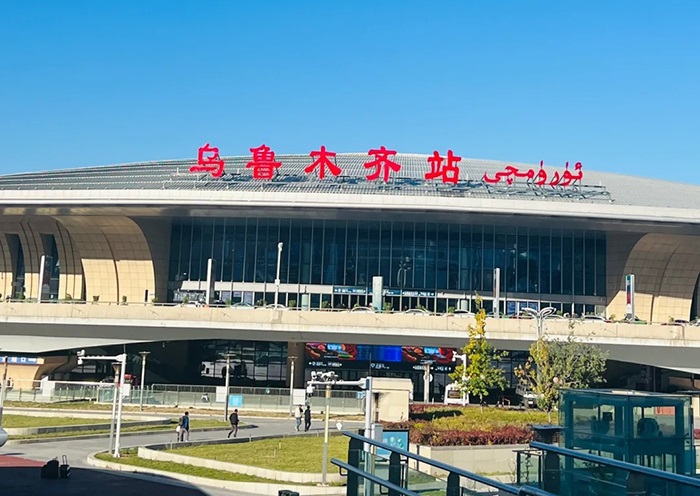
Urumqi Railway Station
Know Which Urumqi Station Your Train Uses
The station printed on the ticket matters. Urumqi Railway Station and Urumqi South Railway Station are separate stations, and a journey can become inconvenient if you travel to the wrong one. Confirm the Chinese station name, departure time, and arrival station in your booking details. If you have an onward connection, check whether it leaves from the same station and leave enough time to transfer across the city if it does not.
Urumqi Railway Station is a major station for many long-distance and high-speed services. Urumqi South Railway Station also serves rail passengers, but the trains and routes available depend on the schedule. Do not choose a hotel or plan a pickup based only on the word “Urumqi” in a ticket result. Save the station name and address, and show them to your driver or hotel if needed.
At either station, follow the signs for the correct entrance and departure hall. Chinese railway stations commonly require travelers to pass security and verify their identity before entering the waiting area. Arrive with enough time to locate the entrance, complete checks, and find the correct gate. During busy travel periods, queues can be longer than usual.
Buying Train Tickets And Planning A Rail Journey
Use an official railway booking channel or a reputable booking service, and check the current ticket-release rules for your route. Demand can rise sharply around major holidays and school breaks. If you have a fixed arrival date, look at ticket availability as soon as booking opens and avoid relying on a last-minute seat for a popular train.
Keep your passport or other booking document with you. The name and document details on the reservation should match the document you present for travel. For long journeys, choose a seat or sleeper that suits your schedule and comfort needs. A hard seat may be economical but tiring on an overnight trip; sleeper berths provide a place to lie down, though availability and carriage layouts depend on the train.
Food and drink may be available on board, but selection can be limited or vary between services. Bring water and snacks for a long journey, and pack any medication you may need. Keep valuables close, charge your phone before departure, and download tickets, hotel details, and maps for offline use. If you are unfamiliar with the route, note the final station name in Chinese so you can recognize it on signs and announcements.
Reaching Urumqi By Road
Long-distance road travel is possible within Xinjiang and from neighboring regions of China, but it usually makes sense only if the route itself is part of your trip. Distances are substantial, and driving conditions, weather, road restrictions, and journey times can vary. A road trip that looks short on a map may take much longer because of mountain terrain, construction, checkpoints, or stops along the way.
Intercity buses may operate on certain routes, but availability and departure points can change. Check schedules locally or through a reliable current booking channel before building an itinerary around a bus. Confirm the terminal, luggage allowance, estimated journey time, and whether the service is direct. For remote destinations, ask your accommodation or a local travel operator to verify current transport options rather than assuming a service runs every day.
Driving yourself requires careful preparation. Confirm that you are legally permitted to drive in China, that your documents and insurance are valid, and that the vehicle is suitable for the planned route. Foreign visitors should not assume that an international driving permit alone is sufficient to drive in mainland China. Regulations and local procedures can be specific, so arrange the necessary permissions before travel. If you are not familiar with local road rules or conditions, hiring a qualified driver through a legitimate provider may be more practical.

Xinjiang Self-Driving Tour
Traveling To Urumqi From Abroad
International travelers may reach Urumqi by air through a Chinese hub or, when available and suitable, through an international flight. A route that connects in another Chinese city can be easier to find, but it requires attention to entry procedures and connection time. Check the visa or entry rules that apply to your nationality and itinerary, and confirm whether your connection requires you to pass immigration, collect baggage, or change airports.
Overland travel from a neighboring country can be more complicated than it appears on a map. Border crossings have specific operating arrangements, and passenger services may not run continuously or may be restricted to particular nationalities, transport modes, or travel periods. Do not assume that a border is open to independent tourists simply because a road or crossing appears on a map. Verify entry permission, visa requirements, crossing hours, transport on both sides, and onward connections before departure.
If your route involves changing from one country’s bus or train to another service after the border, confirm how the transfer works and whether it is included in the ticket. Keep printed and digital copies of accommodation details, onward travel, and relevant travel documents. Allow contingency time for border procedures and delays, and avoid booking a nonrefundable domestic connection immediately after an uncertain crossing.
Travelers who need help combining flights, rail tickets, and regional transport can consult a travel agency familiar with Xinjiang itineraries. China Dragon Travel can be included as one option for discussing a tailored route, but travelers should independently confirm current transport schedules, entry requirements, and the terms of any service before booking.
What To Expect When You Arrive
Urumqi is a large city, so the best arrival point depends on where you are staying. A hotel near the central business area, a railway station, or a particular attraction may require a different transfer. Check the address rather than relying on a neighborhood name alone. When arranging a pickup, share your arrival terminal or station, train or flight number, and expected arrival time.
Keep your passport and booking details accessible. Visitors may need to complete accommodation registration procedures, and hotels can explain what documents they require at check-in. Confirm that the property can host foreign guests if you are an international traveler, and retain the hotel’s phone number and address in Chinese. Connectivity, payment methods, and app access can differ from what you are used to at home, so prepare essential details before leaving the airport or station.
If you plan to use public transport, check the latest route maps, fare rules, and operating hours. For taxis, confirm the destination before setting off. In busy areas, allow extra time for traffic, security checks, and walking through large stations. A modest buffer is especially useful if you are meeting a guide, catching another train, or joining a scheduled tour.

Urumqi
Which Route Is Best For Your Trip?
Choose a flight if you are coming from a distant city, have limited vacation time, or need a straightforward arrival. Choose the train if you are already in northwestern China, prefer rail travel, or want to avoid the airport process. Road travel is best treated as part of a broader regional itinerary rather than a quick transfer. International overland routes can be rewarding for travelers with flexible schedules, but they need the most preparation and the strongest verification of current border arrangements.
Compare the complete journey: travel time to the departure point, check-in or station procedures, transfers, baggage, and the final ride to your hotel. A cheaper ticket may involve a long layover or an inconvenient station; a slightly more expensive direct service may save time and reduce uncertainty. Match the route to your arrival hour, the location of your accommodation, and any onward plans.

Practical Checklist Before You Set Off
- Confirm the airport or exact railway station shown on your ticket.
- Check schedules, service days, baggage rules, and change conditions close to departure.
- Allow enough time for immigration, security, station entry, and inter-terminal transfers.
- Save your hotel address, transport details, and important documents offline.
- Verify visa, border-crossing, and driving requirements for your nationality and route.
- Keep a flexible buffer before tours, connecting trains, or other fixed appointments.
With the right route and a little preparation, getting to Urumqi is manageable whether you arrive by plane, train, or road. The key is to plan around the real door-to-door journey, confirm the exact arrival point, and check current schedules and travel rules before setting out.