

Traveling in Xinjiang with an international credit card is possible, but relying on one card for every payment is not a safe plan. Major hotels, some larger shops, and businesses that serve international visitors may accept cards such as Visa or Mastercard, while many everyday purchases are made through Alipay, WeChat Pay, or cash. Acceptance can vary by city, merchant, and payment terminal, so the most useful approach is to bring a card, set up a mobile payment option if available to you, and carry some renminbi as a backup.
Key Takeaways
- Cards work selectively: Larger hotels and some established businesses are more promising than small shops or street vendors.
- Mobile payments are common: Alipay and WeChat Pay are widely used for routine purchases.
- Cash remains useful: Keep renminbi available for places that cannot process your preferred payment method.
- Prepare before arrival: Check with your bank, enable overseas transactions, and test your payment apps.
- Allow for variation: Payment options can differ between Urumqi, smaller towns, and remote areas.
Can you use international credit cards in Xinjiang?
Yes, you may be able to use an international credit card in Xinjiang, but acceptance is limited and inconsistent compared with the payment experience many visitors expect in other countries. A card bearing an international network logo may work at some hotels, larger retailers, or businesses with payment terminals configured to process foreign cards. It may not work at a small restaurant, neighborhood store, local taxi, market stall, or independent guesthouse.
The key distinction is between a card being technically valid and a merchant being able to accept it. Your bank can approve an overseas transaction, but the shop still needs a compatible terminal and the right merchant account. Some payment terminals in China are set up primarily for domestic bank cards or mobile payment QR codes. A card that works at a hotel reception desk may therefore be declined at a nearby café.
Xinjiang is a large region, and payment options are not uniform. Urumqi, as a major urban center, generally offers more opportunities to find businesses accustomed to serving visitors. In smaller cities, county seats, and remote areas, you should expect fewer international-card options. Even within the same city, two businesses in the same category may handle payments differently.
For a smooth trip, treat your international card as one part of a payment plan, rather than your only method. A practical setup includes a primary card, a second card if available, a mobile payment option that you have tested, and some cash in renminbi. This mix gives you alternatives if a terminal is unavailable, an app cannot complete a transaction, or a bank flags an unusual payment.

Urumqi
Where international cards are most likely to work
Hotels and larger businesses
International credit cards are more likely to be accepted by larger hotels, particularly properties that regularly host overseas guests. Higher-end hotels and established international-facing businesses are generally better prospects than a small, independent accommodation provider. However, acceptance should never be assumed from a hotel’s price or appearance alone. Contact the property before booking or arrival and ask specifically whether it can charge your card at the front desk, not only whether it accepts online reservations.
The distinction matters because a booking platform may process payment outside the property, while the hotel itself may require a deposit or final payment at check-in. Ask which card networks are accepted, whether a deposit is required, and whether the card used for the reservation must be presented in person. If the hotel cannot confirm, bring another payment method and keep enough cash for the first night and incidental expenses.
Larger shopping centers, branded retailers, and some travel-oriented businesses may also be more likely to have suitable terminals. Even there, acceptance can depend on the specific outlet and terminal. If you are making an expensive purchase, ask about card acceptance before the transaction is finalized and check whether the displayed amount is in renminbi.
Restaurants, shops, and local services
For everyday spending, expect mobile QR payments and domestic payment methods to be more prominent than foreign credit cards. A restaurant may display Alipay and WeChat Pay codes at the counter, and a small shop may not have a card terminal at all. Local transport providers, small food stalls, convenience stores, and family-run businesses can be particularly variable.
This does not mean international cards are useless. They can be valuable for hotel bills, larger purchases, or emergencies. The issue is that day-to-day payments often happen through systems designed around scanning a QR code. If you plan to eat at small restaurants, shop at local markets, or travel beyond major urban areas, make sure you have a workable alternative to tapping or inserting your card.
When you are unsure, ask before ordering or purchasing. A simple question such as “Can I pay with an international Visa or Mastercard?” can prevent awkwardness at the end of a meal. If a merchant cannot accept your card, ask whether it accepts cash or a mobile payment app you have configured. Do not assume that a sign showing a familiar card logo means every foreign-issued card will be processed successfully.
Using Alipay or WeChat Pay as a visitor
Mobile payments are a major part of everyday transactions in China. Visitors may be able to link an eligible international bank card to Alipay or WeChat Pay and use the app to pay participating merchants. This can make routine purchases much easier, especially at businesses that rely on QR codes rather than card terminals. Setup requirements and supported cards can change, so review the current instructions inside the official app before your trip.
Set up and test before you travel
Download the official app from a trusted app store and follow its identity-verification and card-linking instructions. You may be asked to provide information that matches your travel document or payment card. Enter your name and other details carefully, since inconsistencies can cause verification or payment problems. Complete setup while you have reliable internet access and time to resolve any issues.
Do not wait until you are standing at a checkout to find out whether your card can be linked. Test the account before departure if possible, and confirm that the app remains accessible on your phone. Keep the phone number associated with the account active if verification codes may be sent to it. Make sure you know your app password and can unlock your device without relying on a network connection.
Linking a foreign card does not necessarily mean every payment will go through. A transaction may be declined because of a bank security check, a merchant’s setup, a spending limit, or an app rule. Some services may charge a fee for particular transactions, and payment limits or conditions can differ by account and card. Read the fee and transaction information shown in the app, and check with your card issuer about any foreign transaction charges.
Understand QR-code payments
A merchant may show a QR code for customers to scan, or the cashier may scan a payment code displayed in your app. Follow the instructions on the screen and check the amount and recipient before confirming. If you are unfamiliar with the process, ask staff to guide you. A screenshot or saved image of a payment code may not work; many codes refresh or require an active connection.
Use only official apps and verify the payment recipient before approving a transaction. Avoid scanning a code that appears to have been placed over another merchant’s code, and do not share verification messages or account passwords. If a payment appears to fail, check the app’s transaction record before trying again to avoid paying twice.
Mobile payment is useful, but it should not be your only backup. Your phone could lose power, connectivity may be poor, an app could require re-verification, or your linked card might be declined. Carry a physical card and some cash even if the app works perfectly during your first few transactions.
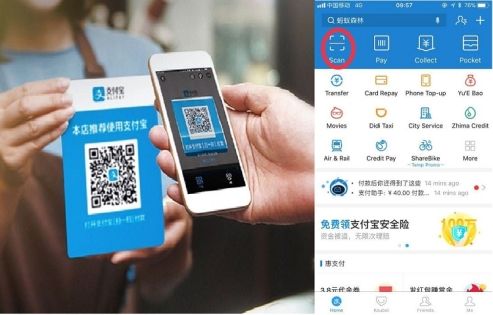
Alipay
Why cash is still worth carrying
Cash in renminbi remains a practical backup for travel in Xinjiang. It can help when a small business has no compatible terminal, a mobile payment service is unavailable, or you need to pay in a place with limited connectivity. Cash is particularly useful when traveling outside major urban centers, where the range of payment options may be narrower.
Before leaving a large city, think about the next part of your route. If you are heading to a smaller town, a scenic area, or a long stretch between settlements, withdraw or exchange a sensible amount in advance. Do not carry more than you need, and keep cash in more than one secure place. Small denominations can be convenient for low-cost purchases, but check notes as you receive them and store them safely.
ATMs are available in major cities, but access can be less convenient in remote locations. Whether an ATM accepts your foreign card depends on the machine, its network, and your bank. Look for machines inside established bank branches or busy commercial areas when possible, and try a modest withdrawal before you urgently need cash. Your bank may charge an international withdrawal fee, and the local operator may apply an additional fee, so check the terms before confirming.
If you plan to exchange currency, use a legitimate bank or authorized exchange service and ask about the required identification and available currencies. Availability can vary, and not every location will exchange every type of foreign banknote. Avoid relying on informal exchanges. Keep receipts for transactions when useful, especially if you need to track spending or resolve a discrepancy.
Preparing your cards and bank account
A few checks before departure can prevent a declined payment from becoming a major inconvenience. Contact your bank or review its app to confirm that your card is enabled for overseas use and that your account details are current. Ask whether the bank requires travel notifications, what foreign transaction fees apply, and how to reach its support team from abroad.
Make sure you know your card’s PIN. Some terminals may request a PIN, and a signature-only card may not behave as expected. Confirm your daily purchase and cash withdrawal limits, and check whether your card issuer blocks transactions that appear unusual. If you have more than one card, consider carrying cards from different accounts or networks rather than relying on duplicates linked to the same account.
Save your bank’s international contact number in a secure place, separate from your wallet. Keep a record of the last few digits of each card and the steps needed to freeze it if lost. Do not store full card details and security codes in an unprotected note on your phone. Enable transaction alerts where available so you can notice an unexpected charge quickly.
When a payment is declined, avoid repeatedly trying the same transaction without checking the cause. Confirm that the amount is correct, ask whether another payment method is accepted, and check your bank app for a fraud alert or authorization request. If the bank has blocked the transaction, use its official support channel. A second card or cash can keep the situation manageable while the issue is resolved.
Planning payments for different parts of Xinjiang
Urumqi
Urumqi is the most practical place to organize your payment options at the start of a trip. You are more likely to find bank branches, ATMs, larger hotels, and businesses with experience serving visitors than in smaller settlements. This makes it a good place to test your card and mobile payment app, obtain cash, and resolve account problems before traveling onward.
Still, a major city does not guarantee that every shop accepts foreign cards. For local restaurants, small stores, and daily transport, plan to use the payment method accepted by the business rather than expecting a standard credit-card terminal. Keep cash accessible for small purchases and unexpected needs.
Smaller cities and rural areas
In smaller cities and rural areas, payment acceptance can become less predictable. A hotel may accept mobile payments but not a foreign card; a shop may accept cash but have limited digital options; another business may process an international card without difficulty. These differences are part of the reason to carry more than one payment method.
If your itinerary includes several nights outside major cities, check payment arrangements with your accommodation before departure. Ask whether meals or transport can be paid at the property, whether a deposit is needed, and whether there is a nearby ATM. If the property is remote, arrange the practical details while you still have reliable connectivity and access to banking services.
Long-distance and remote travel
For road journeys, remote scenic stops, or routes with long gaps between towns, do not assume that you will be able to find an ATM or a merchant that accepts your app. Carry enough cash for planned purchases and reasonable contingencies, while keeping your cards and phone available as alternatives. Replenish supplies in larger towns rather than waiting until your cash is nearly gone.
Before setting out, ask your driver, guide, hotel, or tour operator what payment methods are commonly used along the route. Their local knowledge can help you decide how much cash to carry and whether a particular service needs to be paid in advance. Confirm the agreed price and payment method clearly, especially for services arranged directly with a local provider.

Fruits from Xinjiang
Fees, exchange rates, and receipts
Using a foreign card may involve charges from your card issuer, the payment provider, or both. Common costs include a foreign transaction fee, an overseas cash withdrawal fee, and a local ATM charge. Your card may also offer an exchange rate that differs from the rate shown by a merchant or terminal. Review your card’s terms before traveling so you know which costs are likely to apply.
If a terminal offers to charge you in your home currency instead of renminbi, compare the options carefully. This service is often called dynamic currency conversion. The displayed home-currency amount may include an exchange rate chosen by the merchant or payment processor, which may be less favorable than the rate provided by your own card network or bank. You can generally choose to be charged in the local currency when that option is available, then let your issuer handle the conversion, but check your card’s terms.
Keep receipts for hotel deposits, larger purchases, and transactions that look unusual. Check the amount before confirming a mobile payment or card charge. If a payment is reversed or appears twice, having a receipt and a transaction record can make it easier to speak with the merchant, app provider, or bank. Avoid letting a card out of sight when paying in person, and check that it is returned to you before leaving.
A simple payment strategy for Xinjiang
A dependable plan does not require carrying a large amount of money or using every available payment service. Instead, prepare a few methods and know when to use each one:
- Use your international card for suitable larger transactions. Hotels and established businesses are among the more promising places, but confirm acceptance in advance.
- Set up a mobile payment app before departure. Link an eligible card, complete verification, read the fee information, and test the app.
- Carry renminbi for everyday and backup spending. Keep a reasonable amount available, especially before leaving major cities.
- Bring a second card if possible. Store it separately from your main card in case one is lost, blocked, or incompatible with a terminal.
- Check payment arrangements for remote stays. Ask accommodation providers and tour operators what they accept and whether anything must be paid ahead of time.
This layered approach is more useful than trying to predict exactly which businesses will accept a particular card. Payment systems and merchant arrangements can change, and acceptance may differ from one transaction to the next. A little preparation reduces the need to make urgent decisions at a counter or on the road.
How China Dragon Travel can help with payment planning
If you are arranging a Xinjiang itinerary through China Dragon Travel, ask the team about payment expectations for the specific hotels, tours, and transport services in your plan. Payment methods can differ among suppliers, so it is helpful to confirm which costs are paid in advance, which are settled locally, and whether any provider requires a particular method. Ask about practical access to ATMs and cash on remote routes as well.
A travel operator can provide itinerary-specific guidance, but travelers should still verify card terms with their own bank and check the current requirements of payment apps. Keep confirmation messages and payment records for bookings, and clarify whether a quoted price includes deposits, meals, tickets, or other expenses. This helps you arrive with a realistic payment plan rather than assuming one method will cover the entire journey.

Frequently asked questions
Can I use Visa or Mastercard in Xinjiang?
You may be able to use Visa or Mastercard at some larger hotels, retailers, and businesses serving international visitors. Acceptance is not universal, and many smaller merchants rely on mobile payments or cash. Ask the business directly before making an important purchase or relying on a card for a hotel bill.
Should I bring cash to Xinjiang?
Yes. Carry a reasonable amount of renminbi as a backup, particularly for small purchases and travel outside major cities. Cash can help when a card terminal is unavailable, an app does not work, or an ATM is difficult to find. Keep it secure and replenish it in larger towns when needed.
Can tourists link an international card to Alipay or WeChat Pay?
Visitors may be able to link eligible international cards to Alipay or WeChat Pay, subject to the app’s current rules, verification requirements, and card support. Set up the account before your trip, read the displayed fees and limits, and test it in advance. Carry another payment method in case a transaction is declined.
Are ATMs available throughout Xinjiang?
ATMs can be found in major cities, but availability and foreign-card support may be less dependable in smaller towns and remote areas. Try an ATM in a major city before heading to a remote destination, and check your bank’s withdrawal fees and limits. Do not wait until you have run out of cash to look for one.
What should I do if my international card is declined?
Check that the transaction amount is correct, look for a security alert from your bank, and ask the merchant whether it accepts another method. Try your mobile payment app or cash if available, rather than repeatedly submitting the same declined transaction. Contact your issuer through its official support channel if the card remains blocked, and use a backup card if you have one.