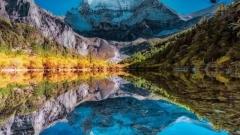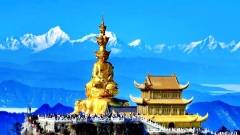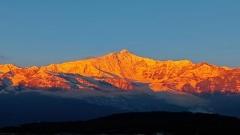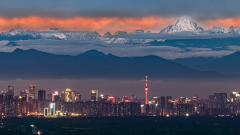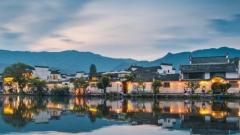

If Tibet is a paradise hidden among the clouds, Western Sichuan (Chuanxi) is the ultimate wilderness within your immediate reach. Among the many travel routes in this region, the “Western Sichuan Small Loop”—connecting Mount Siguniang, Danba, Xinduqiao, and Mugetso—stands out as the most classic and scenically diverse golden route.
This loop spans landscapes ranging from snow-capped peaks and plunging canyons to pristine alpine meadows and ancient Tibetan villages. With its gradual altitude variations, this itinerary is perfect for first-time high-altitude travelers seeking a profound immersion into Khampa Tibetan culture and pristine wilderness. Let’s trace this beautiful loop and unlock its bucket-list highlights.
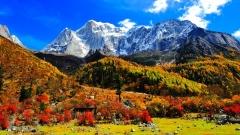
Mount Siguniang: The Alpine Elegance of the “Queen of Sichuan”
Departing from Chengdu and crossing the majestic Balang Mountain Pass, the first major destination to greet you is Mount Siguniang (Four Sisters Mountain). Comprising four continuous, snow-draped peaks, this mountain range remains frozen in eternal white, earning it the reputation of the “Alps of the East.”
A. Shuangqiao Valley: The Most Relaxed & Diverse Scenic Glen
Shuangqiao Valley is the most well-developed and physically effortless part of Mount Siguniang to explore, as the entire route is fully serviced by eco-friendly sightseeing buses.
-
Highlights: Stroll through the hauntingly beautiful Bonsai Beach and the dense Red Redwood Forest, where you can gaze up at towering alpine backdrops. Rushing streams carve through expansive meadows. When autumn rolls around, the entire valley turns into an oil painting of vibrant oranges and deep golds.
B. Changping Valley: A Sanctuary for Hiking and Horseback Trekking
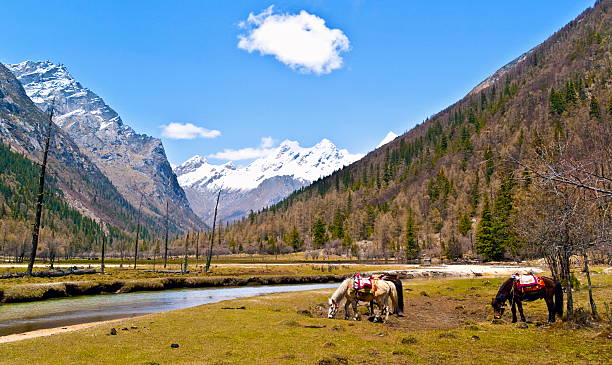
Compared to Shuangqiao Valley, Changping Valley caters to outdoor enthusiasts who prefer deep forest hiking or experiential horseback riding along ancient paths.
-
Highlights: This is a 29-kilometer ecological canyon flanked by towering ancient cypresses and mossy riverbeds. Crucially, it serves as the absolute best vantage point to marvel closely at the sheer, vertical rock face of “Yaomei Feng” (the youngest sister peak and the highest summit at 6,250 meters).
Danba: Step into “The Most Beautiful Village in China”
Leaving the glaciated peaks behind, the route descends into the warm embrace of the Dadu River Valley to enter Danba, a region world-famous for its unique fortified stone towers, striking architecture, and rich local lore.
A. Jiaju Tibetan Village: Emerald Valleys and Red-White Architecture
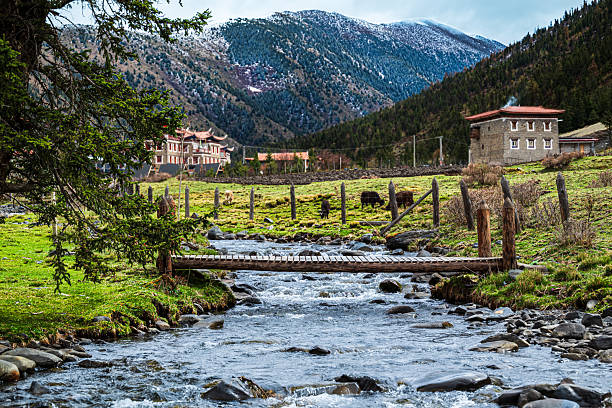
“Jiaju” translates to “a hundred households” in the local Tibetan dialect. Hundreds of traditional stone houses cling gracefully to the undulating mountain slopes, scattered across the lush valley.
-
Highlights: The homes feature a distinct red, white, and black color palette, topped with intricate corner designs. In the early morning mist, wisps of kitchen smoke drift through the valley, blending seamlessly with spring pear blossoms or autumn foliage to create an idyllic, secluded fairy tale.
B. Suopo Ancient Watchtowers: The Ancient Land of a Thousand Towers
Danba has historically been known as the “Kingdom of a Thousand Watchtowers,” and Suopo holds the highest concentration of them. These tall, star-shaped stone structures have withstood centuries of wind, rain, and massive earthquakes—standing as a testament to the defense engineering of ancient Tibetan tribes.
Xinduqiao: The Captivating “Photographer’s Paradise”
After crossing the Geda Liangzi Mountains and passing the vast Tagong Grasslands, you arrive at the crucial transportation hub and the undisputed artistic muse of Western Sichuan: Xinduqiao.
-
The Concept: Xinduqiao is not a single enclosed scenic park with an admission gate. Instead, it refers to a breathtaking 10-kilometer highway corridor stretching between Zheduo Mountain and Tagong.
-
Highlights (The Symphony of Light): The magic of Xinduqiao lies entirely in its “light and shadow.” Winding brooks, rows of upright poplar trees, and Tibetan homes scattered across the hillsides transform under the morning and evening golden hours. The shifting sunrays filter through the trees, casting a high-contrast palette of amber and brilliant emerald. Here, a simple snapshot yields a masterpiece.
Mugetso (The Kangding Love Song Scenic Area): The Pure Alpine Jewel
The loop concludes in Kangding, the historic homeland of the famous Chinese love ballad. Tucked away on the outskirts of the city lies Mugetso (also known as Wild Man Sea), one of the largest high-altitude lakes in northwestern Sichuan.
-
The Concept: The scenic area is a grand collection of alpine wonders, combining the main Mugetso Lake, the Red Sea Grasslands, the Seven-Color Sea, and natural geothermal boiling springs.
-
Highlights:
-
Mugetso Main Lake: Sitting at an elevation of 3,700 meters, the lake boasts pure, crystalline azure waters. On a clear day, the surrounding snow peaks cast flawless reflections across the mirror-like surface. The lake even features a rare, natural golden sand beach along its shore.
-
The Healing Geothermal Springs: The area features multiple natural hot springs. When mountain travel fatigue sets in, stopping here to soak your feet and try a local “spa egg” cooked directly in the sulfur-rich waters is an absolute treat.
-
An Alpine Symphony for the Soul
The true magic of the Western Sichuan Small Loop lies in its ability to condense the raw power of snow mountains, the architectural warmth of ancient Tibetan villages, the fluid art of mountain sunlight, and the absolute silence of holy lakes into a single, cohesive journey. This route is not just a visual feast; it is a profound journey into the heart of geological wonders and local heritage. Standing atop the mountain passes, watching prayer flags flutter against the distant silhouette of Mount Gongga, you will realize this journey is an unforgettable chapter written into your traveling life.