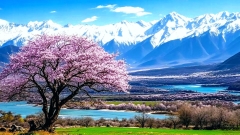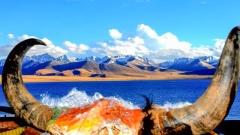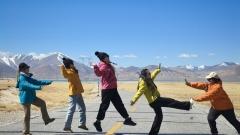

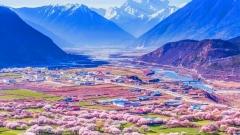
When people talk about Nyingchi, the first image that often comes to mind is peach blossoms covering the valleys in spring. The annual blossoms are certainly one of the region’s biggest attractions, but they are only one part of what makes Nyingchi special.
Located in southeastern Tibet, Nyingchi is known for its lower valleys, dense forests, snow-covered mountains, alpine lakes, rivers, and Tibetan villages. The scenery can change dramatically from one stop to the next. You might begin the day beside a turquoise lake, drive through dense mountain forests, and end up looking toward a snow-covered peak.
This makes Nyingchi worth visiting beyond the peach blossom season. Whether you travel in spring, summer, autumn, or winter, there are plenty of places to explore.
Key Takeaways
- Nyingchi offers much more than its famous spring peach blossoms.
- Basum Tso, Lulang Forest, Namcha Barwa, and the Yarlung Tsangpo Grand Canyon are among the region’s major attractions.
- Nyingchi combines forests, alpine lakes, rivers, snow mountains, grasslands, and Tibetan villages.
- Different areas of Nyingchi offer very different landscapes, making it ideal for photography and scenic road trips.
- Summer and autumn are also good times to explore Nyingchi, even after the peach blossom season.
Why Is Nyingchi Different From Other Parts of Tibet?
Nyingchi has a noticeably different landscape from the dry, open plateau scenery commonly associated with central and western Tibet.
The region lies at a lower elevation than many famous Tibet destinations, and its valleys receive more moisture. As a result, forests are much more prominent.
Drive through the region and you may see cedar and pine forests, green valleys, rivers, farmland, alpine lakes, and snow-covered mountains within the same journey.
This combination gives Nyingchi a distinct character.
It is sometimes described as one of the greener parts of Tibet, but the most interesting thing is really the contrast. A forested valley can suddenly open into a broad mountain landscape, while a quiet Tibetan village may sit beneath a massive snow-covered peak.
That variety is exactly why it is worth looking beyond the peach blossoms.
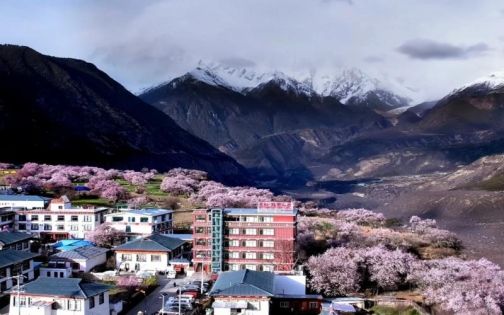
Nyingchi Peach Blossoms
Basum Tso: One of Nyingchi’s Most Beautiful Lakes
One of the first places to consider after the peach blossoms is Basum Tso, also known as Basong Tso.
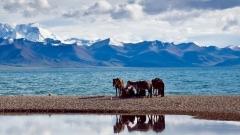
The lake is surrounded by forested mountains and snow peaks, creating a landscape that feels very different from Tibet’s huge open plateau.
Its turquoise or blue-green water is one of its most recognizable features, although the exact appearance can change with weather and light.
What Can You Do at Basum Tso?
The lake is not simply a place to stop for one photograph.
You can spend time walking along the lakeshore, visiting scenic viewpoints, and exploring the surrounding environment.
There are also small islands and religious sites associated with the lake, adding a cultural layer to the natural scenery.
For photographers, Basum Tso offers plenty of possibilities. Wide-angle shots work well for the lake and mountains, while longer lenses can isolate forests, peaks, boats, or architectural details.
The calmest parts of the day can also offer reflections on the water when weather conditions are suitable.
Lulang Forest: A Green Highland Landscape
If you want to see just how green Nyingchi can be, Lulang Forest should be on your itinerary.
Lulang is known for its extensive forests, open grasslands, wooden villages, and mountain backdrop. The area has a softer, more pastoral atmosphere than many of the rugged landscapes found elsewhere in Tibet.
The scenery changes considerably with the seasons.
In warmer months, the grasslands can look intensely green, while autumn brings warmer colors to parts of the forest.
The area is particularly enjoyable for travelers who like scenic walks and photography. You do not necessarily need a long hike to appreciate it. Several viewpoints and roadside areas provide broad views over the valley.
Why Is Lulang Good for a Road Trip?
Lulang is also valuable because of its location along the mountain roads of southeastern Tibet.
The journey itself is part of the experience. Forests, meadows, mountain slopes, and villages appear along the road, creating plenty of opportunities for photography stops.
Instead of treating the drive as simple transportation, allow some extra time to enjoy the changing scenery.
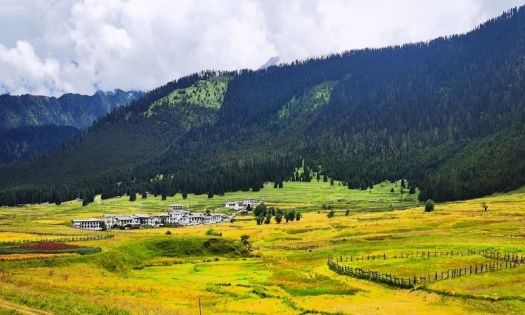
Lulang Forest Sea
Namcha Barwa: The Mountain That Defines the Landscape
For many travelers, Namcha Barwa is one of the most unforgettable sights in Nyingchi.
The mountain rises dramatically above the surrounding valleys and is especially impressive from viewpoints around the Yarlung Tsangpo Grand Canyon and nearby areas.
Its distinctive shape and snowy summit create a powerful contrast with the green valleys below.
However, mountain visibility is highly weather-dependent.
You can visit a famous viewpoint and still find the summit hidden behind clouds. This is normal in high mountain environments.
That is why travelers who want to photograph Namcha Barwa should leave some flexibility in the itinerary rather than expecting a clear view at a precise time.
When Is the Mountain Most Photogenic?
Morning can often be a good time for mountain photography because the air and light may be more favorable before clouds build later in the day.
But there is no guaranteed viewing time.
Weather changes quickly around major Himalayan peaks, so patience is often just as important as camera equipment.
Yarlung Tsangpo Grand Canyon: One of the Region’s Biggest Landscapes
The Yarlung Tsangpo Grand Canyon is another reason to visit Nyingchi beyond spring flowers.
The canyon follows the Yarlung Tsangpo River through an enormous mountain environment and is known for its dramatic combination of deep valleys, steep slopes, rivers, forests, and snow-covered mountains.
This is a destination where scale matters.
Some viewpoints can make the surrounding landscape feel almost overwhelming, particularly when the river, canyon walls, and distant mountains are all visible at once.
For travelers who prefer large landscapes to close-up attractions, the canyon can easily become one of the highlights of a Nyingchi trip.
It is also one of the places where you can better understand the region’s geography. The mountains are not simply a background; they shape the rivers, forests, villages, and roads around them.
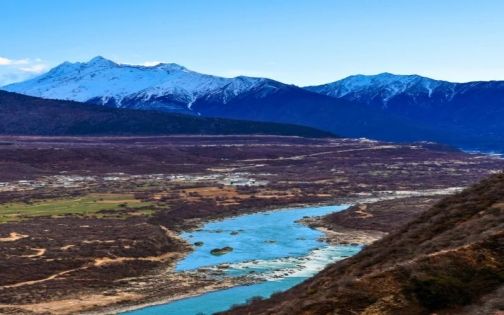
Yarlung Tsangpo Grand Canyon
Sejila Mountain: Mountain Views Along the Road
Sejila Mountain is another notable stop on routes through Nyingchi.
The mountain pass is known for its elevated views of the surrounding landscape and, under favorable conditions, views toward distant snow peaks.
Because this is a mountain environment, weather plays a major role. Clear conditions can reveal expansive views, while clouds can completely transform the mood.
For road-trip travelers, the appeal is also the journey toward the pass. The changing vegetation provides a visual transition from lower valleys into higher mountain terrain.
This makes the route itself part of the attraction.
Niyang River: A Different Side of Nyingchi
The Niyang River is another important landscape feature of the region.
Flowing through the Nyingchi area, the river is surrounded by mountains, forests, and valleys. Along certain sections, it creates broad scenic views where water, green hills, farmland, and distant peaks come together.
You do not necessarily need to plan a separate day around the river.
Instead, it can become part of the scenery you experience while traveling between other destinations.
For photographers, rivers are useful because they introduce a strong visual line into otherwise large mountain landscapes.
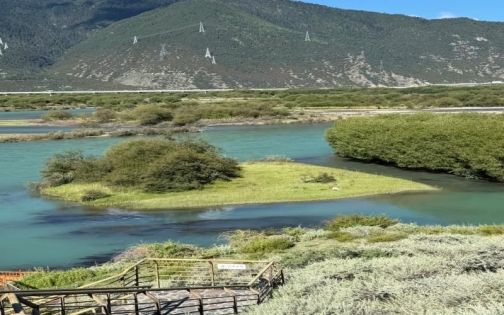
Niyang River
Tibetan Villages and Rural Landscapes
One of the easiest things to overlook when visiting Nyingchi is everyday village life.
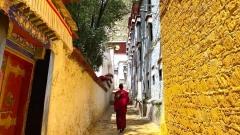
The region is home to traditional Tibetan settlements, farmhouses, cultivated fields, prayer flags, and mountain communities.
These places may not always appear on a standard list of famous attractions, but they can make your trip feel much more connected to the region.
Depending on the season, you may see agricultural work, grazing animals, flowering trees, or villages surrounded by changing mountain colors.
Photography can be particularly rewarding here, but it is important to remember that these are real communities rather than open-air attractions. Ask for permission before photographing people closely or entering private property.
Nyingchi Is Great for Scenic Drives
One of the best ways to explore Nyingchi is by road.
Because the landscapes are so varied, the journey between major destinations can be almost as interesting as the destinations themselves.
A route may include:
Lhasa → Nyingchi → Basum Tso → Lulang → Namcha Barwa → Yarlung Tsangpo Grand Canyon
Along the way, the scenery can shift from high plateau landscapes to forested valleys and dramatic mountain passes.
This makes Nyingchi particularly suitable for travelers who enjoy photography, road trips, and landscapes that change constantly.
Instead of scheduling every stop down to the minute, it can be useful to leave some room for roadside viewpoints and changing weather conditions.
What Can You See in Nyingchi After Peach Blossom Season?
Spring may bring the famous flowers, but summer and autumn have plenty to offer.
Summer: Forests, Lakes, and Green Valleys
Summer is when much of Nyingchi becomes especially lush.
Grasslands turn green, forests become dense, and alpine lakes stand out against the surrounding mountains.
This is a good season for travelers who want to see Nyingchi at its greenest.
Rain is more likely, however, and clouds can affect mountain visibility.
Autumn: Golden Forests and Clearer Landscapes
Autumn brings another transformation.
Parts of the forests turn yellow and orange, creating a strong contrast with evergreen vegetation and distant snow peaks.
This can be an excellent season for photography, especially for travelers who want more than spring flowers.
Autumn light can also make the mountains appear particularly dramatic on clear days.
Winter: A Quieter Nyingchi
Winter is a much quieter season in many parts of Tibet.
Temperatures are lower, but snowy mountains and winter landscapes can create a very different atmosphere. Some attractions and travel conditions may be affected by weather, so winter routes need to be planned more carefully.
For travelers who prefer fewer crowds and do not mind cold weather, winter can provide a more peaceful experience.
How Many Days Do You Need to Explore Nyingchi?
The answer depends on how much of the region you want to see.
3–4 days can work for a compact trip focusing on places such as Basum Tso, Lulang, and nearby scenic areas.
5–7 days gives you more flexibility and makes it easier to include Namcha Barwa and the Yarlung Tsangpo Grand Canyon.
7 days or more allows you to combine Nyingchi with a broader Tibet route, giving you time to experience both Nyingchi’s natural scenery and Lhasa’s cultural landmarks.
Travel time should not be underestimated. Nyingchi is a large region, and mountain roads can make relatively short distances take much longer than they appear on a map.
Can You Combine Nyingchi With Lhasa?
Yes, and this is one of the most popular ways to build a more varied Tibet itinerary.
The contrast between the two destinations is one of the main reasons the combination works well.
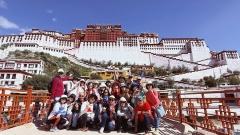
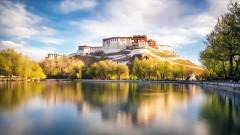
Lhasa offers major cultural attractions such as the Potala Palace, Jokhang Temple, and Barkhor Street.
Nyingchi offers forests, alpine lakes, rivers, valleys, villages, and snow mountains.
A route such as:
Lhasa → Nyingchi → Basum Tso → Lulang → Namcha Barwa → Lhasa
can provide a mix of cultural sightseeing and natural scenery.
Travelers who are concerned about spending their entire trip at very high elevations may also appreciate having Nyingchi as part of a broader route, although altitude remains an important consideration throughout Tibet.
Is Nyingchi Suitable for Families?
Nyingchi can be a good choice for families who want more nature and less intense sightseeing.
Lakes, forests, grasslands, rivers, and villages provide visual variety, while many scenic areas can be explored without long mountain treks.
Basum Tso and Lulang can be particularly attractive for families because you can enjoy the scenery at a relatively relaxed pace.
However, road travel can still involve long hours in the vehicle, so families should consider their children’s tolerance for mountain-road journeys when planning the itinerary.
Is Nyingchi Good for Photography?
Very much so.
One of the region’s biggest strengths is the sheer variety of subjects.
For landscape photography: Basum Tso, Namcha Barwa, the Yarlung Tsangpo Grand Canyon, and mountain passes.
For forest photography: Lulang and surrounding valleys.
For cultural photography: Tibetan villages, temples, traditional homes, and prayer flags.
For seasonal photography: peach blossoms in spring, green valleys in summer, and changing foliage in autumn.
The best photos may also come from unexpected stops along the road. Nyingchi’s landscapes are so varied that a roadside view can sometimes be just as memorable as a famous attraction.
What Should You Know Before Visiting Nyingchi?
There are a few practical points worth remembering.
Weather can change quickly.
Mountain clouds can appear suddenly and affect views of snow peaks.
Bring layers.
Temperatures can vary substantially between morning, afternoon, and different elevations.
Protect yourself from the sun.
Even when the air feels cool, high-altitude sunlight can be strong.
Allow extra travel time.
Mountain roads and scenic stops can make journeys longer than expected.
Don’t build the trip entirely around one photograph.
A mountain may be hidden by clouds, but the surrounding valley can still be beautiful.
Stay respectful in local communities.
Villages and monasteries are living cultural spaces, not just photo locations.
Why Nyingchi Deserves More Than a Peach Blossom Trip
Peach blossoms may be what first puts Nyingchi on the map for many travelers, but they are only the beginning.
Outside spring, the region still offers Basum Tso’s alpine scenery, Lulang’s forests and meadows, Namcha Barwa’s dramatic mountain landscape, the Yarlung Tsangpo Grand Canyon, mountain passes, rivers, and traditional Tibetan villages.
More importantly, these landscapes change with the seasons.
Spring brings blossoms. Summer brings deep green valleys. Autumn adds golden color to the forests. Winter creates a quieter mountain atmosphere.
That variety makes Nyingchi more than a seasonal flower destination. It is a place where the scenery keeps changing as you travel, and where the road between two attractions can become part of the experience itself.
So, when planning a trip to Nyingchi, it is worth looking beyond the peach trees. The flowers may be the reason you discover the region, but the lakes, forests, mountains, rivers, and villages are what can make you want to stay longer.