
As the highest altitude and longest plateau railway in the world, the Qinghai-Tibet Railway has more than 84% of its sections above 4,000 meters above sea level, and the hypoxic environment is your biggest concern. To help you smoothly adapt to the plateau climate and enjoy the beautiful snow-capped scenery at ease, we have compiled this detailed train oxygen supple guide, covering core contents such as the train oxygen supply system, oxygen inhalation skills and precautions, providing careful guidance throughout to ensure your plateau railway journey is worry-free. Whether you are traveling to Tibet for the first time or many times, this guide can provide you with practical reference to easily cope with the challenge of hypoxia.
Train Oxygen Supply System: Guarantee for Plateau Travel
Overview of the Oxygen Supply System
- The train is equipped with a complete oxygen supply system. After departing from Golmud Station, the entire carriage automatically turns on diffused oxygen supply, and the plateau Fuxing EMU also provides comprehensive oxygen supply services.
- Oxygen production mainly adopts high-tech physical oxygen production technology, supplemented by chemical oxygen production devices as backups to ensure that oxygen can be quickly supplied to you in emergency situations.
- Each carriage is equipped with three oxygen concentration sensors, which can real-time measure and automatically adjust the oxygen concentration to ensure stable oxygen supply.
- Different seat classes are equipped with corresponding oxygen supply facilities. Hard seats, soft sleepers, hard sleepers and premium soft sleepers are respectively equipped with independent oxygen inhalation ports or special oxygen supply equipment to meet your different needs.
The train’s oxygen supply facilities are reasonably configured according to seat classes. Understanding the differences helps you choose the appropriate oxygen inhalation method.
It is necessary to grasp the appropriate timing for oxygen inhalation. Correct oxygen inhalation can alleviate altitude sickness and help the body adapt to the plateau environment, avoiding blind oxygen inhalation.
- After the train enters the plateau section from Golmud Station, diffused oxygen supply is automatically turned on. The oxygen concentration in the carriage is close to that of the plains, and most people will not have obvious altitude sickness, so no additional oxygen inhalation is needed.
- It is recommended that you inhale oxygen in a timely manner when you have these hypoxic signals: headache, dizziness, palpitations, chest tightness, shortness of breath, anorexia, insomnia, nausea, vomiting, purple lips, general fatigue, etc.
- When the train passes through sections with higher altitudes such as Tanggula Pass, your hypoxic symptoms may worsen, and you can appropriately increase the oxygen inhalation time.
- Avoid excessive oxygen inhalation by you, otherwise it will waste resources and cause oxygen dependence. It is recommended that you adopt the “intermittent oxygen inhalation” method and stop when the symptoms are relieved.
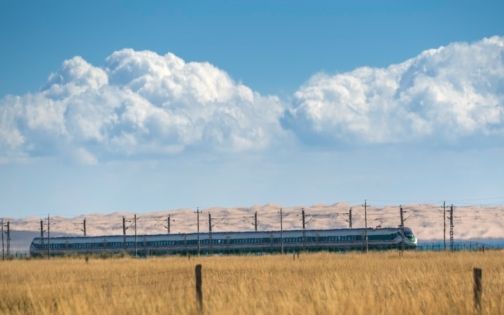
Qinghai-Tibet Railway
Operation Methods of Oxygen Inhalation Equipment
Mastering the correct operation methods of oxygen inhalation equipment is the core practical content of the Qinghai-Tibet railway train oxygen supple guide. The operation methods of different types of oxygen supply facilities are slightly different, but overall they are simple and easy to understand. You only need to follow the following steps to inhale oxygen smoothly.
Operation Steps for Independent Oxygen Inhalation Port:
- Obtain a free oxygen tube from the conductor of your carriage, and check whether the oxygen tube is intact, without damage or air leakage.
- Find the oxygen inhalation port next to your seat or berth, open the protective cover of the oxygen inhalation port, and insert one end of the oxygen tube tightly into the interface of the oxygen inhalation port to ensure a firm connection and avoid air leakage.
- Put the other end of the oxygen tube into your nostrils, turn on the switch of the oxygen inhalation port, and adjust the oxygen flow according to your own feeling. Generally, a medium flow can relieve your hypoxic symptoms, so avoid adjusting to the maximum flow.
- After oxygen inhalation, you first turn off the switch of the oxygen inhalation port, then pull out the oxygen tube from the interface, sort out the oxygen tube and return it to the conductor, or dispose of it properly according to the conductor’s requirements.
Operation Steps for Oxygen Bag Inflation:
- Find the oxygen bag inflation port on the train, which is generally located next to the oxygen generator or in the dedicated area of the premium soft sleeper carriage. You can ask the conductor to confirm the location.
- Firmly connect the inflation interface of your oxygen bag to the train inflation port, turn on the inflation switch, and start inflating the oxygen bag.
- During the inflation process, you should pay attention to observing the fullness of the oxygen bag to avoid the oxygen bag bursting due to over-inflation. Turn off the switch when the inflation reaches 80% full.
- After inflation, you first pull out the inflation interface of the oxygen bag, then cover the protective cover of the inflation port, and place the oxygen bag properly to avoid extrusion and collision.
Safety Precautions for Oxygen Inhalation
In the process of oxygen inhalation, mastering relevant precautions can not only ensure your oxygen inhalation safety, but also improve the oxygen inhalation effect. This is also an indispensable content that everyone needs to carefully understand.
- You should maintain a sitting or lying position when inhaling oxygen, avoid standing to inhale oxygen, to prevent dizziness and instability due to hypoxia and falling, especially during the train operation, you should pay more attention to safety.
- The oxygen tube is for one-time use and cannot be reused to avoid cross-infection. If you find that the oxygen tube is damaged or leaking, please replace it with the conductor in a timely manner.
- You should not arbitrarily disassemble or damage the oxygen supply equipment on the train, including oxygen inhalation ports, oxygen generators, inflation ports, etc. If you find a fault in the oxygen supply equipment, please inform the conductor in a timely manner for professional maintenance.
- You should avoid smoking and using open flames when inhaling oxygen. Oxygen is a combustible gas, which may cause danger when encountering open flames. At the same time, avoid piling up debris in the oxygen inhalation area to keep it unobstructed.
- If you are traveling with children, you need to take good care of them throughout the journey to prevent them from touching the oxygen supply equipment or pulling out the oxygen tube randomly. If the child has altitude sickness, oxygen inhalation should be carried out under the guidance of the conductor.
- If you experience discomfort such as difficulty breathing or aggravated chest tightness during oxygen inhalation, stop oxygen inhalation immediately, and inform the conductor and the accompanying doctor for timely treatment.
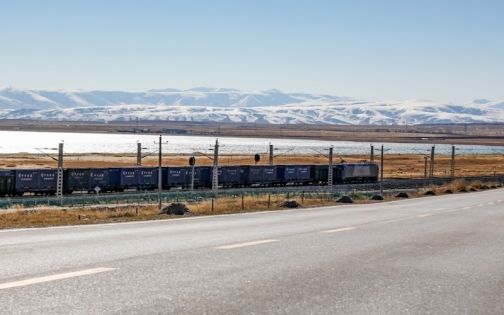
The Qinghai-Tibet Railway train passes by the shore of Qinghai Lake.
Pre-trip Preparation: Cope with the Plateau Environment in Advance
Physical Examination and Medication Preparation
You need to have a physical examination before traveling to confirm that your physical condition is suitable for traveling to Tibet. This is the basis for cooperating with the train’s oxygen supply and coping with high-altitude hypoxia.
People with severe heart disease, hypertension, asthma and other diseases are not recommended to travel to Tibet. If you have mild underlying diseases, you need to consult a doctor in advance and carry corresponding therapeutic drugs.
You can take anti-altitude sickness drugs such as Rhodiola rosea 3 to 7 days in advance under the guidance of a doctor, and carry common drugs such as headache medicine, motion sickness medicine and diarrhea medicine.
After boarding the train, you need to fill in the Passenger Health Registration Card and hand it over to the conductor of your carriage, so that the staff can grasp your physical condition and provide timely help.
Suggestions on Carrying Items
In addition to relying on the oxygen supply facilities on the train, carrying some suitable items before traveling can also help relieve the discomfort caused by high-altitude hypoxia. This is also a content in the Qinghai-Tibet railway train oxygen supple guide that you are likely to ignore.
- Portable oxygen bag: It can be used as a supplement to the train’s oxygen supply, especially when you get off the train to move around at the station or on the way to your accommodation after getting off the train. You can inhale oxygen at any time to relieve hypoxic symptoms. It is recommended that you choose a portable oxygen bag with appropriate capacity and easy carrying, which can be inflated using the inflation port on the train after boarding.
- Moisturizing products: The plateau area is not only hypoxic but also extremely dry. Your mouth and nose dryness will be aggravated during oxygen inhalation. It is recommended that you carry lip balm, skin cream, moisturizing spray, etc., to keep your skin and mouth and nose moist and relieve discomfort.
- Lightweight clothing: The temperature inside the train is relatively stable, but the temperature difference between day and night in the plateau area is large. You need to add or remove clothes in a timely manner when getting off the train to avoid catching a cold. After catching a cold, the body’s resistance decreases, which is likely to aggravate altitude sickness and may also affect your oxygen inhalation effect.
- Hydration products: Drinking plenty of warm water can promote your body’s metabolism, help the body adapt to the plateau environment, and relieve discomfort caused by hypoxia. It is recommended that you carry a portable water bottle to replenish water at any time, and avoid drinking ice water, coffee, strong tea and other stimulating drinks.
Frequently Asked Questions: Solve Travel Doubts
Answers to Common Oxygen Inhalation Questions
Many people have various questions about the train’s oxygen supply when traveling to Tibet by train. The following sorts out the most common questions to answer your doubts and make your trip more at ease.
Question 1: Is the oxygen inhalation service on the Qinghai-Tibet Railway train charged?
Answer: The diffused oxygen supply and oxygen tubes on the train are free of charge and automatically turned on from Golmud Station; only when you inflate your own oxygen bag, some trains may charge a small amount of RMB, and you can consult the conductor.
Question 2: Will the oxygen supply equipment on the train break down? What should I do if there is a breakdown?
Answer: The probability of failure of the oxygen supply equipment is very low. Each carriage is equipped with an oxygen concentration sensor, and faults will be found and handled in a timely manner; if you find any abnormality, please inform the conductor in a timely manner.
Question 3: Are there any special requirements for oxygen inhalation for children and the elderly traveling to Tibet?
Answer: Children need to be accompanied by adults and the appropriate flow rate should be adjusted; if the elderly have underlying diseases, you need to inform the staff in advance, and inhale oxygen under guidance and pay attention to their physical condition.
Question 4: After getting off the train, can you still rely on the oxygen inhalation method on the train?
Answer: It is not recommended that you inhale oxygen at a high flow rate after getting off the train. You can carry a portable oxygen bag for supplementary oxygen as needed, avoid strenuous exercise, rest more and replenish water, and gradually adapt to the local environment.
Question 5: When the train passes through which sections will you feel more obvious hypoxia?
Answer: Your hypoxia will gradually become obvious after Golmud Station, and it is most prominent at Tanggula Pass. The train will increase the oxygen supply; sections such as Naqu have higher altitudes, and you need to make preparations in advance.
Travel the Plateau with Peace of Mind
The snow-capped scenery of the Qinghai-Tibet Railway is fascinating, but the problem of high-altitude hypoxia also makes many people hesitate. Through this detailed Qinghai-Tibet railway train oxygen supple guide, I believe you have fully understood the train’s oxygen supply system, oxygen inhalation skills, pre-trip preparation and common questions. As long as you master this knowledge, you can effectively cope with the challenge of high-altitude hypoxia and enjoy the journey on the sky road at ease.
The complete oxygen supply facilities on the train are your important guarantee. From diffused oxygen supply to independent oxygen inhalation ports, from oxygen production systems to backup devices, every detail is escorting your health. At the same time, you also need to make good physical and item preparations before traveling, master the correct oxygen inhalation methods and precautions, avoid blind and excessive oxygen inhalation, and let your body gradually adapt to the plateau environment.