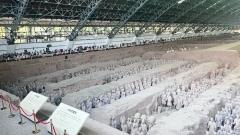

Located in Lintong District, about 40 kilometers from downtown Xi’an, the museum showcases thousands of life-sized clay soldiers buried more than 2,000 years ago to guard China’s first emperor in the afterlife. Each figure is unique, with distinct facial expressions, hairstyles, and armor details, reflecting the remarkable realism of ancient Chinese sculpture.
For international travelers, the Terracotta Warriors are not just a sightseeing stop—they are a cultural journey into one of the earliest and most powerful civilizations in human history.
Overview of the Terracotta Warriors Museum
The Terracotta Army Museum is built beside the mausoleum of Emperor Qin Shi Huang. It consists of several excavation pits and exhibition halls, primarily including Pit 1, Pit 2, Pit 3, and the Exhibition Hall.
The entire site represents a buried underground army designed to protect the emperor in the afterlife. It reflects the military strength, organization, and cultural beliefs of the Qin Dynasty.
Visitors can experience both the massive scale of ancient military formations and the fine artistic details of individual warrior figures, making it one of the most important cultural landmarks in China.
Terracotta Warriors
Recommended Visiting Routes for the Terracotta Warriors Museum
The most efficient and widely recommended visiting sequence is:
Pit 1 → Pit 3 → Pit 2 → Exhibition Hall
This route allows visitors to start with the most visually impressive site and gradually move toward deeper historical interpretation and artifact displays.
Pit 1: The Most Impressive Underground Army Formation
Pit 1 is the largest and most iconic section of the Terracotta Warriors site. It contains thousands of life-sized soldiers arranged in a highly organized battle formation.
The layout mainly features infantry and chariot units, reflecting the strict military discipline of the Qin army. When viewed from above, the formation appears like a vast underground battlefield.
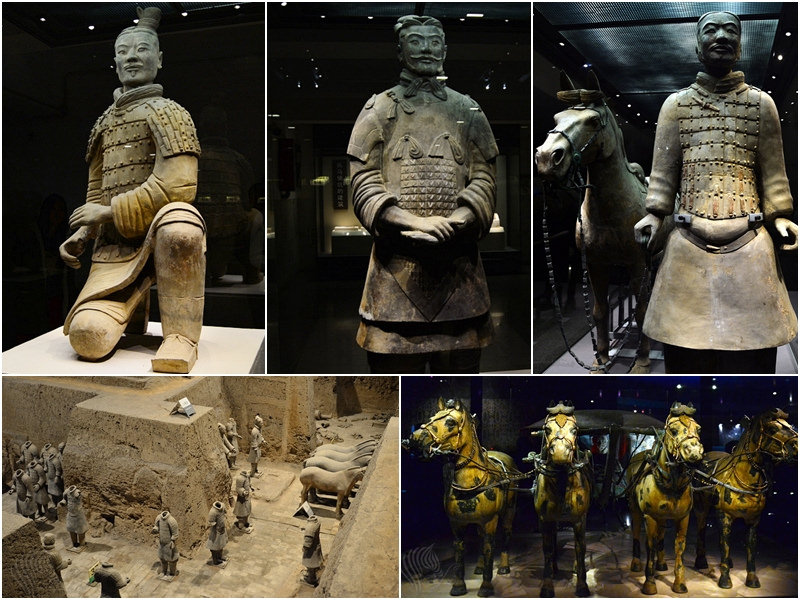
Each warrior figure is individually crafted, with detailed facial expressions, armor patterns, and hairstyles. No two figures are identical, which highlights the advanced craftsmanship of the Qin Dynasty.
Standing at the viewing platform overlooking Pit 1 is one of the most unforgettable moments for visitors, offering a powerful visual impression of ancient military strength.
Pit 3: The Command Center of the Ancient Army
Pit 3 is the smallest but most historically significant pit. It is believed to represent the command headquarters of the Terracotta Army.
Unlike Pit 1, Pit 3 contains fewer figures but a more structured layout, mainly featuring high-ranking officers and command-related artifacts.
This section provides insight into how ancient Chinese military leadership was organized. It reflects strategic planning rather than battlefield scale, making it highly valuable for historical interpretation.
Pit 2: The Most Complex Military Formation
Pit 2 showcases the most diverse range of military units among all excavation areas. It includes infantry, cavalry, archers, and chariot troops, forming a highly complex and layered battlefield structure.
One of the highlights here is the general figures, who wear more elaborate armor and hold weapons with a commanding presence. Their expressions and posture reflect authority and leadership.
In addition to the warriors, Pit 2 also contains bronze weapons and horse-related artifacts, demonstrating the advanced metallurgical technology of the Qin Dynasty.
Exhibition Hall: Artifacts and Historical Insights
The Exhibition Hall displays restored terracotta figures, weapons, chariot components, and other burial objects discovered from the pits.
Visitors can also view reconstructed chariot models, including the famous bronze carriage replicas, which provide insight into imperial transportation systems and craftsmanship.
This section helps visitors better understand the historical context behind the Terracotta Army, bridging the gap between large-scale formations and detailed archaeological discoveries.
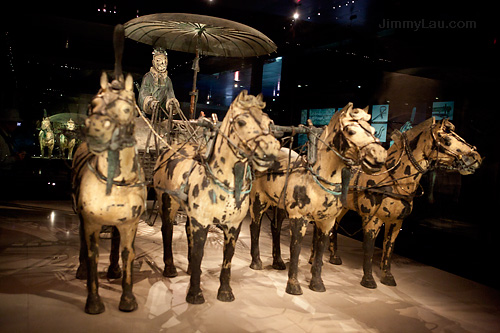
Terracotta Warriors
Recommended Xi’an Travel Itineraries Including the Terracotta Warriors
Xi’an is one of China’s most historically rich cities. The Terracotta Warriors are often included in multi-day travel routes that combine cultural heritage, ancient architecture, and local food experiences.
One-Day Xi’an Terracotta Warriors Tour
This itinerary is ideal for travelers with limited time.
In the morning, visit the Terracotta Warriors Museum to explore all major pits and the exhibition hall. In the afternoon, return to Xi’an city to visit the Ancient City Wall, where visitors can walk or cycle along one of the best-preserved city walls in China.
In the evening, explore the Muslim Quarter, famous for its vibrant street food culture and local atmosphere.
This route combines history, architecture, and food culture in a single day.

Two-Day Cultural Exploration Tour
This option is designed for travelers who want a deeper understanding of Xi’an’s cultural heritage.
Day 1 focuses on the Terracotta Warriors and the Big Wild Goose Pagoda, followed by an evening visit to the Tang Dynasty-themed nightlife district.
Day 2 includes the Ancient City Wall, the Forest of Stone Steles Museum, and optional visits to historical districts or local markets.
This itinerary offers a balanced mix of ancient history and modern cultural experiences.
Three-Day Classic Xi’an Tour
This is the most popular itinerary for international travelers.
Day 1: Arrival in Xi’an, explore Bell Tower and Muslim Quarter
Day 2: Full-day visit to the Terracotta Warriors Museum
Day 3: Visit Big Wild Goose Pagoda, Ancient City Wall, and Tang Paradise Night Show
This route offers a complete introduction to Xi’an’s historical and cultural highlights at a comfortable pace.
Four-Day Xi’an & Mount Hua Adventure
This extended itinerary combines cultural heritage with natural landscapes.
Day 1: Arrival and leisure exploration
Day 2: Terracotta Warriors + optional Huaqing Palace visit
Day 3: Full-day Mount Hua hiking experience
Day 4: Xi’an city highlights and departure
Mount Hua adds a dramatic natural contrast to the historical depth of the Terracotta Warriors.
Transportation to the Terracotta Warriors
The museum is located approximately 40 kilometers from Xi’an city center. Travelers can choose from several transportation options.
Public Transport (Metro + Bus)
There is no direct metro line. Travelers need to transfer from the metro to a bus near Huaqingchi Station before reaching the museum. Total travel time is about 2 hours.
Tourist Shuttle Bus
Direct tourist buses operate from central Xi’an at fixed times. This option is more convenient but requires schedule planning.
Organized Tour (Recommended)
For international travelers, joining a guided tour is the most convenient option.
Companies like China Dragon Travel provide full-service packages including transportation, tickets, and professional guides, ensuring a smooth and informative experience without language or logistics barriers.
Practical Tips for Visiting the Terracotta Warriors
Before visiting, keep the following tips in mind:
- Book tickets in advance, especially during peak seasons
- Avoid national holidays for a better experience
- Wear comfortable walking shoes due to large walking areas
- Allocate at least 3–4 hours for the full visit
- Consider hiring a guide for deeper historical understanding
Why the Terracotta Warriors Are a Must-Visit Destination
The Terracotta Warriors offer more than just visual impact. They provide a direct connection to one of the world’s earliest centralized empires and reveal how ancient China combined military organization, artistic expression, and spiritual beliefs.
For international travelers, this site is a rare opportunity to witness history on an extraordinary scale.
For a more comfortable and well-organized journey, travelers can choose customized tours provided by China Dragon Travel, ensuring a seamless exploration of Xi’an’s historical highlights. A visit to the Terracotta Warriors is more than sightseeing—it is a journey into the heart of ancient civilization.