
Located in Guanghan, Sichuan, Sanxingdui Museum is the most representative thematic museum of the Ancient Shu Civilization. It is a national first-class museum and AAAA tourist attraction. Housing thousands of unearthed relics spanning thousands of years, it witnesses the beliefs and extraordinary artistic creativity of the ancient Shu people. It gathers the essence of the civilization, with each relic holding secrets of the distant past. Whether visiting for the first time or exploring deeply, knowing its key highlights makes your trip more focused, helping you deeply appreciate the unique value of Ancient Shu Civilization, immerse in its charm, and enjoy an unforgettable cultural experience in Sichuan.
Introduction to the Sanxingdui Museum
- Museum Positioning: A modern museum dedicated to the collection, display, and research of cultural relics from the Sanxingdui Site, witnessing the complete course of the Ancient Shu Civilization from its origin to its prosperity.
- Architectural Scale: With a construction area of 54,400 square meters, the new museum is a leading site-type museum in southwest China, whose design integrates Ancient Shu cultural elements with modern architectural aesthetics.
- Core Exhibition Halls: Divided into three major exhibition halls – “Century Dream Chasing”, “Majestic Royal Capital”, and “Heaven, Earth, Humans and Gods”, systematically presenting archaeological achievements and cultural connotations.
- Cultural Status: One of the greatest archaeological discoveries of the 20th century, serving as an important window for spreading the pattern of pluralistic integration of Chinese civilization.
- Visiting Experience: With a quiet environment, it combines garden landscapes and cultural atmosphere, equipped with comprehensive services such as audio guides, professional explanations, and digital interactions, suitable for all types of tourists.

Sanxingdui Museum – A Window to Understand Ancient Shu Civilization
Treasures of the Museum and Key Highlights of Core Cultural Relics
Bronze Sacred Tree
- Cultural Relic Grade: A national treasure-level relic prohibited from being exhibited abroad, and one of the most representative cultural relics of Sanxingdui.
- Shape Details: Nearly 4 meters high, divided into three layers with nine branches. A divine bird perches on the top of each branch, and dragon-shaped ornaments coil around the tree trunk, with a majestic and magnificent shape.
- Craftsmanship Level: With an exquisite structure and complex casting process, it showcases the superb metal smelting and modeling capabilities of ancient Shu craftsmen 3,000 years ago.
- Cultural Connotation: Highly consistent with the Fusang Tree and Ruomu in ancient myths, it is a concrete embodiment of the ancient Shu people’s worldview and mythological beliefs.
- Visiting Highlights: The new museum has a special light and shadow display, which restores the cultural connotation of the sacred tree through multimedia, allowing visitors to observe the details of the branches, divine birds, and dragon patterns up close.
Bronze Giant Standing Figure
- Cultural Relic Status: The largest and best-preserved ancient bronze figure extant in the world, known as the symbol of the Ancient Shu Civilization.
- Shape Features: Nearly 4 meters tall, with a solemn momentum, exquisite clothing, and complex patterns. Its hands are in a circular gripping posture with a unique gesture.
- Mystery: Its identity and the objects it holds are still under academic discussion, full of mystery.
- Research Value: It is not only a work of art but also an important physical material for studying the social stratum and ritual system of the ancient Shu, reflecting the textile craftsmanship and aesthetic concepts of the time.
- Visiting Suggestion: It can be viewed 360 degrees, allowing you to feel its solemnity and the beauty of details from different angles, making it a must-see core exhibit.
Golden Mask and Goldware Series
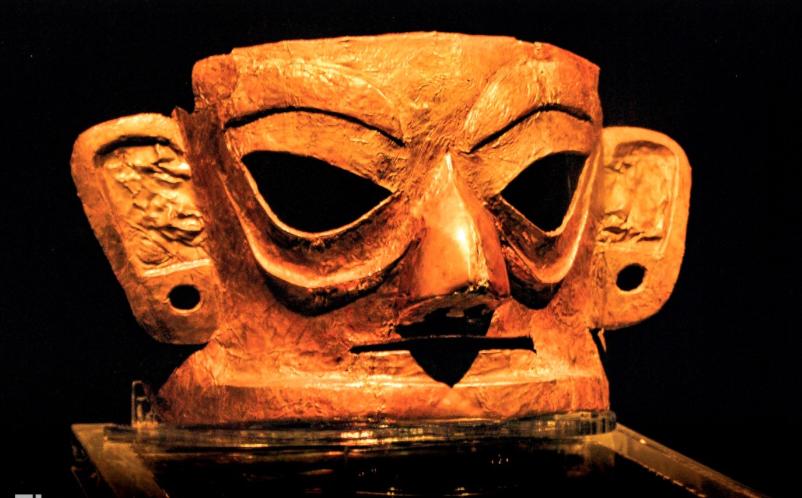
- Golden Mask: With strong visual impact, pure gold quality, full shape, and smooth lines, it showcases the peak level of ancient Shu gold craftsmanship, symbolizing the worship of gods and ancestors, as well as authority and status.
- Fragment of the Golden Scepter: A symbol of ancient Shu authority, the scepter is decorated with patterns and symbols, recording the beliefs and history of the ancient Shu society. Even in its incomplete state, it can still reflect the craftsmanship and cultural connotation of the time.
- Series Value: The museum also displays many gold ornament fragments, which together form the ancient Shu goldware cultural system, reflecting the developed mining, smelting, and handicraft levels of the ancient Shu, and confirming the prosperity of Sanxingdui as an ancient Shu capital.
- Visiting Experience: You can feel the splendor of gold craftsmanship 3,000 years ago up close and experience the luxury and sacredness of the Ancient Shu Civilization.
Bronze Vertical-Eye Mask
- Shape Features: With cylindrical protruding eyeballs and wide spreading ears, it is known as the mythical prototype of “Thousand-Mile Eye and Wind-Ear”.
- Craftsmanship Level: Large in size and magnificent in momentum, with mature casting technology and exquisite detail processing, it showcases the extraordinary imagination and artistic attainments of the ancient Shu people.
- Cultural Significance: As a sacrificial ritual vessel, it is an artistic expression of the ancient Shu people’s concept of communicating with gods, reflecting their worship and yearning for supernatural power.
- Symbolic Value: Its unique shape is extremely rare in the world’s ancient civilizations, making it a symbolic symbol of Sanxingdui culture.
New Heavyweight Cultural Relics in the New Museum
- Excavation Source: Unearthed from No. 3 to No. 8 sacrificial pits, they made their public debut for the first time with the opening of the new museum, enriching the key highlights of Sanxingdui.
- Core Cultural Relics: Including important artifacts such as the Bronze Divine Altar, Bird-Footed God Statue, Beast-Riding Zun-Holding Figure, Turtle-Backed Grid Vessel, Skirt-Wearing Standing Figure, and Tiger-Head Dragon-Body Statue.
- Types of Cultural Relics: Covering various categories such as bronzes, jade and stone artifacts, pottery, goldware, and ivory artifacts, comprehensively displaying the ancient Shu handicraft system and cultural creativity.
- Important Value: Cultural relics such as the Bronze Divine Altar have complex structures and numerous figures, reflecting the ancient Shu sacrificial rituals and social system. They echo the classic exhibits to form a complete picture of the Ancient Shu Civilization.
Golden Mask and Goldware Series
Featured Exhibition Halls and Experience Highlights in the Museum
Comprehensive Hall Exhibition Area
- Exhibition Area Positioning: Systematically presenting the development course of the Ancient Shu Civilization, helping visitors establish a complete knowledge framework of the Ancient Shu culture.
- Display Logic: Taking time as the axis, combined with site models, unearthed artifacts, and scene restoration, it clearly presents the evolution of the ancient Shu from tribes to a kingdom.
- Core Exhibits:
- Pottery: Rich in variety, including cooking utensils, tableware, and containers. Among them, the three-legged pottery cooking utensil is affectionately called the “origin of hot pot” by netizens, reflecting the embryonic form of the ancient Shu food culture.
- Jade and Stone Artifacts: Ritual vessels such as jade zhang (a type of jade artifact), jade cong (a square jade tube with a circular hole), and jade bi (a circular jade disc), with exquisite craftsmanship and elegant patterns. The jade zhang with a mountain-sacrificing pattern is carved with exquisite human figures and mountain patterns, with extremely high historical and artistic value.
Bronze Hall Exhibition Area
- Exhibition Area Positioning: The concentration of the essence of Sanxingdui cultural relics, comprehensively displaying bronze statue groups and bronze ritual vessels, presenting the peak achievements of the ancient Shu bronze civilization.
- Experience Features: With the Human-Headed Bird-Bodied Statue as the core symbol, combined with large-scale relief scenes, it creates an immersive visiting experience, as if walking into an ancient Shu sacrificial ceremony.
- Exhibit Features:
- Rich in variety, including bronze figures, animal shapes, and ritual vessels, with unique styles, both sacrificial utensils and life-like shapes.
- The bronze animal shapes are vivid and lifelike, and the images of divine birds, dragons, and snakes are full of vitality, reflecting the careful observation and vivid artistic expression of ancient Shu craftsmen.
Digital Display and Interactive Experience
- Core Technology: Introducing advanced digital technologies such as AI restoration, 3D animation, and multimedia interpretation to restore the entire process of cultural relics assembly and restoration, and interpret the details, patterns, and cultural connotations.
- Featured Experiences:
- Sacred Tree Light and Shadow Show: Regular performances, restoring ancient Shu mythological scenes through light, shadow, and sound effects, bringing a dual visual and auditory shock.
- Cultural Relics Restoration Center: Open on working days, visitors can watch professional personnel restore cultural relics up close, and understand the hardship and professionalism of archaeological and cultural relic protection work.
Experience Value: Balancing cultural relic protection and display effects, it enhances the interest and knowledge of the visit, making the cultural relics “come alive”.
Practical Visiting Information and Route Suggestions
Optimal Visiting Route Planning
- Efficient Route (Suitable for Tourists with Limited Time): 2nd Floor of the New Museum → Core Cultural Relics such as the Bronze Sacred Tree and Vertical-Eye Mask → Bronze Giant Standing Figure and Goldware Series on the 1st Floor → Comprehensive Hall (to understand the cultural background). This route saves time and does not miss key points.
- In-depth Route (Suitable for Tourists with Sufficient Time): Visit in the order of “Century Dream Chasing” → “Majestic Royal Capital” → “Heaven, Earth, Humans and Gods”, to understand the development context of the Ancient Shu Civilization from shallow to deep.
- Auxiliary Suggestion: During the visit, use an audio guide or professional explanation to deeply understand the stories and values behind each cultural relic.
Key Stay Points and Photography Suggestions
- Key Stay Points:
- Bronze Sacred Tree: It is recommended to stay for more than 15 minutes to carefully appreciate the details.
- Bronze Giant Standing Figure: It is recommended to view it from all angles to feel its overall momentum and details.
- Golden Mask: Find a suitable angle to avoid glass reflection and take clear photos of the details.
- Digital Exhibition Area and Restoration Center: Worth staying to experience the integration of technology and cultural relics.
Photography Rules: Photography is allowed in most areas, but flash and tripods are prohibited to protect the safety of cultural relics.
Photography Tips: Capture the overall shape and detailed features of the cultural relics, record the exhibition area scenes and cultural atmosphere, and take photos civilly as a souvenir.
Transportation and Service Facilities
- Location: Located in Guanghan, Sichuan, about 40 kilometers south of Chengdu, with convenient transportation.
- Transportation Methods: You can drive there by yourself, or take a tourist line or public transportation from Chengdu.
- On-site Facilities: Equipped with parking lots, rest areas, catering services, souvenir shops, etc., to meet various needs of tourists.
- Supporting Services: Provide audio guides, professional explanations, luggage storage, barrier-free services, etc., suitable for tourists with different needs.
- Visiting Suggestion: Avoid peak holidays and choose to visit on working days; book tickets in advance and plan your time reasonably to improve the comfort of the visit.
Cultural Value of Sanxingdui Museum
Cultural Value:
- It is an important platform for inheriting Chinese civilization and telling Chinese stories well.
- The cultural relics prove that the Ancient Shu Civilization is an important part of the pluralistic integration pattern of Chinese civilization, reflecting the richness and inclusiveness of Chinese culture.
- It fills the gap in the history of the ancient Shu and provides precious physical materials for exploring the origin and development of Chinese civilization.
Tourism Significance:
- It is a gold sign of Sichuan’s cultural tourism, connecting tourist cities such as Chengdu and Guanghan to form a rich cultural tourism route.
- Suitable for cultural enthusiasts, family tourists, and historical researchers. It allows you to feel the shock of the ancient civilization and experience the natural and humanistic scenery of western Sichuan.
Unlocking the Origins of Ancient Chinese Civilization
Walking through Sanxingdui Museum feels like stepping into a civilization that has just re-emerged after thousands of years of silence. The bronze masks, sacred trees, and golden artifacts are not just museum pieces—they are fragments of a forgotten world that continues to challenge historians and inspire visitors.
For travelers who want a deeper and more structured cultural journey in Sichuan, joining a guided experience can make a significant difference. China Dragon Travel offers customized Chengdu cultural tours, helping visitors arrange transport, guided interpretation, and seamless access to key attractions, ensuring Sanxingdui is not only visited—but truly understood.