
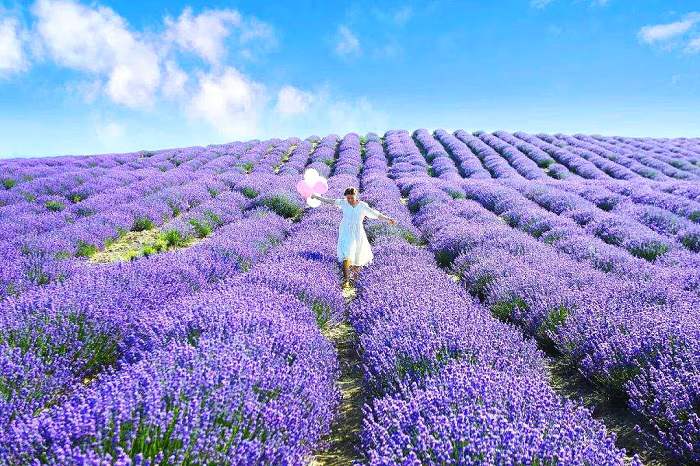
If you associate lavender with Provence in France, you may be surprised to learn that China has its own spectacular lavender destination. In Huocheng County, Ili, Xinjiang, vast fields of purple flowers stretch across the valley beneath the Tianshan Mountains, creating one of the most distinctive summer landscapes in northwest China.
Located at a similar latitude to Provence, Ili has comparable conditions for growing aromatic plants, including abundant sunshine, suitable temperatures and a significant difference between daytime and nighttime temperatures. During summer, the lavender fields become a popular destination for photographers, nature lovers and travelers looking for a different side of Xinjiang.
Key Points
- Xinjiang’s main lavender season runs from late May to late September.
- Huocheng County in Ili is China’s most important lavender-growing region.
- The region has two flowering periods, offering a longer viewing season.
- June to July is generally the best time for peak lavender scenery.
- Princess Jieyou Lavender Garden is one of the most popular places to visit.
When Is The Xinjiang Lavender Season?
One of the most common questions from travelers is: When is the best time to see lavender in Xinjiang?
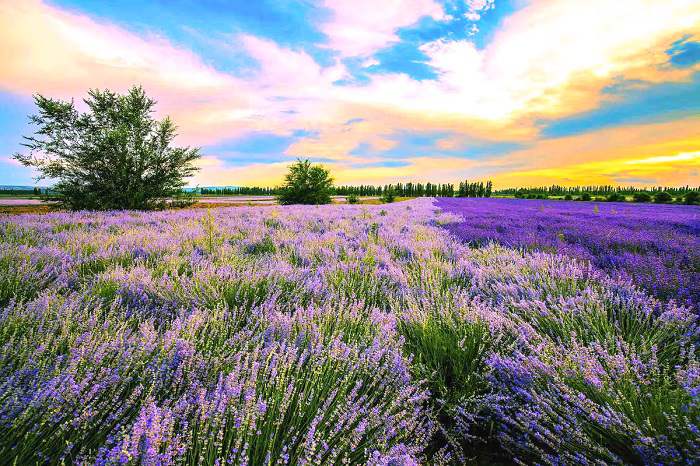
Unlike some famous lavender destinations that have one relatively short flowering season, Huocheng in Ili has two main lavender flowering periods. This gives travelers a much wider window for planning a Xinjiang trip.
First Lavender Season: Late May To Late June
The first lavender crop usually begins flowering around the last week of May. The fields gradually turn purple as more flowers open, with the main harvesting period generally beginning around June 20.
This first season provides approximately one month of flowering and viewing opportunities. For travelers who want to experience the beginning of the lavender season, late May and June are particularly attractive.
Second Lavender Season: Late July To September
The second flowering period begins around late July and continues toward the end of September, when harvesting takes place.
This second season is especially useful for travelers visiting Xinjiang later in the summer. Even if you cannot travel during June, you may still have an opportunity to see flowering lavender in Huocheng from late July through August and into September.
What About Late June To Late July?
Travelers sometimes worry that there will be no lavender to see between the two flowering periods. In practice, some professional lavender farms retain portions of their fields for tourism rather than harvesting everything immediately.
Therefore, late May to late September is generally the broadest period to consider for a Xinjiang lavender trip, although the exact appearance of the fields varies from year to year.
For the most impressive full-field purple scenery, June to July is generally the safest choice, while late May and later summer visits can still offer excellent opportunities depending on local flowering conditions.
Why Does Lavender Grow So Well In Huocheng?
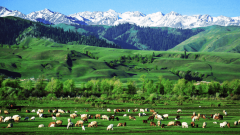
Huocheng County is located in the Ili River Valley, surrounded by mountains on three sides. Its geographical setting creates a relatively favorable environment for lavender cultivation.
The region has mild winters, relatively cool summers and noticeable differences between daytime and nighttime temperatures. These conditions, combined with abundant sunlight, are particularly suitable for aromatic plants such as lavender.
Huocheng receives approximately 2,500 to 3,000 hours of sunshine annually, while its frost-free period is generally around 156 to 165 days. The accumulated temperature and relatively dry, sunny growing conditions also contribute to the region’s suitability for lavender production.
Today, Huocheng is widely recognized as China’s largest lavender-producing area, with extensive plantations covering thousands of hectares and accounting for the overwhelming majority of China’s lavender production.
The landscape is therefore not simply a tourist attraction created around flowers. Lavender is an important agricultural crop and part of the local economy, which makes visiting the region an opportunity to see how agriculture, local industry and tourism have developed together.
How Did Lavender Come To Xinjiang?
Lavender is not originally a native crop of Xinjiang. China introduced lavender from France in 1965, after which cultivation gradually expanded in suitable areas.
As the planting industry developed, Huocheng became the center of China’s lavender production. Modern cultivation has expanded beyond growing flowers to include essential-oil extraction, product processing and tourism.
Today, visitors can see more than lavender fields. Some attractions combine agricultural production with museums, essential-oil workshops, distillation facilities, flower gardens and other tourism experiences.
This combination makes Huocheng particularly interesting for international visitors who want to understand not only the scenery but also the agricultural story behind Xinjiang’s lavender industry.
Where Can You See Lavender In Ili?
Huocheng County is the main destination for lavender viewing in the Ili region. Travelers driving between Sayram Lake and Yining can encounter lavender farms along the route, making it convenient to combine flower viewing with other Ili attractions.
Several agricultural areas and lavender-growing bases are located throughout Huocheng. Among the better-known areas are lavender fields associated with different agricultural regiments in the region.
However, for international visitors looking for a dedicated tourist attraction with viewing areas and additional facilities, Princess Jieyou Lavender Garden is one of the most recognizable choices.
Princess Jieyou Lavender Garden
Located in Huocheng County, Princess Jieyou Lavender Garden is designed specifically for visitors who want to experience the lavender landscape.
The attraction combines extensive lavender fields with colorful flower gardens, sculptures and other decorative elements. The result is a more structured photography environment than simply stopping beside an agricultural field.
For photographers, the combination of purple lavender, colorful flowers and surrounding scenery provides plenty of opportunities for landscape and travel photography.
A typical visit can take around 2–3 hours, depending on how much time you spend photographing the fields and visiting the other attractions.
Lavender Museum And Essential Oil Facilities
The lavender garden also includes a Lavender Museum and refined-oil facilities, where visitors can learn about lavender cultivation, processing and different uses.
Inside the museum, displays introduce the history and development of lavender cultivation as well as different lavender products and specimens. Depending on the day, visitors may also be able to join explanations or demonstrations.
Small workshops, a distillation area, a lavender variety garden and other sections provide a closer look at how lavender is transformed from a cultivated crop into essential oils and other products.
This can be particularly interesting for travelers who want more than a photograph of a purple field.
Colorful Flower Fields
The colorful flower fields are another highlight of the garden. During the main summer viewing period, different flowers are planted in organized patterns, creating colorful stripes across the landscape.
Windmills, sculptures, scarecrows and other decorations are placed throughout the gardens, creating a romantic setting that is particularly popular for photography.
The best viewing period for these flower displays is generally June to July, although the exact appearance depends on seasonal conditions.
What Can You Do During The Xinjiang Lavender Season?
Lavender viewing does not have to be a quick photo stop. If you have enough time, there are several ways to experience the Ili lavender region.
Photograph The Lavender Fields
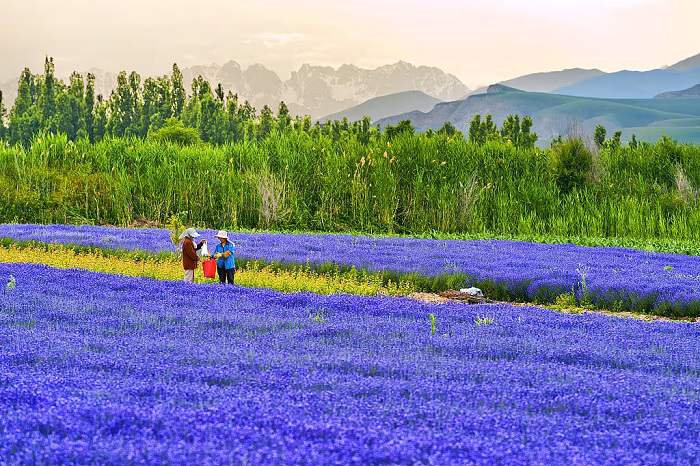
Photography is one of the main reasons international travelers visit Huocheng during summer. Rows of purple flowers stretching toward the mountains create a very different visual experience from the deserts and historic Silk Road sites commonly associated with Xinjiang.
The best photographs often combine lavender with the surrounding landscape rather than focusing only on the flowers. Try looking for compositions that include distant mountains, trees, roads, local architecture or people walking through the fields.
Learn About Lavender Production
Visiting a lavender museum or essential-oil facility provides useful context for understanding why Huocheng has become China’s lavender capital. Instead of seeing the fields simply as a seasonal attraction, travelers can learn how lavender is cultivated, harvested, distilled and processed.
Combine Lavender With Ili’s Natural Landscapes
One of the biggest advantages of visiting Huocheng is that lavender can easily be incorporated into a broader Ili Valley itinerary. Sayram Lake, Guozigou, Yining and the surrounding grasslands and mountain landscapes can be combined with a lavender visit.
This makes the lavender season particularly suitable for international travelers planning a multi-day Xinjiang journey rather than a standalone flower trip.
How To Get To Huocheng Lavender Fields?
Yining is one of the main transportation hubs for travelers visiting the Ili region. From Yining, travelers can continue toward Huocheng by private vehicle, organized tour or other local transportation.
The drive from Yining to the Princess Jieyou Lavender Garden takes roughly 1 hour and 15 minutes, covering about 60 kilometers, depending on the route and road conditions.
Travelers coming from Sayram Lake can also incorporate Huocheng into their itinerary when traveling toward Yining.
For visitors traveling from Nalati Grassland, the journey is considerably longer, taking several hours by road. Because attractions in Xinjiang can be widely separated, a private vehicle or organized tour is often more convenient than relying entirely on public transportation.
How To Plan A Xinjiang Lavender Trip
The most important thing to remember when planning a lavender trip is that flowering dates are natural and can change each year. Weather conditions, temperatures and harvesting schedules can all affect what the fields look like when you arrive.
If seeing peak lavender is the main purpose of your trip, June to early July is generally the most reliable period to consider. However, travelers visiting in late May, August or September may also find flowering fields depending on the second crop and local agricultural arrangements.
It is also worth combining lavender with other Ili destinations rather than traveling several hours just to spend a short time in one field. A well-planned itinerary might include Yining, Sayram Lake, Guozigou, Huocheng lavender fields and other nearby grassland or mountain attractions.
This approach allows you to experience both the seasonal flowers and the broader landscapes of the Ili Valley.

Xinjiang Lavender Season Travel Tips
Weather in Ili can change quickly, so travelers should bring clothing suitable for both warm afternoons and cooler mornings or evenings. Comfortable walking shoes are recommended, particularly if you plan to explore large fields rather than staying near the main viewing areas.
If photography is important to you, allow enough time in the itinerary rather than treating the lavender garden as a brief stop. Early morning and late afternoon can provide softer light and more attractive conditions for landscape photography.
Because lavender is an agricultural crop as well as a tourist attraction, visitors should remain on designated paths and avoid stepping into cultivated fields or picking flowers without permission.
Opening hours, ticket arrangements and access conditions can also change during the season, so checking the latest local information before visiting is recommended.
Is Xinjiang Lavender Season Worth Experiencing?
Absolutely, especially if you are planning a summer trip through Xinjiang.
The Xinjiang lavender season offers a different perspective on the region, combining agriculture, mountain scenery and seasonal flowers in one landscape. Huocheng’s location in the Ili River Valley, its extensive lavender cultivation and its relatively long flowering season make it one of China’s most interesting destinations for lavender lovers.
For international travelers, the greatest advantage is that lavender can be incorporated into a larger Ili itinerary rather than requiring a separate trip. You can visit the purple fields of Huocheng while also exploring Sayram Lake, grasslands, mountain valleys and the cultural landscapes of western Xinjiang.
China Dragon Travel can help international travelers design customized Xinjiang itineraries around the lavender season, including transportation, accommodation and sightseeing arrangements. If seeing the lavender at its best is a priority, planning the route around the expected flowering period can make the difference between simply visiting Xinjiang and experiencing one of its most memorable seasonal landscapes.