
What Is the Tibet Shoton Festival?
If there is one festival that truly represents the soul of Tibet, it is the Shoton Festival.
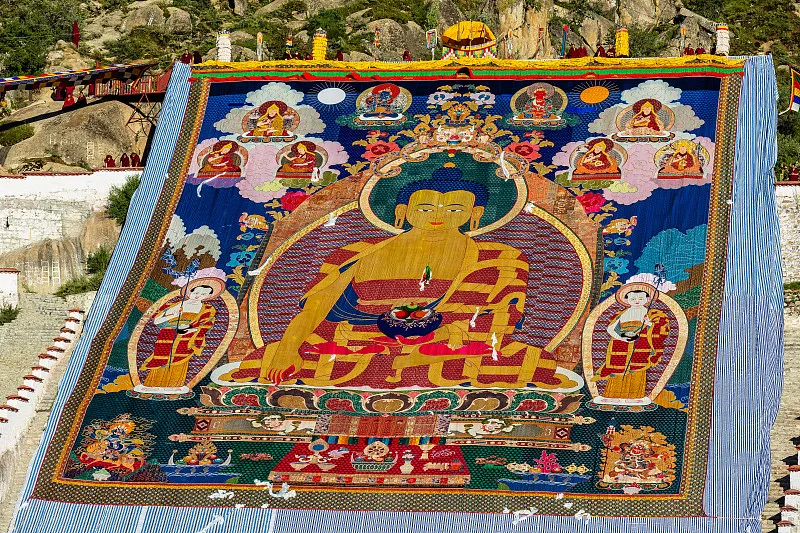
Every year during Shoton Festival, Lhasa transforms into the liveliest city in Tibet. Before sunrise, thousands of pilgrims gather at Drepung Monastery for the giant Thangka unveiling ceremony. During the day, Tibetan opera echoes through Norbulingka, while local families picnic, dance, and celebrate across parks and riversides.
For many travelers, Shoton Festival is not just a sightseeing trip — it is one of the best opportunities to experience authentic Tibetan culture, religion, food, and daily life all at once.
The 2026 Shoton Festival is expected to take place in late August, based on the Tibetan calendar, and usually lasts around one week.
Shoton Festival
Origin and Meaning of the Shoton Festival
“Shoton” means “Yogurt Banquet” in Tibetan.
The festival dates back to the 11th century. Traditionally, Tibetan monks completed summer retreat practices during this period, and local people welcomed them with yogurt offerings after the retreat ended.
Over time, the tradition evolved into a grand celebration combining:
- Giant Buddha unveiling ceremonies
- Tibetan opera performances
- Family picnics and camping
- Food and cultural festivities
Today, Shoton Festival is considered one of the most important traditional festivals in Tibet and was listed as a National Intangible Cultural Heritage of China in 2006.
1. Drepung Monastery Giant Buddha Unveiling Ceremony
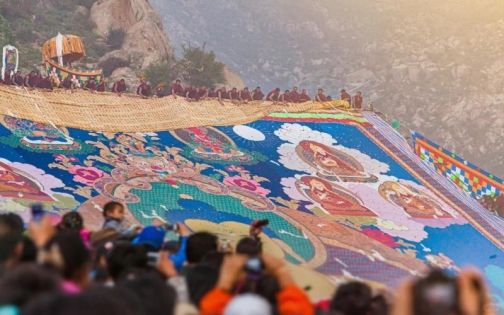
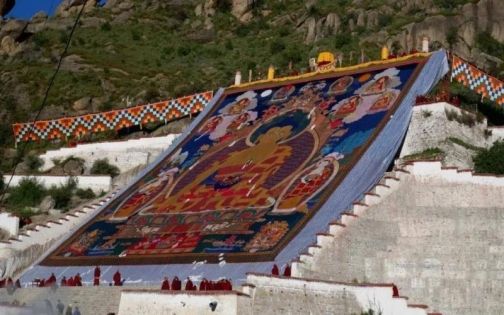
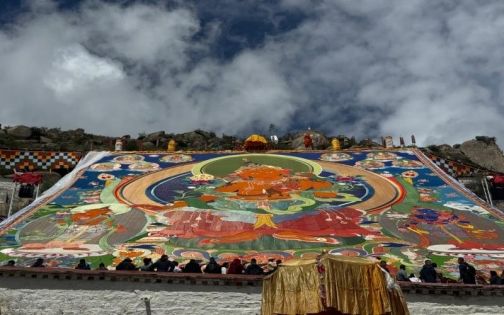
The Buddha unveiling ceremony at Drepung Monastery is the highlight of the entire festival.
Before dawn on the first day of Shoton Festival, tens of thousands of pilgrims walk toward the monastery valley to witness the giant Thangka slowly unfolding across the mountainside.
As sunlight touches the massive Buddha image, the sound of horns, chanting, and prayers fills the valley, creating an unforgettable spiritual atmosphere.
Ceremony Timeline (Reference for 2026)
- 00:00 — Traffic control begins
- 03:30 — Free shuttle buses start operating
- 04:00–05:00 — Pilgrims begin hiking uphill
- 05:00–07:00 — Walk to the unveiling platform
- 08:00 — Giant Thangka officially unfolds
- 13:30 — Ceremony ends
- 14:00 — Visitors begin descending
How to Get to Drepung Monastery
The best option is arranging transportation one night in advance.
After midnight:
- Roads are heavily restricted
- Taxis become extremely difficult to find
- Private vehicles cannot enter the core area
Many visitors leave around 2:00 AM to secure good viewing spots.
Hiking Difficulty
From the foot of the mountain to the viewing platform:
- Elevation: approximately 3,800 meters
- Uphill walking time: 40–60 minutes
- Some sections are steep
First-time visitors to Tibet should walk slowly to avoid altitude sickness.
What to Wear for the Ceremony
Although the festival takes place in August, early mornings in Lhasa can be very cold.
Recommended items:
- Windproof jacket
- Warm layers
- Non-slip hiking shoes
- Hat and gloves
- Raincoat or umbrella
Mountain temperatures before sunrise are much lower than many travelers expect.
Best Photography Spots
Panoramic Viewpoint
The hillside opposite the unveiling platform offers the best wide-angle view of:
- The giant Thangka
- Pilgrims gathering below
- Golden monastery rooftops
- Morning mist in the valley
A telephoto lens is highly recommended.
Documentary & Portrait Photography
Along the pilgrimage route, you can capture emotional moments such as:
- Elderly pilgrims offering khatas
- Children carrying butter tea pots
- Pilgrims throwing tsampa
- Devotional prostrations
This is one of the best opportunities for Tibetan cultural photography.
2. Tibetan Opera Festival at Norbulingka
Another major highlight of Shoton Festival is Tibetan opera.
During the festival week, Tibetan opera troupes from across Tibet gather at Norbulingka to perform traditional stories throughout the day.
Many local families bring tents, food, and picnic supplies, spending entire days inside the park.
What Is Tibetan Opera?
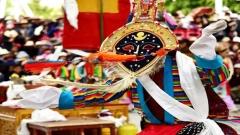
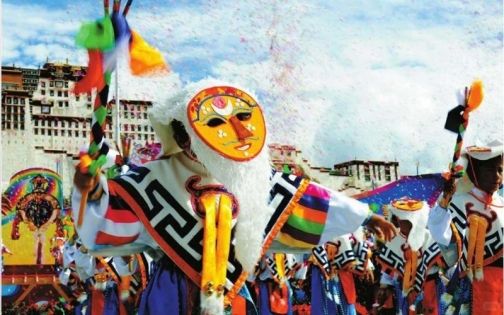
Tibetan opera, known as “Ache Lhamo,” meaning “Fairy Sisters,” originated in the 14th century and is one of the oldest theatrical traditions on the Tibetan Plateau.
Its main features include:
- Colorful masks
- Singing and dancing performances
- Highly stylized movements
- Powerful vocal chanting
The only traditional instruments used are:
- Hand drums
- Cymbals
Shoton Festival
Classic Tibetan Opera Stories
Popular performances during Shoton Festival include:
- Princess Wencheng
- King Norsang
- Drowa Sangmo
- Sukyi Nyima
- Pema Wenba
- Zhime Genden
Each performance can last 6–7 hours.
Even without understanding Tibetan language, the atmosphere alone is worth experiencing.
Tips for Watching Tibetan Opera
Best Arrival Time
Arrive before 10:00 AM for better seating and shade.
Crowds increase significantly after noon.
What to Bring
- Picnic mat
- Sunglasses
- Sunscreen
- Hat
- Drinking water
- Snacks
Lhasa’s UV radiation is extremely strong, even on cloudy days.
3. “Guo Linka” — Tibet’s Traditional Festival Picnic Culture
One of the most authentic experiences during Shoton Festival is “Guo Linka.”
“Linka” refers to outdoor leisure activities similar to:
- Picnics
- Family camping
- Riverside gatherings
- Park celebrations
During the festival, parks and riversides across Lhasa become huge social gathering spaces filled with music, dancing, and food.
Best Places to Experience Guo Linka
Norbulingka
The most traditional and lively location.
Zongjiao Lukang Park
Popular among locals and perfect for experiencing everyday Tibetan life.
Lhasa River Area
Especially lively in the evening, attracting younger crowds and families.
Traditional Festival Food
Families usually prepare:
- Highland barley wine
- Butter tea
- Hand-grabbed yak meat
- Roasted lamb
- Tsampa
- Yak yogurt
It is common to see people dancing Guozhuang in circles while singing together.
Can Tourists Join Local Gatherings?
Yes — Tibetan people are generally very welcoming.
If you politely ask whether you can join, many families will happily invite you in.
However, remember to:
- Respect religious items
- Avoid stepping over food
- Ask before photographing elderly people
Respect is extremely important.
4. Must-Try Foods During Shoton Festival
As the “Yogurt Festival,” dairy products are a huge part of the celebration.
Traditional Tibetan yak yogurt is very different from regular yogurt:
- More sour
- Richer texture
- Stronger milk flavor
Adding sugar or raisins helps balance the taste for first-time visitors.
Recommended Foods
Traditional Yak Yogurt
Usually served with:
- Sugar
- Raisins
- Highland barley crisps
Yogurt Cake
A popular modern Tibetan dessert with a creamy cheesecake-like texture.
Yogurt Ice Cream
One of the most popular street snacks in August.
Recommended Yogurt Shops
Ancient Tree Yogurt
A well-known local shop near Barkhor Street.
Yak Yogurt House
Located near the western side of Potala Palace.
Accommodation Tips During Shoton Festival
Shoton Festival is one of the busiest travel periods in Lhasa.
Hotel prices often double during the festival week.
Best Areas to Stay
Barkhor Street Area
Advantages:
- Traditional Tibetan atmosphere
- Convenient restaurants and cafés
- Beautiful night views
- Great for photography
Beijing Middle Road
Most convenient for attending the Buddha unveiling ceremony because shuttle buses depart nearby.
Booking Advice
Reserve accommodation at least one month in advance.
Popular boutique hotels may sell out even earlier.
Shoton Festival
Transportation Tips in Lhasa
Best Way to Travel Around the City
Shared electric scooters are surprisingly convenient.
Most attractions are relatively close to each other:
- Potala Palace to Barkhor Street
- Barkhor Street to Norbulingka
Usually within 10–15 minutes.
Important Festival Transportation Notes
On the Buddha unveiling day:
- Roads are heavily restricted
- Traffic becomes extremely crowded
- Taxis are difficult to find
Plan your route in advance.
Important Tips for First-Time Visitors
Prevent Altitude Sickness
Festival activities can be physically demanding.
Many travelers:
- Wake up extremely early
- Walk long distances
- Spend entire days outdoors
To reduce altitude sickness:
- Rest well
- Avoid alcohol
- Walk slowly
- Stay hydrated
Sun Protection Is Essential
Lhasa’s UV intensity is much stronger than most travelers expect.
Bring:
- SPF50+ sunscreen
- Sunglasses
- Hat
- Sun protection clothing
Respect Tibetan Religious Culture
When visiting monasteries:
- Do not step on thresholds
- Walk clockwise around prayer paths
- Avoid randomly photographing sacred objects
Never block pilgrims during prayer or prostration.
Is the Shoton Festival Worth Visiting?
Absolutely.
If you want to experience the most vibrant, authentic, and emotional side of Tibet, Shoton Festival is one of the best times to visit.
You will witness:
- Thousands of pilgrims hiking before sunrise
- Families dancing and singing in parks
- Tibetan opera echoing through Norbulingka
- The entire city immersed in festival energy
For many travelers, Shoton Festival becomes one of the most unforgettable experiences of their journey in Tibet.
Shoton Festival