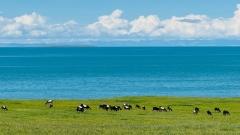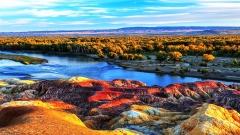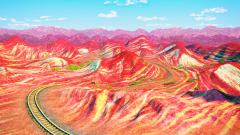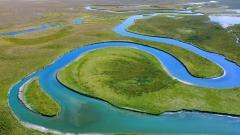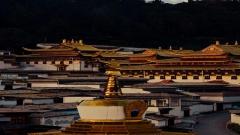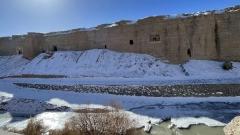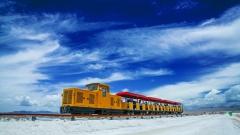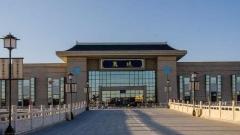

Northwest China is the core area of the Silk Road. Here you will find the unique scenery of the Yellow River flowing through cities, thousand year old grottoes, colorful Danxia at Qilian Mountains, Tibetan Buddhist on the Gannan Plateau, highland lakes beneath snow capped mountains, and the exotic ethnic cultures including Uyghur, Hui, Tibetan, and Mongol. The defining characteristics of Northwest China’s cities are vastness, desolate beauty, and scale. Whether you are a first time or a returning traveler, you will leave with a unique experience. This guide selects tourist cities in Northwest China, covering cities in Hexi Corridor, Qinghai, and Xinjiang. Each city offers an unforgettable travel experience.
Must-Know Information for Northwest China
Climate and Seasons
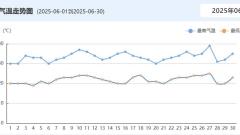
Northwest China has a dry climate with large temperature differences between day and night and strong sunlight. The best time to visit the Hexi Corridor (Dunhuang, Zhangye, Jiayuguan, Jiuquan) is from May to June and September to October, when temperatures are moderate, avoiding the intense heat of July and August and the severe cold of winter. The area around Qinghai Lake is above 3,000 meters in elevation, with the most comfortable temperatures in July and August, though warm clothing is still needed. Southern Xinjiang (Urumqi, Kashgar) is most suitable for travel from May to June and September to October. Autumn is the best season for viewing populus euphratica forests, with the Jinta Populus Euphratica Forest at its most spectacular during this time.
Transportation and Accommodation
Distances between cities in Northwest China are vast. Train and air tickets need to be booked in advance during peak seasons (July to August and late September to early October). Regular tickets for the Mogao Grottoes in Dunhuang need to be booked 14 days in advance through the official WeChat public account. Tickets for mid to late September usually sell out within one hour of release. Accommodation prices in cities along the Hexi Corridor rise significantly during summer and National Day holiday periods. It is recommended that you book one month in advance. Accommodation options around Qinghai Lake are limited and prices are high. Choosing to stay in Chaka Town or Gangcha County offers better value for money.
Document
Foreign travelers visiting Northwest China should ensure their passport is valid for at least six months and that they hold a valid Chinese visa or have confirmed visa free eligibility. For certain border areas in the Kashgar region of Xinjiang, a border pass is required. This can be obtained from the local Public Security Bureau, usually on the same day. Travel to Tibet requires a Tibet Travel Permit to be arranged in advance. Before departure, check the official website of the Chinese embassy or consulate in your country to confirm the latest document requirements.
Tourist Cities in the Hexi Corridor
Dunhuang
Dunhuang is located at the westernmost end of Gansu Province and was a vital hub on the Silk Road. The Mogao Grottoes are a UNESCO World Heritage Site, featuring 735 caves, 45,000 square meters of murals, and over 2,400 painted sculptures, often called the “Eastern Louvre.” The entrance fee is 238 RMB, and tickets must be booked in advance through the official WeChat public account. Mingsha Mountain and Crescent Lake form a desert wonder where sand and water coexist, with an entrance fee of 110 RMB, allowing multiple entries over three days. Yadan National Geological Park is about 180 kilometers west of the city, featuring wind eroded mounds in various shapes, most spectacular at sunset, with an entrance fee of 120 RMB. Shazhou Night Market is Dunhuang’s liveliest evening destination, where donkey meat yellow noodles and apricot peel water are local specialties. It is recommended to spend 2 to 3 days here.
Zhangye
Zhangye is located in the middle of the Hexi Corridor and was historically known as Ganzhou. The Zhangye Danxia is the city’s most iconic landscape, with layers of red, yellow, orange, white, and gray green rock stacking to form rolling colorful hills, known as the “earth’s palette.” The entrance fee is 74 RMB (including sightseeing bus). Binggou Danxia features pillar and tower shaped formations and is a different style of Danxia, with an entrance fee of 40 RMB. The Great Buddha Temple is located in the city and houses China’s largest indoor reclining Buddha, measuring 34.5 meters long. The best time to view the Zhangye Danxia is one hour before sunset, with Viewing Platform Four being the most classic spot. It is recommended to spend 1 to 2 days here.
Jiayuguan
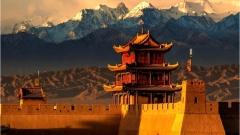
Jiuquan was one of the four commanderies of the Hexi Corridor during the Han Dynasty. Its name comes from the legend that “there is a spring outside the city, and its water tastes like wine.” The Western Han Dynasty Jiuquan Historic Site is where the city’s name originated. It is said that Huo Qubing poured wine into the spring to share with his soldiers. Entry is free. The Jiuquan Satellite Launch Center is the birthplace of the Shenzhou spacecraft. Visits must be arranged in advance through a travel agency. The Jinta Desert Populus Euphratica Forest turns golden yellow in early to mid October each year, with an entrance fee of 65 RMB. Jiuquan is only 25 kilometers from Jiayuguan, and the two cities are often visited together. It is recommended to spend 1 to 2 days here.
Jiuquan
Jiuquan was one of the four commanderies of the Hexi Corridor during the Han Dynasty. Its name comes from the legend that “there is a spring outside the city, and its water tastes like wine.” The Western Han Dynasty Jiuquan Historic Site is where the city’s name originated. It is said that Huo Qubing poured wine into the spring to share with his soldiers. Entry is free. The Jiuquan Satellite Launch Center is the birthplace of the Shenzhou spacecraft. Visits must be arranged in advance through a travel agency. The Jinta Desert Populus Euphratica Forest turns golden yellow in early to mid October each year, with an entrance fee of 65 RMB. Jiuquan is only 25 kilometers from Jiayuguan, and the two cities are often visited together. It is recommended to spend 1 to 2 days here.
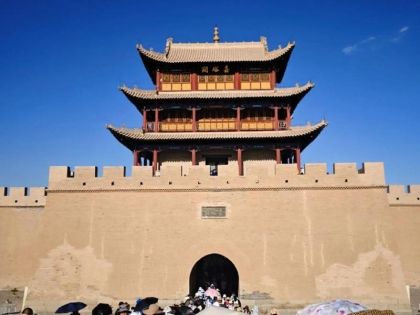
Jiayuguan Pass, the First and Greatest Pass On Earth
Tourist Cities in Qinghai
Xining
Xining is the capital of Qinghai Province and the eastern gateway to the Qinghai Tibet Plateau. It is home to a mix of ethnic groups including Han, Tibetan, Hui, Tu, and Salar. Kumbum Monastery is one of the six great monasteries of the Gelug school of Tibetan Buddhism and the birthplace of Tsongkhapa, with an entrance fee of 70 RMB. Dongguan Great Mosque is the largest mosque in Qinghai Province, capable of accommodating ten thousand worshippers at once. Mojia Street is Xining’s most famous snack street, featuring specialties like hand grabbed lamb, minced noodle soup, yogurt, and sweet fermented grain. From Xining, you can travel to Qinghai Lake (about 2.5 hours by car) and Chaka Salt Lake (about 4 hours by car). It is recommended to spend 1 to 2 days here.
Qinghai
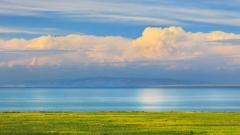
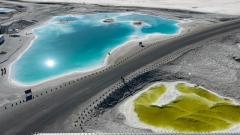
Qinghai Lake is the most famous scenic attraction in Qinghai. It is about 150 kilometers from Xining and is China’s largest inland saltwater lake, with a surface elevation of 3,196 meters. Erlangjian Scenic Area is the core scenic area of Qinghai Lake, with an entrance fee of 90 RMB. Chaka Salt Lake is about 150 kilometers west of Qinghai Lake and is known as the “Mirror of the Sky,” with an entrance fee of 60 RMB. The lake ring road is about 360 kilometers long, and driving or cycling is the best way to explore. In July, rapeseed flowers bloom along the lakeshore, with golden yellow flower seas contrasting with the blue lake and white clouds. It is recommended to take a day trip from Xining or stay overnight by the lake to watch the sunrise. The best season is July to August.
Golmud
Golmud is located in western Qinghai Province. It is the starting point of the Qinghai Tibet Highway and a transportation hub connecting Tibet, Xinjiang, and Gansu. Kunlun Mountain National Geopark is about 100 kilometers from Golmud city. Kunlun Pass is at an elevation of 4,767 meters and is the best place to view Yuzhu Peak and the Kunlun Mountains, with free entry. Qarhan Salt Lake is China’s largest salt lake, with a surface area more than 50 times that of Chaka Salt Lake. The lake water has a turquoise color, and the salt crystal formations are varied. The entrance fee is 40 RMB. Wuji Longfeng Palace is the birthplace of Kunlun Mountain Taoist culture, enshrining a statue of the Queen Mother of the West, with an entrance fee of 10 RMB. There is also a populus euphratica forest reserve around Golmud, which turns golden yellow in autumn, with an entrance fee of 30 RMB. Golmud has an elevation of 2,800 meters. It is recommended to spend a night in Golmud to acclimatize before traveling to higher altitude areas. The best season is June to September, with 1 to 2 days recommended.
Tourist Cities in Xinjiang
Urumqi
Urumqi is the capital of the Xinjiang Uygur Autonomous Region and the inland city farthest from the sea in the world. The Xinjiang International Grand Bazaar is the largest bazaar in the world, combining commerce, dining, and tourism. The Xinjiang Regional Museum houses a large collection of Silk Road artifacts and the Loulan Beauty mummy, with free entry but requiring advance reservation. Tianshan Tianchi Lake is about 110 kilometers from the city, with blue water reflecting Bogda Peak, and an entrance fee of 155 RMB (including sightseeing bus). Big plate chicken, hand grabbed rice, and roasted lamb skewers are representative Xinjiang dishes. It is recommended to spend 1 to 2 days here.
Kashgar
Kashgar is the westernmost city in Xinjiang and was a hub of the Silk Road in Central Asia. Kashgar Old City is China’s only completely preserved Islamic style neighborhood, featuring earthen yellow residential buildings, carved wooden doors, and winding alleys, known as a “living museum of Uyghur culture,” with free entry. Id Kah Mosque is the largest mosque in Xinjiang, with an entrance fee of 45 RMB. The Tomb of Xiangfei is the cenotaph of Rongfei, a concubine of Emperor Qianlong, with an entrance fee of 30 RMB. The Kashgar Grand Bazaar is the largest market in Central Asia. In the century old tea house, locals play the rawap and sip brick tea. Baked buns and lamb stew in a teapot are Kashgar specialties. Traveling to border areas like Tashkurgan requires a border pass. It is recommended to spend 2 days here.
Yining
Yining is located in northwestern Xinjiang and is the capital of the Ili Kazakh Autonomous Prefecture. Narat Grassland is the most famous grassland in Ili. In August, the meadows are lush and wildflowers are in bloom, with an entrance fee of 95 RMB and a shuttle bus fee of 40 RMB. Karajun Grassland is known as the “Body Grassland” due to its rolling curves resembling the lines of the human body, with an entrance fee of 80 RMB. Sayram Lake is known as the “last drop of the Atlantic,” with clear and blue water, and an entrance fee of 70 RMB. Huocheng Lavender Manor is in full bloom from June to July, known as the “Provence of China.” The Kazanqi Folk Tourism Zone in Yining city preserves traditional Uyghur residential houses and lifestyle, featuring distinctive blue doors, windows, and carved wooden pillars. The best season is June to August, with 2 to 3 days recommended.
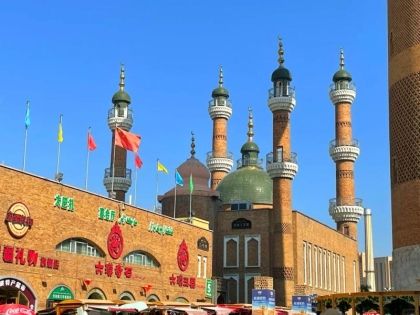
Xinjiang International Grand Bazaar, a famous landmark in Urumqi
Practical Tips for Northwest China Travel
Time Planning
Northwest China is vast, and distances between cities are great. It is recommended to allow 5 to 7 days for the Hexi Corridor, 7 to 10 days for the Qinghai Gansu Grand Loop, 5 to 7 days for the Gannan Loop, and 7 to 10 days for Southern Xinjiang. Most travelers cannot cover all areas in one trip. It is more realistic to choose one region to focus on.
Transportation
There are high speed rail connections between cities in the Hexi Corridor. Dunhuang does not yet have a high speed rail station, so you need to transfer at Jiayuguan. The Qinghai Gansu Grand Loop and the Gannan Loop are suitable for self driving or private car hire, as public transport is less frequent. For travel between Urumqi and Kashgar, flying is recommended to save time.
Notes
The climate in Northwest China is dry with strong UV radiation, so you need to protect yourself from the sun and stay hydrated. Qinghai Lake and Gannan are at higher elevations, so be aware of altitude sickness and avoid strenuous exercise. Many restaurants are halal, so do not bring pork products into them.
Which Cities to Visit in Northwest China: A Land of Beautiful Scenery
These ten diverse cities stretch across the vast Hexi Corridor, the distant landscapes of Qinghai, and the culturally rich lands of Xinjiang. The charm of Northwest China has never been confined to the scenery of a single city. It lies hidden in the rolling mountain ranges of the Hexi Corridor, the crystal clear purity of Qinghai Lake, and the full exotic atmosphere of Kashgar. The vast and magnificent Northwest China fully displays the most stunning and extreme natural and cultural beauty of western China. Every trip to this region will reward you with abundant surprises and unforgettable, precious travel memories.