
For travelers from the United Kingdom, understanding what documents British citizens need to visit Tibet is the crucial first step before booking flights or packing bags. Unlike traveling to other parts of China, entering the Tibet Autonomous Region involves a multi-layered permit system designed to regulate tourism and protect the fragile local environment. The process might seem daunting at first glance, but with the right information and proper planning, securing your paperwork is entirely manageable. Whether you are drawn by the spiritual atmosphere of Lhasa, the towering presence of Mount Everest, or the vast landscapes of the Changtang plateau, having your documentation in order ensures a smooth journey. This comprehensive guide breaks down every single requirement so you can focus on the adventure ahead.
Key Points
- China Visa Required: British citizens must obtain a standard Chinese tourist visa unless qualifying for specific short-term transit exemptions, which rarely apply to Tibet trips.
- Tibet Travel Permit Mandatory: No foreign traveler can enter Tibet without this specific document issued by the Tibet Tourism Bureau.
- Organized Tour Necessary: Independent travel is not permitted; you must book through a registered travel agency to secure permits.
- Additional Permits for Remote Areas: Visiting places like Mount Everest Base Camp or Mount Kailash requires extra military and border permits.
- Original Passport Needed: You must carry your original passport containing the valid Chinese visa throughout the entire journey.
Understanding the China Visa Requirements for British Citizens
The foundation of your journey begins with gaining legal entry into mainland China. Before worrying about regional permits, British passport holders must secure a valid Chinese visa. It is highly important to verify the current visa-exemption policies for British citizens traveling to China before applying, as regulations regarding bilateral agreements and short-stay exemptions can occasionally be updated by immigration authorities. Generally, tourists heading to Tibet will need to apply for an “L” category tourist visa through the Chinese Visa Application Service Centre located in the UK, such as those in London, Manchester, or Edinburgh.
When filling out your visa application form, it is usually recommended to list standard Chinese destinations like Beijing, Shanghai, or Chengdu as your primary itinerary. Mentioning Tibet directly on the initial Chinese visa application can sometimes complicate or delay the approval process, as the Chinese embassy does not issue Tibet-specific visas. Your travel agency will handle the Tibet-related paperwork separately after your main Chinese visa has been successfully granted. Ensure that your passport has at least six months of validity remaining from your planned date of entry into China and contains enough blank pages for the visa stamp and subsequent border checks.
Processing times for a Chinese tourist visa typically take around four to five working days, though expedited services are available for an additional fee if you are working against a tight schedule. Once you have the visa securely stamped in your passport, you have cleared the first major hurdle. Keep in mind that while China offers 144-hour or 72-hour visa-free transit policies for certain nationalities passing through specific hubs, these transit exemptions are practically incompatible with a trip to Tibet due to the extended time required for travel and the strict checkpoint controls involved.
The Crucial Tibet Travel Permit Explained
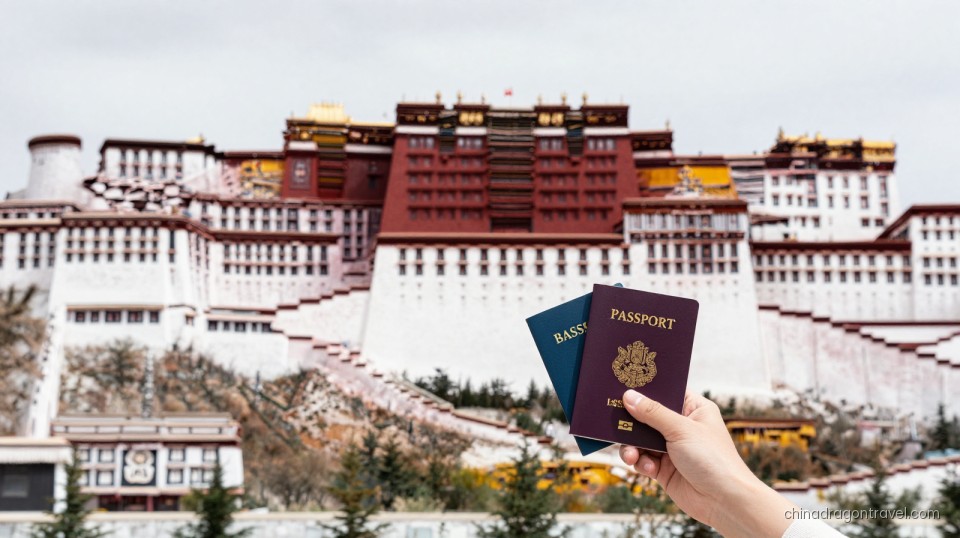
Once you have your Chinese visa, the next—and most important—document on the list of what documents British citizens need to visit Tibet is the Tibet Travel Permit, often referred to as the TTB permit. This document is issued exclusively by the Tibet Tourism Bureau and is an absolute legal requirement for all foreign nationals wishing to enter the Tibet Autonomous Region. Without this physical piece of paper, you will not be allowed to board a flight or a train heading to Lhasa or any other destination within Tibet.
A critical rule to understand is that individual travelers cannot apply for the Tibet Travel Permit on their own. The Chinese government mandates that all foreign visitors must travel as part of an organized tour, accompanied by a licensed local guide. Therefore, the permit application must be submitted by a registered Tibetan travel agency on your behalf. To initiate this process, you will need to provide your agency with clear, color-scanned copies of your passport’s information page and your valid Chinese visa. It is generally advised to submit these documents to your agency at least twenty to thirty days before your intended arrival date in Tibet, as the bureaucratic processing takes time and delays can occur during peak tourist seasons or sensitive periods.
The Tibet Travel Permit itself will detail your exact itinerary, including your entry and exit dates, the cities you are authorized to visit, and the name of your designated tour guide. You must stick strictly to this approved route. If your permit states you are flying into Lhasa, you must fly into Lhasa; you cannot spontaneously decide to take the train instead without prior authorization and reissuance. When you arrive at the airport or train station in your departure city (such as Chengdu, Xining, or Kathmandu), airline staff or railway officials will physically check for this permit before issuing your boarding pass. Your travel agency will typically mail the original hard copy of the permit to your hotel in mainland China before your departure to Tibet.
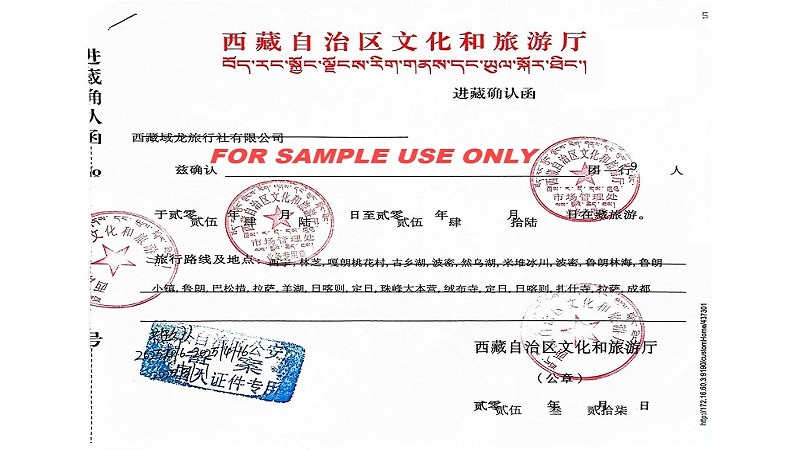
China Dragon Travel – Tibet Travel Permit
Additional Permits for Restricted and Border Regions
While the Tibet Travel Permit allows you to enter the region and visit standard locations like Lhasa, Yamdrok Lake, and Gyantse, it does not grant you access to the entirety of the Tibetan plateau. Many of the most spectacular and sought-after destinations are classified as restricted or border areas, requiring supplementary documentation. Understanding these additional layers is vital when calculating exactly what documents British citizens need to visit Tibet comprehensively.
If your itinerary includes traveling to Mount Everest Base Camp, the remote western regions of Ngari (home to Mount Kailash and Lake Manasarovar), or the eastern forests of Nyingchi near the border, your travel agency must apply for an Alien Travel Permit. This secondary document is issued by the local Public Security Bureau (PSB) in Lhasa. Usually, your guide will collect your passport upon your arrival in Lhasa and handle the application process, which takes one to two business days. You do not need to worry about doing this yourself, but you must ensure your pre-arranged itinerary includes these stops so the agency knows to apply for them.
Furthermore, for areas situated very close to international borders, such as the slopes of Everest or the routes leading toward Nepal and India, a Military Border Pass is required. This is issued by the local military authorities and is strictly controlled. Again, your registered travel agency handles this behind the scenes. Attempting to bypass these checkpoints or traveling to unapproved areas without the correct permits will result in being turned back by police or military checkpoints, heavy fines, and potential deportation. Always communicate your desired destinations clearly to your tour operator well in advance so they can bundle all necessary permit applications together.
How to Apply: The Role of Organized Tours and Agencies
Because the entire permit ecosystem relies on authorized intermediaries, choosing the right travel partner is arguably as important as gathering your personal documents. As mentioned earlier, independent backpacking is not a legally viable option for foreign passport holders in Tibet. You must be part of a structured group or a private guided tour.
This is where experienced operators become invaluable. Agencies such as China Dragon Travel specialize in navigating the complex bureaucracy of Tibetan tourism. By booking your expedition through a reputable organization like China Dragon Travel, you effectively outsource the stress of permit acquisition. They will guide you through the exact timeline for submitting your passport scans, advise you on the nuances of your Chinese visa application, and coordinate the delivery of your physical Tibet Travel Permit to your transit hotel in mainland China. Their established relationships with the Tibet Tourism Bureau and local PSB offices mean that applications are less likely to face administrative hurdles. Whether you prefer a small group tour to share costs or a fully customized private itinerary tailored to your specific interests, utilizing a professional service ensures that the question of what documents British citizens need to visit Tibet is answered seamlessly by experts who handle the logistics daily.
When selecting an agency, ensure they are legally registered to operate inbound tourism in Tibet. Communicate via email or messaging apps to confirm they understand the specific needs of British passport holders, particularly regarding visa application strategies from the UK. Transparency about costs—which should include all permit fees, guide services, and transportation—is also a hallmark of a reliable operator.
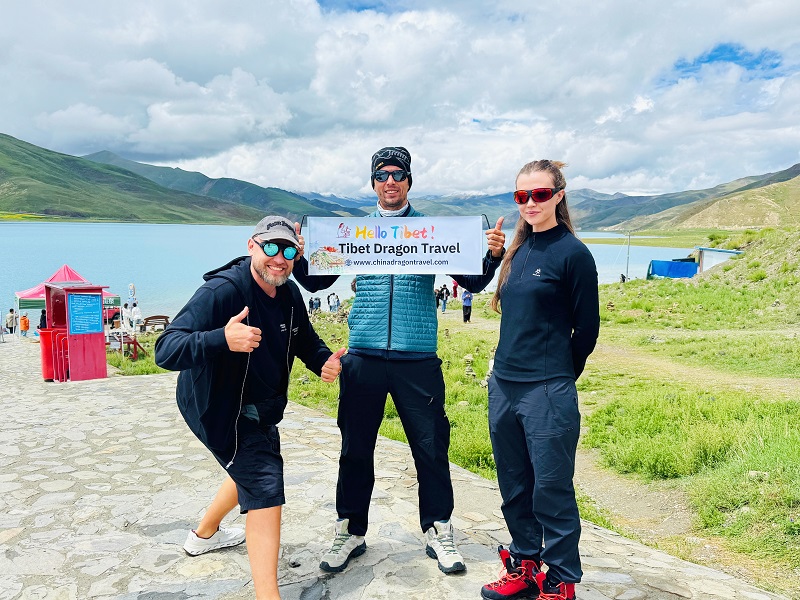
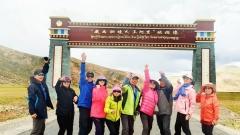
Travelers with China Dragon Travel
Entering Tibet: Flights, Trains, and Document Checks
Securing the paperwork is only half the battle; you must also present it correctly at various logistical chokepoints. Most British travelers enter Tibet either by flying directly into Lhasa Gonggar Airport from a major Chinese hub like Chengdu, Chongqing, or Xining, or by taking the famous Qinghai-Tibet Railway.
If you choose to fly, the airline counter at your departure airport will ask to see your original passport, your valid Chinese visa, and the original hard copy of your Tibet Travel Permit. Photocopies or digital images on your phone are universally rejected. If you are missing any of these items, you will be denied boarding. Because the permit is a physical document mailed to you, timing your mainland China stopover is critical. You generally need at least one overnight stay in your departure city to receive the courier package containing your permit before catching your morning flight to Lhasa.
Taking the train offers a more scenic approach and helps slightly with altitude acclimatization, though the oxygen-supplied carriages mitigate some benefits. The document checks for the railway are equally stringent. Station security will verify your Tibet Travel Permit alongside your train ticket and passport before allowing you onto the platform. During the long train journey, police officers may also walk through the carriages to conduct random spot checks of foreign passengers’ documents. Keep your passport and permit easily accessible in your day bag rather than buried in your checked luggage.
For the adventurous few entering Tibet overland from Nepal via the Friendship Highway, the process differs slightly. Instead of a standard Chinese tourist visa applied for in the UK, you will need a special Chinese Group Visa issued by the Chinese Embassy in Kathmandu. Your travel agency will arrange a visa invitation letter, which you present in Nepal to obtain this specific transit document. You still require the Tibet Travel Permit, which your agency arranges simultaneously.

Special Considerations for British Travelers
While the fundamental rules apply to all foreign nationals, British citizens should keep a few specific nuances in mind when preparing for a Tibetan adventure. The diplomatic and consular relationship between the UK and China means that visa processing centers in Britain are highly efficient, but applicants must be meticulous with their paperwork. Any discrepancies between your visa application and your actual travel plans can raise red flags.
Additionally, British passports must be in good condition. Immigration officers in China, and particularly the specialized border guards in Tibet, are known to scrutinize passports closely. If your passport has significant wear and tear, water damage, or peeling lamination, it is highly advisable to renew it before applying for your Chinese visa. A damaged passport can lead to denied entry even if you hold a valid visa and Tibet Travel Permit.
Health considerations also intersect with documentation. While not always strictly demanded as a physical document at the border, carrying proof of comprehensive travel insurance is highly recommended. Given the extreme altitudes and remote nature of Tibet, medical evacuations can be astronomically expensive. Some agencies may request proof of insurance before finalizing your tour booking. Furthermore, if you have visited certain countries recently, health declaration forms may be required upon entry to China, though these protocols fluctuate based on global health situations. Always check the latest UK Foreign, Commonwealth & Development Office (FCDO) travel advice for China and Tibet shortly before your departure.
Navigating Checkpoints Within Tibet
Once you have successfully arrived in Lhasa, the document checks do not cease. The Tibet Autonomous Region is heavily monitored, and numerous police and military checkpoints exist along the highways connecting different prefectures. Whenever your vehicle leaves one county and enters another, you will likely encounter a barrier where officials inspect identification.
During these stops, your Tibetan tour guide will typically gather everyone’s passports and the relevant Alien Travel Permits or Border Passes and present them to the officers on your behalf. As a passenger, you may be asked to step out of the vehicle for facial recognition scanning or basic questioning. Remain polite, cooperative, and patient. These checks are routine and happen dozens of times on longer itineraries, such as the overland journey from Lhasa to Everest Base Camp or the multi-day kora around Mount Kailash. Losing your passport or misplacing your permits during the trip will cause massive logistical nightmares, potentially halting your tour entirely until replacements can be sourced from Lhasa. Always store your documents in a secure, waterproof travel wallet kept on your person.
Timeline and Preparation Strategy
To avoid last-minute panic, establishing a clear timeline is essential. Roughly three months before your trip, finalize your itinerary with your chosen travel agency and begin gathering your documents. About eight to ten weeks out, submit your application for the Chinese tourist visa at the visa center in the UK. Once the visa is secured, immediately send the high-resolution scans to your Tibetan agency so they can apply for the Tibet Travel Permit.
Around three to four weeks before departure, your agency should confirm that the Tibet Travel Permit application has been submitted and is processing. One week before your flight to China, confirm the mailing address of your first hotel in mainland China where the physical permit will be delivered. By following this structured approach, the complex web of what documents British citizens need to visit Tibet transforms from an overwhelming obstacle into a straightforward checklist.
Traveling to Tibet is a profound experience that rewards those who put in the preparatory effort. The majestic monasteries, the crisp Himalayan air, and the rich cultural tapestry are well worth the administrative legwork. By understanding the visa requirements, relying on professional agencies to secure your Tibet Travel Permit, and respecting the checkpoint protocols, British citizens can embark on this extraordinary journey with confidence and peace of mind.