Traveling to the roof of the world is a dream for many adventurers, but navigating the paperwork can feel overwhelming. If you are wondering what documents Canadian citizens need to visit Tibet, the process involves more than just booking a flight. Tibet operates under specific entry regulations that differ from the rest of China, requiring travelers to secure multiple layers of authorization before setting foot on the plateau. Understanding these requirements well in advance ensures your journey goes smoothly without unexpected delays at border checkpoints or airports.
Key Takeaways
- Canadian passport holders must obtain a valid Chinese visa before applying for any Tibet-specific permits.
- The Tibet Travel Permit is mandatory for all foreign nationals, including Canadians, and must be arranged through a registered travel agency.
- Additional permits, such as the Alien Travel Permit and Military Permit, are required if your itinerary includes restricted or remote areas like Mount Everest Base Camp or Mount Kailash.
- Independent travel is not permitted in Tibet; you must book a guided tour with an approved agency to process your documentation.
- Recent visa-exemption policies for short-term visits to mainland China do not apply to Tibet, meaning Canadians still require full visa documentation for Tibetan travel.
Understanding the Chinese Visa Policy for Canadian Citizens
Before addressing the specific documents needed for Tibet, it is crucial to understand the current entry requirements for mainland China. Recently, China introduced a 15-day visa-exemption policy for citizens of several countries, including Canada, allowing short-term visits for tourism, business, or transit purposes. However, this policy comes with significant limitations when your destination is Tibet.
While the visa-exemption policy allows Canadians to enter cities like Beijing, Shanghai, or Chengdu without a traditional visa for up to 15 days, it does not bypass the strict entry controls governing the Tibet Autonomous Region. To enter Tibet, foreign travelers must possess a Tibet Travel Permit, and the local authorities who issue this permit generally require proof of a standard Chinese tourist visa (L Visa) rather than relying on the visa-free entry stamp. Therefore, even if you qualify for the visa-exemption policy upon arriving in mainland China, attempting to use it as your basis for entering Tibet will likely result in your Tibet Travel Permit application being denied.
For Canadians planning a dedicated trip to Tibet, applying for a standard single-entry or double-entry Chinese Tourist Visa (L Visa) at a Chinese Visa Application Service Center in Canada remains the most reliable path. You will need your original Canadian passport with at least six months of remaining validity and two blank pages, a completed visa application form, a recent passport-sized photograph, and proof of round-trip flights and hotel bookings for your initial entry city in mainland China. Securing this standard visa eliminates ambiguity and provides the solid foundation required for the next phase of your documentation.

China Visa
The Tibet Travel Permit: Your Most Essential Document
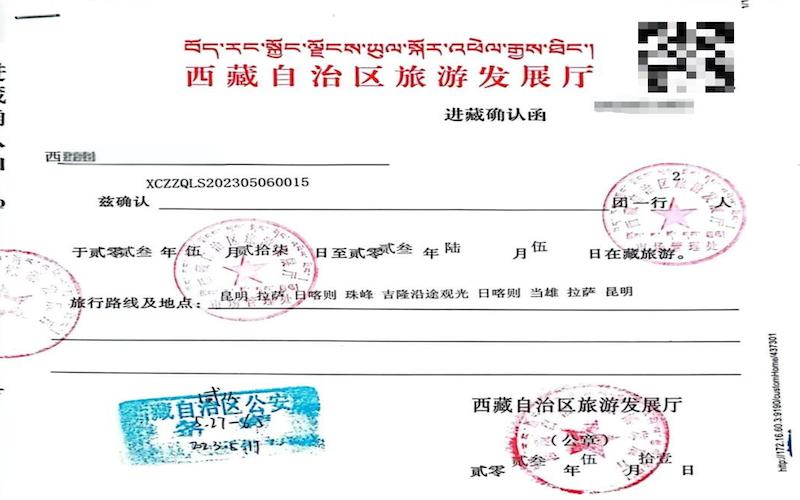
When discussing what documents Canadian citizens need to visit Tibet, the Tibet Travel Permit—often referred to as the TTB Permit—is the absolute centerpiece. Issued by the Tibet Tourism Bureau, this document is legally required for every foreign national wishing to enter the region. Without it, you cannot board a flight or train bound for Lhasa or any other destination within Tibet.
The most important rule regarding the Tibet Travel Permit is that individuals cannot apply for it directly. It must be processed through a locally registered Tibetan travel agency on your behalf. This means that before you can even begin the permit application process, you must have a confirmed itinerary and a booked tour with an authorized agency. Independent backpacking or unguided travel is strictly prohibited for foreign passport holders in Tibet.
To initiate the application, you will need to provide your travel agency with clear scanned copies of your Canadian passport information page and your Chinese visa page. The agency will then submit these documents, along with your detailed daily itinerary, to the Tibet Tourism Bureau in Lhasa. The processing time typically takes between 8 to 15 working days, though it can occasionally take longer during peak travel seasons or around major regional festivals. Because of this timeline, it is highly recommended to finalize your tour booking at least one month before your intended departure date.
Once approved, the physical Tibet Travel Permit is usually mailed to your hotel or designated address in your mainland China gateway city, such as Chengdu, Xining, or Beijing. You must carry the original paper document with you, as photocopies or digital versions on your phone are not accepted by airlines or railway officials. When you check in for your flight or train to Tibet, staff will verify this permit alongside your passport before issuing your boarding pass.
Tibet Travel Permit
Additional Permits Required for Remote Tibetan Destinations
While the Tibet Travel Permit grants you access to major cities like Lhasa, Gyantse, and Shigatse, exploring the deeper, more remote corners of the plateau requires additional documentation. Depending on your chosen itinerary, your travel agency will need to apply for one or more supplementary permits on your behalf.
Alien Travel Permit (PSB Permit)
If your route takes you to partially restricted areas such as Mount Everest Base Camp, Sakya Monastery, or certain parts of the Nyingchi prefecture, you will need an Alien Travel Permit. This document is issued by the Public Security Bureau (PSB) in Lhasa. Unlike the Tibet Travel Permit, which must be secured before you arrive in the region, the Alien Travel Permit is usually applied for by your guide once you are already in Lhasa. The process generally takes only a few hours to a day, provided your guide has your original passport and Tibet Travel Permit in hand.
Military Permit (Border Pass)
For itineraries that venture into sensitive border regions—such as the overland route from Tibet to Nepal via the Gyirong border, the sacred pilgrimage circuit around Mount Kailash in Ngari Prefecture, or deep explorations into the Zanda Earth Forest—a Military Permit is mandatory. This document is issued by the local military authorities and requires a more rigorous application process. Because of the bureaucratic steps involved, securing a Military Permit can add extra processing time to your overall preparation. Your travel agency will handle the logistics, but you must ensure your itinerary is locked in well in advance so they have sufficient time to gather the necessary approvals.
Foreign Affairs Permit
In rare cases, if your travels involve visiting specific monasteries, research facilities, or culturally sensitive sites that are not part of the standard tourist circuit, a Foreign Affairs Permit may be required. This is typically only relevant for specialized academic or journalistic trips, though standard tourists should be aware that deviating from the pre-approved itinerary is not permitted under any circumstances.

Tibet Military Permit
Step-by-Step Documentation Process for Canadians
Understanding the chronological order in which you must acquire these documents is vital for avoiding logistical nightmares. Here is how the process naturally unfolds for a Canadian traveler.
First, plan your itinerary and select a reputable travel agency. Since you cannot get the Tibet Travel Permit without a booked tour, this is your foundational step. Work closely with your agency to design a route that matches your interests, whether that involves cultural immersion in Lhasa’s monasteries or trekking near Everest. Once the itinerary is finalized and your deposit is paid, the agency will request your documentation scans.
Second, apply for your Chinese Tourist Visa in Canada. Submit your application to the appropriate Chinese Visa Application Service Center. Ensure your application reflects your entry point into mainland China (e.g., flying into Chengdu or Beijing) rather than listing Lhasa as your first point of entry, as you cannot fly directly into Tibet from outside China without already holding the Tibet Travel Permit.
Third, forward your visa details to your travel agency. As soon as you receive your passport back with the newly stamped Chinese visa, scan both the passport bio-page and the visa page and send them to your Tibetan travel agent. They will immediately submit your file to the Tibet Tourism Bureau to begin the permit processing.
Fourth, receive your Tibet Travel Permit in mainland China. Arrive in your gateway city a few days before your scheduled departure to Tibet. Your travel agency will either deliver the physical permit to your hotel or arrange for you to pick it up at their local office. Verify that all names, passport numbers, and dates on the permit match your documents perfectly.
Fifth, travel to Tibet. Present your passport and the original Tibet Travel Permit at the airport or train station. Upon arrival in Lhasa, your guide will meet you, collect your passport temporarily if an Alien Travel Permit is needed for your onward journey, and manage the rest of the bureaucratic requirements while you focus on acclimatizing to the high altitude.
Why You Must Travel with a Registered Agency
A common question among Canadian travelers accustomed to independent exploration is why a guided tour is mandatory. The requirement is deeply tied to the permit system. The Tibet Tourism Bureau only issues permits to agencies that hold valid operating licenses within the autonomous region. These agencies act as your legal sponsors during your stay.
Your assigned guide is not merely there to provide historical context about the Potala Palace or Jokhang Temple; they serve as your liaison with local authorities. If you are stopped at a rural checkpoint—and checkpoints are frequent on highways leading out of Lhasa—the police will ask to see your passport, Tibet Travel Permit, and potentially your Alien Travel Permit. Your guide ensures these interactions proceed smoothly. Furthermore, if your itinerary requires a Military Permit, only a licensed agency with established relationships with local government offices can navigate that application successfully.
Attempting to bypass this system by overstaying in a gateway city or trying to sneak onto transport is not only illegal but practically impossible due to the stringent ID checks at every transportation hub and highway toll gate leading into Tibet.
Practical Tips for Managing Your Travel Documents
Handling multiple official documents in a foreign country requires a degree of organization. Always carry your original passport and your Tibet Travel Permit in a secure, waterproof travel pouch. While your guide will often need to hold your documents temporarily to process secondary permits or register you at hotels, you should always know where your paperwork is.
Make several physical photocopies of your passport, Chinese visa, and Tibet Travel Permit before leaving your home in Canada. Additionally, store high-resolution digital scans in a secure cloud storage service accessible from your smartphone. In the unlikely event that your physical documents are lost or stolen, having immediate access to these copies will significantly speed up the process of obtaining replacements from the Canadian embassy or consulate in China, as well as from the Tibet Tourism Bureau.
Be mindful of your passport’s expiration date. Chinese visas and Tibet Travel Permits are tied to your specific passport number. If you renew your Canadian passport after your Tibet Travel Permit has been issued, your permit becomes invalid. Always travel on the exact passport used during the application process.
It is also worth noting that journalists, diplomats, and individuals traveling on official government business face entirely different, much stricter protocols and generally cannot travel to Tibet on standard tourist permits. If you fall into any of these categories, you must contact the relevant diplomatic channels long before planning a trip.
Navigating Altitude and Health Documentation
While not a government-issued travel document, your health status plays a role in your ability to travel comfortably in Tibet. The average elevation exceeds 4,000 meters, and altitude sickness is a genuine concern. Some travel agencies or specific tour operators may request a brief medical clearance or a signed health declaration form stating you do not have severe cardiovascular or respiratory conditions that would make high-altitude travel dangerous.
Ensure you bring any necessary prescription medications in their original packaging, accompanied by a doctor’s note translated into English or Chinese if possible. While customs officials rarely scrutinize personal medication, having proper documentation prevents misunderstandings, especially since some over-the-counter medications in Canada may be controlled substances elsewhere.
How China Dragon Travel Simplifies Your Tibet Journey
Given the intricate web of visas, permits, and mandatory guided tours, partnering with an experienced operator makes all the difference. China Dragon Travel specializes in helping international visitors, including Canadian citizens, navigate the complexities of traveling to Tibet. From the moment you begin inquiring about what documents Canadian citizens need to visit Tibet, their team provides clear, step-by-step guidance tailored to your specific situation.
China Dragon Travel handles the entire permit application process on your behalf, ensuring that your Tibet Travel Permit, Alien Travel Permit, and any required Military Permits are secured accurately and on time. Their deep local connections and thorough understanding of current regulations mean you avoid the stress of bureaucratic delays. By managing the paperwork seamlessly, they allow you to focus entirely on preparing for the breathtaking landscapes, ancient monasteries, and rich cultural encounters that await you on the Tibetan Plateau. Whether you are dreaming of standing at Everest Base Camp or walking the kora around Mount Kailash, utilizing a trusted partner like China Dragon Travel transforms a complicated administrative process into a smooth, confident start to your adventure.