Traveling to the roof of the world is a dream for many adventurers, and for Malaysian citizens, the journey requires careful preparation regarding documentation. Unlike visiting other parts of China, entering the Tibet Autonomous Region involves specific administrative procedures that go beyond a standard tourist visa. Understanding what documents you need before departure ensures a smooth and stress-free experience. The regulations are in place to manage tourism sustainably and protect the unique cultural and environmental landscape of the region. For Malaysians planning this extraordinary trip, gathering the right paperwork well in advance is crucial. This comprehensive guide breaks down every document required, explains how to obtain them, and offers practical advice to help you navigate the process with confidence.
Key Takeaways:
- A valid Chinese Tourist Visa (L Visa) is mandatory.
- The Tibet Travel Permit is required for all foreign nationals.
- Independent travel is not allowed; a guided tour must be booked first.
- Additional permits are needed for restricted areas like Mount Everest.
- Applications should begin at least one month before departure.
Understanding the Basics of Tibet Travel for Malaysian Citizens
Before diving into the specific documents, it is important to understand the foundational rules governing tourism in the region. The Tibet Autonomous Region operates under distinct entry regulations compared to mainland China. All foreign passport holders, including Malaysian citizens, are required to travel as part of an organized tour. This means you cannot simply book a flight or train ticket and arrive independently. You must engage a registered travel agency to arrange your itinerary, transportation, accommodation, and guide services before any permit applications can even begin.
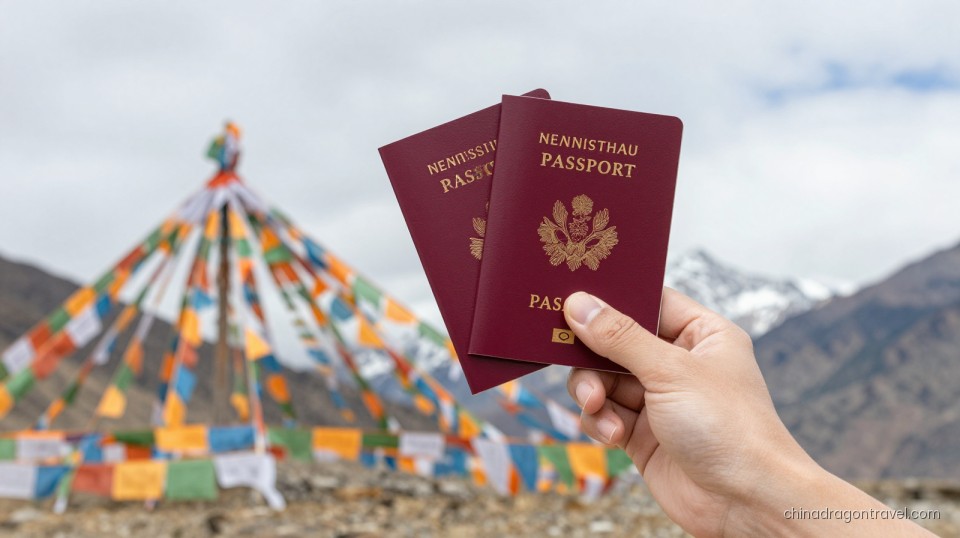
This requirement might seem restrictive, but it actually simplifies much of the logistical burden. Your chosen travel agency acts as your sponsor and handles the bureaucratic heavy lifting on your behalf. For Malaysian travelers, this means your first step in preparing for Tibet Travel is researching and selecting a reliable agency. Once your tour is confirmed and paid for, the agency will initiate the permit application process using copies of your documents. It is also worth noting that these regulations apply regardless of whether you are entering Tibet by air from cities like Chengdu or by train from Xining or Beijing. Every checkpoint along the way will require you to present the appropriate paperwork.
The Chinese Tourist Visa (L Visa)
The absolute first document any Malaysian citizen needs is a valid Chinese Tourist Visa, commonly referred to as the L Visa. Since Tibet is an autonomous region within China, you must have legal permission to enter the country before you can proceed to the plateau. Malaysian passport holders must apply for this visa through the Chinese Visa Application Service Center in Kuala Lumpur or the Chinese Embassy.
When applying for your Chinese visa, you will need to provide your original passport, which must have at least six months of validity remaining and at least two blank visa pages. You will also need to submit a completed visa application form, recent passport-sized photographs with a white background, proof of round-trip flight bookings, and hotel reservations for your initial destinations in mainland China.
A critical detail for those planning Tibet Travel is how you fill out your itinerary on the visa application. It is generally advised not to mention Tibet explicitly on your initial Chinese visa application. Because the Tibet Travel Permit is issued separately after the Chinese visa is granted, listing Tibet as your primary destination during the visa application phase can sometimes lead to delays or complications. Instead, list standard mainland Chinese cities such as Beijing, Chengdu, or Shanghai as your intended destinations. Once your Chinese visa is securely stamped in your passport, you can proceed with the Tibet-specific documentation through your travel agency.
The Tibet Travel Permit (TTP)
The Tibet Travel Permit, often called the TTB (Tibet Tourism Bureau) Permit, is the most vital document specifically required for entering the region. Without this physical piece of paper, you will not be allowed to board a flight or train heading to Lhasa, nor will you be permitted to pass through security checkpoints upon arrival.
Unlike the Chinese visa, Malaysian citizens cannot apply for the Tibet Travel Permit directly. It must be applied for by your registered Tibetan travel agency. To initiate this process, you will need to send your agency clear scanned copies of your Malaysian passport information page and your valid Chinese visa. Your agency will then compile these documents alongside your finalized tour itinerary, guide details, and vehicle registration numbers, submitting the entire package to the Tibet Tourism Bureau for approval.
The processing time for the Tibet Travel Permit typically takes between 15 to 20 working days. Therefore, it is highly recommended that you finalize your tour booking at least 30 to 45 days before your planned departure date. Once approved, the permit is mailed to your agency’s office in mainland China—usually in the city where you will be transiting, such as Chengdu or Xining. Your agency will either hand-deliver the original permit to your hotel in mainland China before your departure or arrange for it to be given to you at the airport or train station. You must carry the original physical document; photocopies or digital versions on your phone will not be accepted by transport authorities.
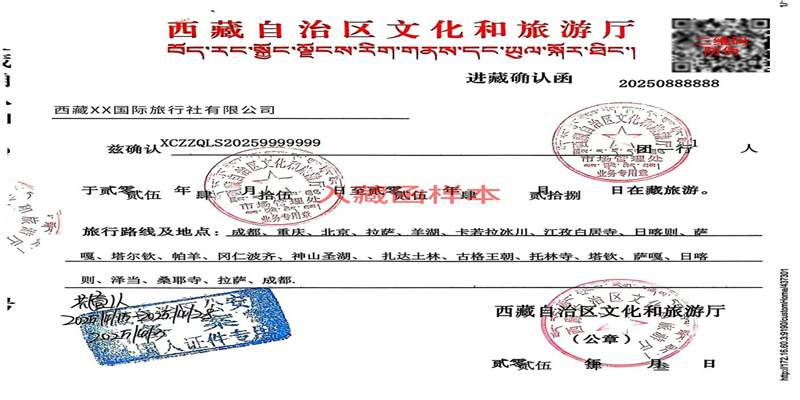
Sample of Tibet Travel Permit
Alien’s Travel Permit (PSB Permit)
While the Tibet Travel Permit allows you to enter the region and stay in Lhasa, it does not grant access to all areas. If your Tibet Travel itinerary includes destinations outside of Lhasa—such as Shigatse, Gyantse, or remote monasteries—you will need an additional document known as the Alien’s Travel Permit, or PSB (Public Security Bureau) Permit.
You do not need to worry about obtaining this before you leave Malaysia. The Alien’s Travel Permit is applied for after you arrive in Tibet. Your local guide will take your original passport and Tibet Travel Permit to the local Public Security Bureau in Lhasa to process this document. It usually only takes a few hours or a single day to issue. The cost is minimal and is often included in your overall tour package. This permit is essential for moving freely between different prefectures within the autonomous region and will be checked at various police checkpoints along the highways.
Military Area Entry Permit
Certain parts of Tibet are considered sensitive border zones or military areas, and accessing them requires yet another layer of documentation. If your Tibet Travel plans include visiting Mount Everest Base Camp, Mount Kailash, Lake Manasarovar, or regions near the borders of Nepal, India, or Bhutan, you must obtain a Military Area Entry Permit.
Similar to the Alien’s Travel Permit, this document is arranged by your travel agency. However, because it involves coordination with military authorities, the processing time can be longer. This is another reason why planning your trip well in advance is crucial. Your agency will handle the submission of your passport details and itinerary to the relevant military offices. Without this permit, you will be turned back at military checkpoints, which are strictly enforced in border regions. For example, the journey to Everest Base Camp involves passing through several checkpoints where both your Alien’s Travel Permit and Military Permit will be thoroughly inspected.
Foreign Affairs Permit
In some specific cases, depending on the current political climate or the nature of your visit, a Foreign Affairs Permit might be required. This is generally applicable if your trip involves interactions with local institutions, research, or travel to highly restricted areas not normally open to standard tourist groups. For the vast majority of Malaysian tourists engaging in standard Tibet Travel itineraries, the travel agency will determine if this is necessary and handle the application accordingly. It is processed through the local Foreign Affairs Office and requires the same foundational documents: your passport and Chinese visa copies.
Essential Personal Documents to Carry
Beyond the specialized permits, there are standard personal documents you must keep on your person throughout your journey. Your original Malaysian passport is your most important asset. Ensure it remains safe, dry, and accessible, as you will need to present it constantly at hotels, checkpoints, and when boarding transport.
Carry multiple printed copies of your passport information page and your Chinese visa. While the original permits are mandatory, having backup copies of your core identification can save significant time if a document is misplaced or if a local authority requests a quick reference copy. Additionally, bring your travel insurance policy documents. While not always checked at borders, comprehensive travel insurance that covers high-altitude medical evacuation is strongly advised for anyone undertaking Tibet Travel due to the extreme elevation and remote terrain.
If you are traveling with prescription medications, it is wise to carry a doctor’s note or prescription translated into English or Chinese, explaining the necessity of the drugs. Border controls and security checks can be stringent, and having proper documentation for medical supplies prevents unnecessary confiscation or questioning.
How to Prepare Your Documents Step-by-Step
Navigating the documentation process requires a systematic approach. Here is how Malaysian citizens should sequence their preparations:
First, contact a reputable travel agency specializing in Tibet tours. Discuss your desired itinerary, confirm the dates, and pay the required deposit. The agency will provide you with a formal invitation letter or tour confirmation, which serves as the basis for all subsequent applications.
Second, apply for your Chinese Tourist Visa in Malaysia. Use the tour confirmation for your mainland China itinerary, ensuring you secure the L Visa without complications. Gather your passport, photos, flight details, and hotel bookings for the visa center in Kuala Lumpur.
Third, once your Chinese visa is approved, immediately send high-quality color scans of both your passport and the new visa to your Tibetan travel agency. They will use these to apply for the Tibet Travel Permit. If your itinerary includes Everest or Mount Kailash, remind them to simultaneously apply for the Military Area Entry Permit.
Fourth, wait for the permit processing period. During this time, finalize your packing, ensure your travel insurance is active, and prepare your physical documents. Your agency will notify you once the Tibet Travel Permit is issued and will coordinate its delivery to your transit city in mainland China.
Fifth, collect your original Tibet Travel Permit from your agency’s representative at your transit hotel or the airport/train station before departing for Lhasa. Keep it safely with your passport for the duration of your trip.
Special Considerations for Malaysian Travelers
Malaysian citizens enjoy relatively straightforward access to Chinese visas, but the logistics of Tibet Travel require extra attention to detail. Flight connections from Kuala Lumpur usually route through major hubs like Chengdu, Kunming, or Guangzhou. When booking your flights, ensure there is ample layover time in your transit city. Receiving your original Tibet Travel Permit often requires meeting an agency courier, and tight connections can cause immense stress or missed flights.
Furthermore, consider the linguistic aspect. While your tour guide will speak English or Mandarin, having your documents organized clearly helps during security checks. Place your passport, Chinese visa, Tibet Travel Permit, and Alien’s Travel Permit in a dedicated, easily accessible travel wallet. Do not pack these in your checked luggage under any circumstances.
Health declarations may also be required depending on prevailing health regulations. Always check with your travel agency for the most up-to-date requirements regarding health forms or vaccination certificates prior to your departure from Malaysia.
Partnering with China Dragon Travel for a Seamless Experience
Given the complexity of securing multiple permits and coordinating logistics across different provinces, choosing the right travel partner is just as important as gathering your documents. For Malaysian citizens seeking a reliable and experienced operator, China Dragon Travel offers comprehensive assistance tailored to international visitors. They specialize in handling the intricate permit processes, ensuring that your Tibet Travel Permit, Alien’s Travel Permit, and Military Area Entry Permits are secured efficiently and accurately.
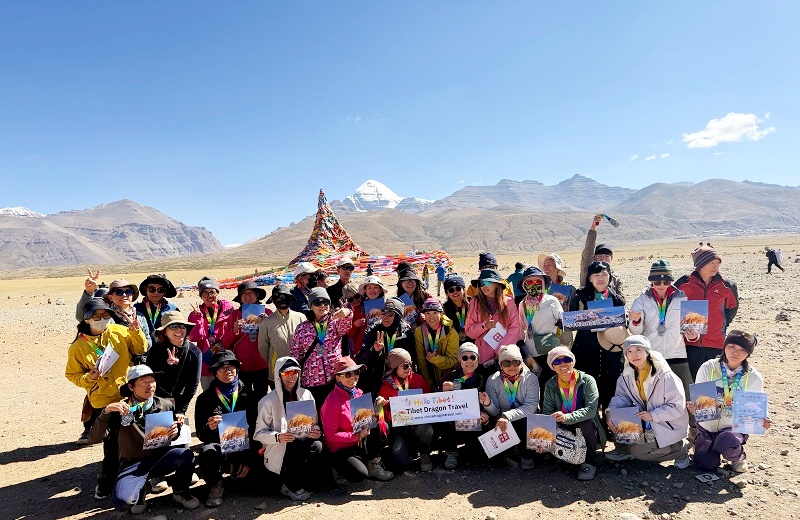
Tibetan Tourists
China Dragon Travel provides end-to-end support, from advising you on how to correctly fill out your Chinese visa application in Malaysia to delivering your physical permits to your transit hotel in Chengdu or Xining. Their deep understanding of regional regulations means you can focus on preparing for the altitude and the incredible sights, rather than worrying about bureaucratic hurdles. By entrusting your itinerary to professionals who navigate these systems daily, you significantly reduce the risk of travel disruptions.
Embarking on a journey to the Tibetan plateau is a profound experience, rich with spiritual heritage, breathtaking landscapes, and unique cultural encounters. While the documentation process for Malaysian citizens may initially seem daunting, breaking it down into manageable steps makes it entirely achievable. Securing your Chinese visa, obtaining the mandatory Tibet Travel Permit through a registered agency, and acquiring the necessary regional passes are all standard procedures that thousands of travelers complete successfully each year. By starting your preparations early, keeping your original documents secure, and partnering with experienced professionals, you pave the way for an unforgettable adventure at the top of the world.