
Xinjiang is one of those places where looking at a map can be slightly misleading. Two destinations may seem close on paper, but the actual journey can take several hours because of the region’s enormous size and mountainous terrain. For first-time visitors, the biggest challenge is often not deciding where to go, but figuring out how to connect the places you want to see. Northern Xinjiang, Southern Xinjiang, the Pamir Plateau, and Eastern Xinjiang each offer very different experiences. Understanding how these regions fit together is the key to building a realistic itinerary without spending half your vacation on unnecessary detours.
Key Takeaways
- Xinjiang is enormous, so it is usually better to focus on one region rather than trying to see everything in a short trip.
- Northern Xinjiang is best known for Kanas, Hemu, Sayram Lake, Nalati, and the Duku Highway.
- Southern Xinjiang is ideal for travelers interested in Kashgar, Silk Road history, local culture, deserts, and ancient cities.
- The Pamir Plateau is best explored from Kashgar, with Karakul Lake and Tashkurgan as major highlights.
- Urumqi is the most convenient starting point for Northern and Eastern Xinjiang, while Kashgar is the natural gateway to Southern Xinjiang and the Pamirs.
- High-speed trains and flights work well between major cities, while private cars or tours are usually more practical for remote scenic areas.
- A well-designed route should minimize backtracking and allow enough time for the long distances between destinations.
How Is Xinjiang Divided for Travel?
Before planning your route, it helps to think of Xinjiang as several major travel regions rather than one huge destination.
Northern Xinjiang
Northern Xinjiang is the region most famous for dramatic natural scenery.
Major destinations include:
- Urumqi
- Kanas
- Hemu
- Altay
- Sayram Lake
- Yining
- Nalati
- Bayinbulak
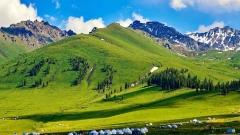
The landscape is dominated by forests, alpine lakes, grasslands, snow mountains, and scenic roads.
For first-time visitors looking for classic Xinjiang scenery, Northern Xinjiang is usually the easiest place to start.
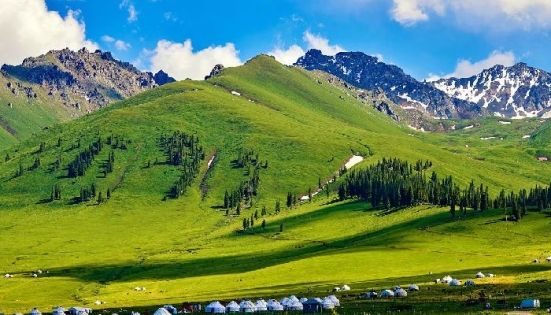
Scenery of Nalati Grassland in Xinjiang
Southern Xinjiang
Southern Xinjiang has a very different character.
Popular destinations include:
- Kashgar
- Kuqa
- Hotan
- Yarkand
- Korla
- Taklamakan Desert
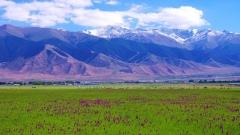
The focus here is more on Silk Road history, ethnic culture, ancient cities, markets, mosques, and desert landscapes.
Eastern Xinjiang
Eastern Xinjiang is easier to combine with a short trip from Urumqi.
Key destinations include:
- Turpan
- Hami
- Urumqi
This region is known for:
- Ancient Silk Road sites
- Grape-growing areas
- Flaming Mountains
- Desert and Gobi landscapes
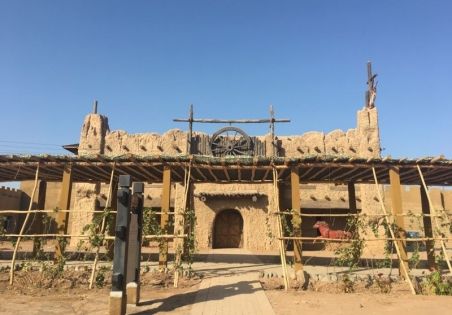
Turpan Karez
Pamir Plateau
The Pamir region is usually explored from Kashgar.
Major stops include:
- Karakul Lake
- Muztagh Ata
- Tashkurgan
- Panlong Ancient Road
This is the region to choose if your ideal Xinjiang trip involves snow mountains, high-altitude lakes, remote roads, and Tajik culture.
Where Should You Start Your Xinjiang Trip?
The best starting point depends on which part of Xinjiang you want to explore.
Urumqi: The Best Gateway to Northern Xinjiang
Urumqi is the most convenient starting point for Northern and Eastern Xinjiang.
It has an important airport and good rail connections, making it easy to begin routes toward: Urumqi → Tianchi → Burqin → Kanas or Urumqi → Turpan → Hami
For many international travelers, Urumqi is the simplest arrival point.
Kashgar: The Gateway to Southern Xinjiang and the Pamirs
Kashgar is a better starting point if your main interests are:
- Kashgar Old City
- Silk Road culture
- Karakul Lake
- Tashkurgan
- Pamir landscapes
A classic route is: Kashgar → Karakul Lake → Tashkurgan → Kashgar
This can be completed in several days without needing to travel all the way back to Urumqi.
Yining: A Convenient Base for the Ili Valley
Yining is useful for travelers focusing on western Northern Xinjiang.
It is well positioned for trips to:
- Sayram Lake
- Nalati Grassland
- Kalajun Grassland
- Tekes
This makes it a practical alternative to starting every Northern Xinjiang journey from Urumqi.
How to Connect the Major Destinations in Northern Xinjiang
The classic Northern Xinjiang route is essentially a large loop.
A popular version looks like this: Urumqi → Tianchi → Burqin → Kanas → Hemu → Karamay → Sayram Lake → Yining → Nalati → Bayinbulak → Duku Highway → Urumqi
The exact route can change depending on the season, but the idea is simple: move continuously through the region instead of repeatedly returning to the same city.
Urumqi → Kanas
This is a long journey, so many travelers break it up by staying in Burqin before continuing to Kanas.
Kanas → Hemu
These two destinations are naturally connected and are usually visited together.
Kanas is known for its alpine lake and mountain scenery, while Hemu is famous for its traditional wooden houses and village atmosphere.
Hemu → Karamay
After leaving the Altay region, travelers can continue south toward Karamay, gradually moving into a different landscape.
Karamay → Sayram Lake
This connects the northern landscape with the greener Ili Valley.
Sayram Lake → Yining → Nalati
This is one of the most scenic sections of the route, especially in summer when the grasslands are green.
Nalati → Bayinbulak → Duku Highway
This section is particularly popular during the summer road-trip season and combines alpine grasslands, valleys, forests, and mountain scenery.
The Classic Northern Xinjiang Loop
For first-time travelers, one of the easiest ways to understand Northern Xinjiang is to picture it as a loop rather than a collection of separate destinations:
Urumqi → Kanas → Hemu → Karamay → Sayram Lake → Yining → Nalati → Bayinbulak → Duku Highway → Urumqi
The advantage is simple: you keep moving forward instead of repeatedly retracing the same roads.
This is also one reason road trips and private tours work so well in Northern Xinjiang. The journey between destinations is often part of the experience, and there are many viewpoints where you may want to stop along the way.
How to Connect Southern Xinjiang
Southern Xinjiang can be planned as a separate route.
A classic itinerary might look like:
Kashgar → Yarkand → Hotan → Kuqa → Korla → Turpan → Urumqi
However, you do not necessarily need to visit every destination.
If you have limited time, a shorter route such as:
Kashgar → Kuqa → Turpan → Urumqi
can provide a good introduction to Southern and Eastern Xinjiang.
Southern Xinjiang is especially suitable for travelers who enjoy history and culture rather than only natural scenery.
You can combine:
- Ancient Silk Road sites
- Local markets
- Historic mosques
- Old towns
- Desert landscapes
- Regional cuisine

How to Connect Kashgar with the Pamir Plateau
The Pamir route is one of the most straightforward regional trips in Xinjiang.
A popular itinerary is: Kashgar → White Sand Lake → Karakul Lake → Tashkurgan → Kashgar
The journey can include some of the most spectacular mountain scenery in the region.
White Sand Lake
A striking combination of sand dunes, turquoise water, and mountain scenery.
Karakul Lake
An alpine lake overlooked by the snow-covered Muztagh Ata and other Pamir peaks.
Tashkurgan
A historic border town with strong Tajik cultural traditions and important Silk Road heritage.
Panlong Ancient Road
A dramatic mountain road famous for its many switchbacks and high-altitude scenery.
Because these places are remote and public transportation is limited, this route is particularly well suited to private cars with drivers or organized tours.

Can You Combine Northern and Southern Xinjiang in One Trip?
Yes, but the answer depends heavily on how much time you have.
10–12 Days
It is usually better to choose one main region.
Trying to combine Northern and Southern Xinjiang in ten days often means spending too much time traveling.
14–16 Days
A combined itinerary becomes more realistic.
You could explore Northern Xinjiang first and then fly to Kashgar, or do the trip in the opposite direction.
18–21 Days
This is a much more comfortable length for a larger Xinjiang journey.
You could combine: Northern Xinjiang → Southern Xinjiang → Pamir Plateau
This gives you a broad overview of the region without making every day a long transfer.
The important rule is not to confuse “more destinations” with “better trip.” Fewer places with enough time usually produce a much more enjoyable experience.
How Far Apart Are Xinjiang’s Major Destinations?
One of the easiest ways to underestimate Xinjiang is to look only at straight-line distance.
Road travel can take much longer because of mountain terrain, scenic stops, road conditions, and the sheer scale of the region.
| Route | Approximate Travel Time | Recommended Transportation |
|---|---|---|
| Urumqi → Turpan | 2–3 hours | High-speed train or car |
| Urumqi → Kanas | Long-distance journey | Flight + car or private car |
| Yining → Sayram Lake | Around 2 hours | Car |
| Kashgar → Karakul Lake | Around 4–5 hours | Private car |
| Kashgar → Tashkurgan | Around 5–6 hours | Private car |
These are general estimates, and actual travel times can vary depending on weather, traffic, road conditions, and seasonal restrictions.
Which Transportation Should You Use in Xinjiang?
High-Speed Trains
High-speed rail is useful for traveling between major cities.
It works especially well for routes such as:
- Urumqi → Turpan
- Urumqi → Hami
Trains are comfortable and efficient, but they are less useful for reaching remote scenic areas.
Flights
Flights are often the best choice when covering very long distances.
For example, flying between Urumqi and Kashgar can save a significant amount of time compared with traveling entirely by road.
Private Car with Driver
For scenic areas, private transportation is often much more practical.
A private car allows you to:
- Stop for photos
- Adjust the schedule
- Reach remote attractions
- Avoid complicated transfers
It is especially useful for families, small groups, and photographers.
Group Tours
A guided tour can be the easiest choice for first-time visitors who do not want to research the complicated connections between remote destinations.
How Many Days Do You Need for Different Xinjiang Routes?
5–7 Days
Good options include: Kashgar + Pamir Plateau or Turpan + Urumqi + nearby destinations
7–10 Days
Ideal for a classic Northern Xinjiang Loop. This is one of the best choices for first-time visitors who want to see the region’s most famous natural landscapes.
10–14 Days
You can explore Northern or Southern Xinjiang in greater depth.
15–21 Days
Suitable for a more comprehensive trip combining: Northern Xinjiang + Southern Xinjiang + Pamir Plateau
Common Mistakes When Planning a Xinjiang Route
The most common problem is simply trying to cover too much.
Underestimating Distances
A destination that looks close on a map may require half a day or more by road.
Trying to See North and South in a Week
Northern and Southern Xinjiang are very different regions. Combining both too quickly often turns the trip into a series of long transfers.
Ignoring Seasonal Roads
Routes such as the Duku Highway are seasonal. Some mountain roads can also be affected by snow and weather.
Always check the conditions for the month you are traveling.
Focusing Only on the Map
A good Xinjiang itinerary is not the one with the shortest line on Google Maps. It is the one that balances driving time, sightseeing, weather, and enough time to actually enjoy each destination.
Which Xinjiang Route Is Best for Your Travel Style?
For Nature Lovers
Try: Kanas → Hemu → Sayram Lake → Nalati
Expect forests, lakes, grasslands, and snow mountains.
For Culture Lovers
Try: Kashgar → Kuqa → Hotan
This route focuses more on history, local communities, markets, and Silk Road heritage.
For Road Trip Enthusiasts
Try: Duku Highway → Bayinbulak → Nalati
The journey itself is the highlight.
For Mountain Lovers
Try: Kashgar → Karakul Lake → Tashkurgan
This route offers some of the most dramatic high-altitude scenery in Xinjiang.
For First-Time Visitors
The Northern Xinjiang Loop is often the easiest introduction because it connects many of the region’s most famous landscapes into one continuous route.
A Simple Rule for Planning Your Xinjiang Map
Planning Xinjiang becomes much easier when you stop trying to decide on every attraction at once.
Start with three questions:
Which region do I want to explore?
How many days do I have?
What type of scenery or experience matters most to me?
Then build the route around those answers.
A good Xinjiang trip usually follows a simple principle:
One region + one logical route + enough time is better than trying to see everything.
Once you understand how the major destinations connect, Xinjiang becomes much easier to navigate — both on the map and in your actual travel plans.