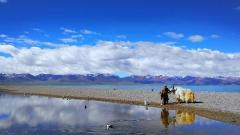

If there’s one place along the legendary Sichuan–Tibet Highway (G318) where travelers instinctively slow down, it’s Lulang.
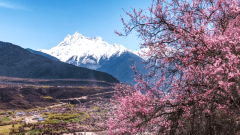
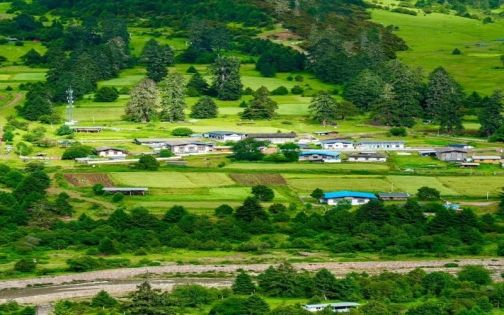
After leaving the snow-covered mountains of Bomi behind, the landscape suddenly opens into endless forests, alpine meadows, grazing pastures, and charming Tibetan villages. Towering spruce and fir trees blanket the rolling hills, streams wind quietly through the valleys, and traditional wooden houses dot the countryside beneath distant snow-capped peaks.
Often compared to the Swiss Alps, Lulang has earned the nickname “The Switzerland of the East.” It is one of Tibet’s most peaceful and picturesque destinations, offering a completely different side of the Tibetan Plateau.
Among all its attractions, the Lulang Forest Viewing Platform is the best place to experience the area’s breathtaking scenery.
From the observation deck, visitors enjoy panoramic views of lush forests, alpine meadows, Tibetan villages, and majestic snow mountains. No matter the season, it remains one of the most iconic viewpoints along the entire G318 route.
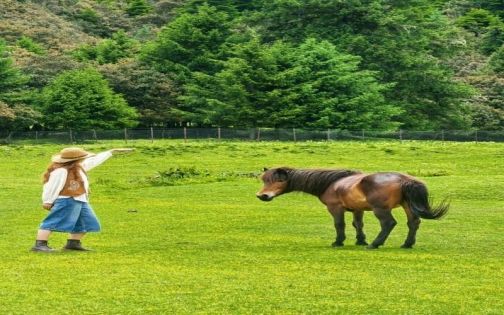
Lulang Forest
Where Is the Lulang Forest Viewing Platform?
The Lulang Forest Viewing Platform is located in Lulang Town, Bayi District, Nyingchi, Tibet, directly beside the famous G318 Sichuan–Tibet Highway.
It lies approximately 70 kilometers from downtown Nyingchi, requiring about 1.5 to 2 hours by car.
Travelers driving from Lhasa via the Lhasa–Nyingchi Expressway can reach Lulang in approximately 5 to 6 hours.
Whether you’re on a self-driving adventure, private tour, or Nyingchi day trip, Lulang is one of the most popular stops along the route.
At an elevation of around 3,700 meters (12,140 feet), altitude sickness is generally less severe than in central Tibet, although visitors should still take time to acclimatize.
Why Is Lulang Called “The Switzerland of the East”?
Unlike many areas of the Tibetan Plateau characterized by vast grasslands and barren mountains, Lulang is covered with dense virgin forests.
Massive spruce and fir trees stretch across the mountainsides, while lush meadows, crystal-clear streams, grazing yaks, and traditional Tibetan homes create a landscape that feels remarkably alpine.
On misty mornings, clouds drift gently through the forest, transforming the valley into a fairy-tale setting.
On clear days, visitors may even catch a glimpse of Namcha Barwa, often regarded as China’s most beautiful snow mountain.
Best Time to Visit Lulang Forest
Lulang offers spectacular scenery throughout the year.
Spring (April–May)
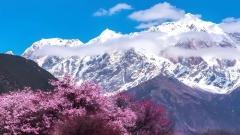
Spring pairs perfectly with the Nyingchi Peach Blossom Festival.
Fresh greenery covers the valley, while wild peach blossoms and rhododendrons bloom across the surrounding mountains.
Summer (May–August)
Summer is widely considered the most beautiful season.
The forests become vibrantly green, alpine meadows burst with wildflowers, and snow-capped peaks remain visible in the distance.
The cool mountain climate also makes Lulang an excellent summer escape.
Autumn (September–October)
Autumn transforms the forests into shades of gold and amber.
Clear skies and colorful landscapes make this one of the favorite seasons for photographers.
Winter (November–March)
Winter offers peaceful snowy landscapes with far fewer visitors.
After snowfall, Lulang resembles a Scandinavian forest, although travelers should check road conditions before departure.
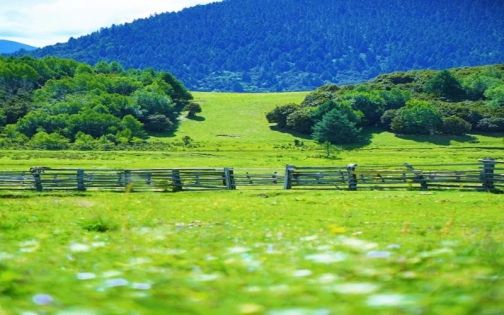
Lulang Forest
Highlights of the Lulang Forest Viewing Platform
Panoramic Forest Views
The second-floor observation deck provides the most comprehensive view of the entire Lulang Forest.
Rolling forests extend toward distant snow-covered mountains, creating one of Tibet’s most recognizable landscapes.
Snow Mountain Backdrop
On clear days, visitors may enjoy magnificent views of Namcha Barwa and neighboring peaks.
Although many travelers joke that seeing Namcha Barwa depends entirely on luck, even cloud-covered mountains create a beautiful ink-painting atmosphere.
Misty Forest Scenery
Following rain or during early mornings, mist often drifts through the forest.
The combination of clouds, towering trees, and alpine meadows creates an unforgettable fairy-tale landscape.
Recommended One-Day Itinerary
If you’re departing from downtown Nyingchi, the following route is highly recommended:
Nyingchi → Sejila Pass → Lulang Forest Viewing Platform → Lulang International Tourist Town → Zhashigang Village → Alpine Pasture → Return to Nyingchi
This itinerary covers all of Lulang’s most iconic attractions within a single day.
Must-Visit Attractions
Sejila Pass
At an elevation of 4,728 meters (15,512 feet), Sejila Pass is the most famous viewpoint for Namcha Barwa.
On clear days, the mountain dominates the horizon.
Even when hidden behind clouds, the dramatic alpine scenery remains breathtaking.
Temperatures here are significantly lower than in Lulang, so warm clothing is recommended throughout the year.
Lulang Forest Viewing Platform
The entrance fee is approximately CNY 30.
Arriving between 7:00 AM and 9:00 AM offers the softest lighting and the fewest visitors.
The second-floor observation deck provides the best panoramic photography angle.
Afternoon light is ideal for portrait photography.
Lulang International Tourist Town
Modern, clean, and well-organized, Lulang International Tourist Town serves as a convenient rest stop for many travelers.
Although the commercial area is relatively small, it’s a pleasant place for coffee, souvenirs, and local dining.
Its greatest attraction is undoubtedly the opportunity to enjoy authentic Lulang Stone Pot Chicken.
Zhashigang Village
If you only have time to visit one traditional Tibetan village in Lulang, choose Zhashigang Village.
Traditional wooden homes, barley fields, forests, and distant snow mountains combine to create an authentic rural Tibetan landscape.
Many experienced travelers believe this peaceful village represents the true soul of Lulang.
Alpine Pasture
The Alpine Pasture is one of Lulang’s signature landscapes.
Wide-open grasslands framed by forests and snow mountains create perfect photography opportunities.
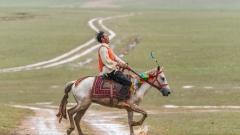
Horse riding and traditional Tibetan archery are often available for visitors.
Wildflowers bloom during summer, while autumn paints the grasslands golden.
Virgin Forest Hiking Trail
Hidden beside the G318 Highway, this easy hiking trail takes approximately one hour to complete.
Walking beneath centuries-old spruce trees, visitors experience one of Tibet’s purest natural oxygen bars.
Wear hiking shoes with good grip, especially after rainfall.
What to Eat in Lulang
No visit to Lulang is complete without tasting its most famous local specialty—Lulang Stone Pot Chicken.
Believed to have originated in Lulang, the dish is slowly simmered in traditional stone pots carved from natural soapstone sourced from Medog.
Free-range Tibetan chicken is cooked together with medicinal herbs, wild mushrooms, matsutake mushrooms, and Rhizoma Gastrodiae (palm ginseng), creating a rich and nourishing broth that’s especially comforting in Tibet’s cool climate.
Popular restaurants include Lulang Stone Pot Chicken Restaurant, Yanbang Mushroom King Stone Pot Chicken, and Zibu Mushroom Stone Pot Restaurant.
During peak travel seasons, queues are common, so arriving early is recommended.
Other local specialties worth trying include Tibetan black pork, butter tea, roasted barley flour (tsampa), and highland barley cakes.
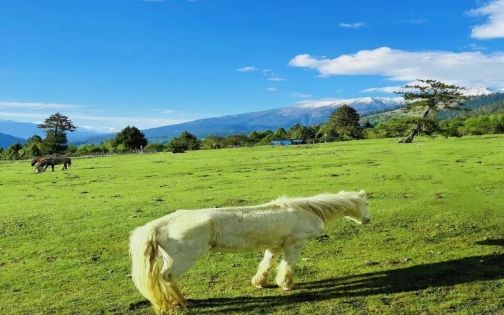
Lulang Forest
Where to Stay
To fully appreciate Lulang’s peaceful atmosphere, spending at least one night is highly recommended.
Luxury travelers can choose Lulang Evergrande Hotel, featuring Tibetan-inspired architecture and rooms with snow mountain views.
Budget-conscious travelers may prefer family-run guesthouses in Zhashigang Village, where visitors can experience authentic Tibetan hospitality while enjoying butter tea beside a traditional fireplace.
Photography Tips
The best time for landscape photography is between 7:00 AM and 9:00 AM, when morning light illuminates the forests and mist still lingers in the valleys.
For portraits, light-colored clothing such as white, beige, or earth tones blends beautifully with the surrounding scenery.
Adding a Tibetan scarf or cowboy hat creates even more striking images.
Don’t worry if it rains.
Lulang becomes even more magical under mist and light rain, with clouds drifting gracefully through the forests to create a dreamlike atmosphere.
Getting There
Driving is the most convenient way to reach Lulang.
From downtown Nyingchi, the journey along G318 takes approximately 1.5 to 2 hours.
From Lhasa, travelers can follow the Lhasa–Nyingchi Expressway, reaching Lulang in about 5 to 6 hours.
If you’re unfamiliar with mountain driving, hiring a private vehicle or joining a small group tour with an experienced local driver is highly recommended.
Public buses are available from Lhasa to Nyingchi, followed by local transportation to Lulang, although schedules are limited.
Essential Travel Tips
Mountain weather changes quickly in Lulang.
Even during summer, rain, fog, and low temperatures are common, so always carry a waterproof jacket or lightweight down jacket.
Visitors heading to Sejila Pass should remember that the altitude approaches 4,700 meters, so avoid strenuous activity and walk at a comfortable pace.
Some online maps still display attractions such as the former Flower Meadow Ranch, which may no longer be operating.
Checking with your hotel or local tourism office before visiting can help you avoid unnecessary detours.
The true beauty of Lulang isn’t confined to a single viewpoint.
It lies in the forests stretching endlessly into the mountains, the peaceful Tibetan villages, the open alpine meadows, and the quiet rhythm of life that surrounds them.
Some travelers come hoping to see the majestic Namcha Barwa.
Others arrive for a steaming bowl of Stone Pot Chicken.
Many simply sit quietly in the pasture, listening to the wind move through the pine trees as clouds drift across the valley.
You may not see a perfectly clear mountain, but Lulang has its own way of healing every visitor.
If you’re traveling along the Sichuan–Tibet Highway, make time for the Lulang Forest Viewing Platform.
The scenery here is more than just beautiful—it’s an experience that stays with you long after the journey ends.
Lulang Forest
recommend route: