
Key Takeaways
- Best season: Autumn offers golden forests, snow-capped mountains, and clearer lake views.
- Upper vs. Lower Ranwu: Choose Upper Ranwu for photography, glaciers, and sunrise; choose Lower Ranwu for a convenient stop along the G318.
- Best experience: Allow at least half a day to explore the lake instead of making a quick photo stop.
- Photography: Look for compositions combining autumn forests, turquoise water, snow mountains, and the G318.
- Best route: Combine Ranwu Lake with Laigu Glacier or continue along the G318 toward Bomi.
- Road trip tip: Some lesser-known viewpoints require careful driving; always prioritize road and weather conditions over finding remote photo spots.
- Overnight stay: Recommended if you want to photograph sunrise, reflections, and early-morning mountain light.
- Most important: Don’t just follow the navigation—some of the best Ranwu Lake scenery is found along the road.
Ranwu Lake
Why Visit Ranwu Lake in Autumn?
For travelers driving along the G318 into Tibet, Ranwu Lake is one of the most rewarding stops between Qamdo and Bomi. In autumn, the combination of alpine lakes, snow-capped mountains, glaciers, and golden forests creates some of the most impressive scenery along the eastern Tibet section of the G318.However, one of the most common mistakes for first-time visitors is treating Ranwu Lake as a single sightseeing spot. In reality, the lake area includes Upper Ranwu, Middle Ranwu, and Lower Ranwu, and each section offers a very different experience.If you have plenty of time, enjoy photography, and want to see scenery closer to the glacier sources, Upper Ranwu is worth prioritizing. If you are simply following the G318 and want a convenient stop without a major detour, Lower Ranwu is the easier choice. Middle Ranwu is particularly suitable for travelers who want good views of the lake and mountains without spending too much time.
What Makes Ranwu Lake Special in Autumn?
Golden Forests Against Snow-Capped Mountains
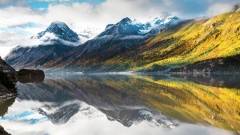
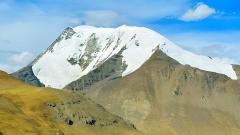
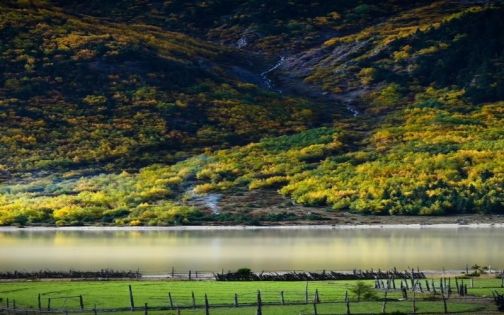
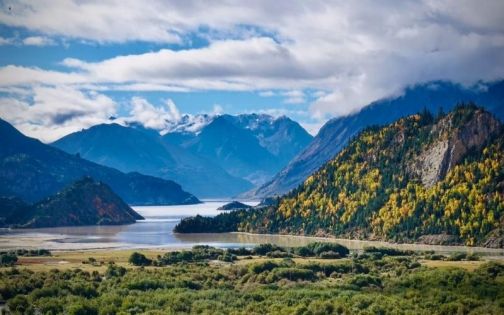
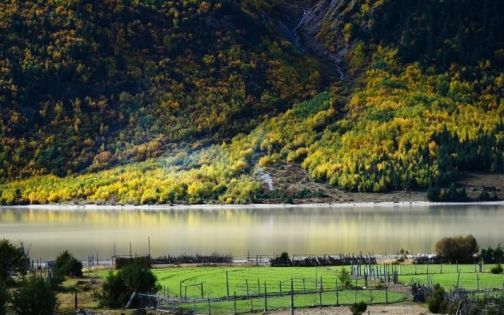
The biggest attraction of Ranwu Lake in autumn is not simply the lake itself, but the colorful forests surrounding it. Golden, orange, and reddish foliage gradually spreads across the valleys, creating a dramatic contrast with the white snow-covered mountains in the distance.The lower section of Ranwu Lake sits at a relatively lower elevation, where taller forests are more prominent. Its autumn scenery is therefore characterized by golden forests, open lake views, and snow-capped mountains.Upper Ranwu, on the other hand, is closer to the glacier source. The vegetation is generally lower, but the relationship between the turquoise lake, glaciers, and surrounding mountains is more striking.For anyone driving the G318 in autumn, this gradual transition from forests and valleys to alpine lakes and snow mountains is part of the experience itself.
The Lake Does Not Stay the Same Color All Year
Many travelers arrive expecting Ranwu Lake to be bright blue or turquoise because of photos seen online. In reality, the lake can appear blue, green, gray, or even muddy depending on the season, rainfall, and amount of glacial meltwater.During the rainy season and periods of heavy snow and glacier melt, large amounts of sediment and rock flour can enter the lake, making the water look cloudy. During periods of stable weather and less rainfall, the water can become much clearer and display deeper blue-green tones.Autumn is generally an excellent season to visit, but the actual color of the lake still depends on weather and water conditions. It is better to treat online photos as references rather than guarantees.
Upper Ranwu or Lower Ranwu: Which One Should You Visit?
Upper Ranwu: Best for Photography and a Deeper Experience
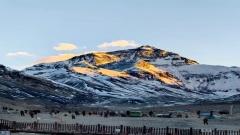
Upper Ranwu is located along G559 toward Zayu from Ranwu Town, with some viewpoints roughly 10–15 kilometers from the town. This area is closer to the upper reaches of the Palong Tsangpo and the surrounding glacier region.The lake is often clearer here, and under good weather conditions it can take on a beautiful blue-green or milky turquoise appearance.The biggest advantage of Upper Ranwu is the closer relationship between the lake and surrounding snow mountains. Early morning sunlight can illuminate the peaks, creating opportunities for golden mountain light, mountain reflections, and lake scenery in the same frame.For photographers, Upper Ranwu is worth spending more time exploring. If you are also planning to visit Laigu Glacier, it makes sense to combine the two rather than treating them as separate trips.Travelers hoping to photograph sunrise, morning mist, or reflections should consider staying overnight near Ranwu.
Lower Ranwu: The Most Convenient Stop Along the G318
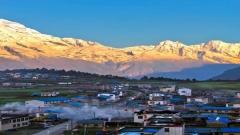
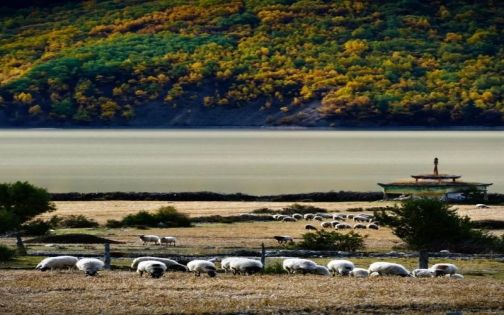
Lower Ranwu, also known as Anmucuo, is the longest section of Ranwu Lake and the one closest to the G318. It is therefore the most convenient option for travelers driving through the area.The scenery here is more open, with forests, wetlands, villages, colorful autumn vegetation, and snow-covered mountains surrounding the lake.In autumn, the combination of golden forests and white mountains creates a classic highland autumn landscape.If you have limited time, are simply passing through, or do not plan to stay overnight, Lower Ranwu is the easiest choice. There are multiple viewpoints and places to stop along the route, allowing you to decide how long to stay depending on the weather and light.
Ranwu Lake
How to Explore Ranwu Lake in Autumn
Don’t Stop Only at the Most Popular Viewpoint
Many travelers arrive at Ranwu Lake, stop at the most obvious viewpoint, take a few photos, and immediately continue their journey. This is convenient, but it also means missing some of the quieter scenery.If your schedule allows, drive slowly along the G318 and look for safe parking areas near the lake. From some locations, a short walk can take you closer to the shoreline, where the scenery is often more immersive.Around Lower Ranwu, some travelers choose to continue toward Waba Village and look for less crowded viewpoints along the route. These locations can offer a quieter experience than the more popular viewpoints.However, safety should always come first. Do not park on dangerous bends, enter unstable riverbanks, cross private property, or follow unmarked trails simply to find a supposedly “secret” viewpoint.
Allow at Least Half a Day
If you are only visiting Lower Ranwu, half a day is a comfortable amount of time for enjoying the scenery without rushing.During an autumn G318 road trip, you can leave Baxu or Ranwu Town in the morning, stop at several lakeside viewpoints, photograph the forests and mountains, and then continue toward Bomi.If you are also visiting Laigu Glacier, Upper Ranwu can be incorporated into the same day, creating a much more complete Ranwu Lake experience.
Recommended Self-Drive Routes
Baxu → Ranwu Lake → Bomi
This is one of the classic G318 road-trip routes.After leaving Baxu and arriving in Ranwu Town, you can first explore Lower Ranwu, then decide whether to continue toward Upper Ranwu or Laigu Glacier before driving onward to Bomi.One of the biggest attractions of this route is the constant change in scenery. As you enter the Ranwu valley, lakes, forests, and snow mountains gradually become the dominant features. Further toward Bomi, the landscape becomes increasingly forested.
Ranwu Town → Upper Ranwu → Laigu Glacier
For photography enthusiasts and travelers specifically interested in glacier landscapes, this route is particularly worthwhile.From Ranwu Town, drive toward Zayu along G559 and explore Upper Ranwu before continuing toward Laigu Glacier, depending on current road conditions and accessibility.There is no need to rush through every viewpoint in one day. Mountain weather and road conditions can change quickly, so always check local conditions before setting out.
Photography Tips for Ranwu Lake
Lake + Snow Mountains + Autumn Forests
The most effective autumn composition is not simply a photograph of the lake. Try to include autumn foliage in the foreground, the lake in the middle, and snow mountains in the background.This gives the photograph much more depth and captures what makes Ranwu Lake special in autumn.Early morning light is generally softer and better for reflections, while afternoon light can highlight the golden forests and create stronger contrasts across the lake.
S-Shaped Roads and Travel Portraits
Some roads around Ranwu Lake offer opportunities to photograph the road stretching toward the mountains and lake.For portraits, rather than simply standing beside the water, place the traveler near the road or viewpoint and use a medium or telephoto lens to compress the distance between the person, road, and mountains.Never stand in the middle of the road for photographs. The G318 carries buses, trucks, and other vehicles, so safety should always take priority.
Ranwu Lake
Should You Stay Overnight at Ranwu Lake?
Stay Overnight If You Want Sunrise
If you are only passing through, there is no need to stay overnight. However, photographers should consider spending at least one night in Ranwu Town.Early morning can provide softer light, clearer reflections, and occasional mist over the lake. When weather conditions are favorable, the surrounding snow mountains can also catch the first sunlight of the day.Accommodation is mainly concentrated around Ranwu Town. Choose your location based on whether you plan to continue toward Bomi, Upper Ranwu, or Laigu Glacier the following day.Keep in mind that Ranwu Town is located at high elevation. Travelers who are sensitive to altitude should avoid forcing themselves to wake extremely early or engage in strenuous activity if they are already experiencing significant altitude-related discomfort.
Practical Autumn Travel Tips
Transportation and Navigation
Self-driving is one of the best ways to explore Ranwu Lake because many scenic viewpoints are scattered along the roads rather than concentrated in a single tourist attraction.For Lower Ranwu, you can search for “Anmucuo” or Ranwu Lake viewpoints. For Upper Ranwu, search for relevant Ranwu Lake viewpoints or use local road signs. Different map platforms may use different names, so downloading offline maps in advance is recommended.Some small roads near the lake are rough and should not be confused with normal paved roads. Certain remote viewpoints may require a high-clearance or four-wheel-drive vehicle. Never assume that a location shown in an online post is suitable for an ordinary car.
Clothing and Equipment
Autumn temperatures around Ranwu Lake can vary significantly between day and night. Bring a warm jacket and windproof layer that can be easily added or removed.Strong UV exposure is common at high altitude, so sunglasses, a hat, and sunscreen are essential.For photography, a wide-angle lens is useful for capturing the entire lake and mountain landscape, while a medium or telephoto lens can compress the distance between people, forests, and snow mountains.If you plan to use a drone, check current local airspace restrictions and site-specific regulations before flying. Avoid airports, military facilities, restricted areas, and other prohibited zones.
The Best Part of Ranwu Lake Is the Road Itself
Ranwu Lake is not a place where you should simply stop, take a few photographs, and leave.Its real charm begins as you drive from Baxu toward the Ranwu valley. Golden forests gradually appear along the road, snow mountains become more prominent in the distance, and suddenly a lake emerges from the valley. For long stretches, the G318 itself becomes part of the scenery.If you simply follow the navigation system without looking around, you may miss some of the most beautiful autumn landscapes.Instead of spending hours searching for a single “Instagram viewpoint,” leave yourself half a day to drive slowly, stop safely, walk a little, and enjoy the changing landscape.The beauty of Ranwu Lake in autumn is not one perfect photograph. It is the combination of golden forests, turquoise water, snow-covered mountains, glaciers, villages, and the G318 unfolding into one continuous journey.If your Tibet road trip takes you through Baxu, Ranwu, and Bomi, don’t treat Ranwu Lake as just a roadside stop. Give it at least half a day, and let Ranwu Lake become a real part of your journey.
Ranwu Lake