

Planning a railway journey along the Silk Road starts with a practical question: how much will the train cost? The answer depends on your route, travel class, booking timing, and whether you choose a direct international service or connect through several cities. This guide explains how to estimate a Silk Road train price without relying on a single headline fare that may not match your itinerary.
Key Takeaways
- There is no single fare for the entire Silk Road; prices depend on the route and operators.
- China domestic trains are generally priced separately from international rail services.
- Sleeper class, cabin type, and availability can change the total considerably.
- Budget for visas, transfers, meals, accommodation, and booking fees as well as tickets.
- Check schedules and fares for your exact dates before making non-refundable plans.
How To Think About Silk Road Train Price
The Silk Road is a broad network of historic and modern routes, not one train line with one standard ticket. Travelers may ride high-speed or conventional trains within China, then continue by rail through parts of Central Asia or connect to another mode of transport where a direct train is unavailable. Each leg can have a separate fare, currency, ticketing system, and set of rules.
For that reason, a useful Silk Road train price estimate starts with a route, not a destination label. A journey from Beijing to Xi’an is a domestic Chinese rail trip. A trip from China toward Kazakhstan involves an international crossing and may require a different service or a carefully planned connection. A longer itinerary that continues through Uzbekistan or other Central Asian countries adds more independent tickets and logistical costs.
A quoted ticket price may also refer only to the seat or berth. It may not include station transfers, meals, accommodation before departure, visa costs, booking assistance, or the cost of reaching the train station. When comparing offers, identify exactly which travel dates, stations, class, and services are included.
What A Fare Usually Covers
A basic rail fare generally covers transport between the stations printed on the ticket and the assigned seat or sleeping accommodation. The exact inclusions depend on the operator and ticket type. International services may have additional conditions, while third-party sellers can add service or handling charges.
Confirm whether a listed price is per person, per compartment, or for a private cabin. On sleeper trains, a lower fare may mean sharing a compartment with other passengers. A private compartment, when available, can cost more and may be sold as a set of berths rather than as one individual ticket.

Silk Road Train
The Main Factors That Affect The Fare
Route Length And Number Of Borders
Distance matters, but it is not the only factor. A short domestic rail journey and a longer international journey are priced under different systems. Border crossings can involve specific services, limited departures, and ticket availability that differs from ordinary domestic routes. The more countries and train operators your itinerary includes, the more separate fares you will need to check.
A multi-country journey should be priced leg by leg. For example, divide it into the train from your starting city to a Chinese rail hub, any domestic connections, the international segment, and onward services in the next country. Do not assume that one ticket or one online booking will cover the entire journey.
Seat, Sleeper, Or Private Compartment
The class of travel is one of the clearest reasons two passengers may see different prices for the same route. A standard seat is often the lower-cost option on services where seats are sold. Overnight journeys may offer different sleeper arrangements, such as open-plan berths or enclosed compartments. Exact names and layouts vary by train and country, so check the operator’s description rather than relying on a familiar class label.
A private compartment is appealing if you value privacy or are traveling as a small group, but it may have limited availability. If the fare is shown per berth, buying all berths may be necessary to reserve the compartment exclusively. Ask the seller or operator to clarify this before paying.
Travel Dates And Availability
Fares and availability can change with demand, seasonal travel patterns, public holidays, and the number of seats released for sale. Popular dates may sell out earlier, especially on limited international services or overnight trains. Booking early can improve the chance of finding your preferred class, but it does not guarantee the lowest price on every route.
Avoid treating a fare shown for one date as a reliable estimate for an entire season. If your dates are flexible, compare several departure days and consider whether a daytime train, overnight service, or alternative connection suits your schedule. Always verify the current ticket-release period and booking rules for each operator.
Booking Channel And Service Fees
Tickets may be sold through an operator, an authorized agent, or a travel company that handles a more complicated itinerary. The final amount can include a booking fee, payment processing charge, delivery cost, or service fee. These charges do not necessarily mean that the ticket itself is more expensive; they may cover assistance with a route that is difficult to book independently.
Compare the total payable amount rather than only the advertised base fare. Check the cancellation terms, change conditions, ticket delivery method, and customer support arrangements. A low displayed price is not useful if the ticket cannot be issued for your selected train or the terms do not fit your plans.

Silk Road New Luxury Train
Budgeting By Journey Type
Since routes and fares vary, it is more reliable to build a budget by journey type than to use a fixed price for “the Silk Road.” The following framework helps you identify the costs to research. Treat it as a planning method, not a live fare quote.
Domestic Rail Within China
For travel between Chinese cities, compare available train types and classes on the specific route. High-speed trains can save substantial time, while conventional services may suit travelers who prefer a slower journey or a sleeper option. Prices depend on the distance, train, class, and date, so check the current fare for your chosen departure.
Include the cost of getting to and from stations. Large cities can have multiple railway stations, and the station printed on your ticket may be far from your hotel or the city center. Add a reasonable transfer allowance, especially for early departures or late arrivals when fewer local transport options may be convenient.
International Rail From China Toward Central Asia
International rail travel requires more careful checking than a domestic journey. Service patterns, operating arrangements, border procedures, and ticket availability can differ from one route to another and may change. Confirm that the service is operating on your dates, which stations it serves, how tickets are issued, and what documents you need to cross each border.
The price may be affected by the type of accommodation, the number of available berths, and how the international section is sold. If a route involves a change of train or a separate ticket, allow enough time between services. A missed connection on separately booked tickets may not be protected by the operator of the next train.
Continuing Through Central Asia
Travelers continuing beyond the first international border should price each country’s rail segment individually. A route through Central Asia may involve several trains, overnight stays, or non-rail transfers. Do not assume that neighboring cities are connected by a convenient daily train; schedules and service frequency should be confirmed for the actual travel period.
Your full transport budget may include a taxi or local transfer to a station, an overnight hotel during a long gap, or a bus or flight where a rail connection is not practical. These costs can matter as much as the ticket fare, particularly when an itinerary has tight connections or arrives outside normal local transport hours.

A Practical Example Of Building A Budget
Imagine you are planning a journey that begins in a major Chinese city, includes one domestic rail leg, crosses an international border, and continues to another Central Asian destination. You do not need to guess one all-inclusive Silk Road train price. Instead, create a simple cost sheet with one line for each leg.
- List every departure and arrival station, including the country and local time zone.
- Check whether each leg is direct or requires a change of train.
- Record the fare for your preferred class and one alternative class.
- Add booking or service fees shown before payment.
- Estimate station transfers, meals, and accommodation during connection gaps.
- Check visa and entry requirements separately for every country on the itinerary.
- Add a contingency for price changes, schedule adjustments, and unexpected overnight stays.
This method makes it easier to compare two itineraries fairly. One route may have a lower train fare but require an extra hotel night. Another may cost more for the ticket but save a long transfer or avoid an inconvenient arrival time. The best-value option is the one that works for your overall trip, not necessarily the one with the smallest fare in search results.
Booking Tips To Avoid Costly Surprises
Confirm The Exact Train And Stations
Cities can have more than one railway station, and similar station names can be confusing. Check the departure and arrival stations on the ticket confirmation, then match them to your accommodation and transfer plan. Allow extra time to reach a large station, especially if you are unfamiliar with local traffic or station entry procedures.
For international services, verify the border-crossing route and expected arrival point. A train may stop for border formalities, and passengers may need to follow instructions from railway or border staff. Do not build an onward connection around an assumed arrival time without checking the schedule and transfer arrangements.
Read The Fare And Change Rules
Before purchase, review whether the ticket is refundable, changeable, or restricted to a particular passenger and departure. Rules vary by seller and operator. International tickets can have different conditions from domestic tickets, and a third-party booking platform may apply its own service terms in addition to the railway’s rules.
Make sure names and passport details are entered exactly as required. Keep the booking confirmation accessible offline, and check whether a paper ticket, electronic ticket, or station collection is required. If your itinerary depends on an international ticket that is not yet issued, ask when the final ticket details will be provided.
Keep A Buffer For Connections
A tight connection may look efficient on paper, but delays, border formalities, and station transfers can make it risky. If two legs are on separate tickets, the next operator may not be responsible if you miss the departure. Consider a longer buffer or an overnight stop when the schedule is uncertain or the stations are not close together.
A buffer also has a cost. Include a possible hotel night and meals when comparing itineraries, rather than treating the transfer as free time. For travelers who want to minimize uncertainty, a planned overnight stay can be more practical than trying to reach a distant station within a short window.
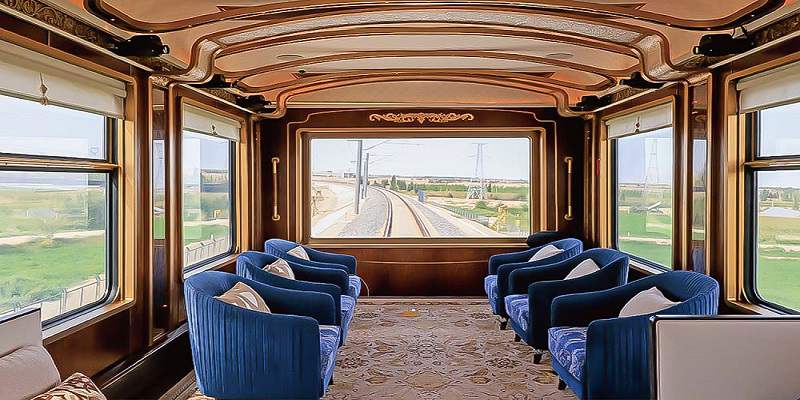
Silk Road Train
What To Include Beyond The Ticket
A realistic rail budget includes more than the fare. Add meals and drinking water for long journeys, local transport at both ends, and accommodation if the train arrives before check-in or departs after checkout. Consider whether your ticket includes bedding or whether you need to bring any personal items recommended by the operator.
International journeys also require attention to travel documents. Visa rules depend on your nationality, the countries visited, and the purpose and length of the stay. Transit rules can differ from entry rules, so confirm the requirements for your precise route before booking non-refundable transport. Passport validity and the availability of blank pages may also be relevant.
Travel insurance is another separate budget item. Review the policy wording for coverage of delays, missed connections, medical needs, and changes to travel plans. Coverage varies, and no policy should be assumed to reimburse every disruption. Keep copies of important documents and the contact details for your accommodation and ticket provider.
Is A Train Journey Better Value Than Flying?
The answer depends on the route and what you value. A train can combine transport and an overnight stay, provide a gradual view of changing landscapes, and connect city centers with railway stations. However, the ticket is only one part of the comparison. Add transfers, travel time, accommodation, and the practical cost of reaching airports or stations.
A flight may be faster for a long distance, while a train may be more convenient for a shorter connection or a route where the station is easier to reach. Compare door-to-door time rather than time in the vehicle alone. For a rail journey across multiple borders, also consider how much planning and schedule flexibility you are willing to handle.
Planning With China Dragon Travel
If your itinerary includes several countries or a complex mix of domestic and international trains, China Dragon Travel can be one option to ask about route planning and ticket arrangements. Before booking, request a clear breakdown of each rail leg, the class and berth type, any service charges, ticket-issuance timing, and the rules for changes or cancellations. Confirm that the proposed schedule is available for your dates and that the quoted total matches the services you intend to purchase.
Whether you book independently or use a travel specialist, keep the same essentials in writing: train numbers where available, stations, departure dates, passenger details, ticket status, and what happens if a schedule changes. This makes it easier to compare providers and helps ensure your Silk Road train price reflects the journey you actually plan to take.
Frequently Asked Questions About Silk Road Train
How Much Does A Silk Road Train Ticket Cost?
There is no single fixed fare. The amount depends on the route, travel date, train operator, ticket class, berth type, availability, and booking channel. Price each leg separately and confirm the current fare for your exact dates.
Can I Buy One Ticket For The Entire Silk Road Route?
Usually, a long multi-country itinerary involves separate tickets for different operators and countries. Some travel providers may arrange several legs together, but confirm which segments are included and whether the booking is issued as one protected itinerary or as independent tickets.
Is A Sleeper Train More Expensive Than A Seat?
A sleeper berth often costs more than a standard seat, but the difference depends on the route and train. Private compartments can cost more than shared accommodation, and availability may be limited. Check whether a quoted compartment price is per person or for all berths.
When Should I Book A Silk Road Train?
Book once the operator’s sales window is open and your dates are reasonably firm, particularly for limited international services or preferred sleeper classes. Ticket-release periods vary, so verify the rules for each leg rather than relying on one general booking deadline.
What Costs Should I Add To The Train Fare?
Budget for booking fees, station transfers, meals, accommodation during long connection gaps, visas where applicable, and any additional transport needed between rail services. These costs can change the overall value of an itinerary even when the base ticket fare looks low.