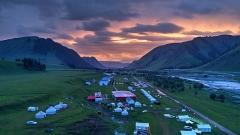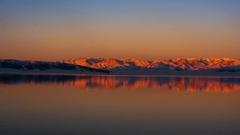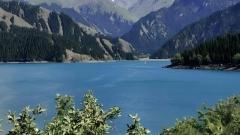

Yes—you can see snow mountains, lakes, and grasslands on one Xinjiang trip. The key is choosing a route that links them naturally rather than trying to cover the whole region at once. In northern Xinjiang, a journey through the Ili Valley and the Tian Shan can combine high peaks, the deep-blue waters of Sayram Lake, and open summer pastures. The scenery changes with altitude and season: a lake shore may be bright with wildflowers while snow remains on distant summits, and grassland colors shift from spring green to late-summer gold. Xinjiang is vast, however, so realistic driving times and a flexible schedule matter as much as the itinerary itself.
Key Takeways
- Best fit: Northern Xinjiang and the Ili Valley
- Core sights: Tian Shan peaks, Sayram Lake, and alpine pasture
- Ideal season: Late spring to early autumn, depending on the route
- Practical priority: Allow time for long drives and weather changes
- Trip style: A focused loop, not a race across the region
Why northern Xinjiang works for a three-landscape trip
Xinjiang covers an immense area, and its landscapes are spread across distinct mountain systems, basins, and grassland regions. That scale is the main reason a trip needs a clear geographic focus. If the goal is to see snow mountains, lakes, and grasslands without spending most of the holiday in a vehicle, northern Xinjiang is a strong choice. The Ili Valley and nearby Tian Shan ranges offer a practical combination of all three within one broad travel circuit.
The Tian Shan, or “Heavenly Mountains,” runs across a large part of Xinjiang. Its high elevations retain snow and ice in places even when lower valleys are warm. At the same time, mountain runoff feeds lakes and rivers, while summer precipitation and seasonal pastures support broad grassland scenery. This does not mean every viewpoint shows all three landscapes at once. Rather, a well-planned route lets you experience each in succession, often with mountain views framing the lakes and pastures along the way.
A northern route can include Urumqi, Sayram Lake, the Ili Valley, and, depending on available time and road conditions, places such as Nalati or Kalajun. Sayram Lake sits in a high mountain setting near the western end of the Tian Shan. The grasslands around Ili are known for their rolling terrain and seasonal pastures, while peaks remain visible from many parts of the region. The exact mix depends on where you stop, the season, and the weather.
It is also possible to build a trip around other parts of Xinjiang, such as the Altai region in the north or the southern route around the Kunlun Mountains. Those areas offer different combinations of mountain scenery, water, and open land, but adding them to an Ili itinerary can mean substantial extra travel. For a first visit focused specifically on three landscapes, it is usually better to explore one region in depth.

Scenery of the Tianshan Mountains
What the three landscapes look like in practice
Snow mountains: dramatic backdrops, not guaranteed close-up views
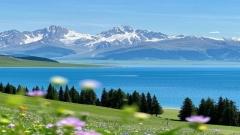
Snow-capped peaks are most likely to be part of the scenery at higher elevations and in mountain-facing viewpoints. In northern Xinjiang, the Tian Shan provides the broad mountain backdrop for much of an Ili journey. The appearance changes with distance: some roads offer wide views of a white ridge beyond green foothills, while other stops put you closer to a mountain valley or glacier-fed landscape.
The phrase “snow mountains” can create an expectation of walking right up to a snowfield. That is not a safe assumption for every standard sightseeing route. Access depends on the specific location, road conditions, local regulations, and weather. Many visitors experience snow peaks from lakeside or grassland viewpoints rather than through a strenuous high-altitude trek. If close-up glacier scenery is important, confirm the access arrangements for a particular site before building the trip around it.
Cloud cover can hide the highest summits, and warm-season snow coverage varies. A clear morning may offer a crisp mountain outline; later in the day, clouds can gather around the peaks. Give mountain scenery more than one chance by allowing time at your main viewpoints, and avoid treating a single photo stop as a guaranteed view.
Lakes: high-altitude color and changing light
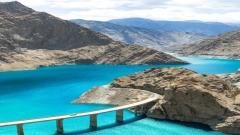
Sayram Lake is one of the most convenient lake stops for a northern Xinjiang itinerary that also includes the Ili Valley. Its setting combines open water with a mountain horizon, and the lake’s color shifts with light, cloud, and viewing angle. The shore is not a single identical panorama: some areas feel open and windswept, while other sections provide closer views of the water and surrounding slopes.
The lake is at high elevation compared with the nearby valley, so conditions can feel cooler and windier than expected. Bring an extra layer even when the forecast for lower-lying towns looks warm. Stay on permitted access routes, take care near the shore, and follow local instructions, particularly where the terrain is exposed or the weather changes quickly.
Lakes in Xinjiang should not be treated as interchangeable stops. Some are convenient roadside destinations; others require more time, higher-altitude travel, or a separate route. For a balanced first trip, one or two carefully chosen lake visits are often more rewarding than trying to collect as many names as possible.
Grasslands: seasonal pastures and open horizons
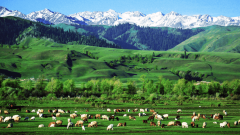
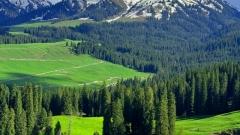
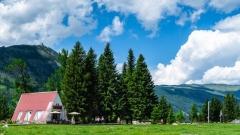
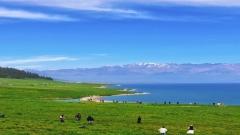
The grasslands around Ili are among the most memorable parts of a warm-season journey. In places such as Nalati and Kalajun, the landscape is shaped by slopes, ridgelines, open meadows, and, in some areas, forested sections. The word “grassland” can suggest a flat plain, but many of these areas are rolling or mountainous. The views change as you gain elevation, and a short walk or a shuttle ride can reveal a very different perspective from the entrance area.
Pasture scenery is seasonal. In spring, the landscape gradually greens as temperatures rise; in summer, meadows are generally fuller and more colorful; later in the season, the grass can turn yellow or gold. These are broad patterns, not fixed dates. Elevation, local rainfall, and the timing of the year affect what you see. If wildflowers are a priority, check local conditions close to departure rather than relying on a specific calendar date.
Grasslands are working landscapes as well as scenic areas. Respect fences, livestock, and private or seasonal pasture access. Use marked paths where provided, avoid disturbing grazing animals, and follow local guidance about where visitors may walk or drive. Responsible behavior helps preserve the landscape and makes interactions with local communities more considerate.
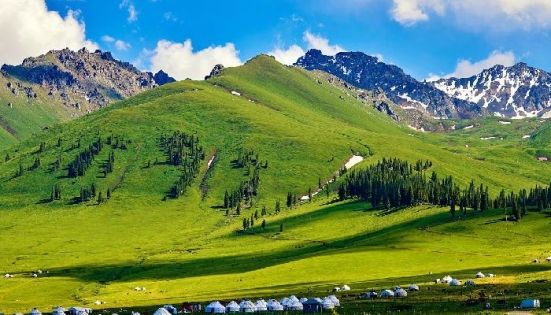
Scenery of Nalati Grassland in Xinjiang
A practical 7–9 day route for seeing all three
A week or slightly longer can provide a satisfying northern Xinjiang trip, especially if you accept that the journey is about a selected area rather than the entire region. The route below is a planning framework, not a promise of specific driving times or access. Distances, transport arrangements, and road conditions should be checked for your travel dates.
Days 1–2: Arrive in Urumqi and adjust
Use Urumqi as your arrival point and give yourself time to recover from the journey. Depending on your arrival time and energy, you can explore the city, arrange supplies, and confirm transport for the route ahead. If you are coming from a different time zone or have a long domestic connection, a relaxed first day makes the rest of the trip more comfortable.
Before leaving the city, check that you have layered clothing, sun protection, any required personal medication, and offline access to your route information. Mobile coverage and service quality can vary on rural and mountain roads. Carry water and snacks for travel days, but avoid buying more than you can reasonably transport.
Day 3: Travel toward Sayram Lake
Make your way west toward Sayram Lake, allowing for a substantial travel day. The journey can be part of the experience: the terrain opens out, and the mountain setting becomes more apparent as you approach the lake. Once there, choose a realistic number of viewpoints instead of trying to circle every accessible section in a rush.
If you arrive late, consider staying in the area rather than scheduling a long onward drive after a full day on the road. Accommodation availability and facilities can vary by season and location, so confirm arrangements in advance. A night nearby can also give you a better chance to enjoy the lake in changing light, subject to weather and local access rules.
Day 4: Explore the lake before continuing to Ili
Spend part of the day at Sayram Lake, then continue toward the Ili Valley if the road plan and conditions make that practical. Keep the schedule flexible: wind, rain, traffic, and stops can change how much time you have. The high-altitude setting can feel noticeably cooler than the valley, so keep warm clothing accessible rather than packed at the bottom of your luggage.
The transition from lake scenery to the valley is one of the pleasures of the route. As you travel, the landscape may shift from exposed mountain slopes to broader, greener terrain. If you are driving yourself, avoid planning a demanding sightseeing stop at the end of a tiring road day.
Days 5–6: Choose one major grassland area
Base yourself in or near the Ili Valley and dedicate a full day to one grassland destination, such as Nalati or Kalajun, after checking current access and transport arrangements. These areas are large enough that the visitor experience can involve internal shuttles, scenic routes, and walking. Confirm what is included in the local ticket or transport system, and allow time for queues or transfers when relevant.
Choose the area that best matches your interests and trip logistics rather than attempting both on the same day. Nalati is associated with high mountain pasture scenery, while Kalajun offers a distinctive combination of rolling grassland and mountain views. The landscapes are not identical, but the better choice for your trip depends on your base, available time, and the conditions on the day.
A second day can be used for another grassland viewpoint, a slower exploration of the valley, or a rest day. This buffer is valuable if the weather was poor on your first outing. It also makes the itinerary less dependent on a single clear-sky window.
Days 7–9: Add a local stop or return to Urumqi
With extra time, add a nearby cultural or natural stop only if it fits the route without creating an exhausting detour. Alternatively, spend another night in the valley and return to Urumqi with a generous time buffer. For a 7-day trip, the return journey may need to begin earlier; for 9 days, an additional overnight stop can make the drive more manageable.
Do not schedule an international flight or an important connection immediately after a long overland journey unless you have allowed enough contingency time. Weather and transport disruptions are possible anywhere, and a comfortable buffer is more useful than squeezing in one last distant attraction.
When to go for the best balance of scenery
The best time depends on which landscape matters most. From late spring into summer, lower grasslands become greener as the season advances, while the high mountains can retain snow. Summer is popular for pasture scenery, but weather can still be changeable in the mountains, and travel demand may be higher during holiday periods. Early autumn can bring more golden tones and cooler conditions, while some seasonal services may change as the year progresses.
There is no single date that guarantees green grass, wildflowers, clear skies, and snow on every summit. These conditions respond to local elevation and weather. Before departure, check recent regional forecasts and confirm the operating status of scenic areas and transport. If your dates are fixed, plan around the broader seasonal character rather than expecting a specific color palette on a particular day.
Temperature differences are important. A valley may be comfortably warm while an exposed lakeside stop feels cold and windy. Mountain weather can change rapidly, so bring a light waterproof layer, warmer clothing, sun protection, and comfortable shoes with grip. Even on a mostly vehicle-based itinerary, short walks may involve uneven ground or slopes.
Getting around: self-drive, private car, or public transport
The right transport option depends on your confidence, route, and travel group. A self-drive itinerary offers flexibility, but long distances, unfamiliar roads, traffic rules, local access requirements, and changing weather call for careful preparation. Visitors should confirm that their licence and documentation are valid for driving in China and arrange an appropriate vehicle through a legitimate provider. Do not assume that an overseas licence alone is sufficient.
A private car with a driver can reduce navigation and parking stress, particularly for travelers with limited time or several scenic stops. Agree in advance on the itinerary, accommodation, driver arrangements, and any additional costs. Ask whether the driver is familiar with the route and whether the planned destinations are accessible during your travel period.
Public transport may work for parts of a route, especially between major towns, but reaching scenic areas can require additional transfers or local transport. Schedules and connections can change, so check them close to your trip and build in extra time. If you are traveling independently, do not assume that a direct bus connects every attraction or that the last return service will suit your plans.
Travel documents and entry requirements can depend on nationality, route, and current regulations. Check official requirements before booking, and carry identification as required. For additional support with a Xinjiang itinerary, China Dragon Travel can be considered as one option for discussing route planning and transport arrangements; confirm the services, inclusions, and current terms directly before making a booking.

Xinjiang Self-Driving Tour
How to make the route comfortable and responsible
Keep the itinerary geographically focused
A map can make Xinjiang’s attractions look closer than they are. Check actual road distances and realistic travel times rather than judging by straight-line distance. Allow time for meal stops, rest breaks, scenic pullouts, traffic, and road conditions. A trip that spends every day moving hotels may technically include many places but leave little time to experience them.
For this particular goal, prioritize the Ili Valley and the Sayram Lake area. Add another region only if you have enough days to travel there and back without turning the holiday into a series of long drives. This focused approach increases your chances of enjoying the mountains, lake, and grassland at an unhurried pace.
Prepare for altitude, sun, and changing weather
The lake and mountain areas sit higher than many visitors’ home environments. Most standard sightseeing stops do not require technical mountaineering, but you should still pay attention to how you feel. Rest when needed, drink water, and avoid pushing yourself into strenuous activity if you are unwell. Seek medical advice before travel if you have health concerns related to altitude or exertion.
At elevation, sunlight can feel strong even when the air is cool. Bring sunglasses, sunscreen, and a hat. Keep a warm layer and rain protection easy to reach, particularly on days that combine a valley drive with a high-altitude lake or pasture. Weather forecasts are useful but cannot eliminate local changes in mountain conditions.
Respect local communities and the landscape
Xinjiang is home to diverse communities and traditions. Approach cultural visits with curiosity and courtesy, ask before photographing people, and follow local rules in religious or community spaces. Do not assume that a scenic area is open for unrestricted access: farmland, seasonal pasture, and private property may be present beyond formal visitor zones.
Use designated waste bins where available and take rubbish with you when they are not. Stay on marked routes, do not pick flowers, and avoid disturbing wildlife or livestock. These habits are especially important in open grassland, where small impacts can accumulate and where the landscape is part of local livelihoods.
What to pack for a mountain, lake, and grassland itinerary
Pack for layers rather than a single expected temperature. A light base layer, a warmer mid-layer, and a windproof or waterproof outer layer are more adaptable than one heavy jacket. Add comfortable walking shoes, sun protection, a reusable water bottle, and a small day bag for snacks and personal items. If you use medication regularly, bring enough for the trip and keep it accessible during long drives.
A power bank and downloaded maps or booking details can be useful where mobile coverage is inconsistent. Keep passports or other required identification secure and accessible in line with local rules. Travelers with specific dietary needs should carry a small supply of suitable snacks for long road sections, as the range of options can vary outside towns.
Avoid overpacking for every possible condition. The aim is to handle cooler wind, sunshine, and a short walk comfortably, not to prepare for a technical expedition unless your itinerary actually includes one. For hikes or high-altitude activities beyond ordinary sightseeing, seek local advice on route difficulty, access, and safety before setting out.
Is one Xinjiang trip enough?
One trip can certainly bring together snow mountains, lakes, and grasslands, but it cannot cover every side of Xinjiang in depth. The region’s scale rewards a focused itinerary. A northern route through Sayram Lake and the Ili Valley gives a coherent way to experience the three landscapes, especially for travelers visiting the region for the first time. The trip will feel most successful when you leave room for changing weather, select a manageable number of stops, and treat the driving as a real part of the plan.
If your priority is a specific kind of mountain experience, such as a challenging trek or a close view of glacial terrain, you may need a different route and more preparation. If the goal is to enjoy a sequence of wide mountain views, a high-altitude lake, and seasonal pasture, the northern Xinjiang approach is a practical starting point. Choose dates with flexibility where possible, verify local arrangements before setting out, and let the landscape—not a checklist—set the pace.
Frequently asked questions
Can you see snow mountains, lakes, and grasslands in one Xinjiang trip?
Yes. A focused northern Xinjiang itinerary can combine Tian Shan mountain views, Sayram Lake, and the grasslands of the Ili Valley. The landscapes may be seen at separate stops rather than all from one viewpoint, and visibility depends on weather and season.
How many days do I need?
About 7–9 days is a useful starting point for a focused route linking Urumqi, Sayram Lake, and one major grassland area. More time allows for slower travel, weather flexibility, and additional stops. Actual driving times depend on the route, transport, and conditions.
What is the best season for this trip?
Late spring through summer is generally favorable for greener pasture scenery, while early autumn can bring cooler weather and more golden tones. Snow coverage, flowers, and clear skies vary from year to year and by elevation, so no date guarantees every condition.
Is Sayram Lake suitable for a short visit?
It can fit into a northern Xinjiang route, but the approach involves road travel and the area is large enough to reward more than a brief stop. Consider an overnight nearby if it suits your schedule, and check current accommodation, access, and transport arrangements before departure.
Should I choose a self-drive trip or a driver?
Choose based on your driving experience, documentation, comfort with long distances, and familiarity with local road conditions. A driver can simplify logistics; self-driving offers more flexibility but requires careful preparation. Public transport is possible for parts of the journey, though transfers to scenic areas may need additional planning.