
For international travelers, the Tibet Travel Permit is not a simple administrative form but a fundamental requirement for visiting Tibet. Due to Tibet’s unique geographical conditions, cultural preservation priorities, and border management policies, travel by non-Mainland Chinese visitors is subject to a unified regulatory system. The Tibet Travel Permit sits at the center of this framework, ensuring both traveler safety and orderly tourism management. Understanding its purpose helps visitors navigate inspections with confidence and ensures their journey proceeds legally and smoothly.
The Core Role of the Tibet Travel Permit in Trips to Tibet
The Tibet Travel Permit is not only a pass to enter Tibet, but also a key link in the entire travel management system. Due to its unique geographical environment, cultural ecology and border location, Tibet implements a unified and standardized travel management system for all non-Mainland China tourists. The core purpose of this management system is twofold: first, to ensure the travel safety and basic rights of every tourist; second, to maintain local social order and environmental protection.
Specifically, the Tibet Travel Permit system enables tourism administration departments to grasp tourists’ basic information, travel plans and entry-exit times in advance. When tourists encounter emergencies in remote areas, such as weather changes, traffic disruptions or health issues, this filed information can make rescue and assistance work more timely and effective. At the same time, by basically grasping the flow of tourists, the management department can better coordinate the reception capacity of scenic spots and maintain the sustainability of cultural heritage and the natural environment.
Therefore, the application and inspection of the Tibet Travel Permit are not simple administrative procedures, but a collaborative mechanism designed to provide basic protection and support for tourists. Understanding this helps travelers treat each inspection link with a more cooperative attitude, recognizing that these steps are important to ensure the smoothness and safety of their own trips.
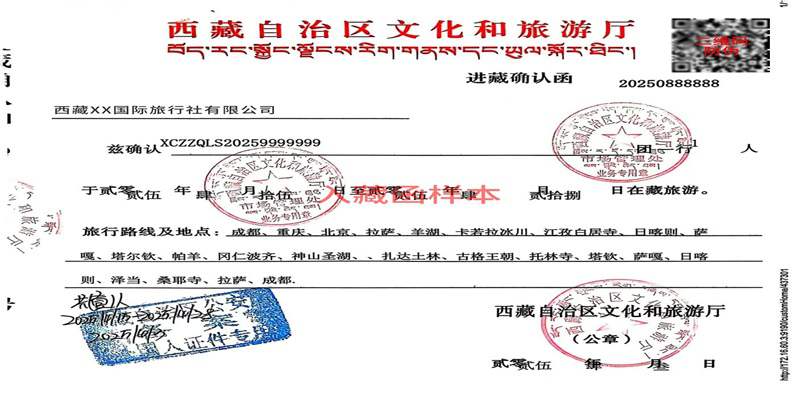
Sample of Tibet Travel Permit
Inspection Occasions for the Tibet Travel Permit When Taking Various Means of Transport
The first use of the Tibet Travel Permit begins during your journey to Tibet.
- Taking a Flight to Tibet
Whether you transfer from a city in Mainland China (such as Chengdu, Xi’an) or fly directly from Kathmandu, Nepal, when going through check-in procedures for flights to airports in the Tibet Autonomous Region (e.g., Lhasa Gonggar Airport, Qamdo Bangda Airport), airline check-in staff will require you to present the Tibet Travel Permit. They will verify whether the name and validity period on the document are consistent with your passport information. This is a necessary condition for obtaining a boarding pass.
- Entering Tibet by Train via the Qinghai-Tibet Railway
If you choose to enter Tibet by train, during the real-name security check and ticket verification before boarding at the train’s departure station (such as Xining, Lanzhou), station staff and railway public security will check your train ticket, passport and Tibet Travel Permit. You can only enter the station and board the train with complete documents. During the trip, conductors may also conduct random checks.
- Taking Flights Within the Tibet Autonomous Region
When you take a flight within the Tibet Autonomous Region, such as from Lhasa to Ngari or Nyingchi, security personnel usually require you to present your boarding pass, passport and Tibet Travel Permit at the same time during airport security checks to confirm the legality of your travel in Tibet.
Application Occasions for the Tibet Travel Permit When Accommodating and Visiting Scenic Spots in Tibet
After arriving in Tibet, the Tibet Travel Permit still needs to be carried with you for accommodation registration and visits to certain areas.
- When Checking in at Any Accommodation Establishment
According to local management regulations, all hotels, guesthouses and qualified homestays must register and upload your passport and Tibet Travel Permit information to the public security system when you check in. This is a mandatory registration procedure, so you need to present these two documents every time you check in.
- When Traveling to Specific Tourist Areas or Passing Through Checkpoints Along the Way
Many tourist attractions in Tibet are located in border or specially managed areas. When your itinerary involves such areas, there are often public security checkpoints along the way. For example, when traveling to Mount Everest Base Camp, Purang County (Kailash), Zhada County (Guge Kingdom Ruins) or some border counties in Shannan City, the travel vehicle needs to stop at the checkpoint for inspection. On-duty personnel will verify the passport and Tibet Travel Permit of each passenger in the vehicle. Inspections may be more frequent and strict when planning to visit some partially closed areas.
Application Process and Usage Notes for the Tibet Travel Permit
After understanding the inspection occasions, correctly applying for and using the Tibet Travel Permit is crucial.
Explanation of the Application Process
Individuals cannot apply for the Tibet Travel Permit directly. You must entrust a qualified Tibet travel agency to handle it on your behalf, such as China Dragon Travel. You need to provide the travel agency with: a scanned copy of the passport information page, a detailed travel plan (including entry and exit dates to/from Tibet, tourist attractions, and booked hotel information), and personal contact information. The travel agency will submit the application to the management department based on this. The regular approval cycle is 15 to 20 working days, and you should reserve more time during peak seasons.
Specific Suggestions During Use
- Proper Carrying and Backup: It is recommended to print the Tibet Travel Permit in color and keep it in a document bag with the original passport. At the same time, save a clear electronic version on your mobile phone, and print an extra copy to keep separately from other luggage.
- Take the Initiative to Cooperate with Inspections: When encountering inspections, prepare your documents in advance and submit them proactively. The whole process is usually quick.
- Keep the Itinerary Basically Consistent: Please try to keep the actual itinerary, especially the overnight stay locations, basically consistent with the outline of the plan submitted when applying for the Tibet Travel Permit. If there are major changes to the itinerary, you should promptly inform the travel agency handling the application on your behalf.
- Utilize Professional Services: If you join a tour group or hire a chartered car service, experienced local tour guides and drivers are familiar with various checkpoints. They will remind you to prepare in advance and assist with necessary communications.
Frequently Asked Questions About the Tibet Travel Permit
Q: Is the Tibet Travel Permit only used once when entering Tibet?
A: No. During the entire Tibet trip, it may be required to be presented repeatedly when taking domestic flights, checking in at hotels, and passing through some checkpoints. Be sure to carry it with you throughout the trip.
Q: What should I do if I lose the Tibet Travel Permit?
A: Please immediately contact the travel agency that handled the application on your behalf. They may try to assist in reissuing the relevant certificate, but the process may be complicated and time-consuming, which will seriously affect the scheduled itinerary. Therefore, it is crucial to properly keep the original document.
Q: Can I travel to all places in Tibet with a Tibet Travel Permit?
A: Not necessarily. The Tibet Travel Permit is a basic travel authorization. If you plan to visit certain specific border control areas (not ordinary tourist attractions), you may need to apply for an additional “Border Area Pass”, which also needs to be handled through a travel agency.
Q: Do children need to apply for a separate Tibet Travel Permit?
A: Yes. All travelers holding non-Mainland China identity documents, regardless of age, must apply for a separate Tibet Travel Permit.
Practical Management Checklist for Occasions to Use the Tibet Travel Permit
To help you better manage the Tibet Travel Permit and ensure a smooth trip, please refer to the following checklist:
- Document Backup: After receiving the electronic version of the Tibet Travel Permit, print it in color immediately. It is recommended to prepare at least two physical copies. Keep one with your passport and carry it with you, and store the other in your luggage. At the same time, save the scanned copy on your mobile phone and email.
- Pre-Trip Preparation: Before going to the airport or railway station, take out the air ticket/train ticket, passport and Tibet Travel Permit needed for the day and place them in an easily accessible document bag or pocket to avoid rushing to find them during inspections.
- Accommodation Registration Habit: Upon arriving at the accommodation every day, first complete the document registration procedure. When leaving, develop the habit of counting and collecting all important documents.
- Stay Alert During the Trip: When traveling by chartered car or with a tour group, pay attention to the driver’s or guide’s reminders about possible checkpoints ahead and prepare your documents in advance.
- Communicate Changes in a Timely Manner: If there are changes to the travel plan midway, especially changes in accommodation locations, you should inform your contact person at the travel agency as soon as possible to obtain response suggestions.
Why Understanding the Tibet Travel Permit Matters for Your Trip
Throughout a journey in Tibet, the Tibet Travel Permit plays an ongoing and practical role—from boarding flights and trains to hotel registration and checkpoint inspections. It is not a one-time document but a continuous authorization that supports traveler safety, regional management, and environmental protection. Applying correctly, carrying it properly, and keeping travel plans consistent are key to avoiding disruptions. China Dragon Travel has extensive experience assisting travelers with Tibet Travel Permit applications and understands how the permit is used in real travel situations, helping ensure that every step of your Tibet journey is secure, compliant, and stress-free.