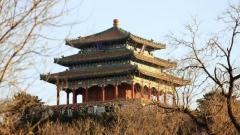

The Summer Palace in Beijing is China’s largest and most intact surviving imperial garden, inscribed on the UNESCO World Heritage List for its exceptional cultural and architectural value. Originally constructed as the Garden of Clear Ripples during the Qing Dynasty’s Qianlong reign to celebrate Empress Dowager Xiaoshengxian’s 60th birthday, it was later burned down and rebuilt in the Guangxu era, receiving its current name. Centered on Longevity Hill and Kunming Lake, it masterfully integrates Jiangnan garden aesthetics with northern natural landscapes, earning the reputation as the “Museum of Imperial Gardens.” Every scenic spot here carries layers of modern Chinese history, waiting to be explored by curious travelers.
Must-Visit Core Attractions in Beijing’s Summer Palace
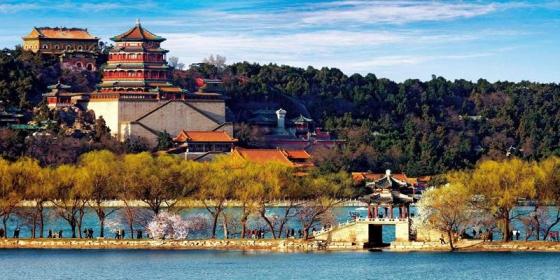
The Summer Palace
Longevity Hill and the Tower of Buddhist Incense
Longevity Hill serves as the heart of the Summer Palace’s architectural complex, originally known as Weng Hill before Emperor Qianlong renamed it to mark his mother’s 60th birthday and constructed a series of pavilions and halls ascending its slopes. Standing at approximately 58 meters tall, the hill is blanketed in lush vegetation that transforms with the seasons—vibrant peach and magnolia blooms paint the slopes pink and white in spring, dense oak and pine trees provide cool shade in summer, fiery maple leaves turn the hillside crimson in autumn, and snow-dusted evergreens create a serene winter wonderland.
Dominating the mid-slope of Longevity Hill’s southern face is the Tower of Buddhist Incense, the iconic landmark and highest point of the entire garden. This octagonal, three-story structure rises 41 meters into the sky, crowned with gleaming yellow glazed tiles (a color reserved exclusively for imperial buildings) and supported by vermilion pillars, creating a striking contrast that epitomizes imperial architectural grandeur. Climbing the winding stone stairs to the top of the tower rewards visitors with unobstructed panoramic views: the shimmering expanse of Kunming Lake stretches out below like a giant jade plate, the winding Long Corridor snakes along the shore like a colorful ribbon, and on clear, sunny days, the distant skyline of Beijing unfolds on the horizon. Inside the tower, a gilded thousand-armed Guanyin statue is enshrined, drawing worshippers and tourists alike with its sacred atmosphere. It is not only a masterpiece of Qing Dynasty architecture but also a spiritual landmark that no visitor to the Summer Palace should miss.
Kunming Lake and the Seventeen-Arch Bridge
Kunming Lake covers three-quarters of the Summer Palace’s total area, serving as the soul of the garden’s landscape. Artificially excavated over 250 years ago and modeled after the iconic layout of Hangzhou’s West Lake, it is fed by crystal-clear spring water from nearby Jade Spring Hill, its waters rippling gently under the sunlight and reflecting the surrounding hills and pavilions. Three small islands dot the lake, symbolizing the three mythical immortal islands of Penglai, Fangzhang, and Yingzhou—a reflection of ancient Chinese emperors’ eternal quest for longevity and immortality. Lined with graceful weeping willows that dip their branches into the water and framed by iconic structures like the Long Corridor and the Marble Boat, the lake creates a picturesque landscape that changes dramatically with each season, from blooming lotus flowers covering the surface in summer to thick ice sheets that support ice skating in winter.
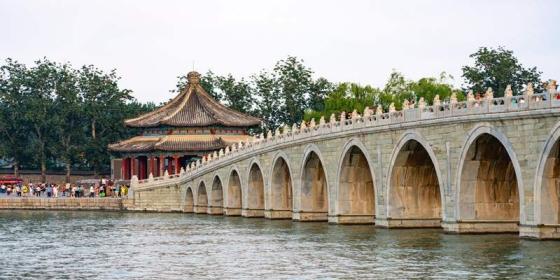
Kunming Lake and the Seventeen-Arch Bridge
Connecting the eastern shore to Nanhu Island is the Seventeen-Arch Bridge, a 150-meter-long, 8-meter-wide stone bridge that resembles a sleeping dragon stretching majestically across the water. Its 17 arches are symmetrically arranged, decreasing in size perfectly from the central arch to both ends, a remarkable feat of ancient Chinese bridge engineering that has stood the test of time. The bridge’s stone railings are adorned with 544 exquisitely carved stone lions, each with a unique posture and expression—some roar fiercely, some play with cubs, and some gaze calmly at the lake—showcasing the unparalleled craftsmanship of Qing Dynasty artisans. The most spectacular sight here occurs around the winter solstice, when the low setting sun casts golden rays through all 17 arches simultaneously, creating the breathtaking “Golden Light Through the Arches” phenomenon. This natural wonder draws thousands of photographers and tourists every year, making it one of the Summer Palace’s most iconic and sought-after views.
The Long Corridor
Stretching along the southern foot of Longevity Hill and facing Kunming Lake, the Long Corridor is one of the Summer Palace’s most famous structures and holds the Guinness World Record as the longest painted corridor in the world. Measuring 728 meters in length with 273 interconnected bays, it features elegant green glazed tile roofs and bright vermilion pillars that blend harmoniously with the surrounding mountains and water, creating a seamless transition between the built environment and nature.
What makes the Long Corridor truly extraordinary is its interior decoration: over 14,000 unique hand-painted artworks adorn the beams and lintels, with no two paintings identical. These vibrant artworks cover a vast range of subjects, including serene landscapes, delicate flowers and birds, and dramatic scenes from classic Chinese literature—most notably episodes from the Four Great Classical Novels: Dream of the Red Chamber, Romance of the Three Kingdoms, Journey to the West, and Water Margin. Executed in both meticulous gongbi (fine brushwork) and expressive xieyi (freehand) styles, they represent the pinnacle of traditional Chinese painting techniques. The corridor also serves as a practical resting place for visitors, providing shelter from the harsh summer sun and sudden rain showers while allowing them to admire both the artwork and the stunning lake views. Four octagonal pavilions are evenly spaced along the corridor, symbolizing the four seasons, each offering a different perspective of the garden’s changing beauty. It is an essential stop on any Summer Palace tour, where art, history, and nature converge in perfect harmony.
Suzhou Street
Located along the banks of the Back Lake in the northern part of the Summer Palace, Suzhou Street is a charming replica of a Jiangnan water town commercial street built during the Qianlong reign. It was originally designed to allow the imperial family and court nobles to experience the lively charm of southern China’s water towns without having to travel thousands of kilometers from the capital. Stretching over 300 meters, the street features more than 60 traditional shops lining both sides of the narrow canal, including teahouses, wine shops, pawnshops, silk stores, and candy shops. The white-walled, gray-tiled buildings and arched stone bridges create an authentic Jiangnan atmosphere, making visitors feel as if they have stepped into a 18th-century water town in Suzhou.
Today, Suzhou Street has been carefully restored to its original Qing Dynasty appearance, with shops selling traditional Jiangnan snacks (such as sweet osmanthus cakes and Shaoxing rice wine), handcrafted souvenirs, and local specialties. Visitors can even rent traditional Qing Dynasty costumes to stroll along the street, immersing themselves in the experience of being an ancient merchant or noble. The street is particularly enchanting at night, when hundreds of red lanterns hang from the eaves and their warm reflections dance on the calm water, creating a peaceful and romantic ambiance. It is the perfect place to take a break from sightseeing, sample delicious local food, and soak up the unique charm of southern Chinese culture.
The Garden of Harmonious Interests
Tucked away in the quiet northeast corner of the Summer Palace, the Garden of Harmonious Interests is a self-contained “garden within a garden,” modeled after the famous Jichang Garden in Wuxi and built during the Qianlong reign. Unlike the grand and imposing architecture of the rest of the Summer Palace, this intimate garden is celebrated for its compact layout and delicate, step-by-step scenic design, where every turn reveals a new and beautiful view.
Centered around a clear, tranquil pond teeming with colorful koi fish, the garden is surrounded by elegant pavilions, winding halls, intricately stacked rockeries, and lush bamboo and pine trees, creating a seamless blend of architecture and nature. Three pavilions—the Spring Awareness Pavilion, the Green Drinking Pavilion, and the Autumn Washing Pavilion—are strategically placed around the pond, each named to evoke a different season and offering unique views of the garden. The lotus pond here is one of the best spots in the Summer Palace to admire lotus flowers, which bloom profusely from July to August, filling the air with their delicate, sweet fragrance. The garden’s rockeries, made of weathered Taihu stone, add an element of playfulness, inviting visitors to explore their winding paths and hidden corners. It is a peaceful retreat within the bustling imperial garden, where visitors can relax, meditate, and appreciate the subtle beauty of traditional Chinese garden design.
Practical Travel Tips for Beijing’s Summer Palace
Tickets and Opening Hours
- Off-season tickets (November 1 to March 31): 20 RMB per person
- Peak-season tickets (April 1 to October 31): 30 RMB per person
- Separate tickets for internal attractions: Tower of Buddhist Incense 10 RMB per person, Suzhou Street 10 RMB per person, Garden of Harmonious Interests 5 RMB per person
- Combined ticket price: Off-season 50 RMB per person, peak-season 60 RMB per person, including admission to the main garden and all internal attractions
- Opening hours: Off-season 7:00 AM – 5:00 PM; peak-season 6:30 AM – 6:00 PM
- Ticket purchasing advice: It is highly recommended to buy tickets in advance through official channels such as Alipay, WeChat mini-programs, or reputable international travel platforms. This avoids long queues at the ticket office, especially during national holidays and peak tourist seasons, and may also offer small exclusive discounts.
Transportation Options
- Subway: Take Beijing Subway Line 4 to Beigongmen Station and exit through Exit A, which leads directly to the Summer Palace’s North Gate. This is the most convenient and time-efficient transportation method, completely avoiding the frequent traffic congestion on Beijing’s roads.
- Bus: Multiple public bus routes serve the Summer Palace, including Routes 331, 332, 346, 584, 601, and 608. Get off at the Summer Palace Station or Beigongmen Station. Bus travel is very affordable and ideal for budget-conscious travelers.
- Self-driving: There are several paid parking lots near the East Gate, North Gate, and Xinjian Gate of the Summer Palace. However, parking spaces are extremely limited during weekends and holidays, and prices can be high. Public transportation is strongly recommended; if you do drive, arrive before 8:00 AM to avoid wasting time searching for a spot.
- Guided tours: For a completely hassle-free experience, consider booking a guided tour with a reputable travel agency. These tours typically include round-trip transportation from your hotel, all admission tickets, and a professional English-speaking guide who will provide detailed explanations of the garden’s history, architecture, and legends, ensuring you don’t miss any important attractions or hidden stories.
Best Time to Visit
- Spring (March – May): The Summer Palace bursts into life during spring, with peach blossoms, apricot blossoms, cherry blossoms, and magnolias blooming in vibrant colors across the garden. The entire area is filled with fresh greenery and fragrant flowers, making it the perfect time for spring outings, picnics, and photography.
- Summer (June – August): Kunming Lake is covered with blooming pink and white lotus flowers, and the garden’s dense trees provide ample shade, creating a cool and refreshing escape from Beijing’s hot summer. Boating on the lake is a popular activity, and the golden sunset over the water in the evening is particularly beautiful.
- Autumn (September – November): Autumn is widely regarded as the most picturesque season at the Summer Palace, as maple leaves and ginkgo leaves turn brilliant shades of gold, orange, and red. The hills are ablaze with color, creating stunning backdrops for photos. This is the busiest season for tourists, so visiting on a weekday is highly recommended.
- Winter (December – February): The Summer Palace takes on a serene and magical quality in winter, with snow covering the traditional buildings and landscapes. When Kunming Lake freezes over (usually from late December to early February), visitors can enjoy ice skating and other winter activities. The “Golden Light Through the Arches” phenomenon at the Seventeen-Arch Bridge around December 21st is a must-see, drawing visitors from all over the world.
Other Important Notes
- The Summer Palace covers an area of over 290 hectares, and a full tour requires 4-6 hours of walking. Wear comfortable, supportive walking shoes to avoid foot fatigue, and bring a foldable umbrella to protect yourself from the sun or sudden rain showers.
- Food and beverages inside the garden are relatively expensive and have limited options. It is advisable to bring your own water and light snacks, such as bottled water, energy bars, and fruits, to save money and replenish your energy. There are designated rest areas with benches throughout the garden where you can eat.
- The Summer Palace is a key national cultural relic protection site. Please respect the historical relics and do not graffiti on buildings, stone lions, or trees. Do not trample on lawns or pick flowers, and help preserve the garden’s beautiful environment and precious historical heritage for future generations.
- The garden is extremely crowded during national holidays, especially during the Spring Festival (January-February) and National Day (October 1-7). To enhance your travel experience, try to visit on a weekday or arrive early in the morning to avoid the peak crowds.
- If you are interested in the Summer Palace’s rich history and culture, consider hiring a professional English-speaking guide or renting an audio guide device at the entrance. Guides will provide fascinating insights into the lives of the imperial family and the stories behind each attraction, allowing you to gain a much deeper understanding of this magnificent imperial garden.
Cherish Unforgettable Memories at Beijing’s Summer Palace
The Summer Palace is a timeless masterpiece that embodies the essence of ancient Chinese garden art, a precious cultural treasure not only for China but also for the entire world. Here, you can step back in time and experience the luxurious lifestyle of China’s ancient imperial family, marvel at the grandeur of imperial architecture, appreciate the delicate beauty of Jiangnan garden design, and witness the perfect fusion of natural landscapes and man-made structures.
If you want a stress-free and enjoyable trip to the Summer Palace without the hassle of planning routes, purchasing tickets, or navigating language barriers, look no further than China Dragon Travel. With a team of experienced English-speaking guides and over a decade of travel expertise, they provide comprehensive, personalized travel services, including full-day guided tours, hotel pickup and drop-off, and detailed historical explanations. They will help you discover the hidden stories behind every scenic spot, ensuring you have an unforgettable and enriching travel experience at the Summer Palace.