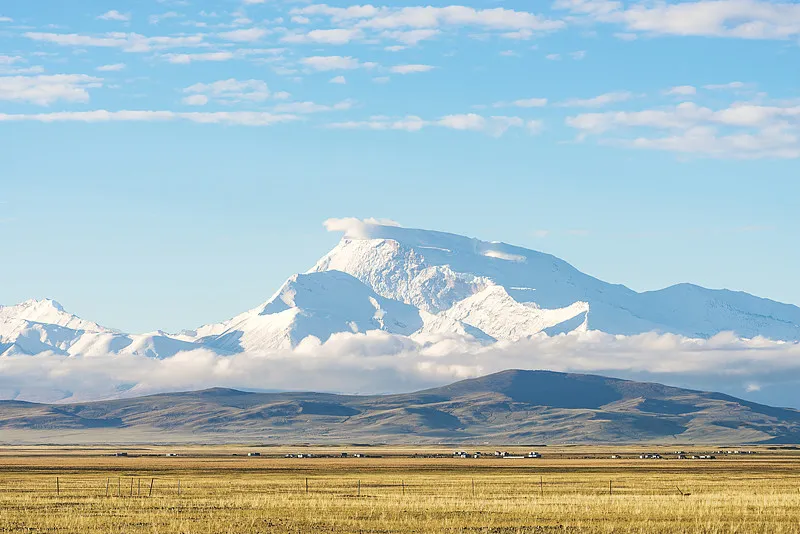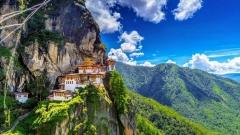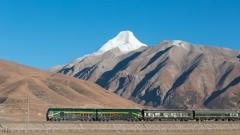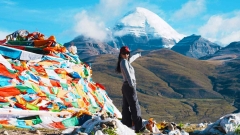

Dreaming of visiting Tibet but worried about altitude sickness? Spring may be the perfect time to start planning your journey. Every year, Nyingchi transforms into a sea of pink and white peach blossoms, with snow-capped mountains, green valleys, turquoise rivers, and traditional Tibetan villages creating some of the most beautiful scenery on the plateau. Unlike itineraries that immediately take travelers to higher-altitude destinations such as Everest Base Camp or Namtso Lake, a well-planned Nyingchi peach blossom tour can begin at a comparatively lower altitude and allow more time for rest and acclimatization. Although altitude sickness cannot be completely prevented, choosing the right route and preparing properly can help make your Tibet adventure more comfortable.
Key Takeaways
- Nyingchi is one of Tibet’s best spring destinations, famous for peach blossoms, mountain scenery, and traditional villages.
- Nyingchi is at a lower elevation than Lhasa and many other popular Tibet destinations, making it a useful starting point for a more gradual itinerary.
- Altitude sickness is still possible: Nyingchi is around 3,000 meters above sea level, and flying there means ascending quickly from lower elevations.
- A slower itinerary, adequate rest, and sensible activity levels can help your body adjust to altitude.
- Traveling with an experienced tour operator can make it easier to organize transportation, accommodation, sightseeing, and a suitable daily schedule.
Why Visit Tibet in Spring? Nyingchi’s Peach Blossoms Are Worth the Journey
When most people imagine Tibet, they picture snow-covered mountains, vast grasslands, sacred lakes, and magnificent monasteries. But in spring, southeastern Tibet reveals another side of its beauty: peach trees covered in pink blossoms, villages surrounded by flowering valleys, and snow-capped peaks rising above the spring landscape.
Nyingchi is particularly famous for its peach blossom season, generally from March to April. The exact flowering period varies by location, elevation, and weather, so there is no single date when every valley reaches full bloom.
For travelers who have always wanted to visit Tibet but feel anxious about high-altitude travel, Nyingchi offers a wonderful combination of natural scenery and cultural experiences without requiring a trip to Tibet’s most extreme destinations.
Best Places to See Peach Blossoms in Nyingchi
Nyingchi has several beautiful areas where peach blossoms can be enjoyed in different settings.
Gala Peach Blossom Village
Often regarded as one of the signature locations of Nyingchi’s peach blossom season, Gala Peach Blossom Village is known for its peach trees, mountain backdrop, and seasonal flower displays. It is a good place to experience the atmosphere of the festival and photograph the blossoms.
Bomi Peach Blossom Valley
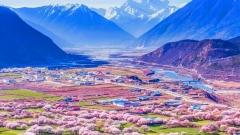
Bomi is famous for its extensive peach blossom landscapes. In spring, peach trees spread across villages, fields, and valleys, creating a distinctive contrast between delicate pink flowers and the surrounding snow-covered mountains. The flowering dates may differ from those in central Nyingchi, making the wider region attractive for a multi-day spring trip.
Suosong Village
Located in the Yarlung Tsangpo Grand Canyon area, Suosong Village is renowned for its views of Mount Namcha Barwa. During the right conditions, peach blossoms in the foreground, traditional villages, and dramatic Himalayan scenery come together to create unforgettable photographs.
Basum Tso
Basum Tso, also known as Basong Lake, offers a different spring landscape, with clear turquoise water, forested mountains, and traditional Tibetan architecture. It is a beautiful addition to a Nyingchi itinerary, even though it is not primarily known as a peach blossom destination.
The appeal of a Nyingchi spring journey is that it combines seasonal flowers with mountains, lakes, villages, and local culture. You can enjoy the scenery at a relaxed pace rather than building the entire trip around strenuous activities.
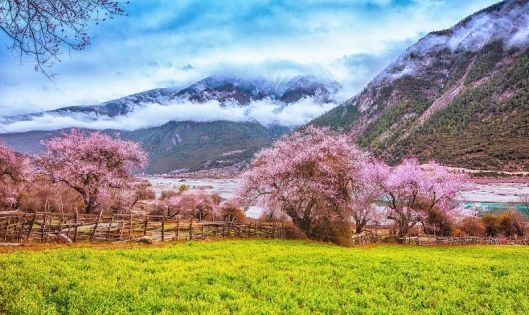
Bomi Peach Blossom Valley
Worried About Altitude Sickness? Start by Understanding Nyingchi’s Elevation
Altitude sickness is one of the most common concerns among first-time visitors to Tibet. It can affect people of different ages and fitness levels, including travelers who exercise regularly. Being fit does not guarantee that you will be free from altitude-related symptoms.
The risk depends on factors such as elevation, how quickly you ascend, your individual response, and how much time your body has to acclimatize.
Is Nyingchi Lower Than Other Popular Tibet Destinations?
Yes. Nyingchi is generally at a lower elevation than Lhasa and many well-known destinations in western and northern Tibet.
| Destination | Approximate Elevation |
|---|---|
| Nyingchi urban area | Around 3,000 m |
| Lhasa | Around 3,650 m |
| Yamdrok Lake viewpoints | Around 4,400–4,800 m, depending on the viewpoint |
| Namtso Lake area | Around 4,700 m |
| Everest Base Camp area | Around 5,200 m |
Elevations vary by exact location. These figures are approximate and intended for general trip planning.
This difference matters because the body generally faces a greater altitude challenge as elevation increases. A route that allows you to spend time around Nyingchi before moving to higher destinations can be more gradual than an itinerary that quickly proceeds to high mountain passes or remote plateau areas.
However, lower altitude does not mean no altitude sickness. Nyingchi is still at an elevation where symptoms can occur, and flying directly from a low-altitude city to Nyingchi involves a relatively rapid ascent. Some travelers may develop altitude-related symptoms even if they never visit Lhasa, Everest Base Camp, or Namtso.
Why Choose a Nyingchi-First Itinerary?
A well-designed Nyingchi peach blossom tour can offer several practical advantages.
First, it allows you to spend time exploring a region that is lower than Lhasa and many other popular Tibet destinations. Second, the itinerary can be designed around scenic drives, village visits, and gentle sightseeing rather than demanding hikes. Third, the schedule can include sufficient rest before moving to destinations at higher elevations.
The important factor is how the itinerary is planned, not just which city you visit first. A route that starts in Nyingchi but immediately rushes to high-altitude destinations may not offer the same advantages as one that takes a gradual approach.
If you are particularly concerned about altitude sickness, discuss your health and the planned elevations with a healthcare professional before booking.
How Can You Reduce the Risk of Altitude Sickness in Tibet?
There is no guaranteed way to prevent altitude sickness, but thoughtful preparation and sensible travel habits can help reduce the risk.
Allow Time to Rest After Arrival
After arriving in Nyingchi, avoid treating the first day as a full sightseeing day. Even if you feel fine initially, your body may need time to respond to the change in elevation.
A sensible arrival-day plan includes checking into the hotel, drinking fluids normally, eating regular meals, and resting. Choose light activities near your accommodation if you feel well rather than rushing from one attraction to another.
Do not assume that feeling healthy immediately after landing means your body has fully adjusted. Symptoms may develop after arrival, and your condition can change over time.
Avoid Overexertion
You do not need to run, climb rapidly, or complete demanding hikes to enjoy Nyingchi’s peach blossoms. Many of the region’s most memorable sights can be enjoyed from village paths, scenic viewpoints, and roadside stops.
During the first few days, keep walking at a comfortable pace and take breaks whenever necessary. Avoid strenuous exercise, rushing uphill, or trying to fit too many attractions into one day.
If you develop symptoms such as a headache, nausea, dizziness, unusual fatigue, or difficulty sleeping after ascending, stop increasing your altitude and inform your guide.
Stay Normally Hydrated and Eat Regularly
Drink fluids regularly and eat balanced meals. You do not need to force yourself to drink excessive amounts of water, as overhydration can also be harmful.
Avoid alcohol while acclimatizing, particularly during the first days at altitude. Alcohol may worsen dehydration and interfere with sleep, making it harder to assess how your body is responding to the elevation.
Prioritize rest and adequate sleep rather than trying to maintain the same activity level you would have at home.
Discuss Preventive Medication With a Healthcare Professional
Some travelers may be advised to use preventive medication, such as acetazolamide, depending on their health history and planned ascent. It is not suitable for everyone and should be discussed with a qualified healthcare professional before the trip.
Do not self-medicate or use medication as a substitute for a sensible itinerary and proper acclimatization.
What Should You Do if You Experience Altitude Sickness?
Understanding the warning signs is just as important as taking preventive measures. Do not ignore symptoms simply because you have already paid for the tour or traveled a long way to reach Tibet.
Mild acute mountain sickness may cause a headache, nausea, dizziness, fatigue, or reduced appetite. If you experience these symptoms after ascending, tell your guide, stop further ascent, and rest while assessing your condition.
If symptoms worsen or fail to improve, you should seek medical assessment and may need to descend to a lower elevation.
Seek urgent medical assistance if you experience any serious warning signs, including difficulty breathing at rest, confusion, inability to walk straight, unusual drowsiness, or a severe and worsening headache accompanied by repeated vomiting. Severe altitude illness can be life-threatening. Do not continue sightseeing or attempt to manage serious symptoms simply by resting at the same altitude.
A responsible itinerary should allow plans to change when health or weather conditions require it. Travelers should also ensure that their insurance provides appropriate medical coverage for the trip.
What Makes a Peach Blossom Tour More Comfortable Than a High-Altitude Adventure?
Tibet has many extraordinary destinations, but not every traveler needs to begin with a demanding itinerary that includes the highest passes, remote lakes, or long-distance treks.
A Nyingchi peach blossom trip can focus on enjoying nature and local culture while keeping the schedule relatively relaxed.
Scenic Experiences Without Demanding Trekking
The peach blossom season is ideal for travelers who prefer beautiful landscapes over strenuous outdoor activities. Depending on the route, you may be able to enjoy:
- Peach blossom villages and flowering valleys.
- Scenic drives through the Nyingchi countryside.
- Views of Mount Namcha Barwa when weather permits.
- Lakeside scenery at Basum Tso.
- Traditional Tibetan villages and local cultural experiences.
- Photography stops at suitable viewpoints.
Many of these experiences do not require long hikes. Nevertheless, walking surfaces, distances, and the elevation of individual locations should be checked when planning for travelers with mobility or health concerns.
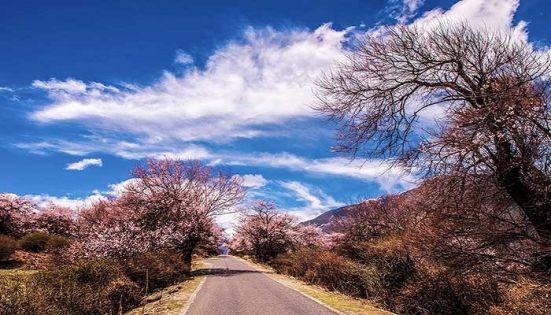
Bomi Peach Blossom
A More Gradual Daily Schedule
The key is not to fill every day with sightseeing. A carefully planned itinerary should limit unnecessary backtracking, keep demanding activities to a minimum, and allow time to rest between destinations.
If you plan to continue to Lhasa after visiting Nyingchi, consider how many nights you will spend in the region and whether your itinerary allows adequate adjustment before moving to higher elevations. If you are especially worried about altitude sickness, you may prefer a route that focuses primarily on Nyingchi rather than combining the trip with several high-altitude destinations.
There is no universally risk-free route. Your personal health, travel history, planned elevations, and response to altitude should all be taken into account.
Is Spring a Good Time for First-Time Visitors to Tibet?
Spring can be an appealing season for first-time visitors, especially those interested in flowers, mountain landscapes, and rural Tibetan culture.
Nyingchi’s peach blossoms generally bloom between March and April, but the timing can vary considerably from one valley to another. Warmer or colder weather may also affect the flowering period, so avoid assuming that every location will be in full bloom on a particular date.
Plan Your Trip Around the Flowering Season
If peach blossoms are your main reason for visiting, allow some flexibility in the itinerary. Different areas may reach peak bloom at different times, and a route that visits multiple blossom locations can improve your chances of seeing flowers during your trip.
Spring mornings and evenings can be cold, even when daytime temperatures feel pleasant. Pack layers, a warm jacket, comfortable walking shoes, sunglasses, and sunscreen.
It is also worth remembering that flowering is only one part of the experience. Nyingchi’s rivers, mountain forests, villages, and viewpoints make the region attractive even when some peach trees have already finished blooming.
How to Choose the Right Tibet Tour if You Are Worried About Altitude
When comparing Tibet tour packages, do not focus only on the price or the number of attractions. Review the altitude profile and daily schedule to understand how demanding the trip will be.
Before booking, ask the tour operator:
- What is the highest elevation reached each day?
- How many nights will we spend in Nyingchi before moving to higher destinations?
- Is the first day scheduled for rest and light sightseeing?
- Are there strenuous hikes or long walks?
- Can the itinerary be adjusted if a traveler develops altitude-related symptoms?
- What support is available if medical attention is needed?
At China Dragon Travel, travelers can discuss their preferred pace, sightseeing interests, and altitude concerns when planning a Tibet itinerary. For a spring visit, a Nyingchi peach blossom route can be a good option to consider, provided the final schedule matches your individual needs and allows for appropriate rest.
Make Next Spring the Season You Discover Tibet
If you have always wanted to visit Tibet but have hesitated because of altitude sickness, do not assume that your only choices are to abandon the idea or undertake a challenging high-altitude journey.
Nyingchi’s spring peach blossoms offer another way to experience Tibet, combining pink flowering valleys, snow-capped peaks, traditional villages, and peaceful natural scenery. A route that starts at a comparatively lower elevation and allows time for rest may be more comfortable than one that rushes directly to higher-altitude destinations, although no itinerary can eliminate the risk of altitude sickness.
For spring 2027, start by choosing the right dates and reviewing the route carefully. Prepare for the elevation, consult a healthcare professional if you have health concerns, and give yourself permission to travel slowly. The goal is not to see everything in one trip, but to enjoy Tibet’s spring landscapes safely and at a pace that suits you.
Explore a Nyingchi peach blossom tour with China Dragon Travel and start planning your spring journey to Tibet.