
Tibet, a sacred snowy land in southwest China’s border regions, embodies profound religious culture and impeccably pure natural scenery. April marks the transition from winter to spring in Tibet: ice and snow begin to melt, and all living things revive, making it the most vibrant season on this plateau. At this time, Tibet retains the solemnity of winter snow-capped mountains while bursting with spring’s vitality, creating a unique springtime beauty. The climate turns warm yet not sweltering, and tourist crowds are manageable before the peak season. Visiting now allows you to avoid the rainy season’s fog and mist, while deeply experiencing the harmonious coexistence of Tibetan culture and nature. This guide compiles the best April attractions in Tibet, outlines a travel itinerary, and helps you embark on an unforgettable spring journey in the snow-covered realm.
Advantages of Travelling to Tibet in April
April is a turning point from winter to spring in Tibet. While winter snow has not fully melted, the breath of spring permeates the plateau’s valleys and mountains. For travelers seeking a high-quality experience, this season offers the perfect combination of favorable climate, unique landscapes, comfort, and in-depth cultural immersion, which is a rare chance to explore Tibet.
- Pleasant Climate: Daytime temperatures rise in April, with gentle sunshine and average temperatures ranging from 5°C to 15°C, ideal for outdoor activities. Compared to winter, air oxygen levels are higher, and temperature-humidity conditions facilitate acclimatization to the plateau.
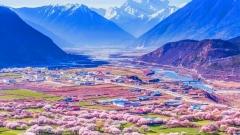
- Unique Landscapes: The most famous highlight is the peach blossom spectacle in Nyingchi. Wild peach trees bloom freely along the Nyang River and Yarlung Zangbo Grand Canyon, forming a stunning picture with distant snow-capped mountains, highland barley fields, and Tibetan villages.
- High Comfort: Compared to the peak travel season (May-October), April sees fewer tourists. You can soak in the atmosphere while enjoying relative tranquility at most attractions, and reservations for popular sites are easier to secure.
Note: Higher-altitude areas still have significant ice and snow in early April, which thaws noticeably by the end of the month. Plan your itinerary to account for this change and arrange outdoor attractions in a reasonable order. Despite April’s advantages, travelers should note the large temperature differences between day and night in high-altitude scenic areas and make adequate preparations.

Nyingchi Peach Blossom
Climate and Clothing Recommendations
Climate
April is a transition period between winter and spring in Tibet, with large day-night temperature differences. Days are comfortable under intense sunshine, while nights turn cold. Sun protection and moisturization are essential, and weather changes should not be overlooked even in mild April.
- Strong Sunlight: Ultraviolet (UV) radiation is extremely intense this season. Sun protection is a top priority, regardless of sunny or cloudy weather.
- Large Day-Night Temperature Differences: Warm during the day under the sun, but temperatures can drop to around 0°C in the morning and evening.
- Dry and Windy: Low air humidity often causes chapped lips and skin. Wind speed may increase in the afternoons in some areas.
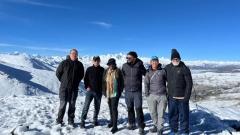
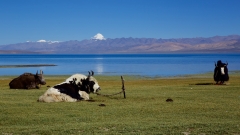
- Occasional Rain and Snow: Higher-altitude areas (e.g., Nam Co Lake, Everest Base Camp) may still experience snowfall in April.
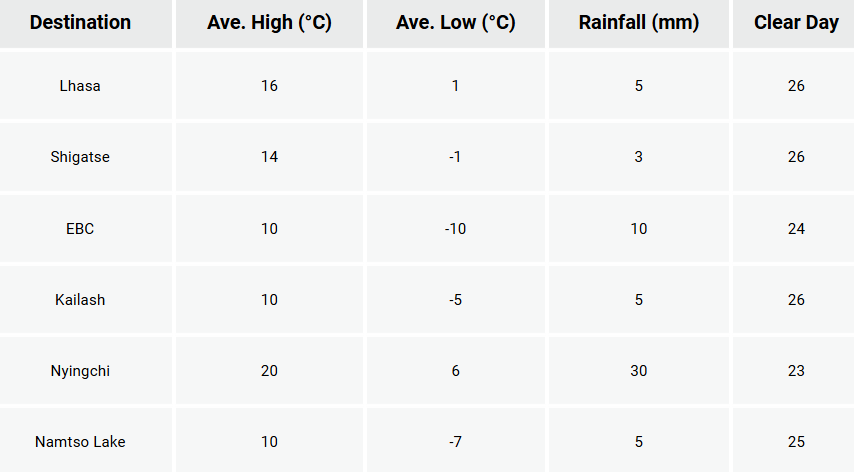
Weather in Tibet in April
Clothing
- Base Layer: Moisture-wicking, quick-drying long-sleeve thermal underwear.
- Mid Layer: Fleece jacket or thin down jacket for warmth.
- Outer Layer: Windproof and waterproof hiking jacket to cope with weather changes.
- Pants: Comfortable thermal pants; hiking pants are recommended.
- Shoes and Socks: High-top, non-slip, warm outdoor shoes paired with moisture-wicking, thermal woolen socks.
Tibetan Must-Visit Attractions in April
Cultural Attractions
In April, Tibet’s cultural and natural landscapes exude a unique charm – less crowded than in peak season, with more tranquility and leisure. Exploring these sites at this time offers a distinctive experience.
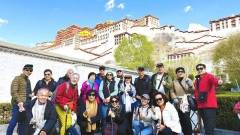
- Potala Palace: Fewer tourists than in peak season, reducing reservation pressure. Under the bright spring sun, the red and white palace walls appear even more solemn and magnificent.
- Jokhang Temple & Barkhor Street: Follow the pilgrim flow, walk on the sunlit stone slabs of Barkhor Street, and feel the warm daily vibe of Tibet in April.
- Norbulingka: Flowers and plants in Norbulingka begin to revive in April, making it an ideal place to experience Lhasa’s leisurely pace of life.
- Sera Monastery Debate: Watching the monks’ philosophical debates in the afternoon is a vivid window into Tibetan Buddhist culture.
Natural Attractions
- Basum Tso Lake: Located in eastern Tibet, the lake is surrounded by lush forests in April, with emerald-green waters and the serene Chosong Monastery on the central island.
- Yamdrok Lake: Usually thawed by April, the lake’s sapphire-blue waters wind through the mountains, creating a breathtaking sight. The view from Gangbala Pass is the most spectacular.
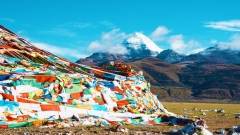
- Everest Base Camp: April is one of the best times to visit the Everest region. Weather is relatively stable, increasing the chance of seeing the mountain’s full view. Note that nights at the base camp are extremely cold – thorough preparations are a must.
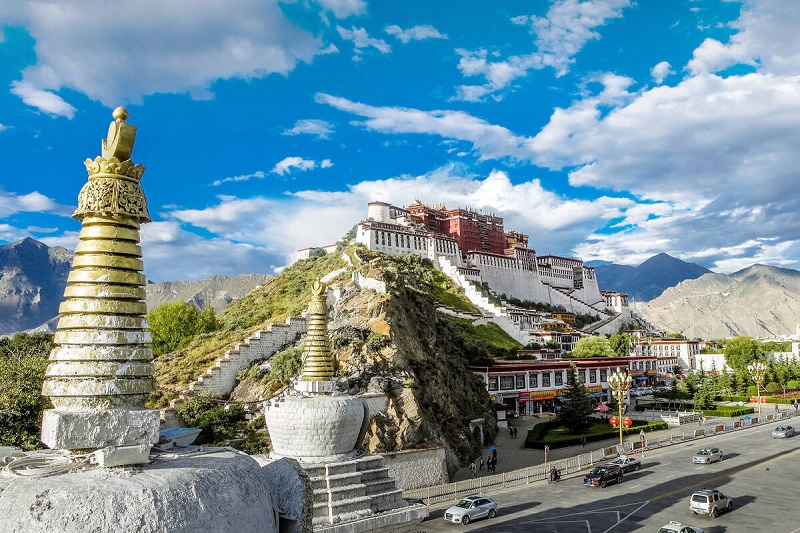
Potala Palace
Tibet Recommended Itinerary in April
This 8-day itinerary allows you to leisurely explore Tibet’s must-see attractions, cleverly connecting the plateau’s highlights while following a gradual altitude increase to facilitate acclimatization.
- Day 1: Arrive in Lhasa and check into your hotel.
- Day 2: Visit Potala Palace—Jokhang Temple—Barkhor Street.
- Day 3: Lhasa—Basum Tso Lake—Nyang River—
- Day 4: Nyingchi—Namcha Barwa Peak—Lulang Forest—
- Day 5: Nyingchi—Kadinggou Tianfo Waterfall—
- Day 6: Lhasa—Yamdrok Lake—Ritog Monastery—
- Day 7: Lhasa—Northern Tibetan Grassland—Nam Co Lake—
- Day 8: Departure from Lhasa.
Transportation And Accommodation
Transportation
Reasonable transportation planning and comfortable accommodation/dining arrangements are key to a smooth trip. Tibet is vast with scattered attractions, and options ranging from boutique hotels to characteristic homestays cater to diverse needs. Below are specific recommendations for April travel:
- By Air: Fly to Lhasa Gonggar Airport or Nyingchi Mainling Airport. First-time visitors to Tibet are advised to fly to Nyingchi (lower altitude) for gradual acclimatization.
- By Train: The Qinghai-Tibet Railway offers a classic experience but takes longer. Train tickets are more readily available in April than in peak season.
- Local Transportation: Attractions are far apart; chartered cars (with drivers) are the most common and convenient option. Book with reputable travel fleets in advance – drivers are familiar with road conditions and plateau driving.
Local Accommodations
- Lhasa: Abundant choices from international brand hotels to characteristic Tibetan boutique guesthouses. Recommended areas: near Potala Palace or Barkhor Street for easy travel.
- Nyingchi/Bomi: Book in advance regardless of peak or off-season. Hotels in downtown Nyingchi are well-equipped but far from core attractions.
- Xigazê/Dingri: Accommodation is relatively basic, mainly mid-range hotels and guest houses – set appropriate expectations.
- Everest Base Camp: Accommodation consists of tent hotels with simple facilities, designed for experience only. Bring a sleeping bag liner.
Q&As for Tibet Travel in April
Q1: Is April suitable for first-time visitors to Tibet?
April is a suitable time for first-time visitors to Tibet. With fewer tourists than the peak season, the travel experience is more relaxed. It is particularly important to arrive in Lhasa 3-5 days in advance to acclimatize to the altitude and avoid over-scheduling the itinerary. In addition to regular plateau protection measures, you need to prepare both summer and winter clothing.
Q2: What special documents are required for traveling to Tibet in April?
In addition to regular documents such as an ID card, you also need to prepare a Border Area Pass if your itinerary includes areas like Everest Base Camp, Ngari, and Purang. For travel to high-altitude regions, it is recommended to carry a medical examination report, especially regarding cardiopulmonary function. It is also advisable to prepare other documents such as a military officer’s certificate or student ID, as some attractions offer ticket discounts.
Q3: What should I pay attention to regarding accommodation and catering in Tibet in April?
For accommodation, prioritize hotels with central oxygen supply or in-room oxygen equipment. If staying in downtown Lhasa, it is recommended to book 3-5 days in advance; for popular scenic areas, book 10-15 days ahead. For catering, start with light meals and gradually try Tibetan cuisine. It is recommended to drink bottled water or boiled water to avoid gastrointestinal discomfort.
A Season of Contrast and Quiet Beauty in Tibet
April reveals Tibet at a moment of transition, when winter has not fully retreated and spring begins to unfold across valleys and riverbanks. Snow-capped mountains remain dominant on the horizon, while signs of renewal slowly appear in forests, villages, and sacred landscapes. This balance creates a travel atmosphere that feels both powerful and serene.
For travelers seeking a deeper and more measured Tibet experience, April offers a rare sense of space and clarity. With fewer crowds and stable weather conditions, the journey allows time to adapt to altitude while fully appreciating the cultural and natural depth of the plateau. Standing beneath towering peaks as spring quietly arrives, visitors often find that Tibet in April leaves one of the most lasting impressions of all.