
Key Takeaways
- Mount Everest is only the beginning: Tibet is home to an extraordinary collection of high-altitude peaks, from 8,000-meter giants to distinctive 6,000–7,000-meter mountains.
- Choose mountains by scenery, not altitude alone: Peak shape, visibility, surrounding landscapes and accessibility often matter more than elevation.
- Best panoramic viewpoint: Gyatso La Pass offers the chance to see several major Himalayan peaks, including Everest, Lhotse, Makalu and Cho Oyu, in favorable weather.
- Best for dramatic photography: Xilin Viewpoint provides a striking perspective of Mount Everest and Lhotse, while Qujula Pass is a great roadside viewpoint for Makalu.
- Best iconic mountains: Mount Everest, Namcha Barwa, Mount Kailash, Shishapangma, Kula Kangri, Mount Sap and King Peak each offer very different landscapes and experiences.
- Best for lakes and snow mountains: Kula Kangri, Shishapangma and Mount Sap combine dramatic peaks with high-altitude lakes, glaciers and open landscapes.
- Best for Golden Mountain sunrise: Clear, dry conditions in autumn, winter and early spring can offer excellent visibility, but weather ultimately determines whether the peaks appear.
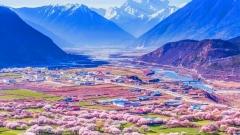
- Spring has a special advantage in Nyingchi: Namcha Barwa can be photographed together with peach blossoms, forests and the Yarlung Tsangpo Grand Canyon.
- Remote snow mountains require extra planning: Destinations such as Mount Sap, Kula Kangri and King Peak may involve long drives and challenging road conditions.
- Allow time for altitude acclimatization: High-altitude destinations in Tibet should not be rushed, especially when early-morning departures and remote mountain areas are involved.
- Weather is the biggest variable: Even the best viewpoint cannot guarantee a clear mountain view, so keeping some flexibility in your itinerary is highly recommended.
- The real attraction is the experience: Tibet’s snow mountains are not simply about collecting peak names—they are about dramatic light, sacred landscapes, high-altitude lakes, valleys and the vastness of the Tibetan Plateau.
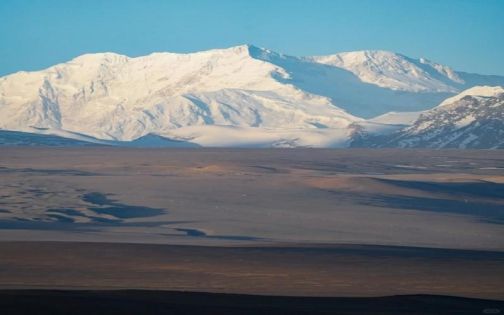
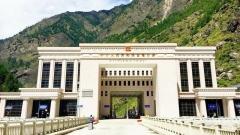
Gyatso La Pass
Tibet’s Snow Mountains: More Than Just Mount Everest
This Tibet travel guide is coming to an end after putting together more than 20,000 words of research and practical information. One of the original goals was to see as many 8,000-meter peaks as possible. However, mountain weather in Tibet is notoriously unpredictable. Clouds, snowfall and visibility can completely change the view within a short period of time. In the end, only a few of the 8,000-meter peaks were clearly visible.It was disappointing, but it also reinforced one important lesson: when it comes to seeing snow mountains in Tibet, your itinerary matters, but weather is ultimately what decides what you get to see.Tibet’s mountains are fascinating for more than their altitude. Some travelers are drawn to Mount Everest because it is the highest mountain on Earth. Others prefer the sharp, dramatic profile of Namcha Barwa, while Mount Kailash attracts visitors with its distinctive shape and profound religious significance. There are also lower peaks that can be even more impressive visually, such as King Peak, Mount Sap and Kula Kangri.For travelers deciding which mountains are actually worth visiting, I would use three basic criteria: the mountain should have significant altitude and scale; its main summit should have a distinctive shape, such as a pyramid or sharply pointed peak; and, most importantly, ordinary travelers should be able to reach a viewpoint by road, vehicle or a relatively accessible trek.
How to Choose the Best Snow Mountains in Tibet
High Altitude Does Not Always Mean Better Views
When people make a list of Tibet’s snow mountains, it is tempting to simply rank them by elevation. For travelers, however, altitude is only one part of the equation.The visual impact of a mountain depends on its height relative to the surrounding landscape, the shape of the summit, glaciers, ridgelines and the scenery in the foreground.A 6,000-meter peak with a sharp, isolated summit can sometimes look far more dramatic than a 7,000-meter mountain with a broad and relatively gentle ridge.
Mountain Shape Matters
If photography is one of your priorities, look for mountains with pyramid-shaped, sharply pointed or highly distinctive summits. These formations are especially spectacular around sunrise and sunset.When the first sunlight reaches the summit, the snow and rock can gradually turn golden against the darker blue tones of the surrounding mountains. This is the famous Golden Mountain sunrise, one of the most sought-after sights in Tibet.
Accessibility Is More Important Than the Number on the Map
Tibet is home to countless remote mountains, but the highest mountain is not necessarily the easiest or most rewarding for an ordinary traveler to visit.Mount Everest, for example, can be viewed from accessible roads and designated viewpoints in the Everest region. Namcha Barwa can be admired from places such as Songtsen Village, while Mount Kailash can be incorporated into the classic western Tibet travel routes.By contrast, peaks that require technical climbing, professional equipment or long mountaineering expeditions are better considered mountaineering destinations rather than conventional sightseeing attractions.
The Best Snow Mountains to See in Tibet
Mount Everest|8,848.86 m
Mount Everest needs little introduction. As the highest mountain in the world, it is one of the main reasons many travelers dream of visiting Tibet.The northern side of Everest lies within Tibet’s Tingri County in Shigatse. For sightseeing, Gyatso La Pass, Xilin Viewpoint and the Everest Base Camp area are among the key places to consider.Gyatso La Pass is particularly impressive because of its enormous panoramic view. Under clear conditions, visitors can see several major Himalayan peaks, including Mount Everest, Lhotse, Makalu and Cho Oyu.Xilin Viewpoint offers another excellent perspective, particularly for photography. On a clear day, Mount Everest and Lhotse can appear in the same frame, while the valleys, wetlands and sandy terrain in the foreground add depth to the composition.For Golden Mountain sunrise photography, arriving early is essential. The mountain may remain dark for a long time before the first sunlight reaches the summit.
Namcha Barwa|7,782 m
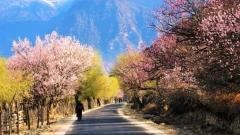
Located in Nyingchi, eastern Tibet, Namcha Barwa is one of the most visually striking mountains in the region.Although it is not an 8,000-meter peak, its sharply pointed summit and enormous vertical rise make it one of Tibet’s most spectacular mountains. Because clouds frequently surround the peak, it is also known as the “Shy Mountain.”Songtsen Village is one of the classic viewing locations. From here, the Yarlung Tsangpo Grand Canyon, forests, villages and Namcha Barwa create an extraordinary sense of scale.Spring is particularly special because peach blossoms can appear in the foreground, creating a rare combination of snow mountains, peach blossoms and the Yarlung Tsangpo River valley.For photographers, the key is patience. Namcha Barwa can remain hidden behind clouds for hours before suddenly revealing its summit.
Mount Kailash|Approximately 6,656 m
Mount Kailash is located in Purang County in western Tibet and is one of the most sacred mountains in Asia.Its appeal is not based purely on altitude. The mountain has a distinctive pyramid-like shape and an extraordinary cultural and religious significance. It is sacred in Tibetan Buddhism, Hinduism, Jainism and the Bon tradition.Mount Kailash is usually visited as part of a western Tibet itinerary that also includes Lake Manasarovar, Lake Rakshastal and Namtso-related landscapes in the wider region.Travelers who want a deeper experience can undertake the famous Kailash kora, or pilgrimage circuit. However, if your primary goal is photography and sightseeing, you do not necessarily need to complete the entire trek.
Shishapangma|8,027 m
Shishapangma is one of the world’s 8,000-meter peaks and has a special distinction: it is the only 8,000-meter mountain whose entire main massif lies within China.The mountain is located in Nyalam County in Shigatse. Lake Peiku is one of the most impressive places to appreciate the mountain, with snow-covered peaks reflected in the high-altitude lake.The Tong La mountain area also provides excellent panoramic views of Shishapangma and the surrounding peaks. Rather than seeing a single isolated mountain, travelers can experience an entire Himalayan snow-mountain corridor.
Cho Oyu|8,201 m
Cho Oyu is the world’s sixth-highest mountain and lies along the China–Nepal border in the Himalayas.Although it does not have the same level of tourism recognition as Everest, its massive glaciers and imposing mountain structure make it an impressive part of the Himalayan landscape.On routes toward the Rongxia Valley, viewpoints around Pusla Pass can provide close views of Cho Oyu, with surrounding peaks adding depth to the landscape.For travelers who want to see multiple Himalayan peaks during one journey, this region can be more rewarding than focusing on a single mountain.
Kula Kangri|7,538 m
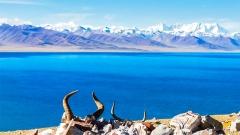
Kula Kangri, located in Lhozhag County in southern Tibet, has become increasingly popular among hikers and outdoor travelers.Its biggest attraction is that it is not simply about one mountain. The region combines snow peaks, glaciers and high-altitude lakes into one dramatic landscape.Baimalin Tso, Jiejiu Tso and Zhegong Tso are among the areas known for mountain views. When the weather is clear, the snow peaks reflected in the deep-blue lakes create some of the most photogenic landscapes in southern Tibet.For travelers who enjoy hiking but do not want a technical mountaineering expedition, Kula Kangri is an excellent choice. However, altitude should be taken seriously, and adequate acclimatization is essential.
Mount Sap|Approximately 6,956 m
Mount Sap is located in Biru County in Nagqu, northern Tibet. Unlike a solitary peak, it is best known as a dramatic group of mountains with several distinctive summits.The main peak and surrounding mountains form what is often described as a “snow mountain family.” Several peaks have sharp, pyramid-like shapes, while glaciers, lakes and alpine grasslands create an extraordinary foreground.Mount Sap is considerably more remote than the classic Lhasa–Shigatse–Everest route. Road conditions and travel times should therefore be checked carefully before departure, particularly if you are planning a self-drive or private vehicle trip.
King Peak (Pulaxiqiong)|Approximately 6,530 m
If mountain shape is your priority, King Peak deserves a place on any list of Tibet’s most beautiful mountains.Located around the border area of Saga and Zhongba in western Tibet, the peak is famous for its almost perfectly triangular, pyramid-like profile.Standing alone above the vast high-altitude wilderness, the mountain has an unusually clean and powerful silhouette.This is a destination better suited to experienced road-trip or off-road travelers, as the area is much less developed for conventional tourism than Mount Everest.
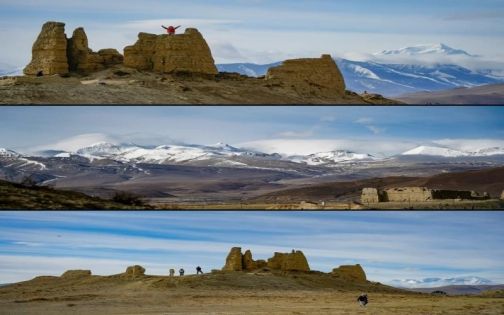
Xilin Viewpoint
Best Snow Mountain Viewpoints in Tibet
Gyatso La Pass: See Multiple 8,000-Meter Peaks
If you want a panoramic introduction to the Himalayas, Gyatso La Pass is one of the best choices.The main advantage is not that it is closest to Everest, but that the viewpoint provides an exceptionally broad panorama. Under clear conditions, several major Himalayan peaks can be visible from the same location.
Xilin Viewpoint: Everest and Lhotse in One Frame
Located near the G219 National Highway, Xilin Viewpoint is particularly attractive for photographers.Mount Everest and Lhotse can appear together, while the valley, wetlands and sandy terrain create a layered foreground.Try to arrive before sunrise if your goal is Golden Mountain photography.
Qujula Pass: A Great Roadside View of Makalu
For travelers who enjoy finding mountain viewpoints during road trips, Qujula Pass is worth considering.Under favorable weather conditions, Makalu has a particularly distinctive profile from this area, and Everest and Lhotse may also appear in the wider panorama.
Tong La Pass: A Himalayan Snow Mountain Corridor
The Tong La area is an excellent place to appreciate Shishapangma and the surrounding peaks.Instead of photographing a single summit, travelers can experience the scale of the Himalayan range itself, with multiple snow-covered mountains stretching across the horizon.
Latola Pass & Asia No. 1 Viewpoint: A 270-Degree Himalayan Panorama
These viewpoints offer broad, unobstructed views across the Himalayan landscape.On clear days, visitors can see the Shishapangma range, the peaks around Peiku Tso and the Langtang mountain range. With exceptional visibility, some mountains on the Nepalese side can also be seen in the distance.
Naixia Village, Gyirong Town: Snow Mountains with Forest and Villages
For a different type of mountain photography, Naixia Village near Gyirong is worth considering.Instead of a barren high-altitude landscape, you get a combination of forests, grasslands, villages and distant snow peaks. The contrast between the lower-elevation vegetation and massive Himalayan mountains creates a particularly strong sense of depth.
When Is the Best Time to See Golden Mountain Sunrise in Tibet?
Golden Mountain sunrise occurs when low-angle sunlight illuminates the snow-covered summit, turning the mountain from blue and white into shades of gold.There is no month that guarantees the phenomenon.In general, autumn, winter and early spring often offer relatively dry air and good visibility in many parts of Tibet, while spring in Nyingchi provides the additional attraction of peach blossoms beneath the snow mountains.However, the decisive factors are still the weather conditions on the specific day, including cloud cover, snowfall, wind and visibility.If Golden Mountain sunrise is one of the main goals of your trip, avoid scheduling only one opportunity. Staying an extra night in the same region can significantly increase your chances.
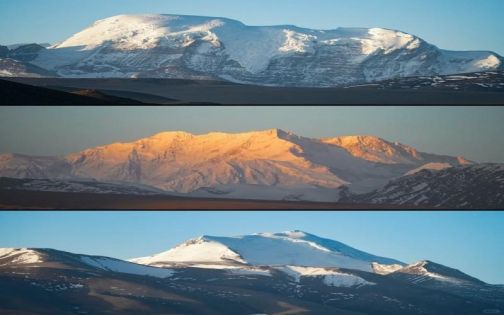
Qujula Pass
Practical Tips for a Tibet Snow Mountain Trip
First-Time Visitors: Lhasa, Shigatse and Everest
For a first trip to Tibet, travelers primarily interested in high-altitude snow mountains can consider a route from Lhasa to Shigatse, Tingri and Mount Everest.This route combines Tibet’s major cultural attractions, such as the Potala Palace, Jokhang Temple and Tashilhunpo Monastery, with some of the most spectacular Himalayan scenery.
Photography Focus: Nyingchi and Everest
If landscape photography is your priority, combining Nyingchi and the Everest region is a strong option.Spring offers the possibility of photographing peach blossoms beneath Namcha Barwa, while autumn is often attractive for clear skies, crisp mountain details and dramatic light.
For Experienced Travelers: Western Tibet and Ngari
Mount Kailash, Lake Manasarovar, Namtso-related landscapes and countless remote mountains make western Tibet one of the most spectacular regions for experienced travelers.However, the journey is long, the average altitude is high and the infrastructure is more limited. The itinerary should therefore be planned with enough time for acclimatization and unexpected weather or road conditions.
Important Things Travelers Often Overlook
Seeing a Snow Mountain Is Never Guaranteed
Weather in Tibet can change extremely quickly.A viewpoint may have a completely clear sky in the morning and be covered by clouds later in the day. This is why flexible itineraries are much more useful than schedules that leave no room for weather changes.
Give Yourself Time to Acclimatize
Many snow mountain destinations in Tibet are located at very high elevations.After arriving in Lhasa, avoid immediately scheduling exhausting activities or rushing to remote high-altitude destinations. If you are planning sunrise photography, remember that early departures and lack of sleep can make altitude adaptation more difficult.
Check Road Conditions Before Visiting Remote Mountains
Some of Tibet’s most beautiful mountains are located far from major tourist routes.A navigation app showing that a destination is “reachable” does not necessarily mean an ordinary sedan can safely get there. Rain, snow and road conditions can change rapidly.For remote destinations such as Mount Sap, Kula Kangri and King Peak, check local road conditions, vehicle requirements and travel restrictions before departure.
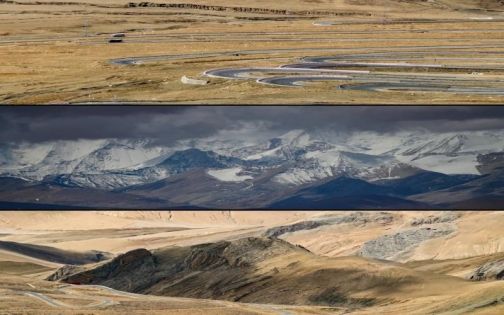
Tong La Pass
Final Thoughts: Tibet Is a World of Snow Mountains
If you think Tibet’s snow mountains begin and end with Mount Everest, you are only seeing part of the picture.Everest represents the highest point on Earth. Namcha Barwa represents the dramatic beauty of a sharp Himalayan summit emerging from the clouds. Mount Kailash combines a distinctive mountain form with thousands of years of religious tradition. Shishapangma represents the pure grandeur of an 8,000-meter peak, while Kula Kangri showcases the combination of glaciers, lakes and mountains. Mount Sap and King Peak reveal a completely different side of Tibet, where unusual mountain shapes dominate vast wilderness landscapes.What stays in your memory is often not the altitude number itself.It may be a quiet morning on a high-altitude road, a frozen lake beneath a snow-covered peak, or the moment when the first ray of sunlight touches the summit and the entire mountain suddenly turns gold.