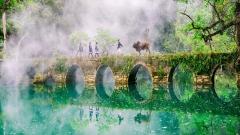

China is a country spanning 9.6 million square kilometers, from the deserts of the northwest to the coastlines of the southeast, from the snow capped mountains of the Tibetan Plateau to the ancient water towns of the Jiangnan region. The variety of landscapes is truly rare on a global scale. For first time visitors to China, the abundance of beautiful places can be overwhelming. This guide carefully selects the 15 most beautiful places in China, covering essential travel documents, natural landscapes, cultural heritage sites, ethnic minority culture, and practical tips. Each destination represents the pinnacle of China’s scenic beauty, helping you plan a perfect trip to China.
Essential Documents
Passport
Before departure, ensure your passport is valid for at least another six months. You will need to present your passport at almost every step of your journey, including hotel check in, train ticket purchases, scenic area entry, and border checkpoints. Be sure to carry the original document with you at all times. It is recommended that you take a photo of your passport information page on your phone and keep a paper photocopy in both your suitcase and your day bag, which will be very helpful if the original is lost. If you do lose it, report the loss immediately to the local Public Security Bureau’s Exit Entry Administration Department and contact your home country’s embassy or consulate in China to apply for a replacement travel document.
Visa
As of 2026, citizens from 50 countries can enter China visa free for stays of up to 30 days. This includes most EU countries, the United Kingdom, Canada, Australia, Japan, South Korea, and Singapore, among others. If your country is not on the visa free list, or if you plan to stay longer than 30 days, you will need to apply for a tourist visa in advance. You can apply online and then submit your materials at a visa application center. The processing time is approximately 4 business days.
Tibet Travel Permit
Foreign travelers entering the Tibet Autonomous Region must obtain a Tibet Travel Permit in advance. A Chinese visa or visa free eligibility alone is not sufficient. The Tibet Travel Permit is issued by the Tibet Tourism Bureau and cannot be applied for individually. You must arrange it through a licensed travel agency as part of an organized tour group. Independent travel is not permitted in Tibet. Processing typically takes 5 to 20 business days. It is recommended that you start the application process at least 4 to 6 weeks before your planned arrival in Tibet. The permit will be sent by the travel agency to your hotel at your first port of entry in China. You must carry the original permit with you at all times, as multiple checkpoints along the way will require inspection.
The Most Beautiful Natural Landscapes in China
Jiuzhaigou Valley in Sichuan
The water of Jiuzhaigou Valley is the most beautiful in China and arguably the world. 108 alpine lakes are scattered between snow capped mountains and forests, displaying colors of blue, green, yellow, and purple, with crystal clear clarity. Autumn is the most beautiful season in Jiuzhaigou, with colorful forests reflecting in the turquoise lakes, creating a fairytale landscape of brilliant colors. Five Flower Lake, Mirror Lake, Long Lake, and Nuorilang Waterfall are all unmissable sights. Best season: mid to late October.
Zhangye Danxia in Gansu
Zhangye Danxia is the earth’s palette. Layers of red, yellow, orange, white, and gray green rock alternate and stack, forming rolling colorful hills. The colors are most vibrant after rain or at sunset, when the entire mountain range appears to be burning like flames. The sunset at Viewing Platform Four, the panorama at Platform One, and the Colorful Screen at Platform Three each offer unique views. Best season: June to September.
Qinghai Lake
Qinghai Lake is China’s largest inland saltwater lake, with deep blue water and vast, expansive views. In July, rapeseed flowers bloom along the lakeshore, with golden yellow flower seas contrasting with the blue lake and white clouds. The lake ring road is about 360 kilometers long, and driving or cycling is the best way to explore. Best season: July to August.
Kanas Lake in Xinjiang
Kanas Lake is located deep in the Altai Mountains. The lake’s water changes color with the seasons, displaying an emerald like blue green in autumn. The larch and birch trees along the lakeshore turn golden yellow in September, creating a strong contrast with the turquoise water. The S shaped river channel of Moon Bay, the morning mist at Immortal Bay, and the panoramic view from Guanyu Terrace are all iconic scenes of Kanas. Best season: mid to late September.
Namtso Lake in Tibet
Namtso Lake is one of the three holy lakes of Tibet, with a surface elevation of 4,718 meters, making it the highest saltwater lake in the world. The water displays a deep, profound blue, reflecting the snow capped peaks of the distant Nyenchen Tanglha Mountains. Zhaxi Peninsula is the best place to view Namtso, with the early morning and evening light dyeing the lake surface and snow mountains golden red. The starry skies here are equally stunning. Best season: June to September.
Huangguoshu Waterfall in Guizhou
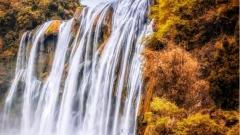
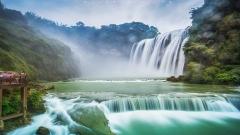
Huangguoshu Waterfall is the largest waterfall in Asia, 101 meters wide with a drop of 77.8 meters. During the high water season, the waterfall has a spectacular, majestic momentum, with mist filling the air and rainbows visible across the falls in the sunlight. The Water Curtain Cave lies behind the waterfall, allowing visitors to walk through and experience the thunderous roar from within. The nearby Doupotang Waterfall and Tianxingqiao Scenic Area are also worth visiting. Best season: June to August.
Zhangjiajie National Forest Park in Hunan
Zhangjiajie is China’s first national forest park, with over 3,000 quartz sandstone pillars rising abruptly from the ground, forming a unique peak forest landscape. The floating mountains from the movie Avatar were filmed here. Hallelujah Mountain in Yuanjiajie, the Imperial Writing Brush Peak in Tianzi Mountain, the clear flowing waters of Golden Whip Stream, and the thrilling ride of the Bailong Elevator are all iconic sights of Zhangjiajie. When clouds and mist linger after rain, the peaks appear and disappear like a fairyland. Best season: April to October.
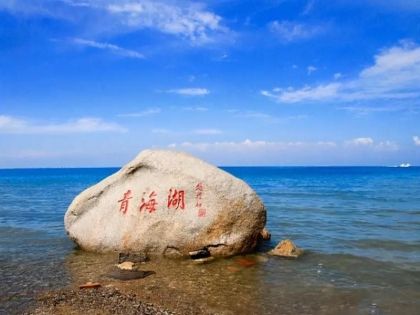
Qinghai Lake, One of China’s Most Beautiful Natural Landscapes
The Most Beautiful Cultural Heritages in China
Potala Palace in Tibet
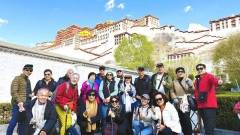
The Potala Palace is the highest and most magnificent palace in the world, and a sacred site of Tibetan Buddhism. The palace is built on Red Hill, with the White Palace and Red Palace stacked in layers, creating a grand and imposing presence. Inside are precious collections of Buddha statues, murals, and sutras, making it the best place to understand Tibetan history and culture. Best season: May to October.
Jokhang Temple in Tibet
Jokhang Temple is the most sacred temple in Tibetan Buddhism, enshrining the 12 year old life size statue of Sakyamuni brought to Tibet by Princess Wencheng. The temple’s architecture blends Tibetan, Tang Chinese, Nepalese, and Indian styles, with its golden roof shining brightly under the sun. Barkhor Street outside the temple is the oldest street in Lhasa, a place where Tibetan pilgrims circumambulate Jokhang Temple, offering the best environment to experience Tibetan faith. Best season: May to October.
Dujiangyan Irrigation System in Sichuan
Dujiangyan is the oldest, only surviving, and still functioning dam less water diversion irrigation project in the world. Built in 256 BC and constructed by Li Bing and his son, it still nourishes the Chengdu Plain today. The three main components, the Fish Mouth Water Dividing Dike, the Flying Sand Spillway, and the Bottleneck Neck Inlet, demonstrate the wisdom of ancient Chinese engineers. Dujiangyan is not only a hydraulic marvel but also the foundation of the Chengdu Plain being known as the “Land of Abundance.” Best season: Spring or Autumn.
Wuhou Shrine and Du Fu Thatched Cottage in Sichuan
Wuhou Shrine is China’s only temple dedicated to both a ruler and his minister, honoring Zhuge Liang and Liu Bei. It is the best place to learn about the culture of the Three Kingdoms period. The red wall pathway is the most representative photo spot in Chengdu. Du Fu Thatched Cottage is the former residence of the poet sage Du Fu when he lived in Chengdu, where he composed over 240 poems. The cottage grounds have lush bamboo groves and babbling streams, making it Chengdu’s most tranquil cultural space. Best season: Spring or Autumn.
Qingyan Ancient Town in Guizhou
Qingyan Ancient Town was first built during the Hongwu era of the Ming Dynasty and is one of the four great ancient towns of Guizhou. The town has preserved its Ming and Qing Dynasty style stone streets, city walls, and watchtowers, with architecture blending Han Chinese and ethnic minority styles. The Zhuangyuan Residence, Ciyun Temple, and Wanshou Palace within the town are all worth seeing. Qingyan’s braised pork trotters, rose sugar, and spicy chicken are local specialty snacks. Best season: Spring or Autumn.
The Most Beautiful Ethnic Cultures in China
Kashgar Old City in Xinjiang
Kashgar Old City is China’s only completely preserved Islamic style neighborhood, known as a living museum of Uyghur culture. The earthen yellow residential buildings, carved wooden doors, and winding alleys are all filled with the exotic atmosphere of the Western Regions. The Id Kah Mosque is the largest mosque in Xinjiang, and the Kashgar Grand Bazaar is the largest market in Central Asia. In the century old tea house, locals play the rawap and sip brick tea, where time seems to slow down. Best season: May to October.
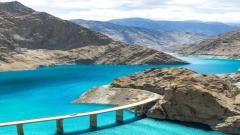
Dukezong Ancient Town, Shangri-La in Yunnan
Dukezong Ancient Town is one of China’s best preserved traditional Tibetan ancient towns, known as the “Moonlight City.” At the center of the town, Guishan Park features the world’s largest prayer wheel, which requires multiple people to turn together. The town’s stone streets and Tibetan style houses preserve a rich Tibetan way of life. Songzanlin Monastery is the largest Tibetan Buddhist monastery in Yunnan Province, built on a hillside. Best season: May to October.
Xijiang Qianhu Miao Village in Guizhou
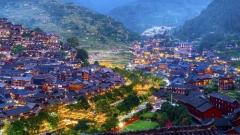
Xijiang Qianhu Miao Village is the largest Miao ethnic settlement in the world, with over a thousand stilt houses built in terraced layers up the mountainside. When the lights come on at night, the entire hillside twinkles like stars, creating a dreamlike scene. The village’s long table banquet is the highest form of Miao hospitality, and sour fish soup is a Miao specialty. Miao silver ornaments and embroidery are exquisitely crafted, and visitors can purchase handicrafts in the village. Best season: Spring or Autumn.
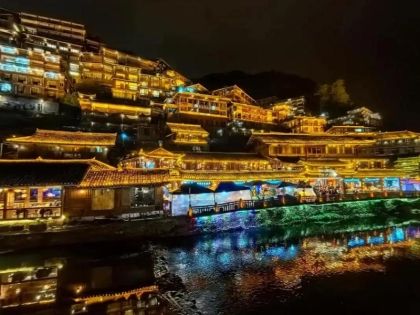
The illuminated Xijiang Qianhu Miao Village
Practical Tips for China Travel
Itinerary Arrangement
These 15 destinations are scattered across China, and you cannot cover all of them in one trip. It is recommended that you plan regionally based on season and transportation convenience. In the southwestern region, you can combine Jiuzhaigou, Zhangjiajie, Huangguoshu, Dujiangyan, and Shangri-La. In Tibet, you can combine Namtso Lake, Potala Palace, and Jokhang Temple. In Xinjiang, you can combine Kanas Lake and Kashgar Old City.
Best Time
Autumn (September to October) is the most beautiful season across most of China, when natural landscapes like Jiuzhaigou and Kanas are at their peak. Summer (July to August) is ideal for Qinghai Lake, Huangguoshu Waterfall, and the ancient towns of Guizhou. Winter is a good time to see the Potala Palace in Lhasa under snow, or to experience the rich atmosphere of Kashgar. Spring (April to May) offers pleasant temperatures for Dujiangyan and Wuhou Shrine.
Altitude Sickness
Namtso Lake has an elevation of 4,718 meters above sea level, the Potala Palace is at 3,700 meters, and Shangri-La is at 3,300 meters. When traveling to these high altitude destinations, be mindful of altitude sickness. Avoid strenuous exercise, carry portable oxygen canisters and common medications. It is recommended that you spend 1 to 2 days acclimating in Lhasa or Lijiang first. Staying hydrated and getting enough sleep can also help alleviate symptoms.
15 Most Beautiful Places in China: From the Snowy Plateaus to the Western Frontier
These 15 places span an immense range, from Namtso Lake in Tibet to Kanas Lake in Xinjiang, from the ancient city of Kashgar to the Miao village in Guizhou, covering China’s most extreme natural landscapes and richest cultural heritage. The waters of Jiuzhaigou, the peak forest of Zhangjiajie, the waterfalls of Huangguoshu, the rapeseed flower sea of Qinghai Lake are all stunning natural gifts. The solemnity of the Potala Palace, the wisdom of Dujiangyan, the Three Kingdoms history at Wuhou Shrine are all profound witnesses to Chinese civilization. The exotic Western Regions atmosphere of Kashgar, the hidden Tibetan wonderland of Shangri-La, the Miao culture of Xijiang are all vivid portrayals of China’s ethnic diversity. China is vast and worth exploring slowly over a lifetime. We hope this guide provides inspiration for your next journey.