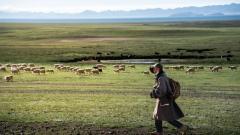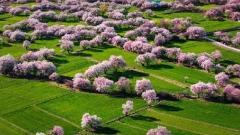

The Year of the Sheep holds special significance in Tibetan pilgrimage traditions, particularly for visiting sacred lakes. In 2027, the Tibetan calendar enters the Year of the Fire Sheep on February 7, making it an important year for the traditional pilgrimage around Namtso Lake. Known as one of Tibet’s most sacred lakes, Namtso attracts pilgrims who walk along its shores to pray for blessings and good fortune. This guide explains the cultural meaning of the Sheep Year pilgrimage, the Namtso Kora route, the best time to visit, and essential preparations for travelers.
Key Takeaways
- 2027 Fire Sheep Year: Begins on February 7, 2027, in the Tibetan calendar.
- Main Pilgrimage Destination: Namtso is the principal sacred lake associated with the Sheep Year pilgrimage.
- Special Tradition: Sheep Year is traditionally considered an especially auspicious time for circumambulating Namtso.
- Full Kora Distance: Approximately 280–300 km, depending on the route.
- High-Altitude Preparation: Namtso sits at around 4,718 meters, requiring careful acclimatization and planning.
What Is the Tibetan Year of the Sheep Lake Pilgrimage?
The Tibetan practice of kora refers to walking clockwise around a sacred site as an act of devotion. Pilgrims may circumambulate a lake, mountain, monastery, or other religious landmark while reciting prayers, making offerings, and wishing for good fortune. For Tibetan Buddhists, kora is not simply a physical journey but also a spiritual practice.
Traditional Tibetan pilgrimage customs associate certain zodiac years with particular sacred mountains and lakes. This is commonly expressed through the saying “Horse Year for mountain circumambulation and Sheep Year for lake circumambulation.” The Sheep Year pilgrimage is especially associated with Namtso, one of Tibet’s most revered lakes.
In 2027, the Tibetan calendar enters the Year of the Fire Sheep. Many Tibetan pilgrims may therefore choose to visit Namtso and walk around the lake as part of their religious practice. The tradition has been passed down through generations and remains an important part of Tibetan spiritual culture.
The pilgrimage is not limited to a single festival day. Pilgrims may arrange their journeys according to personal circumstances, religious traditions, and local conditions. The timing and scale of activities can vary from year to year.
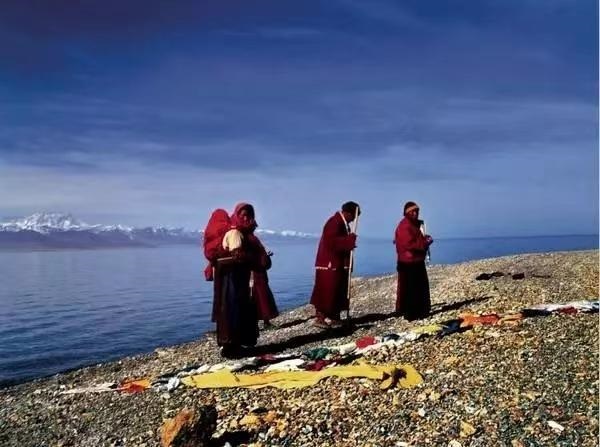
Namtso Lake
Why Visit Namtso During the 2027 Sheep Year?
Namtso, whose Tibetan name is often translated as “Heavenly Lake,” is one of Tibet’s three major sacred lakes. Located in the region of Damxung and Baingoin, north of Lhasa, it sits at approximately 4,718 meters above sea level. The lake is surrounded by the vast Tibetan Plateau, with the Nyenchen Tanglha mountain range forming a dramatic backdrop.
Namtso holds an important place in Tibetan religious beliefs. It is regarded not only as a remarkable natural landscape but also as a sacred place connected with local legends and pilgrimage traditions. During the Year of the Sheep, Tibetan pilgrims traditionally travel to Namtso to perform kora and pray for blessings.
The main difference between a Sheep Year pilgrimage and an ordinary sightseeing visit lies in the purpose of the journey. Pilgrims focus on religious devotion, prayer, and the spiritual experience of walking around the lake. Along the route, visitors may encounter prayer flags, mani stones, sacred sites, and people reciting Buddhist prayers.
For international travelers, 2027 offers an opportunity to learn more about this tradition while discovering the natural and cultural significance of Namtso.
How Long Is the Namtso Kora Route?
The complete Namtso Kora is a long-distance high-altitude journey. Estimates commonly place the full circuit at approximately 280–300 kilometers, although the actual distance depends on the route, lakeshore terrain, and accessible sections.
Because some parts of the route are remote and have limited facilities, completing the entire circuit requires considerable preparation. Travelers should not assume that accommodation, food, drinking water, or medical assistance will be readily available along the way.
Full Namtso Kora
The full pilgrimage generally follows a clockwise route around the lake. Along the way, pilgrims pass grasslands, mountain slopes, lakeside terrain, mani stone piles, and areas associated with local religious traditions.
The time required varies considerably. A full circuit may take approximately 8–20 days, depending on walking speed, daily distance, weather, physical condition, and arrangements for supplies and overnight stays.
Anyone planning the complete Kora should organize accommodation or camping equipment, food, drinking water, warm clothing, emergency communication, and a reliable route plan in advance. Support from people familiar with the local terrain can also be valuable.
Short Pilgrimage Walks Around Tashi Peninsula
Travelers who do not have enough time or physical capacity for the complete circuit can consider shorter walks around Tashi Peninsula, a well-known area on the southern side of Namtso.
The peninsula offers views of the lake, distinctive rock formations, prayer flags, and religious landmarks. Some pilgrims also walk around parts of the peninsula as a form of local circumambulation.
However, a short walk around Tashi Peninsula is not the same as completing the full Namtso Kora. Visitors should choose an activity that matches their available time, altitude experience, and physical condition rather than feeling obliged to complete a long-distance route.
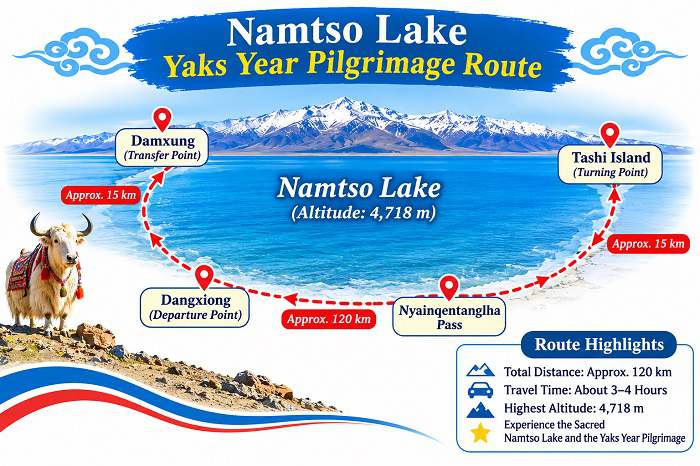
Namtso Lake Pilgrimage Route
When Is the Best Time for the 2027 Sheep Year Pilgrimage?
Namtso is located at a very high altitude, where winter temperatures can be severe. The lake may freeze, and snowfall can affect roads and walking conditions. For travelers considering a full Kora, the warmer months are generally more suitable, although weather conditions must still be assessed carefully.
June to September is generally a period worth considering for high-altitude trekking around Namtso. Temperatures are relatively more manageable, but summer weather can also bring rain, strong winds, and sudden changes in conditions. Always check local forecasts, road accessibility, and current route conditions before departure.
- April to May: Temperatures gradually rise, but some areas may still be cold or affected by snow. Travelers should confirm road and trail conditions before planning outdoor activities.
- June to July: Conditions are generally warmer, and the surrounding grasslands become greener. However, rain and thunderstorms may affect walking conditions, so flexible scheduling is important.
- August to September: These months can be suitable for high-altitude outdoor activities, although strong winds and changing weather remain possible. Prepare appropriate clothing and confirm supply arrangements before setting out.
- October: Temperatures begin to drop, and some sections may become icy. A full Kora requires more careful assessment of weather and route conditions.
- November to March: Winter conditions can be harsh, and parts of the lake may freeze. These months are generally unsuitable for ordinary travelers planning a complete walking circuit.
Although 2027 is a Sheep Year, this does not mean every month is equally suitable for pilgrimage. Travelers should prioritize safety, weather, and route accessibility rather than choosing a departure date based only on the zodiac year.
What Is the Difference Between the Sheep Year Kora and Ordinary Namtso Sightseeing?
Namtso is also one of Tibet’s best-known natural attractions. Many visitors travel from Lhasa to see the lake, enjoy the mountain scenery, and explore the Tashi Peninsula. A regular sightseeing trip usually takes one or two days.
The Sheep Year pilgrimage is different in both purpose and scale. Ordinary sightseeing focuses on landscapes and cultural attractions, while the traditional Kora is a religious journey involving long-distance walking and prayer.
A typical Namtso sightseeing visit may include a drive from Lhasa, time at the lakeshore, and a short walk around accessible areas. By contrast, a complete Kora involves walking around the lake over many days, with careful arrangements for food, water, accommodation, and emergency support.
Travelers who want to experience the cultural atmosphere of the Sheep Year do not necessarily need to complete the entire circuit. For most international visitors, a shorter visit to Namtso after sufficient acclimatization in Lhasa is a more manageable option.
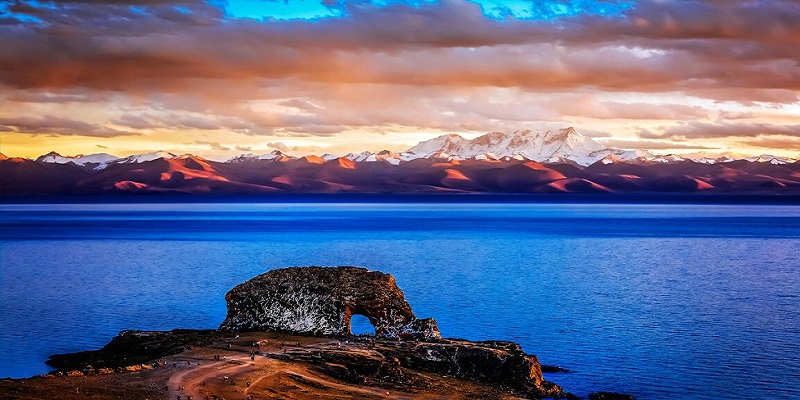
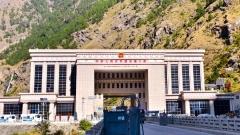
Namtso Holy Elephant Gate
Important Things to Know Before the Namtso Kora
Allow Enough Time for Altitude Acclimatization
Namtso is approximately 4,718 meters above sea level, significantly higher than Lhasa. Travelers arriving in Tibet for the first time should spend time acclimatizing in Lhasa before visiting the lake. Avoid starting a long-distance trek immediately after arriving on the plateau.
Symptoms such as persistent headaches, nausea, dizziness, or unusual breathlessness should be taken seriously. Stop physical activity and seek medical advice if symptoms develop. Severe symptoms require immediate descent to a lower altitude and urgent medical attention.
Prepare Suitable Trekking Equipment
A multi-day journey around Namtso requires appropriate outdoor equipment. Bring waterproof and windproof outerwear, warm layers, sturdy trekking shoes, gloves, a hat, sunglasses, and sunscreen. Temperatures can change quickly, so clothing should be suitable for both cold conditions and strong sunlight.
Plan Food and Water Supplies
Some sections around Namtso are remote, and shops or other facilities may be unavailable. Full-circuit trekkers should plan daily food and drinking water supplies, overnight arrangements, and waste disposal in advance. Do not drink untreated lake water or water from unknown natural sources.
Respect Local Religious Customs
The Namtso Kora is a pilgrimage with deep religious significance. Visitors should respect the direction in which pilgrims walk, avoid disturbing people who are praying, and follow local rules at religious sites.
Prayer flags, mani stones, and other religious objects should not be moved, damaged, or taken away. Always check whether photography is permitted before taking pictures of religious activities or local residents.
Confirm Transportation and Travel Permits
Namtso is a considerable distance from Lhasa, and access depends on road conditions, seasonal arrangements, and local management policies. Foreign travelers generally need to arrange their Tibet visit through an authorized travel agency and obtain the required Tibet Travel Permit. Additional permits may apply to certain restricted areas.
Confirm the latest requirements and access arrangements before departure. Do not assume that all routes or areas around the lake are open throughout the year.
How to Plan Your 2027 Namtso Sheep Year Trip
The best itinerary depends on your travel goals, available time, and experience at high altitude. There are several ways to include Namtso in a 2027 Tibet journey.
Cultural Sightseeing
Travelers interested mainly in Tibetan culture can begin with Lhasa, visiting landmarks such as the Potala Palace, Jokhang Temple, and Barkhor Street. After allowing time for acclimatization, they can travel to Namtso to appreciate the lake scenery and learn about the Sheep Year pilgrimage tradition.
This option is suitable for visitors with limited time who want to understand the cultural significance of the year without attempting a full Kora.
Short-Distance Walking
Visitors who want a more active experience can arrange short walks around Tashi Peninsula and nearby accessible areas. This provides an opportunity to see the lakeshore and learn about local pilgrimage customs while keeping the walking distance manageable.
The length and difficulty of any walk should be adjusted according to weather, altitude adaptation, and personal fitness.
Full Pilgrimage
Travelers intending to complete the full Namtso Kora should allow sufficient time and prepare a detailed plan covering the route, food, water, overnight stays, camping equipment, and emergency arrangements. This is a demanding high-altitude journey and is not recommended for people without adequate preparation or relevant trekking experience.

Plan Your 2027 Tibet Sheep Year Journey with China Dragon Travel
The 2027 Tibetan Year of the Fire Sheep is an important occasion for learning about the traditional pilgrimage around Namtso. Whether you want to visit the sacred lake, take a short walk around Tashi Peninsula, or consider a complete Kora, your itinerary should reflect your available time, physical condition, and the actual conditions on the plateau.
China Dragon Travel can assist international visitors with Tibet travel consultations, including transportation between Lhasa and Namtso, accommodation arrangements, sightseeing itineraries, and required travel documents. Travelers considering a full pilgrimage should make additional preparations and confirm route accessibility, supply conditions, and safety arrangements well in advance. A standard Namtso sightseeing tour should not be mistaken for a complete pilgrimage circuit.
The meaning of the Sheep Year Kora goes beyond the distance covered. It is an opportunity to understand Tibetan spiritual traditions and appreciate the cultural importance of sacred lakes. Visiting Namtso in 2027 can be both a memorable journey through the landscapes of northern Tibet and a meaningful introduction to one of the region’s enduring pilgrimage traditions.