When travelers begin planning a journey to the Himalayas, one of the most common questions they ask is whether it snows heavily on the plateau. The answer requires looking beyond simple yes or no responses, as the region’s vast elevation changes create wildly different microclimates. Winter transforms this high-altitude landscape into a stark, beautiful environment where snow plays a significant but highly localized role. Understanding how precipitation behaves across these mountains is essential for anyone preparing for a cold-weather expedition.
Key Takeaways
- Snow falls frequently but mostly in specific high-elevation zones rather than uniformly everywhere.
- Daytime temperatures in lower valleys can actually be surprisingly mild under intense sunlight.
- Major mountain passes often accumulate heavy drifts that can temporarily disrupt overland travel routes.
- The dry winter air means clear skies dominate, offering spectacular views of snow-capped peaks.
- Proper acclimatization and layered clothing are absolute necessities for safe winter exploration.
Does It Snow in Tibet During Winter?
To truly understand the winter climate of the Tibetan Plateau, you have to abandon the idea that it functions like a standard continental winter. Sitting at an average elevation exceeding 4,000 meters, the region experiences weather patterns dictated almost entirely by altitude, topography, and the rain shadow effect created by the Himalayas. When people ask if it snows here during the colder months, they are usually picturing relentless blizzards covering every inch of the landscape. The reality is far more nuanced.
The plateau acts as a massive thermal engine. During the day, even in the depths of winter, the thin atmosphere allows intense solar radiation to warm the ground rapidly. However, once the sun dips below the horizon, that heat escapes just as quickly, leading to drastic temperature drops. This extreme diurnal temperature variation is the defining characteristic of the local climate. Because the surrounding mountain ranges block moisture-laden monsoon winds from the Indian Ocean, the winter months are generally very dry. Precipitation is scarce compared to summer, meaning that while snow does occur, it is not a daily, overwhelming event in most populated areas.
Instead of constant snowfall, winter here is defined by biting winds, freezing nights, and brilliant, cloudless blue skies. The snow that does fall tends to stick around much longer than it would at sea level because the ambient temperatures rarely rise high enough to melt it completely, especially in shaded valleys or on north-facing slopes. Therefore, while total snowfall volume might be lower than in places known for heavy winters, the visual impact of the snow against the rugged terrain is profound and long-lasting.
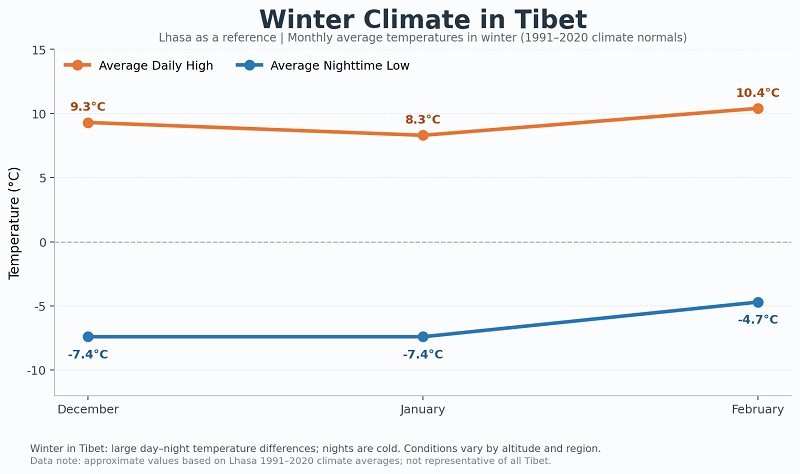
Tibet Winter Climate Chart
Regional Differences: Where Snow Falls Heaviest on the Plateau
The Tibetan Plateau is enormous, roughly the size of Western Europe, and its weather varies drastically from one region to another. Treating it as a single climatic zone is a mistake that leads to poor packing decisions and unrealistic expectations. The distribution of winter snow depends heavily on proximity to moisture sources and local elevation.
Lhasa and the Central Valleys
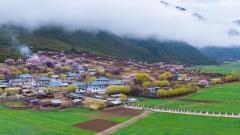
Lhasa, situated at around 3,650 meters in the Yarlung Tsangpo river valley, enjoys a relatively mild winter compared to the rest of the plateau. Does it snow in Lhasa during winter? Yes, but less frequently and less intensely than many assume. The city typically sees only a handful of significant snow days throughout the entire season. Because it sits in a valley protected by surrounding ridges, it escapes the worst of the high-altitude winds. Daytime temperatures in Lhasa often reach 8 to 12 degrees Celsius when the sun is out, making it feel quite comfortable. Any snow that falls in the city center usually melts within a day or two due to the strong solar heating, though the surrounding hills remain dusted white for weeks.
Mount Everest Base Camp and the Southern Himalayas
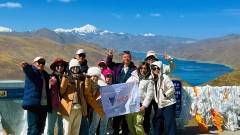
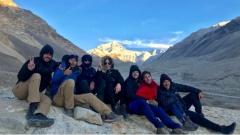
Moving south toward the Himalayan crest, the story changes dramatically. The regions bordering Nepal, including the route to Everest Base Camp (EBC) at 5,200 meters, experience much harsher conditions. Here, occasional moisture slipping through mountain gaps can result in heavier snowfall. The wind chill at EBC during winter is brutal, and snow accumulation is common. While the base camp itself might not be buried under meters of snow constantly, the access roads and high passes leading to it are frequently covered, making travel challenging. The peaks themselves, naturally, are perpetually cloaked in ice and snow, creating the iconic vistas that draw photographers worldwide.
Western Regions and Ngari Prefecture
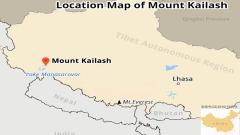
Western Tibet, particularly the Ngari Prefecture home to Mount Kailash, represents the most extreme winter environment on the plateau. Elevations here routinely exceed 4,500 meters, and the landscape is incredibly arid. Paradoxically, despite being a desert-like environment in terms of annual precipitation, the extreme cold means that whatever little moisture arrives falls as snow and stays frozen. Temperatures regularly plunge below -20 degrees Celsius. Snowstorms here are less frequent than in coastal climates but are far more dangerous when they occur, capable of isolating remote villages for days. Overland travel through Ngari in deep winter is generally discouraged unless part of a highly specialized, well-supported expedition.
Northern Changtang Grasslands
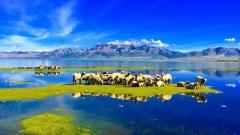
The northern plateau, known as the Changtang, is a vast, high-altitude steppe. Winter here brings fierce winds sweeping across flat, treeless expanses. Snowfall occurs, but the relentless wind often scours the ground, blowing the snow into massive drifts along fence lines, riverbanks, and rocky outcrops rather than leaving a uniform blanket. Nomadic herders in this region face severe challenges, as deep drifts can bury grazing grass, threatening livestock. The beauty of the Changtang in winter is austere and wild, characterized by endless horizons of yellow-brown grass contrasting with patches of driven snow.
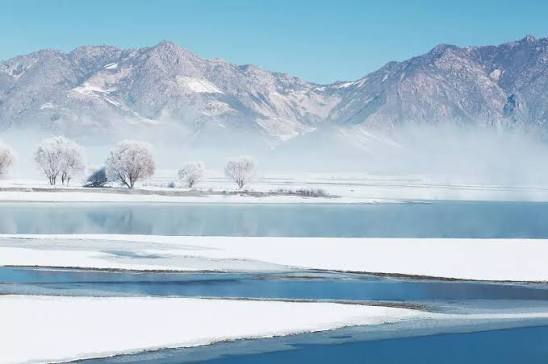
Tibet in Winter
Average Winter Temperatures and Weather Conditions
Understanding the numbers behind the cold helps travelers prepare mentally and physically. Winter generally spans from November through March, with December and January being the coldest months. However, “cold” is relative, and the difference between shade and direct sunlight is staggering.
In central hubs like Lhasa and Shigatse, daytime highs hover between 7°C and 12°C. If you are walking through Barkhor Street in the midday sun wearing a dark jacket, you might actually find yourself unzipping your coat. Yet, the moment you step into the shade of a building, or when the sun sets around 6:00 PM, the temperature plummets instantly. Nighttime lows in these cities drop to -5°C to -10°C. The air holds very little moisture, so it is a dry cold, which is somewhat easier to manage than humid cold, provided you have windproof layers.
At higher elevations, such as Namtso Lake (4,718 meters) or Everest Base Camp, the math changes entirely. Daytime highs struggle to break freezing, often sitting around -2°C to 2°C, while nighttime temperatures easily crash to -15°C or -25°C. Wind chill exacerbates these numbers significantly. A gentle breeze at 5,000 meters feels like a physical force pushing the cold through your clothing. Furthermore, the lack of humidity means static electricity is a constant companion, and skin dries out rapidly without aggressive moisturizing routines.
One of the greatest compensations for the freezing temperatures is the sky. Winter offers the clearest atmospheric conditions of the entire year. With the summer monsoon clouds gone, visibility stretches for hundreds of kilometers. The chance of seeing the summit of Mount Everest unobstructed by clouds is vastly higher in winter than in summer. The stars at night are piercingly bright, undimmed by atmospheric moisture or light pollution, making it a paradise for astrophotographers willing to brave the cold.
How Winter Snow Impacts Travel and Transportation
Snowfall on the plateau directly dictates the logistics of any journey. While major towns remain accessible, the arteries connecting them can become unpredictable. The primary concern is not necessarily the amount of snow falling, but the behavior of the snow after it lands. High winds sculpt the snow into hard-packed drifts that can block roads even if the overall snowfall was light.
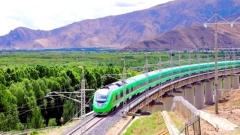
The Qinghai-Tibet Railway remains the most reliable way to enter the region during winter. The trains are specially engineered to handle extreme cold, permafrost variations, and high altitudes. Tracks are continuously monitored and cleared, meaning train schedules rarely suffer delays due to snow. For those flying into Lhasa Gonggar Airport, flights generally operate normally, though occasional heavy snowfalls or high crosswinds can cause temporary diversions or delays.
Overland travel is where winter snow makes its presence truly felt. The famous Friendship Highway connecting Lhasa to the Nepalese border crosses several high passes, including Gyatso La and Gawu La. These passes frequently accumulate snow and ice. Local road crews work diligently to clear them, but closures lasting 24 to 48 hours after a storm are not uncommon. Drivers must use tire chains, and only experienced local drivers familiar with the icy switchbacks should attempt these routes. Similarly, the road to Namtso Lake involves crossing the Nagenla Pass at nearly 5,200 meters, which can become impassable during heavy snow periods, sometimes restricting tourist access to the lake entirely until spring thaws begin.
Travelers must build flexibility into their itineraries. A rigid schedule that relies on crossing specific high passes on exact dates is a recipe for frustration during the winter months. Having backup plans, extra days built into the route, and a willingness to alter destinations based on real-time road conditions is crucial for a successful trip.
Essential Packing Guide for a Winter Journey
Packing for a winter trip to the Tibetan Plateau requires a strategic approach centered on the layering system. Cotton is virtually useless here; it retains moisture and loses all insulating properties when wet or sweaty. Everything you bring should be synthetic, wool, or down.
Your base layer must be high-quality merino wool or advanced synthetic thermal wear. This layer manages moisture, pulling sweat away from your skin before it can cool and freeze you. The mid-layer provides insulation. A thick fleece jacket or a lightweight down sweater works perfectly here. You may need multiple mid-layers depending on whether you are exploring the streets of Lhasa or standing at Everest Base Camp.
The outer shell is arguably the most critical piece of gear. It must be entirely windproof and waterproof. Even if it isn’t actively snowing, the wind on the plateau cuts through standard jackets effortlessly. A durable Gore-Tex or equivalent hard-shell jacket and pants will protect your insulating layers from being compressed by the wind. For extremities, insulated waterproof boots with aggressive tread are mandatory. Thick wool socks, a balaclava or neck gaiter to protect your lungs from the freezing air, and heavy-duty gloves complete the setup.
Do not forget non-clothing essentials. The winter sun at high altitude is deceptively powerful. UV radiation is significantly stronger than at sea level, reflecting off any snow on the ground. High-SPF sunscreen, lip balm with SPF, and category 4 glacier sunglasses are required to prevent severe sunburn and snow blindness. Additionally, portable hand and toe warmers can provide immense comfort during early morning temple visits or long drives.
Experiencing Tibetan Culture and Festivals in Winter
While summer draws crowds focused on trekking and landscapes, winter reveals the cultural heartbeat of the region. With the influx of tourists reduced to a trickle, the monasteries, temples, and streets belong primarily to the locals. Pilgrims from remote nomadic regions often travel to Lhasa during the winter months, having finished their autumn herding duties. Walking the Barkhor circuit in winter means walking shoulder-to-shoulder with devout pilgrims spinning prayer wheels, offering a deeply authentic spiritual atmosphere that is harder to find during the busy summer peak.
Winter also hosts some of the most significant cultural events. The Losar festival, marking the Tibetan New Year, usually falls in February or early March. Though exact dates shift according to the lunar calendar, the preparations and celebrations transform the region. Monasteries hold elaborate cham dances, homes are decorated, and the air smells of burning juniper incense used in purification rituals. Witnessing Losar provides an unparalleled window into local traditions, hospitality, and religious devotion.
Another unique winter phenomenon is the gathering of monks for intensive debate sessions. In courtyards like those at Sera Monastery, the sharp clapping of hands and rhythmic chanting of philosophical debates echo loudly in the crisp winter air. Without the noise of large tour groups, visitors can sit quietly on the periphery and observe these ancient educational practices in peace.
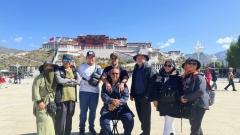
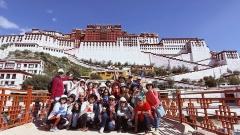
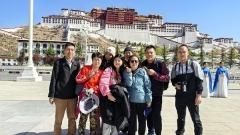
Photographers particularly favor the winter months. The low angle of the winter sun creates long shadows and bathes the golden roofs of the Potala Palace and Jokhang Temple in a rich, warm light for extended periods. The clarity of the air ensures that distant mountains appear razor-sharp in the background of urban portraits, providing depth and context to every image captured.
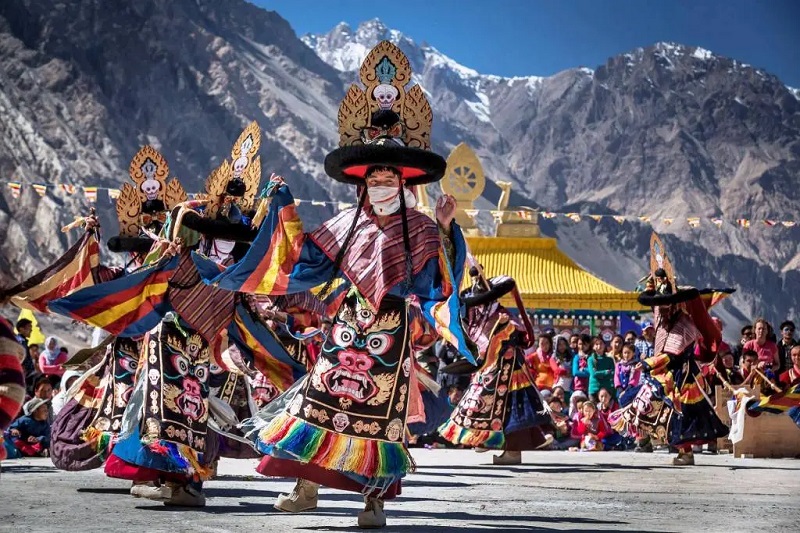
Losar (Tibetan New Year)
Health, Safety, and Altitude Considerations
Visiting the plateau in winter amplifies the already present risks associated with high altitude. The air pressure is lower, meaning each breath delivers less oxygen to your bloodstream. When combined with freezing temperatures, the body has to work significantly harder just to maintain core warmth, accelerating fatigue and increasing the risk of Acute Mountain Sickness (AMS).
Acclimatization cannot be rushed. Upon arrival, regardless of whether you land in Lhasa or take the train, plan for at least two to three days of minimal exertion. Do not attempt to climb stairs quickly, carry heavy luggage, or rush to high-altitude viewpoints immediately. Drink copious amounts of water. The dry winter air causes rapid dehydration, which mimics and worsens AMS symptoms like headaches, nausea, and dizziness.
Respiratory issues are more common in winter. Breathing in sub-zero, dry air can irritate the throat and lungs, triggering coughing fits. Wearing a buff or scarf over your mouth and nose when outdoors warms and humidifies the air before it enters your lungs, making breathing much more comfortable. Those with pre-existing cardiovascular or respiratory conditions must consult a physician before attempting a winter journey to these elevations.
Navigating these logistical, health, and environmental complexities is why many travelers choose to organize their journeys through experienced professionals. Agencies specializing in high-altitude travel, such as China Dragon Travel, provide invaluable support during the winter months. Their expertise ensures that vehicles are equipped with proper tires and emergency supplies, itineraries account for potential weather delays, and guides are trained to monitor guests for signs of altitude sickness. Relying on established operators like China Dragon Travel removes the guesswork from winter logistics, allowing visitors to focus entirely on the breathtaking scenery and rich cultural encounters rather than worrying about frozen fuel lines or closed mountain passes.
Frequently Asked Questions About Winter in Tibet
1. Is it safe to travel to Tibet during the winter months?
Yes, traveling during winter is generally safe provided you take necessary precautions regarding altitude acclimatization and cold weather preparation. Roads and flights operate, though occasional weather disruptions happen. Hiring experienced local guides and using reputable transportation is highly recommended to navigate icy conditions safely.
2. Does it snow in Lhasa frequently during winter?
Snow in Lhasa is relatively infrequent. The city might experience a few snow events during the entire winter season, and because of the intense daytime sunshine, snow in the city center usually melts quickly. However, the surrounding mountains will retain their snow cover throughout the season.
3. Are tourist sites like the Potala Palace open in winter?
Most major tourist attractions, including the Potala Palace and Jokhang Temple, remain open year-round. In fact, winter is an excellent time to visit these sites as there are significantly fewer tourists, shorter queues, and sometimes relaxed ticket policies, allowing for a more peaceful and immersive experience.
4. How cold does it get at Everest Base Camp in winter?
Everest Base Camp is extremely cold in winter. Daytime temperatures rarely rise above freezing, hovering around -2°C to 2°C, while nighttime temperatures frequently drop to -15°C or even -25°C. Combined with strong winds, the wind chill makes it feel much colder, requiring specialized extreme-weather gear.
5. Will altitude sickness be worse in winter compared to summer?
The oxygen levels remain consistently low year-round, but winter can make altitude sickness feel more taxing. The cold forces your body to expend more energy staying warm, which increases oxygen demand. Staying hydrated, resting adequately upon arrival, and avoiding strenuous activity during your first few days are critical steps to prevent illness.