
Travel Guide to Laigu Glacier
If you can only pick one most breathtaking natural landscape in Tibet in winter, many people will choose Laigu Glacier without hesitation.
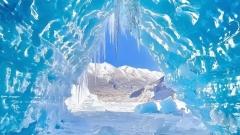
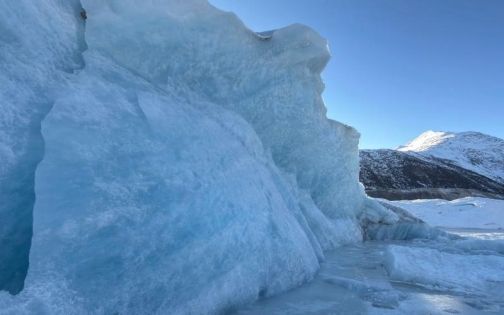
Stepping on the blue ice that has formed over tens of thousands of years, you are standing on crystal-clear ice layers. From time to time, you can hear the crisp sounds generated by the natural squeezing of the glacier. In front of your eyes is the magnificent scenery interwoven by snow-capped mountains, ice lakes and glaciers, as if you have truly stepped into the ice age in the movies.
However, in recent years, due to the continuous adjustment of glacier protection policies, the visiting methods of Laigu Glacier have changed a lot compared with the past. Many online travel guides have mixed information, and some are even stuck in several years ago. Therefore, you must learn about the latest gameplay before departure to avoid a wasted trip.
This article sorts out the latest Laigu Glacier travel guide, including the best travel seasons, differences between Route A and Route B, transportation methods, ticket information, whether you can step on the ice, photography skills, equipment suggestions and various pit-avoidance reminders. Even first-time visitors can understand it at a glance.
Laigu Glacier
Where is Laigu Glacier located?
Laigu Glacier is located near Laigu Village, Ranwu Town, Baxoi County, Qamdo, Tibet, only about 20 kilometers away from Ranwu Lake. It is one of the most popular natural attractions along National Highway 318 of the Sichuan-Tibet South Line.
The entire Laigu Glacier is not a single glacier, but a combination of Meixi Glacier, Yalong Glacier, Ruo Jiao Glacier, Dongga Glacier, Xiongjia Glacier and Niuma Glacier. Among them, Yalong Glacier is the largest in scale, and it is also one of the largest maritime glaciers in Asia.
Many people will arrange a visit to Ranwu Lake and Laigu Glacier on the same day, which is also one of the most classic itineraries along the 318 Sichuan-Tibet Line.
Best travel time for Laigu Glacier
Laigu Glacier presents completely different scenery in different seasons.
- December to February of the next year | The best blue ice season
If your goal is to see blue ice, ice caves, and even get the chance to get close to the glacier, winter is absolutely the best time.
At this time, the glacial erosion lake is completely frozen, and the blue ice has the highest transparency, showing a dreamy gem blue under sunlight. It is also the most anticipated season for photography enthusiasts.
It is also the time of the year when it is easiest to capture the “Ice Age” vibe.
However, the temperature in winter usually ranges from -17°C to -2°C, so you must prepare complete warm equipment. - March to May | Ice and snow begin to melt
Spring starts to warm up, part of the ice surface begins to melt, and the amount of blue ice gradually decreases.
You can still enjoy the glacier landscape at this time, but whether you can step on the ice depends on the on-site management regulations of the scenic spot on that day. - June to September | The most beautiful time for glaciers and Ranwu Lake in summer
Many people mistakenly think that summer is not worth visiting, but in fact, the landscape is just different.
You can’t see the dreamy blue ice of winter in summer, but Ranwu Lake along the way shows an emerald blue-green color. The snow-capped mountains, forests and meadows form another kind of plateau landscape, which is very suitable for self-driving travel along National Highway 318.
The only thing to note is that this is the rainy season in Tibet, and roads may occasionally be affected by rainfall. - October to November | The most beautiful autumn scenery
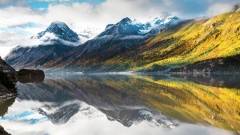
The weather is stable in autumn, the colorful forests along the road begin to change colors, and the visibility of snow-capped mountains is high, which is very suitable for photography.
If you arrange a tour that covers Nyingchi, Ranwu Lake, Bomi and Laigu Glacier, it is also a very popular autumn route.
Latest tickets and transportation methods
At present, the ticket for Laigu Glacier is about 150 RMB.
The scenic spot is mainly divided into two visiting routes.
- Route A (Laigu Ice Lake)
This is the location where most tourists go to the blue ice cave.
After arriving at the parking lot, you need to walk for about 15 minutes to reach the ice lake.
If you don’t want to walk, you can also ride a horse there, with a reference price of about 100 RMB.
If you have normal physical strength, the walk is not difficult, and most tourists can complete it easily. - Route B (Yalong Glacier)
Yalong Glacier is located further upstream.
At present, it requires local villagers to drive off-road vehicles to pick up and drop off tourists, with a reference price of about 200 RMB per person.
If you drive by yourself, you are also allowed to enter by paying a road management fee at some times. However, the roads along the way are almost all narrow mountain roads with sharp turns and cliffs. It is recommended that only people with four-wheel drive vehicles and mountain driving experience drive there by themselves.
Ordinary tourists are still recommended to take the villagers’ off-road vehicles for a safer and more worry-free experience.
It is worth noting that Yalong Glacier currently prohibits tourists from entering the ice surface, and you can only watch it from a close distance.
Can you step on the ice now?
This is also the question that everyone is most concerned about.
In recent years, due to global warming and glacier protection policies, Laigu Glacier has gradually restricted tourists from directly entering the ice surface.
The regulations may vary in different times, different seasons and different management methods.
In winter, when the ice layer is completely frozen, tourists may still be allowed to enter the designated area according to the on-site management situation; if the staff strengthen management, the ice surface may be completely closed to visitors.
Therefore, it is not recommended to rely entirely on online travel guides to confirm whether you can step on the blue ice now. You should refer to the official announcement of the scenic spot on that day and the arrangements of the on-site staff.
Even if you are allowed to step on the ice, please be sure to move only in the open area and do not go deep into the glacier on your own.
Ice cracks are often hidden under snow or transparent ice surface. They look flat on the outside, but are actually extremely dangerous.
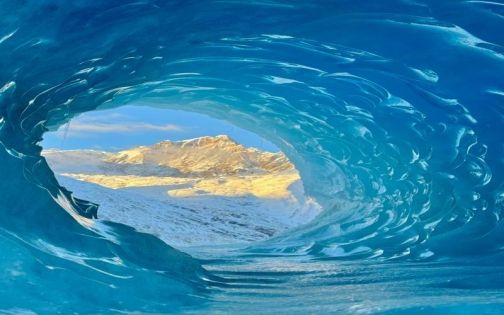
Laigu Glacier
Equipment list for stepping on the ice
If you travel there in winter, you must prepare the following equipment in advance.
- Crampons
The most important piece of equipment.
The ice surface is much more slippery than it looks in photos. You can hardly walk normally without crampons.
It is recommended to buy them in advance, as the scenic spot may not rent or sell them. - Warm clothing
It is recommended to adopt the three-layer dressing method: sweat-wicking inner layer, warm fleece layer, and windproof down jacket.
In addition, hats, scarves, cold-proof gloves and windproof trousers are all indispensable.
The wind is extremely strong in winter, and it is very cold even on sunny days. - Sunscreen products
Many people ignore the strong reflection on the plateau glacier.
Please prepare: SPF50+ sunscreen, sunglasses, sun hat.
Otherwise, you are prone to sunburn, and even face an increased risk of snow blindness. - Plateau emergency supplies
The altitude here is about 4200 meters.
You can prepare according to your physical condition: oxygen cylinder, warm water, high-calorie snacks, power bank.
In low-temperature environments, mobile phones drain power very quickly. It is recommended to store them close to your body to keep them warm.
Photography tips
There are hardly any bad angles for taking photos at Laigu Glacier in winter.
However, mastering the following skills will make it easier for you to take amazing photos.
- Outfit suggestions
Red, orange and yellow are the most recommended colors. The strong contrast between warm and cold colors makes you very eye-catching.
White clothing is also very suitable for snow scenes.
On the contrary, black and dark blue are easy to blend into the background and are not prominent enough. - Best shooting time
From 10 a.m. to 2 p.m.
The sunlight is at the best angle, and the transparency of the blue ice reaches its peak.
There are relatively fewer tourists in the afternoon, but the wind usually starts to pick up, making photography more difficult.
If you can arrange to arrive in the morning, the experience is usually better. - Recommended shooting spots
Shoot upwards at the entrance of the ice cave, which can create the feeling of stepping into another world.
Take a full-body photo in front of the transparent blue ice, which can best show the texture of the glacier.
If you bring a drone, under legal and safe flight conditions, you can overlook the magnificent scenery where ice lakes, snow-capped mountains and glaciers are intertwined. But please pay attention to the scenic spot regulations and flight restrictions.
Safety precautions
- Do not leave the open area. Ice cracks are often difficult to identify with the naked eye. Please move according to the warning signs or the instructions of the staff.
- Do not run or jump on the ice surface. Even if you are wearing crampons, you may lose your balance and slip.
- Bring your own drinking water and snacks. The supplies in the scenic spot are limited, so it is recommended to prepare in advance.
- Protect your camera and mobile phone. Do not stand near ice cracks when taking photos, and do not place your equipment on the edge of the ice surface.
- Take all your garbage away with you. The glacier ecosystem is extremely fragile. A cigarette butt or plastic garbage may cause long-term impact on the environment.
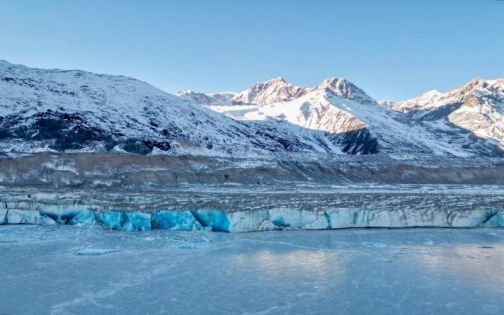
Laigu Glacier
Frequently Asked Questions
- Is Route A still worth visiting?
If there is blue ice in winter, Route A is still the choice for most tourists.
If stepping on the ice is completely prohibited, you can mainly enjoy the landscape of the ice lake and the glacier. - Is it worth paying extra for Route B?
It is highly recommended if you have enough time.
Yalong Glacier is much larger than the glacier along Route A, and you can feel the grandeur of the maritime glacier more deeply. Even if you can’t step on the ice, it is well worth a visit. - Is it still worth visiting in summer?
Yes, it is worth it.
Although there is no blue ice in summer, the completely different landscape formed by Ranwu Lake, snow-capped mountains, forests and Tibetan villages is also the most essence section along National Highway 318. -
Is Laigu Glacier worth visiting?
The answer is definitely yes.
In winter, it is Tibet’s most dreamy blue ice world; in summer, it shows the magnificent scenery where snow-capped mountains, forests and glaciers coexist.
More importantly, affected by global warming, the glaciers are retreating continuously. Many areas that used to be accessible at close range have now been closed to visitors. The local people often say: “The glacier is retreating every year. The scenery you see today may be something you will never see again in the future.”
Therefore, if your Tibet travel plan covers the 318 Sichuan-Tibet Line, Ranwu Lake or Qamdo area, it is recommended to include Laigu Glacier in your itinerary. Whether it is the dreamy blue ice in winter or the grand snow-capped mountains in summer, every visit will be the most unforgettable encounter with this precious natural heritage.
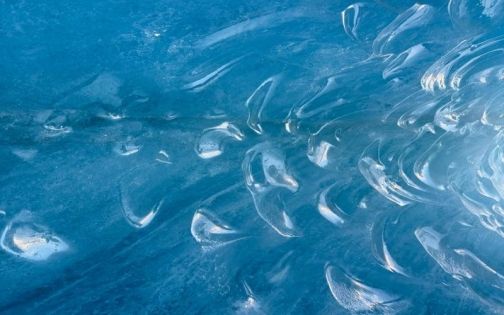
Laigu Glacier
Recommended itinerary: