
Planning a trip to Tibet, you first need to know the latest departure dates of China Dragon Travel’s Tibet group tours. Travelers to Tibet must arrange trips via a qualified agency, which handles the Tibet Travel Permit and provides a guide; independent travel is not allowed. With nearly 25 years of service in Tibet, China Dragon Travel is expert in permit applications and ensures smooth approval. Weather, road conditions and landscapes vary greatly by season, so schedules are adjusted accordingly. Choosing the right time helps control your budget and improve comfort. China Dragon Travel adjusts tours yearly by season, with monthly rules and features explained below for your reference.
Spring Departure Rules for Tibet Group Tours: Tours Gradually Increase during Peach Blossom Season
Spring is a period when the Tibet travel market gradually warms up. The number of spring Tibet group tours offered by China Dragon Travel increases significantly starting from March. In previous years, the approval of Tibet Travel Permits was suspended in March, but the current policy has returned to normal, and travel is available in March. China Dragon Travel Agency’s tour departure dates are the 5th, 10th, 15th, 20th, 25th, and 30th of each month. View Now
Key information for spring travel:
- Late March to April is the best time to view peach blossoms in Nyingchi. The pink and white flower sea contrasts with snow-capped mountains, creating a unique landscape. China Dragon Travel’s peach blossom-themed tours are popular every year during this period, and it is recommended to book 1 to 2 months in advance.
- Weather improves significantly in May, with snow and ice melting in most areas. The departure frequency of China Dragon Travel rises sharply, with multiple departure dates available every week.
- The temperature difference between day and night is large in spring in Tibet. It is warm during the day with sufficient sunshine, but drops rapidly after sunset. A thick windbreaker or down jacket is a must, and hats, scarves and sun protection items are also required.
Mid-to-Late March to April
Nyingchi peach blossoms are the main attraction. During this period, wild peach blossoms in Nyingchi are in full bloom. The pink flower sea and distant snow-capped mountains form the most representative landscape of Tibet in spring. China Dragon Travel launches special peach blossom tour schedules every year, covering major viewing spots such as Bomi Peach Blossom Valley and Suosong Village. Note that some high-altitude roads are still unstable in March, and individual mountain passes may be temporarily closed due to snow. Therefore, tours during this period mainly go to relatively low-altitude and well-connected areas such as Nyingchi, Lhasa and Shannan. Everest Base Camp is not open for tent camps during this period.
May
Weather improves and tour numbers increase significantly. In May, the weather in most parts of Tibet becomes stable. The temperature rises during the day, with little rainfall and abundant sunshine. Roads to sacred lakes such as Namtso Lake and Yamdrok Lake are in good condition, and the lakes present bright blue against the blue sky. China Dragon Travel has dense tour schedules in May, with multiple departure dates every week. The oxygen content in the air is significantly higher than in winter, making this month suitable for travelers worried about altitude sickness. The number of tourists is still low, providing a comfortable travel experience.Peach Blossoms in Tibet in Spring
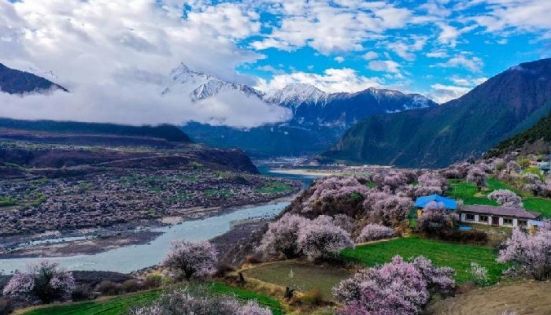
Peach blossoms in Tibet in spring
Summer Departure Frequency for Tibet Group Tours: Daily Departures in the Peak Travel Season
Summer is the most comfortable season in Tibet and also the busiest period for tourists. China Dragon Travel’s summer Tibet group tours have the densest departure schedules, with tours departing almost every day, but spots are still in short supply.
Important facts for summer travel:
- This is the peak travel season of the year, with the best weather conditions and the highest oxygen content. It is easier for first-time visitors to adapt to the altitude. China Dragon Travel flexibly adjusts the pace according to travelers’ physical conditions.
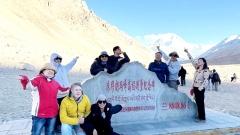
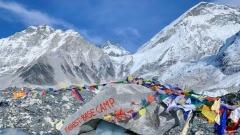
- All scenic spots are open, including Everest Base Camp and Ngari Prefecture. Summer is the only feasible choice for travelers planning to visit Everest or Ngari. China Dragon Travel has the highest departure frequency for these two routes in summer.
- July and August are the rainy season, but rainfall in Tibet mostly occurs at night or as short showers, with a high probability of clear skies during the day, which has limited impact on travel.
- Due to the large number of tourists, tickets for the Potala Palace need to be booked well in advance. Popular tours of China Dragon Travel are usually fully booked 1 to 2 months in advance, so early booking is recommended.
June
Pre-peak warm-up period. The number of tourists starts to increase in June but has not yet reached the crowded level of July and August. Grasslands turn green and wildflowers bloom, making the whole landscape of Tibet full of vitality. Visiting places such as Lulang Forest Sea and Basongcuo Lake at this time offers green views. The daytime temperature is about 20 degrees Celsius, making it comfortable. China Dragon Travel has stable tour schedules in June, with fixed departures every week and sufficient spots. The competent department of cultural tourism in Tibet, China recommends limiting daily activities to less than 6 hours and avoiding strenuous exercise to help prevent altitude sickness.
July to August
Peak travel season of the year. July and August are the peak of Tibet tourism. The weather is the best, the temperature is comfortable, and the oxygen concentration in the air reaches the highest level of the year, making it easiest for the body to adapt to the plateau environment. All scenic spots are fully open, including Everest Base Camp and Ngari Prefecture. This period is the first choice for travelers planning to visit Everest or Ngari. During the peak season, China Dragon Travel departs almost every day, but spots for popular tours are still tight, so it is recommended to book 1 to 2 months in advance.
Autumn Departure Features for Tibet Group Tours: Most Stable Weather and High-Quality Tours
Autumn is considered the season with the richest landscape colors in Tibet. Many photography enthusiasts and repeat visitors regard autumn as the most beautiful time in Tibet. During this period, the number of autumn Tibet group tours offered by China Dragon Travel is comparable to that in summer, but the travel experience is of higher quality.
Key points for autumn:
- The rainy season ends completely in September, with extremely stable weather and sunny days almost every day. The effect of viewing snow-capped mountains and starry skies is the best of the year. The official of Tibet Autonomous Region, China recommends April to October as the best tourist season.
- Grasslands and forests turn yellow, with rich color layers on the land, suitable for shooting snow-capped mountains and lakes. China Dragon Travel’s autumn photography tours are widely popular every year.
- There is a short off-peak period from mid-September to before National Day, with a significant decrease in tourists compared with the summer vacation, providing a comfortable travel experience.
- After mid-October, the autumn landscape gradually fades and the temperature drops significantly; in late October, tours to Ngari are suspended due to weather, and Namtso Lake may be closed due to heavy snow. Mid-October to early November is the most spectacular period for autumn scenery, with stable weather and a high probability of seeing the golden sun on snow-capped mountains. Travel costs are lower than in the peak season.
- National Day is a travel peak, with tour fees rising and scenic spots crowded. China Dragon Travel recommends avoiding departure during this period.
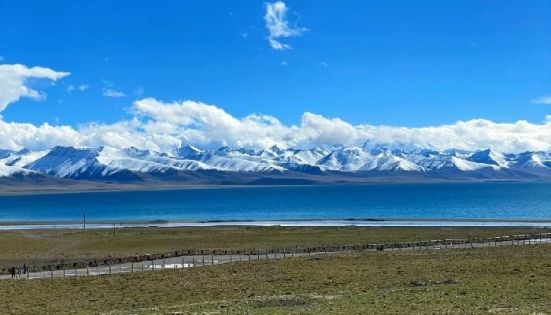
Namtso Lake in Tibet in Autumn
Winter Departure Dates for Tibet Group Tours: Off-Season Price Discounts and Limited Tours
Fewer travelers visit Tibet in winter, but winter in Tibet has unique travel value. During this period, the number of winter Tibet group tours offered by China Dragon Travel decreases greatly, and not all routes are available.
Winter departure rules:
In the off-season, the number of tourists is scarce, and most tours stop departing or do not depart daily. Tours to Namtso Lake are basically suspended; tours to Nyingchi and Xigaze usually depart every other day; tours to Everest require a certain number of travelers to depart. Remote high-altitude areas suspend tours due to heavy snow closing roads. The most effective way to find a suitable tour in winter is to contact China Dragon Travel directly to confirm the current departure status.
Winter accessible areas:
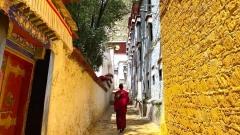
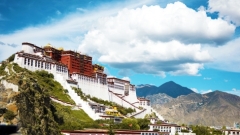
Lhasa is known as the “City of Sunshine”. In winter, it has sufficient sunshine during the day, with temperatures reaching 10 to 15 degrees Celsius, and it is not cold. There are very few tourists, so there is no need to queue for a long time at the Potala Palace, and there are few tourists in front of the Jokhang Temple. Travel costs are the lowest of the year, with obvious advantages in airfare, accommodation and charter prices. You can experience Tibetan culture at a low cost. It is cost-effective for travelers on a budget who want to visit in depth.
Notes:
High-altitude areas such as Namtso Lake, Everest Base Camp and Ngari are closed due to heavy snow in winter, and group tours cannot go there. Winter travel mainly focuses on temples and cultural landscapes in and around Lhasa.
Indispensable Information before Checking Tibet Group Tour Departure Dates
No matter which season you choose to depart, the following matters must be understood before traveling to Tibet. China Dragon Travel has rich experience in this regard, and the following information is available for you to prepare in advance.
Application Method and Time Required for Tibet Travel Permit
Travelers to Tibet must apply for the Tibet Travel Permit in advance. They cannot apply on their own and can only do so through a qualified local travel agency in Tibet. Travelers need to provide a scanned copy of their passport home page and Chinese visa. China Dragon Travel will assist in submitting the application for approval. The whole process usually takes several working days for review and issuance. However, considering that flights and hotels need to be booked in advance, it is recommended to contact China Dragon Travel as early as possible to start the application. Recent policy adjustments: whether traveling to Tibet by train or plane, you must hold the original Tibet Travel Permit to board the transportation to Tibet. In previous years, a copy could be used for train travel, but the current policy has changed, so please pay attention.
Transportation Options to Tibet
Travelers cannot fly directly to Lhasa or Nyingchi. They must first fly to major cities in Chinese mainland, obtain the Tibet Travel Permit, and then transfer by plane or train to Tibet. China Dragon Travel provides free ticket booking service for flights and trains.
By plane
The most commonly used transit cities include Chengdu, Beijing, Shanghai, Guangzhou, Xi’an and Chongqing. Chengdu has the most and most stable flights to Lhasa, making it the first choice for most travelers.
By train
The Qinghai-Tibet Railway runs from Xining to Lhasa, taking about 19 to 22 hours. It passes through scenic spots such as Qinghai Lake, Hoh Xil and Tanggula Mountains, offering unique scenery. The train is equipped with an oxygen supply system throughout the journey, climbing gradually from Xining to the plateau. The incidence of altitude sickness is significantly lower than traveling by plane. Train tickets are in short supply during the peak season, so it is recommended to book through China Dragon Travel in advance.
Altitude Sickness Prevention Measures
Altitude sickness is a concern for many travelers, but it can be effectively dealt with through full preparation. When receiving travelers, China Dragon Travel communicates in detail in advance and recommends entering via Nyingchi to reduce the risk of altitude sickness according to their physical conditions. Practical prevention methods are as follows:
- Rest well for a few days before departure and avoid staying up late. You can take auxiliary medicines such as Rhodiola rosea properly one week before entering Tibet, or consult a doctor about preparing medicines such as Diamox to prevent altitude sickness.
- Slow down your pace of life in the first 2 to 3 days after arriving in Lhasa, move slowly and speak slowly to let your body adapt gradually. China Dragon Travel controls the intensity of daily activities in the itinerary, avoiding high-intensity activities on the first day.
- Try not to take a bath within the first 3 days after entering Tibet to prevent excessive oxygen consumption and worsening altitude sickness. Increase water intake, eat 70% to 80% full per meal, and reduce greasy food intake. These measures help the body adapt to the plateau environment.
- If you have mild discomfort such as headache and chest tightness, you can take oxygen or painkillers to relieve it. Symptoms usually subside gradually after 3 to 5 days. All tour guides of China Dragon Travel have received professional plateau first aid training. You can inform the guide immediately for help if you feel unwell.
Equipment Preparation
The temperature difference between day and night in Tibet is large, and ultraviolet radiation is strong. No matter which season you visit Tibet, you need to prepare warm clothes, sunscreen, sunglasses and hats. You must bring a down jacket and cold-proof hat when going to areas above 4,000 meters above sea level. China Dragon Travel provides a detailed packing list before departure.
Cultural Etiquette Notes
Please respect the local ethnic customs and religious beliefs in Tibet, China. Do not point directly at Buddha statues or temples with your fingers, and do not take photos of local people and pilgrims without permission. Tour guides of China Dragon Travel explain local cultural customs throughout the journey. Just follow the guide’s instructions.
Choose the Right Season according to Group Tour Departure Dates
For peach blossoms and spring landscapes
Choose late March to April. Tibet Travel Permit approval has returned to normal in March, and travel is available. China Dragon Travel launches special tours during the peach blossom season every year, and it is recommended to book two months in advance.
For comfortable climate, grasslands and all open scenic spots
Choose July to August. You need to book early enough and prepare for more tourists and queuing. China Dragon Travel departs almost every day in the peak season.
For the clearest blue sky and golden autumn landscapes
Choose September to October. The weather is the most stable, but some high-altitude routes stop departing after late October. China Dragon Travel’s autumn photography tours are popular.
For cost savings, cultural experience and quietness
Choose November to February of the following year. You need to accept that many routes are not available and you can only visit areas around Lhasa. China Dragon Travel has limited winter tours, so it is recommended to consult in advance.
For balance, avoiding crowds and good weather
Early May to early June is a good choice. China Dragon Travel has stable tours during this period, and prices are more affordable than in the peak season.
China Dragon Travel provides one-stop service from Tibet Travel Permit application to full reception, with its own fleet, tour guides and sales team, and has operated in Tibet, China for nearly 25 years. No matter when you plan to depart, you can get the latest and most accurate departure dates for Tibet group tours by contacting China Dragon Travel. China Dragon Travel recommends the most suitable tour according to your time, budget and physical condition, and takes full responsibility from Tibet Travel Permit application to itinerary arrangement. Travelers only need to depart with peace of mind.
How to Choose the Most Suitable Tibet Group Tour Departure Date
Every season in Tibet has unique travel value. There is no absolute “best”departure time, only the most suitable one for your personal situation. Spring is suitable for viewing the scenery of peach blossoms contrasting with snow-capped mountains; summer is suitable for escaping the heat and experiencing all open scenic spots; autumn is suitable for photography and looking at the transparent snow-capped mountains; winter is ideal for budget travelers who prefer quietness. After understanding the rules of the latest departure dates for Tibet group tours, travelers can make a choice based on their holiday arrangements, budget range and landscape preferences. If you want to see Nyingchi peach blossoms, late March to April is the best window; if you plan to visit Everest Base Camp or Ngari Prefecture, summer is an irreplaceable choice; if you pursue cost performance and few crowds, winter is an ideal time. No matter which season you choose to depart, it is recommended to contact China Dragon Travel in advance to confirm the specific tour schedule and allow enough time to handle the Tibet Travel Permit and related transportation tickets. Proper planning of the departure time will make your Tibet trip smooth and unforgettable.