A trek to Everest Base Camp in Tibet offers a very different experience from the familiar multi-day walk in Nepal. On the Tibetan side, most visitors travel by vehicle across the plateau and take short walks near Rongbuk, where the north face of Everest rises beyond an immense, high-altitude landscape.
Key Points
- The Tibet-side Everest Base Camp is reached by road, not by a multi-day hiking trail. The classic trek is on Nepal’s side of Everest.
- Tibet’s north-side base camp is near Rongbuk Monastery, in a high-altitude landscape with striking views of Everest on clear days.
- Foreign travelers generally need to arrange a Tibet visit through an authorized travel agency, with the required permits and transport organized in advance.
- Altitude is the main challenge: the base camp area is roughly 5,000 meters above sea level, so acclimatization and a flexible itinerary matter.
- Weather, access rules, and visibility can change. Confirm current arrangements before setting out, and never treat a summit view as guaranteed.
What “Trek To Everest Base Camp In Tibet” Really Means?
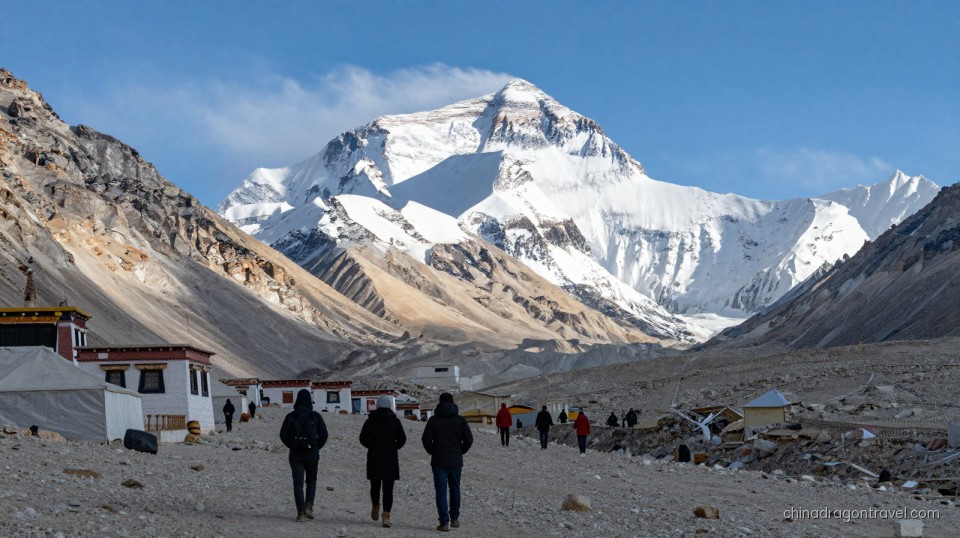
The phrase “Trek to Everest Base Camp in Tibet” can be misleading if you picture a long trail from village to village. The standard tourist visit to the north-side Everest Base Camp, also called the Tibet-side or northern base camp, is normally part of a road itinerary. Travelers drive from towns such as Shigatse or Tingri toward the Everest region, then continue to the permitted visitor area near Rongbuk Monastery. The final approach may involve a short walk or local shuttle, depending on the arrangements in effect.
That distinction is important for planning. Nepal’s south-side base camp is reached by a well-known trekking route that takes many days on foot. Tibet’s north-side visit is generally shorter on walking and more dependent on permits, vehicle access, road conditions, and altitude management. Some independent mountaineering expeditions use routes and camps that are not part of a regular visitor itinerary; a tourist visit does not mean entering an expedition’s working base camp.
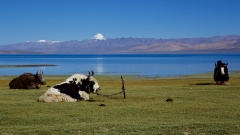
The destination is compelling for reasons beyond distance. The north face presents a different profile from the southern approach, and Rongbuk Monastery gives the journey a cultural dimension as well as a mountain setting. The landscape is broad and exposed, with sparse vegetation, high passes, and a strong sense of scale. On a clear day, Everest can dominate the view; cloud, wind, or haze may obscure it without warning.
Summiting Everest – A Challenge of Perseverance and Courage
Where The North-Side Base Camp Is?
Everest, known in Tibet as Qomolangma, lies on the border between Tibet and Nepal. The north-side visitor area is in Tingri County, within the Tibet Autonomous Region of China, close to Rongbuk Monastery. At roughly 5,000 meters above sea level, it is among the highest places most travelers will visit on a standard road trip.
The base camp area and visitor access arrangements have changed over time. Vehicles may be required to stop at a designated point, with visitors continuing by shuttle or on foot. Exact access rules can vary, so use the instructions provided by your operator and local authorities rather than relying on an old itinerary or an online account from a previous season.
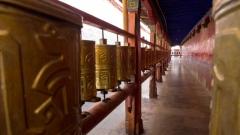
Rongbuk Monastery, often described as one of the world’s highest monasteries, is a notable stop near the mountain. It is a functioning religious site, not merely a viewpoint. Dress modestly, follow any photography restrictions, and be considerate of worshippers and residents. The surrounding valley is fragile; keep to designated areas and take all rubbish with you.
Planning Permits And Travel Arrangements
Travel requirements for foreign visitors to Tibet are not the same as those for ordinary domestic travel in mainland China. Foreign travelers generally need to arrange their visit through an authorized travel agency and obtain the documents required for their specific itinerary. Depending on nationality, route, and current policy, these may include a Tibet Travel Permit and additional permits for travel in areas outside Lhasa. Requirements can change, so confirm them with a qualified operator before booking flights or trains.
An Everest-region itinerary usually involves a licensed guide and arranged transport. Travelers should provide accurate passport details well ahead of departure and allow enough time for document processing. Do not assume that a valid Chinese visa, where applicable, automatically grants permission to travel to Tibet or to restricted border areas.
China Dragon Travel can help travelers plan a Tibet itinerary that includes the north-side Everest region, coordinate transport and guiding, and explain the documents required for the route. Before committing, ask for a written itinerary that clarifies what is included, how the journey handles altitude, where overnight stops are planned, and what happens if road access or weather disrupts the schedule. Confirm cancellation terms and the process for any permit-related changes.
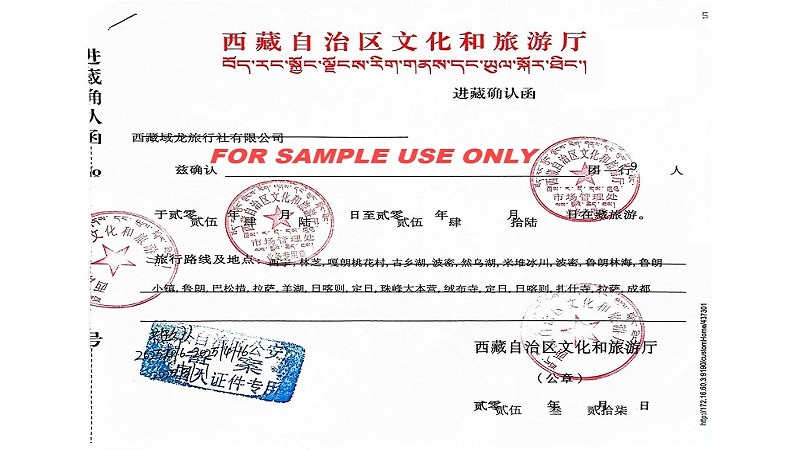
China Dragon Travel – Tibet Travel Permit
Choosing A Route And Allowing Enough Time
A common approach is to begin in Lhasa, spend several days traveling west through central Tibet, and continue via Shigatse and Tingri toward Rongbuk. The route is as much a plateau journey as a mountain visit. Along the way, travelers may pass monasteries, lakes, farming settlements, and high mountain passes. The exact stops depend on road conditions, the itinerary, and the time available.
A direct drive from Lhasa to the Everest area can be demanding, especially for visitors arriving from sea level. It is better to build acclimatization into the trip than to treat the drive as a race. Many itineraries include nights in Lhasa and further stops at progressively higher elevations before reaching the Everest region. The correct pace varies from person to person, and spending extra time at altitude does not eliminate the risk of acute mountain sickness.
A multi-day schedule is more practical than a rushed overnight excursion. It leaves room to adapt to symptoms, allows for rest, and gives you more than one possible window for viewing Everest. Ask how many nights will be spent at each elevation and whether the itinerary can change if someone feels unwell. A responsible operator should take altitude concerns seriously rather than promise that every traveler can complete the route on a fixed timetable.
Altitude And Acclimatization
Altitude is the most important physical consideration on a trek to Everest Base Camp in Tibet. The air contains less available oxygen at high elevation, and symptoms can occur even in people who are fit and have no known health conditions. A comfortable pace at lower elevations does not predict how your body will respond near 5,000 meters.
Common early symptoms of acute mountain sickness include headache, nausea, dizziness, fatigue, poor appetite, and disrupted sleep. Mild symptoms should not be ignored or hidden from your guide. If symptoms worsen, particularly if a person becomes confused, unusually unsteady, breathless at rest, or unable to care for themselves, they need urgent medical attention and descent. Severe altitude illness can be life-threatening.
Plan a gradual ascent where possible, walk slowly, drink according to thirst, eat regularly, and avoid alcohol during acclimatization. Medication may help some travelers, but it is not a substitute for a sensible itinerary or descent when required. Discuss altitude exposure with a medical professional before travel, especially if you have heart or lung conditions, are pregnant, or have previously experienced altitude illness. Travel insurance should cover high-altitude travel and emergency evacuation under the policy’s actual terms.
Best Time To Visit And Mountain Conditions
The most suitable travel period depends on road access, temperature, wind, and visibility, not just the calendar. Spring and autumn are commonly considered for Tibet travel because conditions can be comparatively favorable, but mountain weather remains unpredictable. A clear morning can turn cloudy, and strong winds or cold temperatures can make the exposed base camp area feel much harsher than expected.
Summer can bring a greater chance of cloud and rain in parts of the region, while winter travel may involve severe cold and logistical limitations. These are broad seasonal patterns rather than guarantees. Local conditions vary from year to year, and the timing of permits or road arrangements may also affect when a trip is practical. Ask your operator for current guidance close to your departure date.
If seeing Everest is a priority, schedule enough time to allow for more than one viewing opportunity. Even then, no operator can promise an unobstructed panorama. Early light may offer appealing photography conditions, but the best moment depends on clouds, wind, and where access is permitted that day. Bring patience along with your camera.
What To Pack For The Journey
Pack for cold, wind, strong sun, and rapid changes in conditions. Layering is more useful than relying on one heavy coat: a moisture-wicking base layer, warm mid-layer, and windproof, insulated outer layer can be adjusted as the temperature changes. A hat, gloves, warm socks, and sturdy shoes are practical even if your walking distance is short.
At high altitude, ultraviolet exposure is intense. Bring sunscreen, sunglasses with strong UV protection, and lip balm. A reusable water bottle, personal medication, basic first-aid supplies, and snacks can also be useful during long drives. Keep essential items in your day bag rather than in luggage that may be inaccessible during a road transfer.
The journey may involve long hours in a vehicle and basic facilities outside major towns. Carry small amounts of cash for incidental expenses, but check in advance what payment methods are accepted. A power bank can help when charging opportunities are limited. Pack lightly enough for vehicle transfers and follow your operator’s advice about luggage limits.
Photography And Responsible Travel
The plateau invites wide landscape photographs, but thin air and cold weather can affect both concentration and equipment. Keep batteries warm, bring a lens cloth, and protect cameras from dust and sudden temperature changes. Give yourself time to enjoy the view without framing every moment through a screen. If clouds cover Everest, the monastery, valley, and changing light still offer plenty to notice.
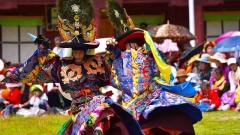
Ask before photographing people, religious ceremonies, or monastery interiors. Follow posted rules and your guide’s advice, and avoid blocking paths or intruding on private spaces. Do not touch religious objects unless invited, and keep noise low at sacred sites. Small gestures of respect make a difference in communities that receive visitors from around the world.
Travel responsibly by staying on established routes, avoiding single-use plastics where practical, and carrying your waste until you reach an appropriate disposal point. The high-altitude environment is sensitive, and waste can be difficult to manage in remote locations. Choose an operator that treats local staff fairly, respects religious sites, and has a clear plan for emergencies.
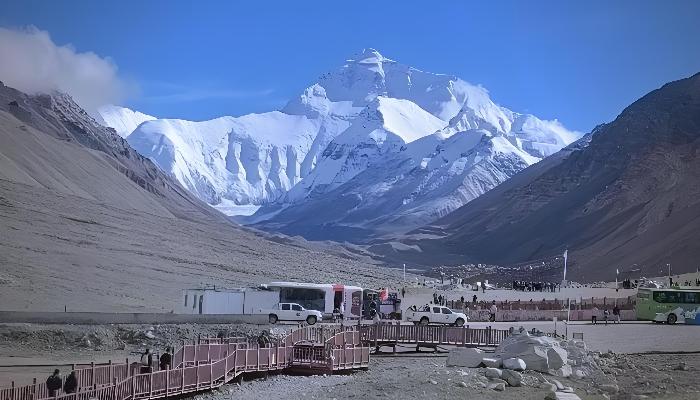
Panoramic view of Everest Base Camp
Common Misunderstandings About The Tibet Visit
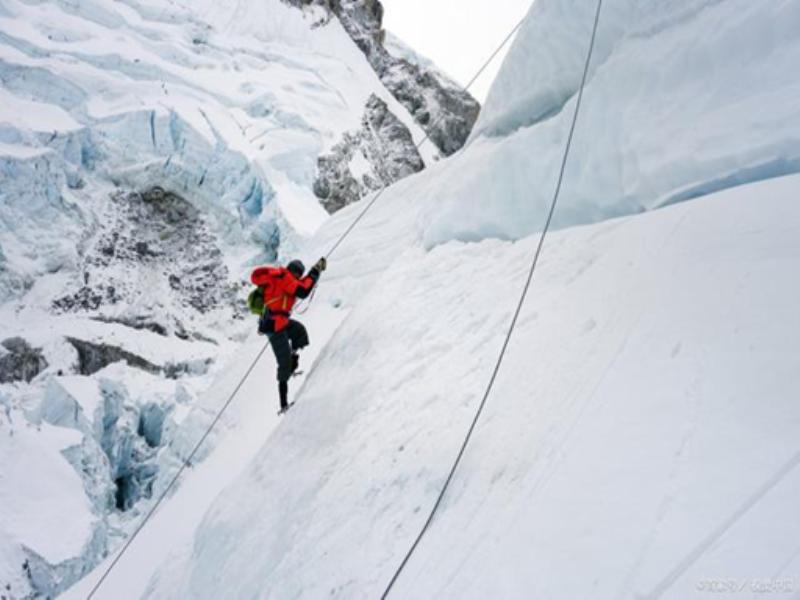
The first misconception is that reaching the north-side base camp requires a long trek. Most standard tourist itineraries reach the visitor area by road, with only limited walking. The second is that a visit to the north-side camp includes climbing Everest. It does not: mountaineering expeditions have separate requirements, logistics, and risks.
Another misconception is that the summit will always be visible. Everest’s appearance depends on weather and visibility, and the mountain may be hidden during a visit. Finally, some travelers assume that being physically fit prevents altitude sickness. Fitness is valuable for general health, but it does not guarantee a particular response to high elevation. Plan with flexibility and make health the priority.
Frequently Asked Questions
Is the Tibet-side Everest Base Camp a trekking route?
Not in the same sense as Nepal’s multi-day Everest Base Camp trek. Most visitors travel to the north-side area by road and complete only a short walk or shuttle-assisted approach, depending on current access rules.
How high is the north-side base camp visitor area?
It is roughly 5,000 meters above sea level. Exact elevations quoted for the visitor area can vary slightly by location and current access arrangements, so use your itinerary’s local guidance.
Do foreign travelers need a permit to visit Everest in Tibet?
Foreign travelers generally need to arrange Tibet travel through an authorized agency and obtain the permits required for their route. Requirements can change; confirm them before booking and carry the documents specified by your operator.
How many days should I allow for the trip?
Allow several days for the journey from Lhasa, including time to acclimatize and stop at intermediate elevations. The right itinerary depends on your starting point, health, and operator’s route; avoid plans that rush directly to the highest stop.
Can I be sure of seeing Mount Everest?
No. Clouds, wind, haze, and other weather conditions can hide the mountain. A flexible schedule may improve your chances, but a clear view cannot be guaranteed.