Everest is not a single, easy-to-reach viewpoint: the best place to see it depends on your route, fitness, season, and whether you travel from Nepal or Tibet. Some lookouts bring you close to the summit; others reveal the mountain from a broad Himalayan panorama.
Key Takeaways
- Best close-up view: Kala Patthar offers one of the most celebrated perspectives of Everest from Nepal.
- Best trek-side landmark: Everest Base Camp puts you among the expedition landscape, though the summit is not always visible from the camp itself.
- Best road-accessible panorama: Tibet’s Gawula Pass is known for a wide view across several Himalayan peaks.
- Best planning tip: Choose a viewpoint based on altitude tolerance and route logistics, not photographs alone.
- Best viewing season: Clear autumn and spring mornings often offer favorable visibility, but mountain weather is never guaranteed.
What Makes a Great Everest Viewpoint?
Mount Everest, known as Sagarmatha in Nepal and Qomolangma in Tibet, rises to 8,848.86 meters above sea level. Seeing it well is a matter of geography as much as elevation. A viewpoint may be physically close to the mountain yet offer a blocked or limited angle, while a more distant ridge can provide a dramatic, unobstructed panorama.
Before choosing among the best vantage points for viewing Mount Everest, consider four practical factors: how much of the mountain is visible, how difficult the approach is, how high you will sleep, and whether your itinerary allows time for weather delays. The highest or closest spot is not automatically the best choice for every traveler.
Visibility also changes through the day. Early morning is often favored because clouds may build later, and low-angle light can bring out the mountain’s ridges. Conditions vary, however; wind, cloud, snow, and seasonal weather can obscure the summit at any hour. Build flexibility into your plans rather than expecting a guaranteed clear view.

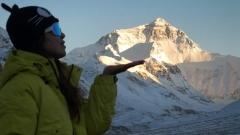
Mount Everest Tourists
Best Vantage Points for Viewing Mount Everest in Nepal
Nepal’s classic Everest viewpoints lie within the Khumbu region. Reaching them usually means trekking at high altitude, with flights or road transfers to the trailhead and several days of walking. The reward is a gradual approach through Sherpa settlements, valleys, glaciers, and neighboring peaks—not just a view of Everest itself.
Kala Patthar: The Classic Close-Up View
Kala Patthar, a rocky high point above Gorak Shep, is among the most famous places to see Everest from Nepal. At roughly 5,545 meters, it provides a striking view of the summit and the surrounding Khumbu landscape. The climb is steep and exposed to altitude, and many trekkers start before dawn to reach the ridge around sunrise.
The perspective is memorable, but the ascent should not be treated as a casual photo stop. The thin air makes even a short climb demanding. Walk slowly, follow your guide’s advice, and turn back if you develop concerning symptoms. A clear morning is a possibility, not a promise; cloud can cover the mountain, and cold or wind may make waiting uncomfortable.
Kala Patthar is commonly approached from Gorak Shep on the Everest Base Camp trekking route. Most itineraries include acclimatization days, but a planned schedule does not eliminate altitude risk. Travelers should choose a reputable operator, keep their pace conservative, and avoid ascending when unwell.
Everest Base Camp: Close to the Expedition Landscape
Nepal’s Everest Base Camp sits on the Khumbu Glacier at approximately 5,364 meters during the main climbing season. It is a landmark destination for trekkers and a base for mountaineering expeditions. The camp’s tents, glacier, and surrounding peaks create an unmistakable high-Himalayan setting.
It is important to set expectations: Everest’s summit is not necessarily visible from the base camp itself. Nearby terrain and the shape of the valley can restrict the angle. Many visitors pair the camp with Kala Patthar, which offers a more direct view of the summit. Base Camp is best appreciated for its expedition atmosphere and glacier environment, rather than as the single definitive Everest lookout.
The camp is seasonal and changes with expedition activity and glacier conditions. Trekkers should follow local guidance, respect restricted areas, and avoid disturbing climbers or camp operations. The walk from Gorak Shep can be strenuous underfoot, so sturdy footwear and a steady pace matter.
Gokyo Ri: A Broad Himalayan Panorama
For travelers who want a sweeping mountain scene, Gokyo Ri is a compelling alternative. This viewpoint rises above the turquoise Gokyo Lakes and looks across a broad section of the Khumbu Himalaya. Everest is part of the panorama, alongside other major peaks, making the view feel expansive rather than narrowly focused on one summit.
The Gokyo route is a demanding high-altitude trek, and reaching the viewpoint involves a steep climb from the village. It is often included in longer itineraries that cross the Cho La Pass or connect with the Everest Base Camp trail. These routes require careful acclimatization, suitable equipment, and an itinerary that can adapt to weather and trail conditions.
Gokyo Ri suits trekkers who value a varied landscape of lakes, glaciers, and multiple peaks. It is not a shortcut to an easy Everest view: the altitude is substantial, and the approach takes several days on foot. Check current trail conditions with a local guide before setting out.
Namche Bazaar And Nearby Viewpoints: A Gentler First Glimpse
Namche Bazaar, the main trading town of the Khumbu, is an important acclimatization stop and a possible place to catch an early glimpse of Everest in favorable conditions. The view can be partly screened by closer mountains, so it is not as commanding as the panorama from higher viewpoints. Still, it offers a meaningful first sight for many trekkers without requiring an extra high-altitude summit climb.
Nearby ridges and viewpoints around Namche can reveal more of the surrounding range. Ask locally about weather, trail conditions, and appropriate walking time. These outings are useful for gradual acclimatization when planned sensibly, but they should not replace rest days or medical advice.
Namche is also a practical place to adjust to the trek: visitors can check equipment, replenish basic supplies, and learn about local conditions. Treat it as part of the journey rather than a guaranteed Everest viewing platform.
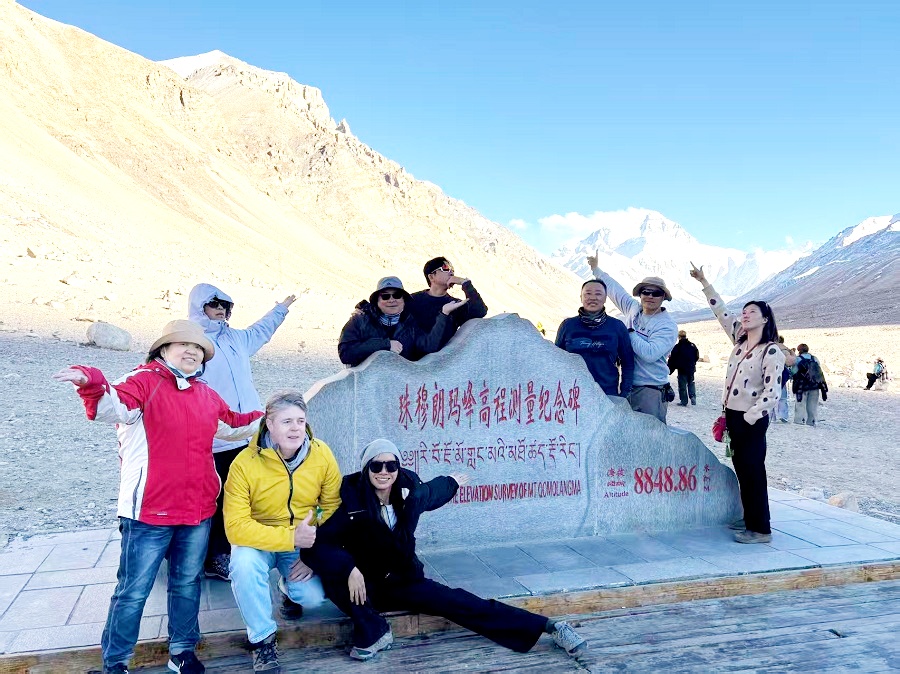
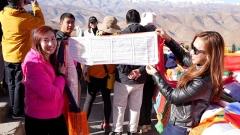
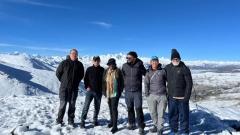
Tourist Photos of Everest Base Camp
Best Vantage Points for Viewing Mount Everest in Tibet
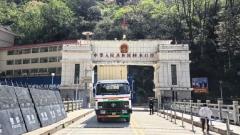
On the Tibetan side, road access makes some viewpoints more attainable without a multi-day trek. Access arrangements can change, and foreign visitors generally need to travel under the required permits and organized-tour rules. Confirm current requirements and route access before booking; do not assume that a border crossing or road is open simply because it appears on a map.
Gawula Pass: A Wide Himalayan Range View
Gawula Pass, also called Gawu La, is a renowned roadside viewpoint on the approach to the Everest region in Tibet. From the high pass, travelers may see a chain of Himalayan peaks, including Everest, weather permitting. The broad panorama is a major contrast with the more intimate, trekking-based views from Nepal.
Because the pass is at high elevation, visitors should take symptoms seriously even when arriving by vehicle. Spend time acclimatizing in accordance with the itinerary, move gently, and keep warm. A short stop at a roadside viewpoint does not make altitude exposure risk-free.
The pass can be windy and cold, and visibility can change quickly. Carry layers, protect your hands and face, and follow the guide’s instructions about where it is safe to walk. The best photograph may come during a brief clear spell, so allow enough time if the itinerary permits.
Rongbuk Monastery And The Everest North Face
Rongbuk Monastery lies in the Everest region of Tibet and is a notable vantage point for viewing the mountain’s north face. The setting combines a high-altitude landscape with a historic Tibetan Buddhist monastery. When conditions are clear, Everest rises dramatically beyond the valley.
The monastery area is also a place of worship and local life, not merely a photo stop. Dress respectfully, follow posted rules, and ask before photographing people or religious spaces. Depending on current access arrangements, visitors may need to use designated transport or comply with restrictions in the area.
The north-face perspective differs from Nepal’s familiar southern approach. Rather than a trek to a high ridge, the experience is shaped by road travel, altitude, and a more open view across the Tibetan plateau. Verify the route and accommodation details before departure, as services and access can vary.
Everest Base Camp In Tibet: A Road-Accessible Perspective
The Tibetan-side Everest Base Camp area is generally reached by road as part of an organized journey, subject to current regulations and access conditions. It provides a different experience from Nepal’s trekking base camp: the surrounding landscape is drier and more open, and the north face is the focus.
The precise visitor arrangements and location available to travelers may change. Confirm what is included in a tour and whether transport, permits, and overnight stays are permitted on the dates you plan to travel. Even with vehicle access, the altitude is severe, so a gradual itinerary and attention to health remain essential.
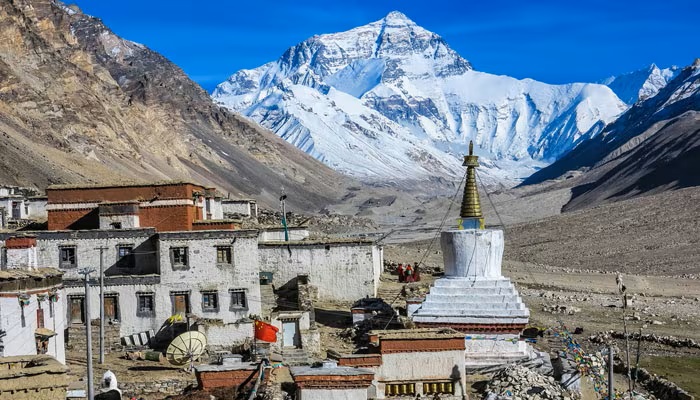
Rongbuk Monastery, Everest Base Camp on the north slope of Tibet
Choosing Between The Nepal And Tibet Views
Choose Nepal if you want a multi-day trek, village stays, and the possibility of combining Everest Base Camp with Kala Patthar or Gokyo Ri. This route demands more walking and usually requires a longer trip, but it offers close contact with the Khumbu landscape and its trail culture.
Choose Tibet if you prefer a road-based journey and want to see Everest’s north face from a high pass or the Rongbuk area. This option can reduce the amount of trekking, but it is not low altitude or automatically easier. Permits, organized travel requirements, and road access need careful checking.
If your priority is the most direct classic summit view from Nepal, Kala Patthar is a strong choice. For a wide range panorama, consider Gokyo Ri or Gawula Pass, depending on your route. For mountaineering atmosphere, Nepal’s Base Camp is distinctive; for a north-face perspective, the Tibetan side offers a different angle.
When To Go And How To Improve Your Chances
Spring and autumn are popular periods for Himalayan travel. Spring coincides with climbing activity on Everest and can bring busy trails in the Khumbu. Autumn often follows the monsoon, when many travelers hope for clearer skies. Neither season guarantees visibility, and conditions vary by year and location.
Winter can bring very cold temperatures and challenging conditions at high altitude. The summer monsoon often brings cloud and precipitation to Nepal, though weather patterns differ across the Himalaya and Tibetan plateau. Check a current forecast close to departure, and let local guides make day-to-day decisions based on conditions.
To improve your odds, schedule more than one morning in the Everest region if possible. Keep the first clear morning flexible rather than tying every excursion to a single fixed hour. Bring warm layers, sunglasses, sunscreen, and a camera battery that can cope with cold. Most importantly, do not push higher or stay exposed simply to wait for a photograph.
Altitude, Safety, And Responsible Travel
The best vantage points for viewing Mount Everest are all high enough to require serious preparation. Altitude sickness can affect healthy, experienced travelers, and symptoms can worsen quickly. Headache, nausea, unusual tiredness, dizziness, and loss of appetite can be warning signs. Tell your guide or travel companion promptly if you feel unwell; descending is often the most important response to worsening symptoms.
Follow a gradual itinerary with planned acclimatization, drink regularly, and avoid strenuous exertion immediately after arriving at altitude. Do not rely on fitness, medication, or a fixed number of rest days as a guarantee of safety. Travelers with medical conditions should discuss the trip with a qualified clinician before departure and understand the limitations of emergency care in remote areas.
Respect local communities, monasteries, and mountain environments. Carry out rubbish, stay on established paths, and ask before photographing residents. On trekking routes, choose services that treat guides and porters fairly and provide appropriate safety support. In sensitive high-altitude landscapes, small choices—such as refilling a bottle where safe and minimizing disposable packaging—help reduce avoidable waste.
Planning The Trip With China Dragon Travel
China Dragon Travel can be considered for travelers organizing a Tibet itinerary, where permits, route access, and transport arrangements may be part of a guided tour. Before confirming any booking, ask for the current itinerary, included services, altitude schedule, cancellation terms, and the specific viewpoints available on your travel dates. For Nepal trekking, compare route plans carefully and check that acclimatization, guide support, and emergency procedures are clearly explained.
A useful itinerary leaves room for changing weather and individual adjustment. Share your fitness level and relevant medical needs before departure, pack for cold conditions even during warmer travel months, and carry travel insurance that explicitly covers high-altitude trekking or remote-area evacuation if applicable. Regulations, transport access, and tour services can change, so verify operational details directly before you travel.
Frequently Asked Questions
Which viewpoint offers the best close-up view of Mount Everest?
For many trekkers on Nepal’s south side, Kala Patthar offers one of the most direct and celebrated views of the summit. The climb is strenuous and very high, so it is suitable only for travelers whose itinerary and health allow it.
Can you see Mount Everest from Everest Base Camp in Nepal?
The summit is not always visible from Nepal’s Base Camp because nearby terrain can block the angle. Many trekkers climb Kala Patthar for a clearer view while visiting the Base Camp area.
Is it easier to see Everest from Tibet or Nepal?
Tibet offers road-accessible viewpoints on some organized itineraries, while Nepal’s iconic viewpoints generally require trekking. The Tibetan route may involve less walking, but both sides are at high altitude and can require permits or organized travel arrangements.
What is the best time of day to view Everest?
Early morning often offers a better chance of clear skies and attractive light, but weather is unpredictable. Allow flexibility and follow local guidance rather than relying on a guaranteed viewing time.
How many days should I allow for an Everest viewpoint trip?
The required time depends on the route. Nepal’s trekking viewpoints usually need a multi-day itinerary with acclimatization, while Tibet road journeys vary according to permits, travel distances, and planned stops. Confirm the full schedule before booking.