
Key Takeaways
- Yalong Glacier is one of the most spectacular hidden glacier destinations in Tibet, located inside the Laigu Glacier Group near Ranwu Lake in Chamdo. It is not a single glacier but one of the three main branches of the Laigu Glacier system, together with Meixi Glacier and Dongga Glacier.
- The biggest attractions of Yalong Glacier are its ancient blue ice, glacier landscapes, and natural ice formations. The crystal-blue ice is created through thousands of years of snow compression, making it one of the most unique glacier experiences in Tibet.
- December to February is the best season for blue ice viewing, when colder temperatures reduce glacier melting and create clearer, more transparent ice. Winter mornings also provide better lighting conditions for photography.
- Access to Yalong Glacier requires careful planning, as the road conditions are challenging with steep mountain roads, gravel sections, muddy areas, and narrow passages. Taking local village vehicles is recommended for safety and convenience.
- The glacier area reaches an altitude of around 4,200 meters, so visitors should prepare for high-altitude conditions, including proper acclimatization, warm clothing, oxygen supplies if needed, and avoiding excessive physical activity.
- The famous blue ice caves and glacier hiking experiences depend on seasonal conditions and local regulations. Glacier landscapes are constantly changing, and some areas may be closed for environmental protection or safety reasons.
- The best photography period is usually between 8:00 AM and 11:00 AM, when sunlight enters the ice layers and enhances the deep blue colors. Wide-angle lenses, telephoto lenses, tripods, and drones are recommended for capturing different perspectives.
- Yalong Glacier is often combined with Ranwu Lake and Laigu Glacier for a complete eastern Tibet itinerary, creating one of the most impressive glacier-and-lake travel routes along the 318 Sichuan-Tibet Highway.
- Responsible travel is essential when visiting glaciers. Visitors should avoid leaving waste, damaging ice formations, or entering restricted areas, as glaciers are fragile natural landscapes.
- Yalong Glacier represents a rare opportunity to experience Tibet’s ancient ice world up close. As glaciers continue to change and access conditions may vary, travelers who want to witness this blue wonder should plan carefully and visit with respect for nature.
Yalong Glacier
Why Is Yalong Glacier Worth Visiting?
Ancient Blue Ice and Natural Blue Ice Caves
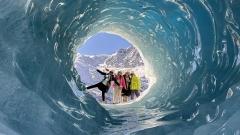
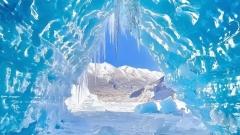
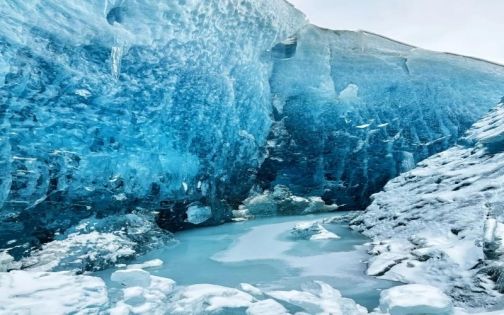
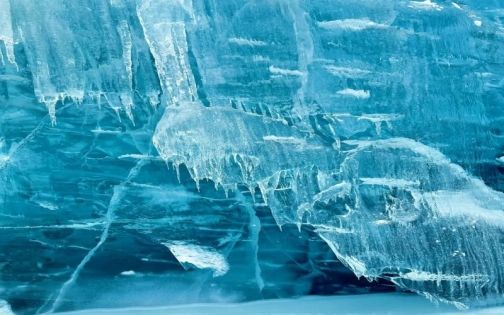
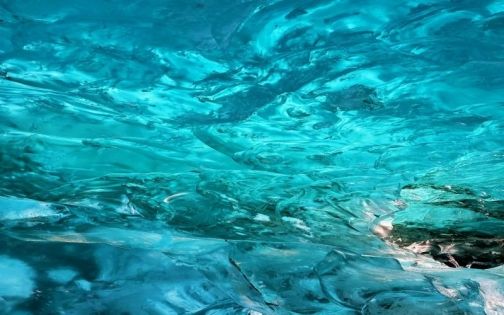
The most attractive feature of Yalong Glacier is its crystal-clear blue ice scenery.The blue color of glacier ice is not created artificially. It is formed through thousands of years of natural compression. Fresh snow accumulates year after year, gradually becoming dense ice under enormous pressure. As air bubbles inside the ice disappear, light can penetrate deeper into the ice. Red wavelengths are absorbed while blue wavelengths remain visible, creating the famous crystal-like blue color.On sunny days, sunlight passes through the ice layers, creating a deep blue glow inside the ice caves. The curved patterns on the ice walls, transparent frozen layers, and constantly dripping meltwater create a magical world unlike anywhere else.However, blue ice caves are natural formations that change constantly due to temperature, glacier movement, and seasonal conditions. They are not guaranteed to exist or remain open every year. Visitors should not rely only on online photos when planning their trip.
Experiencing a Real Glacier Landscape Up Close
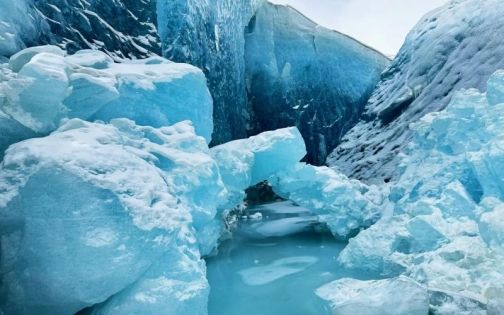
Unlike some glaciers that can only be viewed from a distance, Yalong Glacier offers a much closer experience.After reaching the viewing area, visitors can see the massive glacier extending between the mountains. The combination of snow peaks, ice fields, rocks, and meltwater creates a complete high-altitude glacier ecosystem.When glacier hiking is available, visitors usually need to wear crampons and follow professional guidance to approach the blue ice walls. Along the way, you may discover ice cracks, frozen streams, and layers of ice formed over different periods of time.
The 12-Kilometer S-Shaped Glacier View
From above, Yalong Glacier reveals its most impressive form. The glacier flows through the valley in a beautiful S-shaped curve, creating a breathtaking natural composition.Drone photography provides the best perspective, showing the glacier as a huge blue-and-white river surrounded by mountains. This is also one of the main reasons photographers travel to Yalong Glacier.
Best Time to Visit Yalong Glacier
December to February: The Best Season for Blue Ice
If your main goal is to see blue ice and glacier caves, winter from December to February is generally the best period.During this time, temperatures remain low, glacier lakes may freeze completely, and the reduced meltwater creates clearer and cleaner ice surfaces.Winter mornings usually offer more stable weather conditions, and the lower sunlight angle creates stronger contrast and texture when photographing the glacier.
Other Seasons: Different Landscapes, Different Experiences
Spring, summer, and autumn also offer beautiful glacier scenery, but warmer temperatures increase glacier melting. Some areas may become muddy, and meltwater can make the ice appear less transparent.During the rainy season, the 318 Sichuan-Tibet Highway may also face risks from landslides, falling rocks, and unstable road conditions.
Yalong Glacier
How to Get to Yalong Glacier
Traveling from Ranwu Lake
Yalong Glacier is located in Baxoi County, Chamdo, Tibet, and is usually included in a 318 Sichuan-Tibet Highway itinerary.Common routes include:Lhasa / Nyingchi → Ranwu Lake → Laigu Glacier → Yalong Glacier or:Chengdu → Sichuan-Tibet Highway 318 → Ranwu Lake → Yalong Glacier After reaching the Laigu Glacier area, visitors need to follow local management requirements to enter.
Transportation Inside the Glacier Area
Currently, reaching Yalong Glacier usually involves passing through local village-managed areas.The general process is:Turn from National Highway 559 toward the glacier access road, pass through the Daba Village area, and arrive at the parking area.Visitors can choose:Driving their own vehicle to Yalong Glacier;or taking a local vehicle arranged by villagers.Taking a local vehicle is strongly recommended.The road conditions are challenging, with gravel roads, muddy sections, steep mountain slopes, and narrow sections where passing another vehicle can be difficult.Even experienced drivers with four-wheel-drive vehicles may find the route demanding if they are unfamiliar with local conditions.Many residents of Daba Village depend on glacier tourism for their livelihood. Local men usually work as drivers transporting visitors, while women often operate camps, sell local products, or run guesthouses. Choosing local transportation not only improves safety but also supports the local community.
Yalong Glacier Ticket and Travel Costs
Yalong Glacier involves several management areas, and prices may vary depending on the season and local regulations.Some travelers report that entrance tickets, sightseeing vehicles, and transportation costs can become relatively expensive when visiting Laigu Glacier and Yalong Glacier together. Therefore, checking the latest prices before departure is recommended.If you only want to enjoy the glacier landscape from a distance, plan according to your budget and schedule.If you hope to experience blue ice caves or glacier hiking, confirm in advance whether these activities are available during your travel period.Glaciers are fragile natural environments, and visitors should never enter restricted areas for the sake of photography.
Photography Guide for Yalong Glacier
Best Photography Time
Arriving in the morning is highly recommended.Around 8:00 AM to 11:00 AM is usually a good photography period. When sunlight enters the ice layers, the blue colors become more vivid and transparent.On clear days, the morning sunlight creates beautiful reflections and textures inside the glacier.
Recommended Photography Equipment
For photographing Yalong Glacier, consider bringing:A wide-angle lens for large glacier landscapes;A telephoto lens for snow mountain details;A tripod for stable low-light photography;A drone for capturing the glacier’s complete shape from above.Because cold temperatures drain batteries quickly at high altitude, carrying spare batteries is essential.
Yalong Glacier
Important Travel Tips for Yalong Glacier
Prepare for High Altitude Conditions
The altitude around Yalong Glacier is approximately 4,200 meters.Travelers arriving from lower elevations may experience altitude sickness.Recommended preparation:Spend time acclimatizing in places such as Lhasa, Nyingchi, or Ranwu Lake;Avoid intense physical activity;Carry oxygen supplies if necessary;Maintain good sleep and hydration.
Stay Safe During Glacier Activities
If glacier hiking is available, crampons are required.Although glacier surfaces may look flat, hidden cracks and unstable ice areas can exist.Do not approach dangerous areas for photos, and never enter closed glacier zones.
Protect the Fragile Glacier Environment
Glaciers are irreplaceable natural resources.During your visit, avoid leaving any trash, damaging ice formations, or touching fragile glacier structures unnecessarily.Every visit to a glacier is an opportunity to experience nature, and it should always be done with respect.
Yalong Glacier and Ranwu Lake: A Perfect Combination Along Highway 318
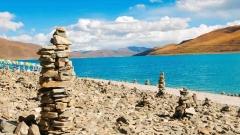
A trip to Yalong Glacier should not be limited to only one attraction.Nearby Ranwu Lake is also worth visiting.Located near the source area of the Palong Zangbo River, Ranwu Lake is one of the most beautiful high-altitude lakes along the 318 Sichuan-Tibet Highway. In the early morning, snow mountains reflect on the blue-green lake surface, creating excellent photography opportunities.Many travelers combine Ranwu Lake, Laigu Glacier, and Yalong Glacier into one itinerary, creating one of the most scenic glacier and lake routes in eastern Tibet.
Yalong Glacier
Conclusion: Visit the Blue World of Ancient Ice Before It Changes
Yalong Glacier is more than a tourist attraction. It is a natural museum that records thousands of years of Earth’s history.From the massive glacier flowing down from snow-covered mountains to the mysterious blue ice caves illuminated by sunlight, every detail represents a landscape shaped by time.However, glaciers are retreating, and access policies may continue to change due to environmental protection. Whether visitors will still be able to enter the blue ice caves in the future remains uncertain.For travelers searching for a truly spectacular, remote, and authentic Tibetan destination, Yalong Glacier remains one of the most unforgettable stops along the 318 Sichuan-Tibet Highway.Visit while this ancient blue world still remains.