
Introduction
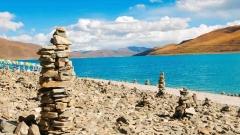
Tibet is often described as the “Roof of the World,” but its most unforgettable landscapes are not always found at famous landmarks. Across the plateau, countless lakes appear beneath snow-covered mountains, across vast grasslands and deep within remote wilderness. Known locally as “tso,” these high-altitude lakes vary dramatically in color, scale and character. Some are brilliant turquoise, some deep blue, while others reveal unusual shades of green, yellow and even reddish brown. After traveling through Tibet’s long-distance routes, the experience of seeing one lake after another becomes a journey of its own. This guide highlights 20 remarkable lakes in Tibet, from the famous sacred lakes of Yamdrok, Namtso and Manasarovar to remote and lesser-known lakes in Ngari and northern Tibet, along with practical advice to help you plan a safer and more rewarding lake-focused journey.
Key Takeaways
- Tibet has far more than three famous sacred lakes: Yamdrok Lake, Namtso and Manasarovar are the best known, but dozens of lesser-known lakes offer equally impressive scenery.
- Weather can completely change the landscape: Clear skies reveal vivid blue water and snow mountain reflections, while cloudy conditions create darker and more dramatic scenery.
- Ngari and northern Tibet offer the strongest sense of wilderness: Lakes such as Tsochen Lake, Zhari Namco, Selincuo and Peikucuo are ideal for travelers seeking remote landscapes.
- Not every lake is easy to reach: Some destinations involve long drives, high elevations, unpaved roads or hiking, so travel time should never be estimated by distance alone.
- Altitude and road conditions matter: Acclimatization, weather forecasts, fuel supplies, vehicle conditions and local road information should always take priority over sightseeing schedules.
- The “best” lake is highly subjective: Some travelers prefer bright turquoise water, while others may be more impressed by snow mountains, glaciers, wildlife, reflections or complete solitude.
- A lake-focused Tibet itinerary is about the journey, not just the destinations: The changing landscapes between lakes—grasslands, snow peaks, barren plateaus and remote villages—are an essential part of the experience.
Baimalin Co
Why Tibet Is All About “One Lake After Another”
When planning a trip to Tibet, most travelers think first of the Potala Palace, Mount Everest Base Camp, Lhasa, Nyingchi or the remote landscapes of Ngari. But after traveling deeper into Tibet, you quickly discover another major attraction: the endless succession of high-altitude lakes, locally known as “tso.”In Tibetan, “tso” means lake. Tibet is home to an extraordinary variety of lakes, and they are far more than simply blue bodies of water. Depending on altitude, geography, sunlight, weather and season, a lake can appear deep blue, turquoise, emerald green, yellow-green or even display contrasting shades across the same body of water.On a clear day, snow-covered mountains reflected on the surface can create an almost unreal landscape. On cloudy days, the colors become darker and the surrounding wilderness feels even more dramatic.This guide brings together 20 memorable lakes encountered during a long-distance Tibet road trip. The ranking is based entirely on personal impressions rather than any official classification. There is no absolute “best” lake in Tibet—the same lake can look completely different depending on the weather, season and viewing angle.
20 Lakes in Tibet Worth Seeing
1. Gurula Tso|One of the Bluest Lakes
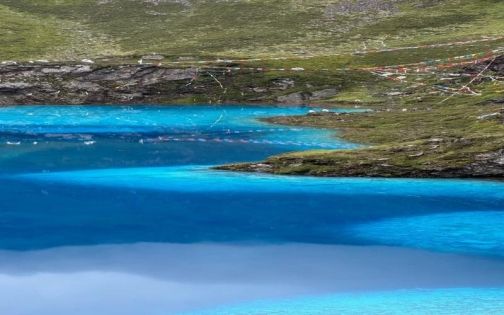
Gurula Tso immediately stands out for its intense blue color. Rather than having a single shade, the lake often displays several layers of blue, gradually changing from the shoreline toward the distant water. Even under cloudy conditions, the lake can retain its striking color. When sunlight reaches the surface, the water becomes even clearer and more vibrant. If your route passes through this area, it is well worth making time for a stop.
2. Peikucuo|Lake Views with Shishapangma
Peikucuo is one of the most impressive lakes in Tibet when it comes to combining water and mountains in a single view. The biggest attraction is not simply the lake itself, but the possibility of seeing it together with Shishapangma, one of the world’s 8,000-meter peaks.Many travelers stop at roadside viewpoints along the highway, but if road and weather conditions allow, it is worth continuing to a viewpoint where Peikucuo and Shishapangma can be seen together. On a clear day, the lake, snow-covered peaks and grasslands create a spectacular layered landscape.
3. Yamdrok Lake|A Classic Tibetan Sacred Lake
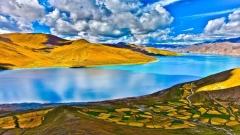
Yamdrok Lake is one of the first major lakes many travelers encounter when visiting Tibet and is one of Tibet’s three major sacred lakes. Its appeal lies not only in its color but also in its incredibly winding shoreline. From different elevations and viewpoints, the lake can appear blue, turquoise or green.Ritu Temple and Luri La viewpoints offer excellent perspectives, while driving along the lakeshore is an experience in itself. If you are traveling by road, avoid rushing through Yamdrok Lake simply because it is a popular destination. The changing views along the route are part of the attraction.
4. Namtso|Deep Blue Beneath the Nyenchen Tanglha Mountains
Namtso has a completely different character from Yamdrok Lake. It feels larger, more open and more powerful. The lake sits beneath the Nyenchen Tanglha mountain range, creating one of the most recognizable landscapes in northern Tibet.When the weather is clear, the contrast between the dark blue water, snow-covered mountains and enormous sky is unforgettable. Early morning is particularly rewarding, especially around sunrise when low-angle light transforms the surface of the lake.
5. Tsochen Lake|A Favorite for Its Wilderness
Tsochen Lake is less about postcard-perfect scenery and more about atmosphere. Located deep in northern Tibet, it retains a strong sense of wilderness. The surrounding landscape contains an unusual mix of red, yellow, gray and white geological formations, contrasting with the deep blue-green water.Nearby Wenbu South Village also provides an opportunity to experience the unique landscape and cultural heritage associated with the ancient Zhangzhung civilization. If you enjoy remote landscapes rather than conventional tourist attractions, this is one of the most memorable lakes on the list.
6. Puma Yumco|The “Tears of a Young Girl”
Puma Yumco is often described as the “Tears of a Young Girl.” The lake is known for its clear water and dramatic backdrop of snow-covered mountains, particularly the peaks around Kulagangri.On a sunny day, the combination of blue sky, turquoise water and white mountains resembles a carefully composed landscape painting. Travelers who are already acclimatized and physically comfortable at high altitude may consider staying near Tuiwa Village for sunset and stargazing.However, altitude should always come first. Do not stay overnight at high elevation simply for photography if your body is not responding well.
7. Meima Tso|Mountains, Lake, Grasslands and Wildlife
Meima Tso is a particularly rewarding destination for photographers because several major elements can appear in the same frame: mountains, water, grasslands and wildlife.If you are lucky, Tibetan antelopes and other wildlife may appear near the lake. The combination of open terrain and relatively few visitors gives the area a genuine wilderness atmosphere that is difficult to find at more developed scenic destinations.
8. Baimalin Tso|A Small Lake Surrounded by Mountains
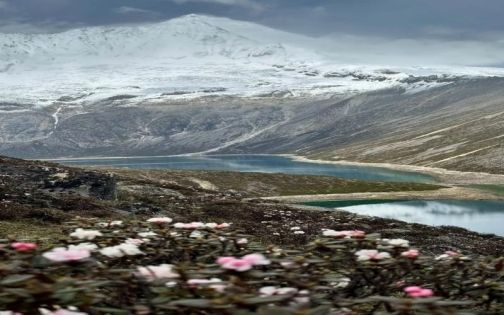
Baimalin Tso is located around the Kulagangri region. The lake itself is only part of the attraction; the surrounding snow-covered mountains are what make the landscape particularly impressive.Clouds can easily cover the peaks, so the experience depends heavily on weather conditions. During the rhododendron season, the surrounding vegetation adds another layer of color. Hiking conditions and access routes can vary, so check local conditions before setting out.
9. Zhegong Three Lakes|Three Different Shades of Blue
The defining feature of Zhegong Three Lakes is right in the name: three lakes can be seen within the same landscape. Their colors can differ significantly, and glaciers and snow-covered mountains add further visual depth.This is an excellent place for landscape photography, particularly if you can find a higher viewpoint. However, altitude makes climbing considerably more demanding than the same distance would be at low elevation. Take your time and do not underestimate the effects of high altitude.
10. Laang Tso|Worth Visiting When the Sacred Mountain Appears
Laang Tso is located close to Lake Manasarovar and is often visited as part of a western Tibet itinerary. Compared with the more sacred and serene atmosphere of Manasarovar, Laang Tso feels more remote and barren.The experience becomes especially impressive when Mount Kailash is visible in the distance. Because cloud cover can completely change the landscape, weather conditions play a major role in what you will see.
Gurulacuo
11. Pangong Tso|A Quiet Place to Simply Sit and Watch
Pangong Tso is not necessarily about having the brightest blue water. Its appeal comes from its unique environment and peaceful atmosphere.The combination of lake, mountains and barren landscape creates a distinctive frontier feeling. It is the kind of place where sitting quietly beside the water can be more enjoyable than rushing from one viewpoint to another.Descriptions of Pangong Lake often simplify its changing salinity and water characteristics into phrases such as “half freshwater and half saltwater.” In reality, conditions vary across different sections of the lake. It is better to appreciate its unusual geography rather than focus too heavily on a simplified description.
12. Zhari Namco|A Remote Lake Worth the Rough Road
Getting to Zhari Namco is part of the adventure. Some sections involve unpaved roads, and conditions can change significantly depending on weather and season.The route passes through grasslands and remote terrain before eventually revealing the enormous lake. Its distinctive narrow landform, sometimes described as a “beauty-spot” or “beauty peak,” adds character to the landscape.Do not judge the journey by distance alone. Before setting out, check local road conditions, weather and vehicle suitability.
13. Selincuo|A High-Altitude Sea
Selincuo is one of the most impressive large lakes in northern Tibet. Its enormous scale makes it feel less like a conventional lake and more like an inland sea.Standing on the shore, it can be difficult to distinguish where the water ends and the sky begins. The appeal here is not necessarily a dramatic snow mountain in the background, but the sheer scale of the lake, sky and surrounding wilderness.From an elevated or aerial perspective, the contrast between the blue-green water and surrounding plateau landscape becomes even more striking.
14. Xincuo|A Hiking Destination Near Basong Lake
Xincuo is located within the Basong Lake scenic area and is better suited to travelers who want to combine lake scenery with hiking.Unlike simply viewing Basong Lake from established tourist areas, reaching Xincuo involves going deeper into the surrounding valleys, with some sections requiring shuttle vehicles or travel along unpaved roads.The landscape combines forests, mountains and alpine lakes, creating a completely different atmosphere from the dry landscapes of northern Tibet. Check the latest access and shuttle arrangements before visiting.
15. Bailanggou|Glaciers and Forests
Bailanggou is another hiking destination around the Basong Lake region. Rather than focusing on one single viewpoint, the journey itself is part of the experience.As you move deeper into the valley, the landscape changes from forest to mountains and eventually toward glacier scenery. If you already plan to visit Basong Lake and have enough time, Bailanggou and Xincuo can be considered as additional hiking options.
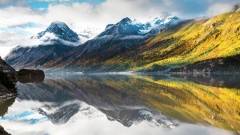
16. Dingjie Zongcuo|Best When the Water Is Completely Calm
Dingjie Zongcuo is an easily overlooked lake that becomes particularly beautiful when the wind disappears.Under calm conditions, the surface can act like a natural mirror, reflecting the surrounding snow-covered mountains almost perfectly. This is one of those landscapes where timing matters more than photography equipment. A perfect reflection cannot be guaranteed, so treat it as a bonus rather than an expectation.
17. Chongba Yumco|A Small Lake at the End of the Road
Chongba Yumco is much smaller and less famous than major lakes such as Yamdrok and Namtso. Its appeal comes from its clear water, surrounding mountains and relatively quiet environment.It works especially well as a surprise destination along a longer road trip rather than a place that requires a dedicated journey. If you are staying nearby, early morning can be a particularly rewarding time to see the first sunlight reach the surrounding mountains.
18. Duoqing Tso|A Lake Beside Mount Jomolhari
Duoqing Tso is closely associated with the dramatic mountain scenery around Mount Jomolhari. The lake itself may not create the same immediate impact as Yamdrok or Peikucuo, but the combination of snow peaks, grasslands, water and open sky creates a classic Himalayan landscape.It is best appreciated as part of a larger road trip rather than judged solely as an individual attraction.
19. Daze Tso|An Unexpected Stop Along Highway 317
Daze Tso demonstrates one of the most enjoyable aspects of traveling through Tibet: sometimes the best views are not the famous attractions on your itinerary.Along Highway 317, snow mountains, grasslands and lakes frequently appear together. A small lake beside the road can suddenly be enough to make you stop the car.If you are driving, always prioritize road safety. Do not stop in dangerous locations or walk into the roadway simply to capture a photograph.
20. Wuma Tso|A Lake Best Seen from Above
Wuma Tso is particularly interesting from an aerial perspective. From ground level, the differences in water color may not be obvious, but from above, blue-green water and reddish-brown terrain can form a striking contrast.This is one of the most fascinating things about Tibetan lakes: the landscape seen by the human eye from the shore can be completely different from the patterns revealed from above.
How to Choose the Best Lakes in Tibet
Yamdrok Lake, Namtso or Manasarovar?
Yamdrok Lake, Namtso and Lake Manasarovar are commonly regarded as Tibet’s three major sacred lakes, and each offers a completely different experience.Yamdrok Lake is relatively accessible from Lhasa and is ideal for first-time visitors with limited time. Namtso offers enormous scale and dramatic views beneath the Nyenchen Tanglha Mountains. Lake Manasarovar is best experienced as part of a western Tibet or Mount Kailash itinerary, where the lake becomes part of a much larger sacred landscape.If you only have a few days in Tibet, Yamdrok Lake and Namtso are easier to incorporate into a conventional itinerary. If you are traveling to Ngari, however, Lake Manasarovar deserves more than a quick photo stop.
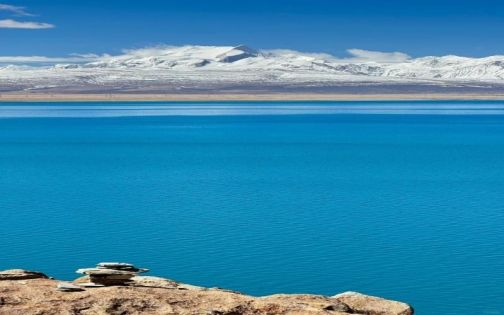
Peiku Lake
The Six Famous “Yumco” Lakes
What Does “Yumco” Mean?
In Tibetan place names, “tso” means lake. “Yumco” or “Yongtso” is commonly used in the names of several famous turquoise-colored Tibetan lakes.The six lakes often referred to as the “Six Great Yumco Lakes” are Manasarovar, Yamdrok Lake, Tsochen Lake, Puma Yumco, Nari Yumco and Chongba Yumco.Different travel sources may use slightly different classifications when discussing the “six great Yumco lakes,” so travelers planning an actual itinerary should rely on current local maps, official information and road conditions rather than treating the list as an official tourism ranking.
How to Plan a Tibet “One Lake After Another” Road Trip
First Trip to Tibet: Start with the Classics
If this is your first visit to Tibet and you only have five to eight days, there is no need to chase 20 lakes.Yamdrok Lake and Namtso already provide two very different examples of Tibetan high-altitude lake scenery. Use the remaining time for Lhasa, the Potala Palace, Jokhang Temple and other major cultural attractions. A balanced itinerary is usually more enjoyable than trying to collect as many lakes as possible.
Want Lakes and Snow Mountains? Consider the Ngari Route
With around 10 to 15 days or more, a western Tibet or Ngari itinerary becomes more realistic. Yamdrok Lake, Puma Yumco, Peikucuo, Lake Manasarovar and Laang Tso can be combined with some of Tibet’s most dramatic mountain landscapes.The real attraction is not any individual lake, but the constant change in scenery: snow mountains, grasslands, turquoise lakes, barren plateaus and remote villages appear one after another.
Want True Wilderness? Explore Northern Tibet
For travelers looking for a more remote experience, Tsochen Lake, Zhari Namco and Selincuo are more suitable.These areas are much farther from major tourist centers, and road conditions, accommodation, communications and fuel supplies can be limited. The trade-off is a much stronger sense of untouched wilderness.
Practical Tips for Visiting Tibet’s Lakes
Weather Matters More Than Rankings
Tibetan lakes are highly weather-dependent. Under clear skies, sunlight can produce extremely saturated blue and turquoise water. Under clouds, the same lake can become gray-blue, dark blue or green.Clouds can also hide the surrounding mountains, dramatically changing the overall composition. Therefore, do not assume that a lake will look exactly like the photos you saw online.
Altitude Should Always Come Before Photography
Many Tibetan lakes are located at high elevations, and some require long drives, hiking or climbing.High-altitude travel is very different from traveling at sea level. If you develop significant symptoms of altitude-related illness, prioritize rest and seek medical assistance when necessary. Do not push yourself simply to complete a sightseeing schedule.
Do Not Judge Driving Time by Distance Alone
In western and northern Tibet, the actual travel time can be significantly affected by road surfaces, weather, construction, checkpoints and driving conditions.Places involving unpaved roads, including some routes around Zhari Namco, Xincuo and Bailanggou, should not be planned purely according to the distance shown on a navigation app.Check road conditions before departure, keep sufficient fuel and allow plenty of extra time.
Follow Local Drone Regulations
Some areas of Tibet are close to international borders, military facilities, protected areas or other restricted zones. Drone flights may therefore be prohibited or require authorization.Always check the regulations in the specific area before flying. Do not take off in restricted areas simply for an aerial photograph.
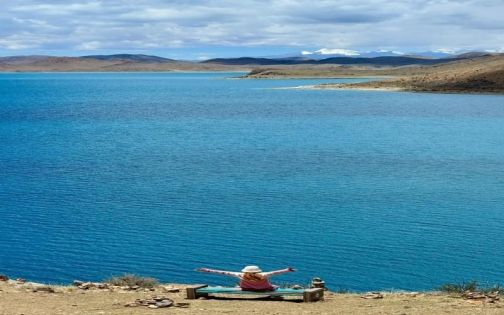
yamdrok lake
Final Thoughts|The Beauty of Tibet Lies Beyond the Blue
After traveling through Tibet’s long-distance routes, you begin to understand what “one lake after another” really means.Some lakes sit beneath snow-covered mountains. Others appear suddenly in the middle of vast grasslands or barren plateaus. Some are deeply connected with local religious traditions, while others are simply quiet bodies of water beside a remote road.Yamdrok Lake offers layers of blue and green. Namtso provides immense scale. Peikucuo creates a spectacular pairing with Shishapangma. Tsochen Lake feels wild and ancient. Selincuo resembles an inland sea, while Wuma Tso reveals completely different colors from above.So if you ask which of these 20 lakes is the most beautiful, there is no objective answer.Some travelers prefer brilliant blue water. Others look for perfect mountain reflections, dramatic glaciers, wildlife or complete solitude.That is precisely what makes Tibet so fascinating.The most memorable lake may not be the one at the top of your itinerary. It may be the one you unexpectedly discover after crossing a mountain pass, turning a corner or driving along a seemingly ordinary road.In Tibet, you never quite know what will appear beyond the next mountain.And that is the magic of traveling through a land where one lake follows another.