

Planning a trip to the Dazu Rock Carvings but not sure where to begin? Many first-time visitors wonder which sites are essential, whether one day is enough, and if a guide is necessary. Unlike typical scenic attractions, Dazu is a vast cultural heritage site with deep religious and artistic meaning. Without proper context, it’s easy to miss the significance behind the carvings. This guide explains the key sites, visiting strategies, and practical tips to help you experience Dazu in a more meaningful and efficient way.
Core Highlights of Dazu Rock Carvings
Dazu Rock Carvings are not a single site but a collection of over 20 grotto clusters scattered across Dazu District. The most renowned are the Five Mountains Grotto Complexes: Baoding Mountain, Beishan Mountain, Nanshan Mountain, Shizhuan Mountain, and Shimen Mountain. Each boasts unique artistic styles and historical significance, collectively representing the zenith of Tang and Song stone carving and serving as invaluable physical records for studying ancient Chinese religion, culture, and art.
Baoding Mountain Rock Carvings: The Apex of Grotto Art
Baoding Mountain is the largest, most comprehensive, and best-preserved site in Dazu, drawing the vast majority of visitors. Masterminded by the Southern Song Dynasty monk Zhao Zhifeng over 70 years, it is a grand Buddhist Tantric monastery integrating Confucian, Buddhist, and Taoist statues. Carved into the mountainside in a sweeping, cohesive layout, the site seamlessly blends religious doctrine with everyday secular life, showcasing the highest achievements of Song Dynasty stone art.
- Thousand-Hand Guanyin Statue: The crown jewel of Baoding Mountain and the world’s largest stone-carved Thousand-Hand Guanyin. Standing 7.7 meters tall and 12.5 meters wide, the statue features 1,007 hands each holding a distinct ritual implement, rendered with breathtaking lifelike detail. After an eight-year restoration, the gilded statue glows with golden radiance, embodying both masterful carving and solemn religious grandeur.
- The Wheel of Reincarnation: A vivid depiction of Buddhist reincarnation beliefs. A massive wheel, clutched by a fearsome demon, is divided into six realms from heaven to hell. The dramatic, realistic scenes deliver a powerful visual impact, making the abstract concept of karmic retribution instantly understandable.
- The Herding Ox Scenes: A delightful celebration of rural life. Set against a pastoral backdrop, the carvings depict ten stages of a cowherd tending his ox, symbolizing the ten stages of Buddhist spiritual practice. The lively poses of the cowherds and oxen not only capture the tranquility of Song Dynasty countryside but also make profound spiritual teachings accessible to all.
- The Three Sages of Huayan: Three towering statues reaching 7 meters in height, exuding majestic presence. The central figure is Vairocana Buddha, flanked by Manjushri and Samantabhadra Bodhisattvas. Most remarkably, the thousand-jin stone pagoda held in Samantabhadra’s hand has remained intact for 800 years, a testament to the extraordinary engineering and mechanical expertise of Song Dynasty artisans.
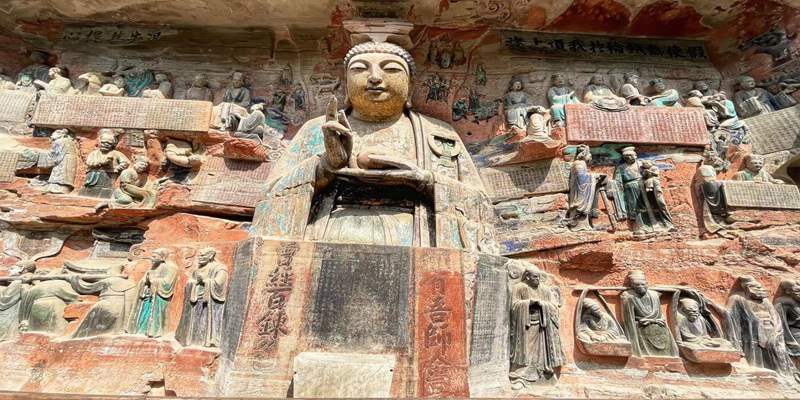
Baoding Mountain
Beishan Mountain Rock Carvings: A Gallery of Exquisite Tang and Song Statues
Carved from the first year of the Jingfu reign of the Tang Dynasty through the Five Dynasties to the Southern Song Dynasty over 250 years, Beishan Mountain has the longest carving history and the most refined statues in Dazu. Unlike Baoding Mountain’s epic narrative scale, Beishan is renowned for its delicate craftsmanship and elegant artistic style, earning it the nickname “the gallery of Tang and Song stone carving art.” Most statues are small to medium-sized, focusing on Buddhist figures like Guanyin and Tathagata, blending the plump, rounded aesthetic of the Tang with the slender, graceful style of the Song.
- The Scripture Wheel Cave: The crown jewel of Beishan Mountain. At its center stands a pagoda-shaped, freely rotating scripture wheel adorned with intricate floral patterns and Buddhist motifs. The surrounding Bodhisattva statues are dignified and graceful, with exquisitely carved lines that epitomize the refined elegance of Song Dynasty stone carving, making them priceless ancient artistic treasures.
- The Mind-Wheel Cave: Named for the central “mind-wheel” symbolizing the universe, which is carved with the Eight Heavenly Kings and other divine beings with exceptional skill. The statues on the cave walls combine Tang Dynasty fullness with Song Dynasty delicacy, reflecting the transitional fusion of Tang and Song artistic styles and serving as crucial physical evidence for studying the evolution of stone carving.
- The Stele of Wei Junjing: The earliest stele at Beishan Mountain, recording the history of Beishan’s carving and the life of Wei Junjing. The thousand-character inscription features elegant calligraphy that blends clerical and regular script styles, making it a precious resource for studying Tang Dynasty history, military affairs, and calligraphy, and a magnet for calligraphy enthusiasts worldwide.
Other Distinctive Grottoes: A Fusion of Diverse Cultures
Beyond Baoding and Beishan, Nanshan, Shizhuan, and Shimen Mountains offer unique cultural insights. Though small in scale, they are of great artistic and cultural value. Nanshan features Taoist statues, Shizhuan is a rare Confucian-Buddhist-Taoist complex, and Shimen balances Buddhist and Taoist carvings, with its Ten Sages Guanyin Cave showcasing fine Ming Dynasty stone art.
Recommended Itineraries for Visiting the Dazu Rock Carvings
With its scattered sites, choosing the right travel approach is essential for a rewarding visit to Dazu Rock Carvings. Whether you’re a short-term traveler pressed for time or a culture enthusiast seeking an in-depth experience, there’s an itinerary tailored to your needs. Below are the most popular travel options, along with their pros and cons, to help you plan an efficient and unforgettable journey through these millennium-old grottoes.
Classic One-Day Tour: Efficiently Unlock the Core Attractions
This is the most popular option for visitors with limited time who want to experience the essence of Dazu Rock Carvings. With careful planning, you can explore the two core sites without feeling rushed, fully appreciating the artistic and cultural splendor of the carvings.
- Morning: Visit Baoding Mountain Rock Carvings. As the heart of Dazu, Baoding Mountain deserves 3-4 hours of your time. We highly recommend following a professional guide to learn the stories and cultural significance behind each group of statues—otherwise, you risk missing the profound meaning beneath the surface. Focus your attention on the iconic Thousand-Hand Guanyin, The Wheel of Reincarnation, and other must-see masterpieces.
- Lunch: Savor local specialties at restaurants near Baoding Mountain, such as Dazu Youting Crucian Carp and Sanqu Field Jelly. These authentic, affordable dishes not only replenish your energy but also offer a taste of Dazu’s unique culinary culture.
- Afternoon: Head to Beishan Mountain Rock Carvings. Located about 15 kilometers from Baoding Mountain, it takes approximately 30 minutes by local bus or taxi. Beishan’s smaller scale and refined statues make it perfect for a 2-hour visit. Prioritize the Scripture Wheel Cave and Mind-Wheel Cave to experience the exquisite beauty of Tang and Song stone carving.
- Evening: Return to downtown Chongqing. Conclude your enriching cultural journey by taking a scheduled bus or driving back to the city center.
In-Depth Two-Day Tour: Immerse Yourself in Stone Carving Art
If you have ample time and want to fully understand the artistic charm of Dazu Rock Carvings while experiencing local culture, a two-day in-depth tour is ideal. This itinerary allows you to visit all core sites at a leisurely pace, savoring the subtle nuances of the millennium-old carvings.
- Day 1: Spend 4 hours in the morning exploring Baoding Mountain Rock Carvings, taking your time to admire each cave and statue and absorb their cultural connotations. In the afternoon, visit Shengshou Temple and the Dazu Rock Carvings Museum. Adjacent to Baoding Mountain, Shengshou Temple was built in the Tang Dynasty and features simple, ancient architecture that complements the stone carvings perfectly. The Dazu Rock Carvings Museum houses a vast collection of cultural relics and documents, with detailed exhibitions on the carving process, artistic characteristics, and conservation efforts, providing a comprehensive understanding of Dazu’s history.
- Day 2: Dedicate 2-3 hours in the morning to Beishan Mountain Rock Carvings, appreciating the intricate craftsmanship of the Tang and Song statues. In the afternoon, choose to visit Nanshan, Shizhuan, or Shimen Mountain based on your interests to explore the diverse cultural dimensions of Dazu Rock Carvings. In the evening, stay in Dazu’s urban area to experience local nightlife, sample street snacks, and immerse yourself in the region’s humanistic charm.
Convenient Transportation: Multiple Options to Reach the Grottoes
- Public Transportation: Direct buses run from Caiyuanba, Chenjiaping, and Longtoushi bus stations in downtown Chongqing to Dazu. The journey takes about 2 hours, with frequent departures and affordable fares. Upon arrival, transfer to local buses (direct to Baoding and Beishan) or take a taxi for greater convenience.
- Self-Driving: The most convenient option for families or groups traveling together. Drive from downtown Chongqing along the Yurong Expressway for approximately 1.5 hours to reach Dazu. All scenic areas have ample parking spaces, allowing you to adjust your itinerary freely and enjoy maximum flexibility.
- Group Tours: Hassle-free and informative, group tours include round-trip transportation, tickets, and guide services. They are perfect for first-time visitors to Chongqing or those who prefer not to plan their own trips, and also offer the opportunity to meet fellow travelers.
Essential Travel Tips: Protect the Heritage, Enjoy Your Visit
- Advance Booking: Dazu Rock Carvings implement real-name reservation system. We strongly recommend booking tickets in advance through the official website or WeChat public account to avoid long queues on-site, especially during peak tourist seasons. Fill in your personal information accurately and present your ID card for entry.
- Hire a Professional Guide: The cultural connotations of Dazu Rock Carvings are incredibly rich, with each statue holding unique stories and religious meanings. Without a guide, you may only see the surface carvings and miss their deep cultural value. The scenic area offers professional guides and audio guide rentals—choose the option that best suits your needs to enhance your visit.
- Civilized Tourism: As a UNESCO World Heritage Site, Dazu Rock Carvings are a precious treasure for all humanity. Please do not touch the statues, litter, make loud noises, or graffiti. Abide by the scenic area regulations to protect this millennium heritage for future generations to enjoy.
- Comfortable Attire: Visiting Dazu Rock Carvings involves extensive walking, with many steps and slopes. Wear comfortable sneakers and casual clothing—avoid high heels or sandals to prevent discomfort. Bring sun protection (umbrellas, hats, sunscreen) in summer and warm coats in winter to ensure a pleasant visit.
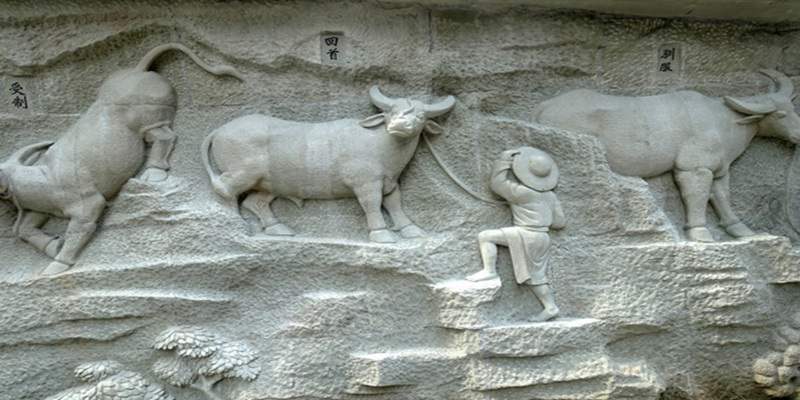
The Herding Ox Scenes
Dazu Rock Carvings Tickets and Opening Hours
Ticket Details: Discount Policies and Booking Methods
- Baoding Mountain Rock Carvings Ticket: 115 RMB per person, including all caves in the main Baoding Mountain scenic area and Shengshou Temple. Tickets are valid for the same day and allow all-day access.
- Beishan Mountain Rock Carvings Ticket: 70 RMB per person, including all caves and attractions such as the Stele of Wei Junjing. Tickets are valid for the same day.
- Baoding + Beishan Combined Ticket: 140 RMB per person, offering better value than purchasing separate tickets. Valid for two days, it is ideal for visitors planning to explore both core sites over two days.
- Dazu Rock Carvings Museum Ticket: Free (reservation required). The museum’s opening hours align with the scenic areas, and tickets can be booked using the same method as scenic area tickets. Present your ID card for entry.
- Discount Policies: Students, seniors, and people with disabilities are eligible for half-price or free tickets, subject to the latest announcements from the scenic area. Valid student ID cards, ID cards or senior citizen cards, and disability certificates must be presented to claim discounts.
Opening Hours: Plan Your Visit Wisely
- Peak Season (March 1 – November 30): 08:30 – 18:00. This period offers pleasant weather but attracts more visitors. Arrive early to avoid crowds.
- Off-Season (December 1 – February 28): 09:00 – 17:30. Fewer visitors allow for a quieter, more contemplative experience, but the weather is colder—dress warmly.
- Ticket Sales Cutoff: 16:30 during peak season and 16:00 during off-season. The scenic area stops admitting visitors one hour before closing. Plan your itinerary carefully to avoid missing entry.
Is Dazu Rock Carvings Worth Visiting?
The value of the Dazu Rock Carvings lies not only in their scale, but in how they reflect centuries of religious belief, daily life, and artistic evolution. From the grand narrative scenes of Baodingshan to the refined craftsmanship of Beishan, each area offers a different perspective on Chinese cultural history. For travelers with limited time, focusing on the main highlights is essential, while those interested in history and art will benefit from a slower, more detailed visit.
For international travelers unfamiliar with Chinese culture or Buddhist symbolism, the way you explore Dazu can significantly shape your experience. Joining a well-organized tour, such as those offered by China Dragon Travel, can provide valuable context through professional guidance and efficient planning. With the right approach, a visit to Dazu becomes more than sightseeing—it becomes an insightful journey into the depth of Chinese heritage.